No US federal agency defines the word “superfood.” We searched for one: FDA, USDA and the rest have no definition, no criteria, no list. What they do define is the word “healthy” on a label, which has criteria you can check — and, more usefully, a documented list of the foods and nutrients Americans actually fall short on. That list is the honest version of a superfood list, and it is short.
The short version
- “Superfood” is a marketing word with no legal definition. “Healthy” is a regulated claim with criteria.
- The nutrients federal guidance flags as under-consumed: calcium, potassium, dietary fiber and vitamin D.
- The food groups Americans are documented to under-eat: seafood; nuts, seeds and soy; vegetables; whole grains.
- “Backed by science” is not a compliment — FDA and FTC both have a formal evidence standard, and most food claims sit below the top one.
- Build a weekly rotation around your gaps, not around whichever berry is fashionable.
What “healthy” legally means — and what “superfood” doesn’t
FDA finalised an updated definition of the “healthy” nutrient content claim. To use the word on a package, a food must contain a certain amount of food (food group equivalent) from at least one of the food groups or subgroups recommended by the Dietary Guidelines, and it must adhere to specified limits for saturated fat, sodium, and added sugars. Manufacturers have three years to conform but can use the new criteria sooner, so packaging will be inconsistent for a while.
Note what that definition is built on: real food from a real food group, plus limits. Not antioxidant capacity, not an exotic origin, not a phytonutrient with a long name. There is no equivalent for “superfood” because no agency has written one.
“Backed by science” has a technical meaning, and it is a ladder
When a package links a food to a disease, that link sits at a specific rung. FDA’s top tier — authorised health claims — requires significant scientific agreement. Below it sit qualified health claims, which FDA describes as supported by scientific evidence, but that do not meet the “significant scientific agreement” standard. Most of the famous food-and-heart-disease claims, including the ones on nuts, are on that lower rung.
Advertising has its own standard. FTC requires competent and reliable scientific evidence, which it defines as tests, analyses, research, studies, or other evidence based on the expertise of professionals in the relevant area, conducted and evaluated in an objective manner, and states that well-controlled human clinical studies are the most reliable form of evidence.
So when a headline says a food is backed by science, the useful question is: which rung? For most superfood claims the answer is none of them — the phrase is doing decorative work.

What Americans actually run short of
This is the part with numbers. Federal guidance names calcium, potassium, dietary fiber, and vitamin D as dietary components of public health concern for the general U.S. population, and adds that iron is a nutrient of public health concern for infants from about 6 months receiving mostly human milk and people who are pregnant.
FDA says the same thing on the label itself: dietary fiber, vitamin D, calcium, iron and potassium are nutrients on the label that Americans generally do not get the recommended amount of. The Daily Value for fiber on that label is 28 grams — which is why the fiber line on our Nutrition Facts cards is worth reading before the calorie line.
The five gaps, and what closes them
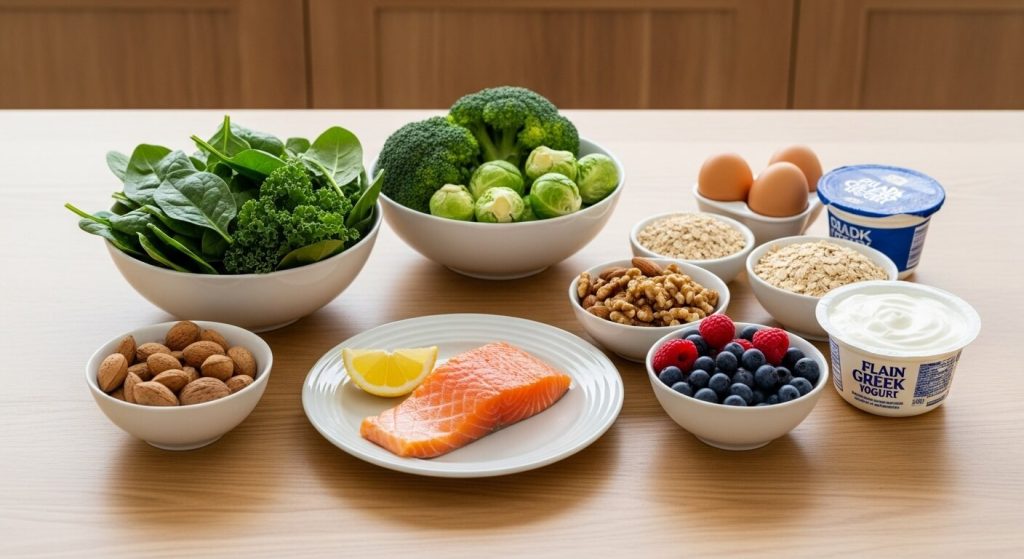
Seafood. EPA and FDA jointly advise at least 8 ounces of seafood per week based on a 2,000 calorie diet. USDA states outright that Americans do not meet the recommendations for seafood or nuts, seeds, and soy products even when total protein is fine. Two portions a week closes it: salmon, tuna.
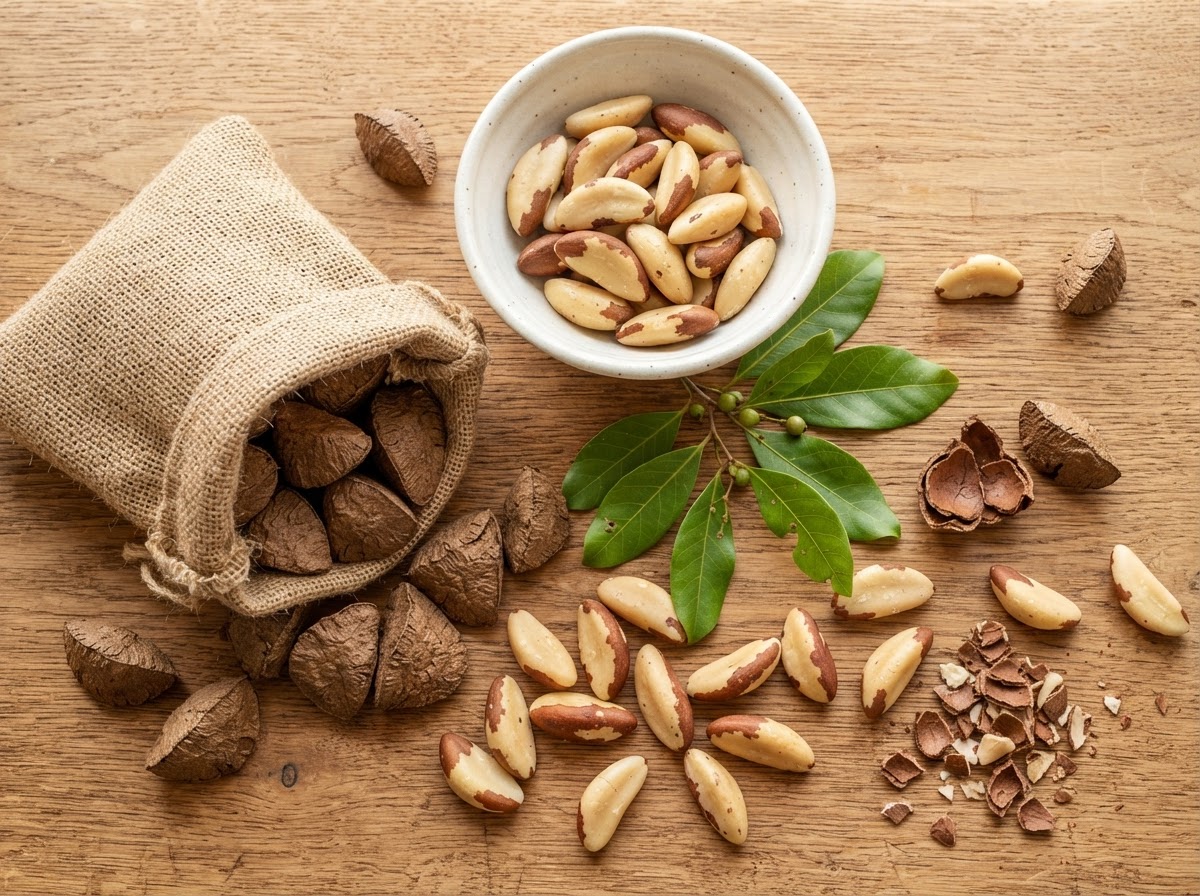
Nuts and seeds. The same sentence covers them. Half an ounce counts as an ounce-equivalent, so this is a small habit: almonds, walnuts, pumpkin seeds, chia seeds. Our seed and nut comparison has the per-ounce nutrient numbers and the one genuine upper limit.
Vegetables. CDC found that 10.0% of surveyed adults met vegetable intake recommendations in 2019. The fix is usually a missing subgroup rather than more of the same: see the five vegetable groups and their weekly amounts. Start with spinach, broccoli, sweet potatoes.
Whole grains. USDA’s guidance is blunt: make at least half your grains whole grains, and at 2,000 calories that means about 6 ounces of grains each day, three of them whole-grain. USDA’s Economic Research Service has stated that most Americans are not meeting these guidelines. Practical swaps: rolled oats, brown rice, bulgur, 100% whole wheat bread.
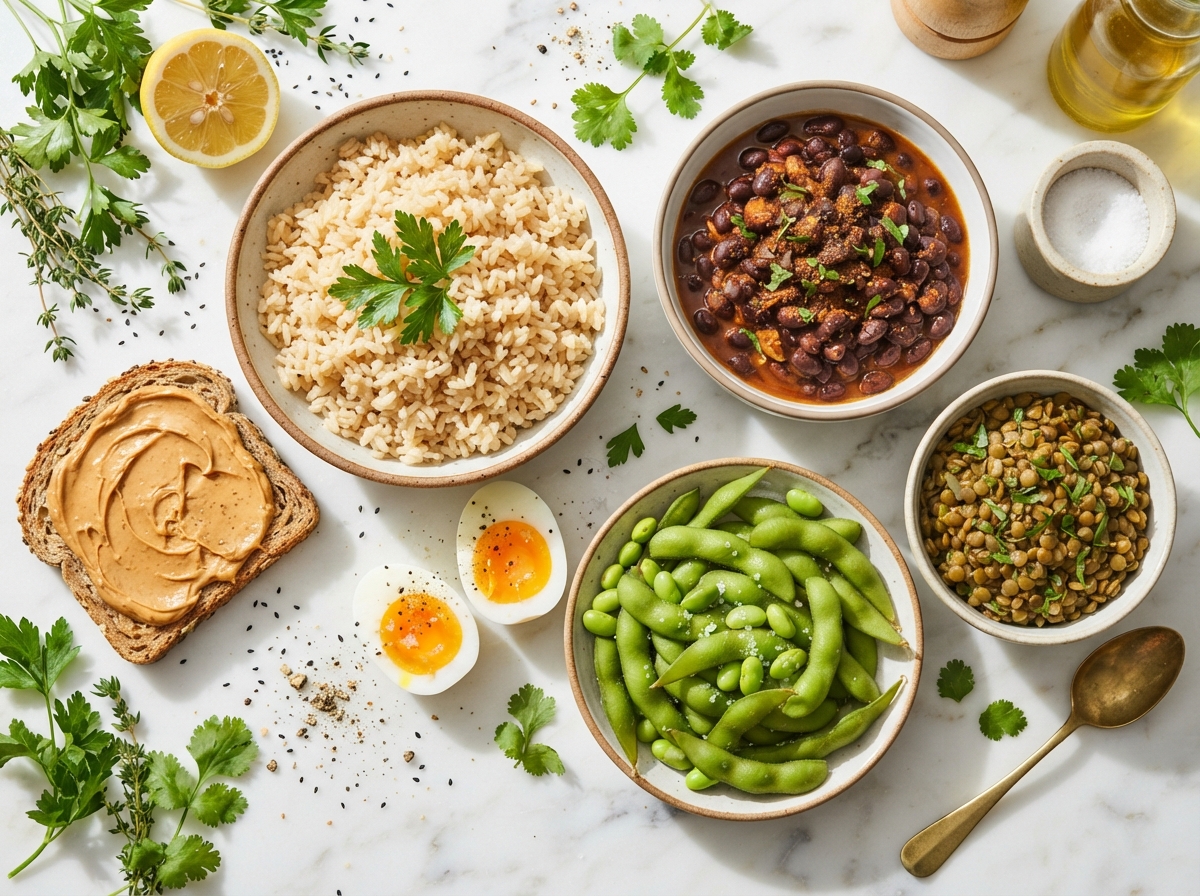
Beans, and the calcium/potassium pair. Beans have their own vegetable subgroup quota and carry fiber and potassium at once — lentils, chickpeas, black beans. For calcium, federal guidance puts about 3 cups of dairy each day at the 2,000-calorie level: Greek yogurt, milk, cottage cheese.

A week that covers all five
Nothing here is exotic, and that is the point.
None of this tells you how much to eat. If you want your own numbers rather than an average, start with the calorie calculator and split the result with the macro calculator.
| Gap | Weekly target | What it looks like |
|---|---|---|
| Seafood | 8 oz (227 g) | Two dinners of salmon or tuna |
| Nuts and seeds | Most days | ½ oz on yogurt or in a salad |
| Dark green vegetables | 1½ cups | Two spinach or broccoli sides |
| Beans, peas, lentils | 1½ cups | One pot of lentils |
| Whole grains | 3 oz daily | Oats at breakfast, brown rice at dinner |
| Dairy | 3 cups daily | Yogurt, milk, cottage cheese |
Weekly vegetable amounts are from the Dietary Guidelines for Americans 2025–2030 pattern at 2,000 calories.
What we are not claiming
- That any food is a “superfood.” We looked for a federal definition of the term and found none — only recall notices for products with the word in their brand name.
- A single percentage for how many Americans miss the whole-grain target. USDA states qualitatively that most do not meet it; we found no verbatim federal percentage.
- That any single food prevents a disease. FDA’s own top tier requires significant scientific agreement, and very few food-disease links reach it.
- Weight-loss claims of any kind for these foods. No food on this page has a federal weight-loss claim attached to it.
- Anything about antioxidants, “detox,” or anti-inflammatory scoring. Those framings do not appear in the federal guidance we work from, so they do not appear here.
FAQ
Is “superfood” a real category? Not legally. No US federal agency defines or regulates the term. “Healthy” is regulated; “superfood” is marketing.
Which foods should I eat every week? Work from the documented shortfalls: seafood, nuts and seeds, vegetables (especially the subgroups you skip), whole grains, beans and dairy.
How much fish per week? At least 8 ounces for adults on a 2,000-calorie diet, per joint EPA and FDA advice.
How much fiber should I get? The Nutrition Facts label Daily Value is 28 grams. Fiber is one of the nutrients FDA names as generally under-consumed.
Does “healthy” on a package mean anything? Yes, and more than it used to — but manufacturers have three years to move to the new criteria, so during the transition the word means different things on different packages.
What to do with this
Pick the single gap you are furthest from — for most people that is seafood or vegetables — and fix it for a month before adding anything else. Then check the foods you already eat against real numbers rather than reputation: every food named here has a Nutrition Facts card listing the USDA record its values came from.
Educational content, not medical advice.
This content is for educational purposes only and is not medical advice. Always consult a qualified healthcare professional for personalised guidance.