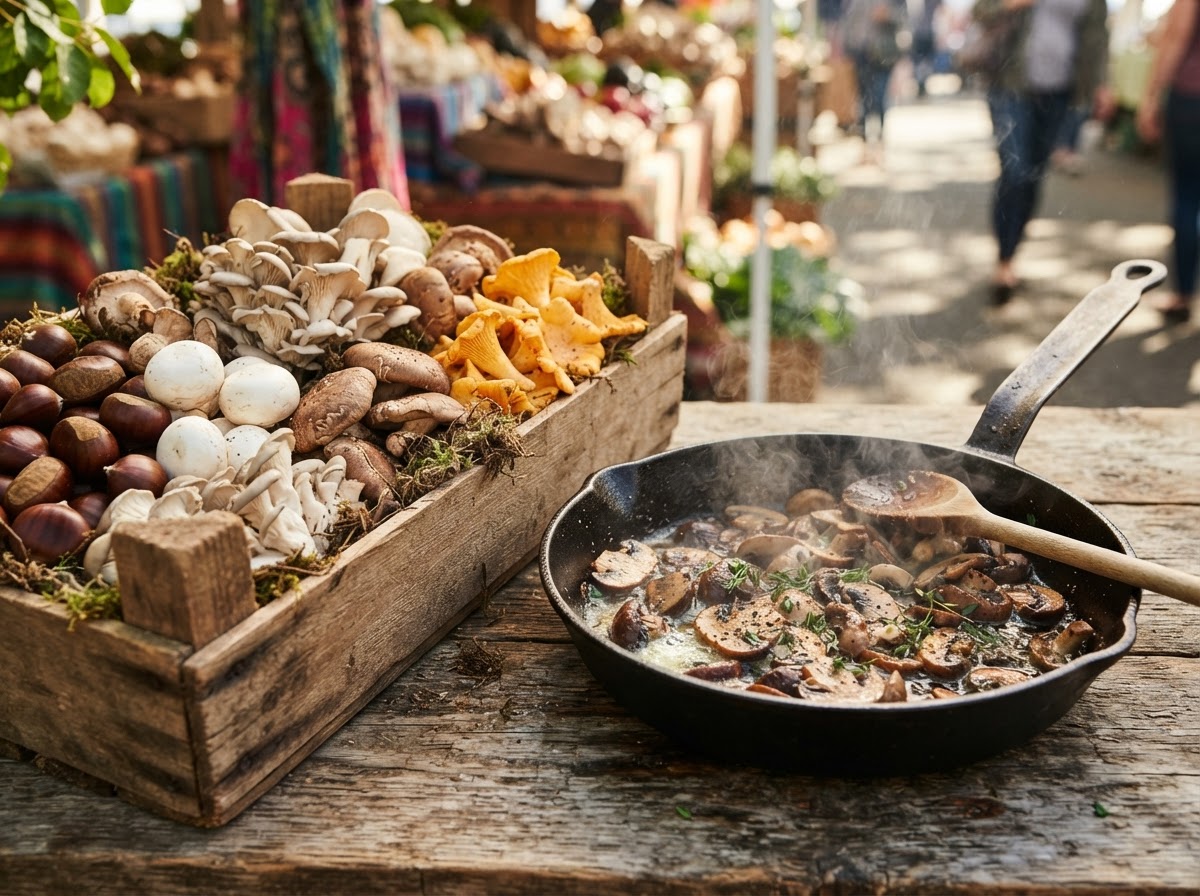
Mushrooms have one genuinely unusual property, and it is not the one they are usually sold on. They are the only item in the produce aisle whose vitamin D content can be deliberately raised by shining ultraviolet light at it — and the Office of Dietary Supplements says so explicitly. Everything else about them is ordinary vegetable nutrition, which is fine, and which our own database can quantify.
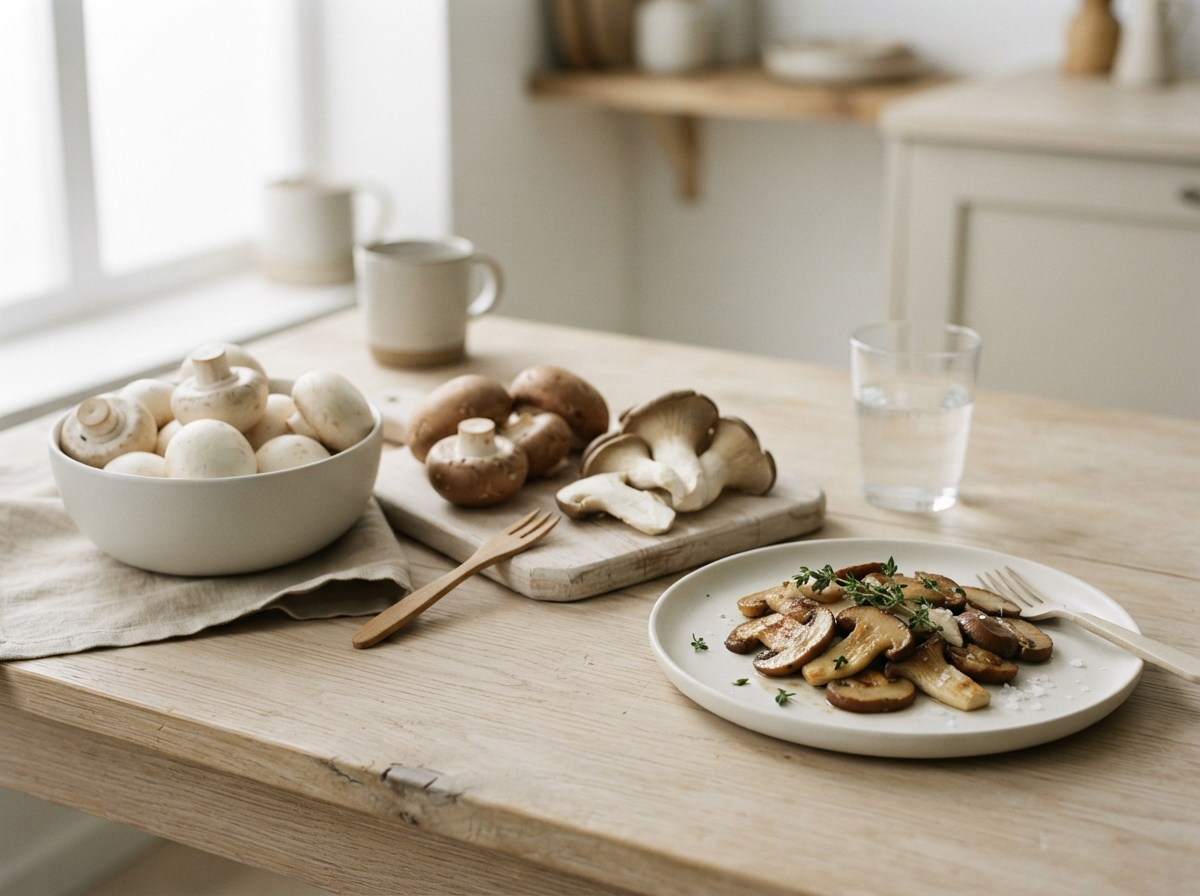
The short version
- ODS: mushrooms provide a little vitamin D, and some have been UV-exposed to increase it.
- Calories run 30–46 per 100 g across the varieties in our database — among the lowest of any food group.
- Protein is 2.2–3.5 g per 100 g. Real, but they are not a protein food.
- Fiber varies more than expected: 1.7 g in button, 4.4 g in lion’s mane.
- Claims about immunity and medicinal mushroom extracts are not something we can source federally.
The vitamin D fact
NIH’s Office of Dietary Supplements states it plainly: mushrooms provide a little vitamin D. Some mushrooms have been exposed to ultraviolet light to increase their vitamin D content.
Both halves matter. “A little” sets expectations for ordinary mushrooms. The second sentence describes a deliberate production step — UV-treated mushrooms are sold specifically for this, and where they are, the pack usually says so.
Why it is interesting: ODS also states that few foods naturally contain vitamin D, with fatty fish and fish liver oils the best sources. For anyone not eating fish, the natural options are thin — which is what makes a UV-treated vegetable worth knowing about. Full context in vitamin D: how much you need.
The numbers, across eleven varieties
Values per 100 g from our own cards, each traced to a named USDA record.
| Mushroom | Calories | Protein, g | Fiber, g |
|---|---|---|---|
| Crimini | 30 | 3.1 | 1.8 |
| White button | 31 | 2.9 | 1.7 |
| Portabella | 32 | 2.8 | 1.9 |
| Maitake | 38 | 2.2 | 3.1 |
| Pioppini | 39 | 3.5 | 2.8 |
| Beech | 40 | 2.2 | 3.1 |
| Oyster | 41 | 2.9 | 2.9 |
| Lion’s mane | 43 | 2.5 | 4.4 |
| Shiitake | 44 | 2.4 | 4.2 |
| Enoki | 44 | 2.4 | 2.9 |
| King oyster | 46 | 2.4 | 3.0 |
The spread is smaller than the marketing around exotic varieties implies — 30 to 46 calories, 2.2 to 3.5 g of protein. The one real difference is fiber: shiitake and lion’s mane carry more than double what button mushrooms do.
Where mushrooms fit in the pattern
In the federal food groups they sit in “other vegetables”, which carries a weekly target of 4 cup-equivalents at 2,000 calories — see the five vegetable groups. Since only about one adult in ten meets the vegetable recommendation at all, a food this low in calories that people actually enjoy cooking is a practical way in.
Mushrooms are low enough in calories that they rarely change a daily total — if you want to check yours, the calorie calculator sets the level they fit into.
They also work well in the volume-eating approach: at roughly 30 calories per 100 g they belong on the same list as high-volume, low-calorie foods.
What we are not claiming
- That mushrooms boost immunity. No federal source we could reach supports this, for any variety.
- Anything about medicinal or extract mushrooms — reishi, cordyceps, lion’s mane supplements. Our numbers are for the food; the supplements are a different product with a different evidence base.
- That mushrooms are a significant vitamin D source by default. ODS says “a little”, and the higher amounts come from deliberate UV treatment.
- Vitamin D amounts per serving. Our cards do not carry vitamin D values; we are not inventing them.
- That mushrooms are a protein food. 2–3 g per 100 g is a vegetable’s protein content, not a protein source.
FAQ
Do mushrooms contain vitamin D? A little, per ODS — and some are exposed to ultraviolet light specifically to raise the amount.
Which mushroom is most nutritious? On our numbers, shiitake and lion’s mane lead on fiber at over 4 g per 100 g. Calories and protein are similar across all of them.
Are mushrooms a good protein source? No. 2.2–3.5 g per 100 g is typical vegetable territory.
Do exotic mushrooms have more nutrients than button? Slightly more fiber. Otherwise the differences are small.
Do mushrooms count as a vegetable? In the federal food groups they count in the “other vegetables” subgroup.
What to do with this
Buy them because they are 30 calories per 100 g and make vegetables taste better, which is the honest reason. If you are short on vitamin D and not eating fish, look for packs that say UV-treated — that is the one property here worth seeking out deliberately.
Educational content, not medical advice.
This content is for educational purposes only and is not medical advice. Always consult a qualified healthcare professional for personalised guidance.