The Mediterranean diet is the most searched diet in the world. It is also not named anywhere in the current dietary guidance of the United States. We checked the document twice: the word “Mediterranean” does not appear in the Dietary Guidelines for Americans, 2025–2030. Neither does DASH. Neither does keto, or paleo, or any other diet by name.
That is not a verdict on the Mediterranean diet, and this article is not going to pretend it is. It is a change in how American dietary guidance is written — from naming patterns to naming principles — and it happened in January 2026, quietly, while every article on the subject carried on describing the old arrangement. What follows is what the Mediterranean diet actually is on federal sources, what the United States now says instead, and where the evidence for the popular diets really stands when you only count sources that exist.
Key takeaways. The current US Dietary Guidelines, published January 2026, name no diet at all — not Mediterranean, not DASH. The one agency description of the Mediterranean diet is the National Institute on Aging’s, and it calls the cognitive evidence “mixed”; a trial of the MIND diet in 600 adults found gains no better than a mild calorie-restriction control. DASH is the one pattern fully specified, serving by serving — and nuts and legumes in it are weekly, not daily. Its 5.5/3.0 mmHg figure is real but lives in a 2013 evidence review, not on NHLBI’s DASH page. Intermittent fasting matched plain calorie counting at 12 months, and no federal source anywhere defines “16:8”. The carnivore diet has no federal source at all.
What the Mediterranean diet is, according to an agency
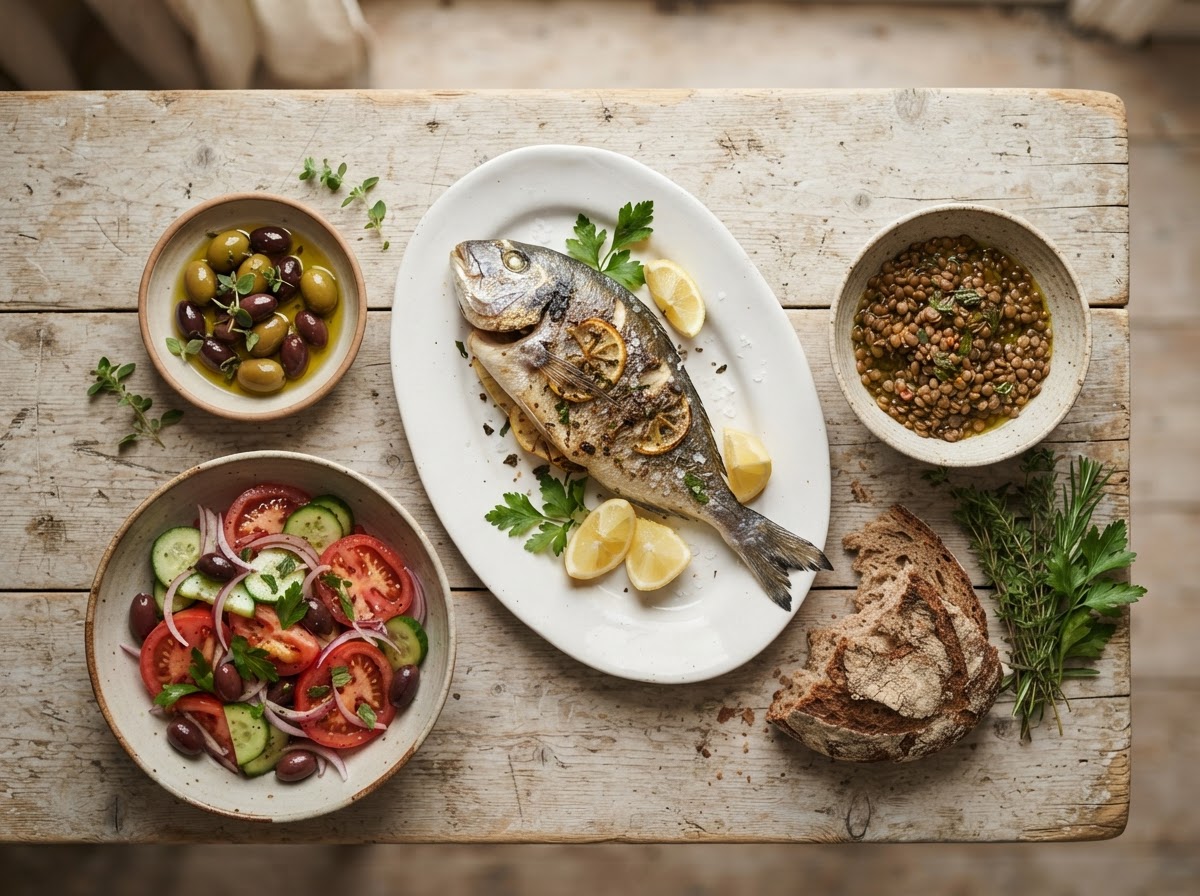
There is one place a US agency describes this diet in its own words, and it is not where you would look for it. The National Institute on Aging, in its page on diet and the prevention of Alzheimer’s disease (content reviewed November 2023), writes: “The Mediterranean diet emphasizes fruits, vegetables, whole grains, legumes, fish and other seafood, unsaturated fats such as olive oils, and low amounts of red meat, eggs, and sweets.”
That is an agency’s own definition, and it is worth more than the descriptions circulating elsewhere. Note how NIA frames the whole subject before giving it: “there are two diets that research has shown may hold potential benefits for cognitive health, but the evidence is mixed.”
MedlinePlus also carries a description, and one attribution point matters before quoting it: MedlinePlus’s medical encyclopedia is produced by A.D.A.M. and hosted by the National Library of Medicine. It is not an agency position, and it should not be quoted as “NIH says”. With that noted, its version is a good plain-language one: “The Mediterranean-style diet has fewer meats and carbohydrates than a typical American diet. It also has more plant-based foods and monounsaturated (good) fat.” It is built on plant-based meals with only small amounts of lean meat and chicken, plenty of fish and other seafood, and olive oil as the main source of fat for cooking. On benefits it gives exactly one sentence, and the hedge in it is the point: “Following the Mediterranean diet may lead to more stable blood sugar, lower cholesterol and triglycerides, and a lower risk for heart disease and other health problems.”
There is a second federal-host assessment worth knowing. A StatPearls review on NIH’s NCBI Bookshelf, discussing the paleolithic diet, ranks it against others in passing: the clinical evidence for paleo is “less robust than other well-studied approaches, such as the Mediterranean and DASH diets”. That is a US-hosted source treating Mediterranean and DASH as the well-studied benchmark.
And the MIND diet, which is the Mediterranean diet crossed with DASH
The same NIA page is the only reachable federal description of the MIND diet: “The MIND (Mediterranean–DASH Intervention for Neurodegenerative Delay) diet is a hybrid of the Mediterranean and the DASH (Dietary Approaches to Stop Hypertension) diet.” Its composition, as NIA lists it: “vegetables, especially green leafy vegetables; berries over other fruit; whole grains; beans; nuts; one or more weekly servings of fish; and olive oil.”
And then NIA does something most write-ups do not, which is publish the result that went the wrong way:
“Some, but not all observational studies have shown that the Mediterranean and MIND diets are associated with a lower risk for dementia compared to a Western-style diet, which typically contains more red meat, saturated fats, and sugar. However, a recent clinical trial assigned 600 older adults with a family history of dementia to either a MIND-diet group or a control-diet group. Results showed that participants who followed the MIND diet had only small improvements in cognition that were similar to those who followed a control diet of mild caloric restriction.“
Read that carefully, because it is the shape of the whole subject. The observational studies point one way. The randomized trial found the MIND diet performed about as well as a control diet of mild calorie restriction. NIA prints both, and prefaces the section with a line worth keeping: “Before starting any dietary change, it’s important to talk with your health care provider.”
What American guidance now says instead
The 2025–2030 Dietary Guidelines are short, and they are organized as instructions rather than as patterns. The sections, in order: prioritize protein foods at every meal; consume dairy; eat the right amount for you; gut health; eat vegetables and fruits throughout the day; incorporate healthy fats; focus on whole grains; limit highly processed foods, added sugars and refined carbohydrates; added sugars; sodium; limit alcoholic beverages; and special populations.
The numbers attached to those, between the document and the government’s realfood.gov site:
| What | Current US guidance |
|---|---|
| Protein | 1.2–1.6 g per kilogram of body weight per day |
| Vegetables | 3 servings a day, on a 2,000-calorie pattern |
| Fruits | 2 servings a day |
| Dairy | 3 servings a day, on a 2,000-calorie pattern |
| Whole grains | 2–4 servings a day |
| Saturated fat | “In general… should not exceed 10% of total daily calories” |
| Added sugars | no more than 10 g in one meal |
| Sodium, ages 14+ | less than 2,300 mg a day |
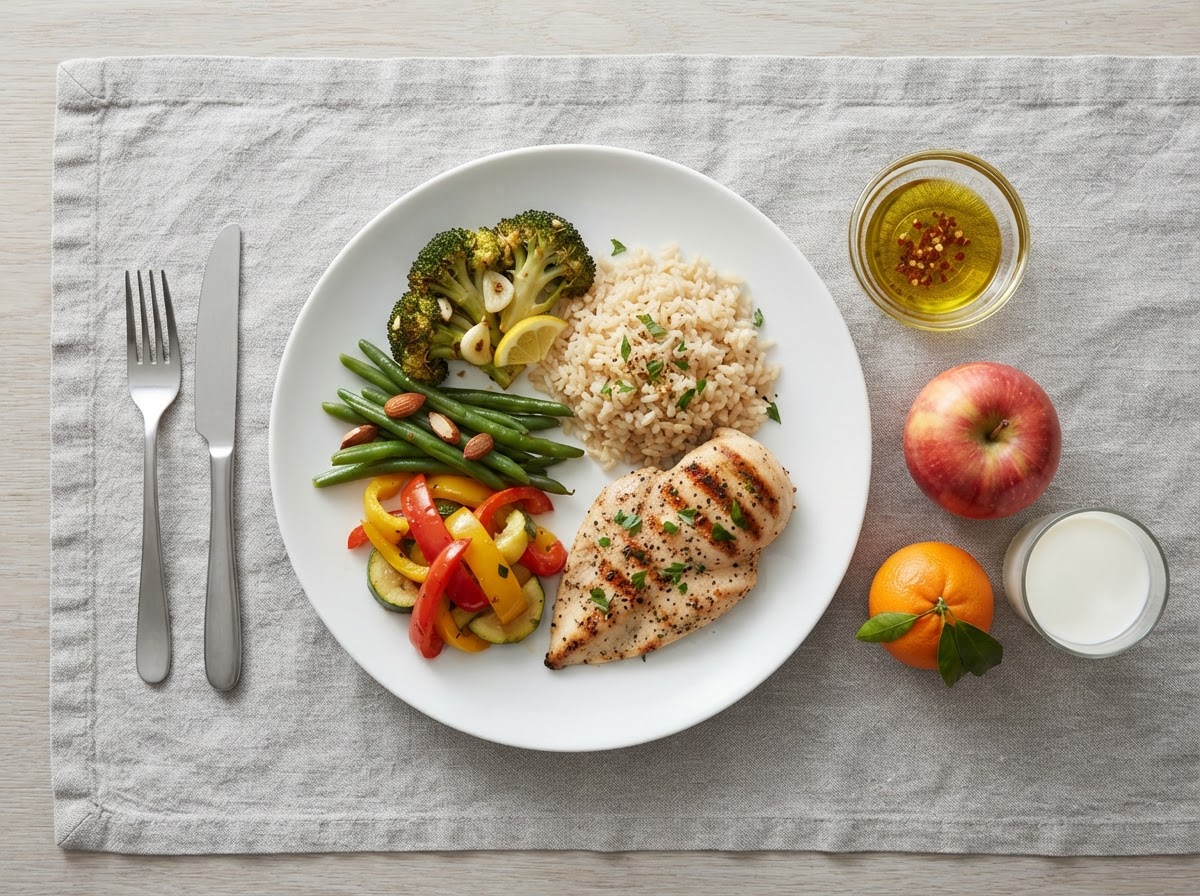
The accompanying scientific volume, The Scientific Foundation for the Dietary Guidelines for Americans, states the shift outright: the report “differs from previous U.S. guidelines in three crucial ways: First, guidance is centered on the principle of encouraging the consumption of minimally processed, naturally nutrient-dense foods and discouraging the consumption of highly processed foods.” It also gives a figure worth keeping: “Highly processed foods and beverages currently account for about two-thirds of the energy consumed in the U.S.”
And where there used to be named patterns, there is now one pattern with a new name. The scientific volume recommends retaining the 2020 Healthy U.S. Style Diet for young children aged 12 through 23 months, “except to change the name of the pattern to the Eat Healthy Your Way Dietary Pattern,” and says “Flexibilities within the core elements of the Eat Healthy Your Way Dietary Pattern are recommended.”
One honest limitation: we could not read the full 2020–2025 edition to establish exactly which patterns it named, because the complete document is too large for our tools and the executive summary does not list them. So this article states what the current guidelines say and do not say, which we verified directly, and does not make claims about the previous edition’s wording that we have not read ourselves.
DASH did not disappear — it just lives somewhere else
DASH is absent from the Dietary Guidelines, but it is not absent from the government. The National Heart, Lung, and Blood Institute still runs it as a programme, and the page was last updated in February 2026 — after the new guidelines came out. NHLBI describes it as “a flexible and balanced eating plan that helps create a heart-healthy eating style for life.”
What NHLBI still publishes, in full, is the plan itself — which is the next section.
This is the pattern to notice across the whole subject: a diet vanishing from one document does not mean the agencies stopped working on it. It means the document changed shape.
DASH, written out in full
This is the one eating pattern the US government has fully specified, serving by serving. NHLBI publishes the targets for a 2,000-calorie day, and the important thing — which almost every summary of DASH gets wrong — is that the table has two columns. Most rows are daily. Two are weekly.
| Food group | Servings |
|---|---|
| Grains | 6–8 a day |
| Meats, poultry, and fish | 6 or less a day |
| Vegetables | 4–5 a day |
| Fruit | 4–5 a day |
| Low-fat or fat-free dairy products | 2–3 a day |
| Fats and oils | 2–3 a day |
| Sodium | 2,300 mg a day |
| Nuts, seeds, dry beans, and peas | 4–5 a week |
| Sweets | 5 or less a week |
Nuts, seeds and legumes at four to five servings a week is not what most people assume from a plant-forward plan, and sweets at five or fewer a week is a good deal more permissive than most people assume too. Both sit in the weekly column on NHLBI’s page, last updated 25 February 2026.
The sodium row carries a footnote, and it is the single most useful line on the page: “1,500 milligrams (mg) sodium lowers blood pressure even further than 2,300 mg sodium daily.” NHLBI also gives the plan’s guiding rule — when following DASH, choose foods that are low in saturated and trans fats, rich in potassium, calcium, magnesium, fiber and protein, and lower in sodium. Our guide to daily sodium intake goes through the numbers.
The blood pressure numbers, and where they actually live
Here is a small piece of detective work that matters for anyone checking our sources. The famous DASH blood-pressure figure is not on NHLBI’s DASH page. We looked three times; there is no millimetre-of-mercury figure there at all.
It exists, though, in three other federal documents, all giving the same number. A systematic evidence review published on NHLBI’s site by the Lifestyle Work Group in 2013 states: “The DASH diet lowered BP in the entire study population by an average of 5.5/3.0 mmHg.” The NIH Office of Dietary Supplements repeats it on its potassium fact sheet, attributing the effect to a pattern emphasizing potassium from fruit, vegetables and low-fat dairy. And its calcium fact sheet repeats it again, this time framing the same trial around added low-fat dairy — while adding, honestly, that “any independent contribution of calcium cannot be determined.”
One number, one trial, three documents, three different explanations of what in the diet did the work. That is not a contradiction; it is what it looks like when a whole dietary pattern is tested rather than a single nutrient.
And there is a figure for the Mediterranean pattern too, from the same 2013 review, and it is comparative: “Counseling to eat a MED dietary pattern, compared with minimal advice to consume a low-fat dietary pattern, in free-living middle-aged or older adults (with type 2 diabetes or at least three CVD risk factors), reduces BP by 6–7/2–3 mmHg.”
Three caveats, all of which belong with the number. It is a 2013 evidence review by a working group, published on NHLBI’s site — not a current NHLBI recommendation. It compares counseling to eat one way against minimal advice to eat another, not one diet against another. And the same document says plainly: “The RCTs and cohort studies did not uniformly define the MED diet.” The studies behind the most-searched diet in the world did not agree on what it is.
Vegetarian and vegan: now a nutrient-risk section
The clearest illustration of the new framing is how plant-based eating is handled. It appears not as a recommended pattern but under “Special Populations & Considerations”, and what it gets is a list of gaps:
“Vegetarian diets often fall short in vitamins D and E, choline, and iron, whereas vegan diets show broader shortfalls in vitamins A, D, E, B6, and B12; riboflavin; niacin; choline; calcium; iron; magnesium; phosphorus; potassium; zinc; and protein.”
The advice that follows is practical rather than discouraging: consume a variety of whole foods, especially protein-rich ones — “dairy, eggs, beans, peas, lentils, legumes, nuts, seeds, tofu, or tempeh”; “significantly limit highly processed vegan or vegetarian foods that can include added fats, sugars, and salt”; “monitor nutrient status periodically, especially for iron, vitamin B12, vitamin D, calcium, and iodine”; and prioritize targeted supplementation, diversify plant proteins for amino acid balance, and improve mineral bioavailability through food preparation.
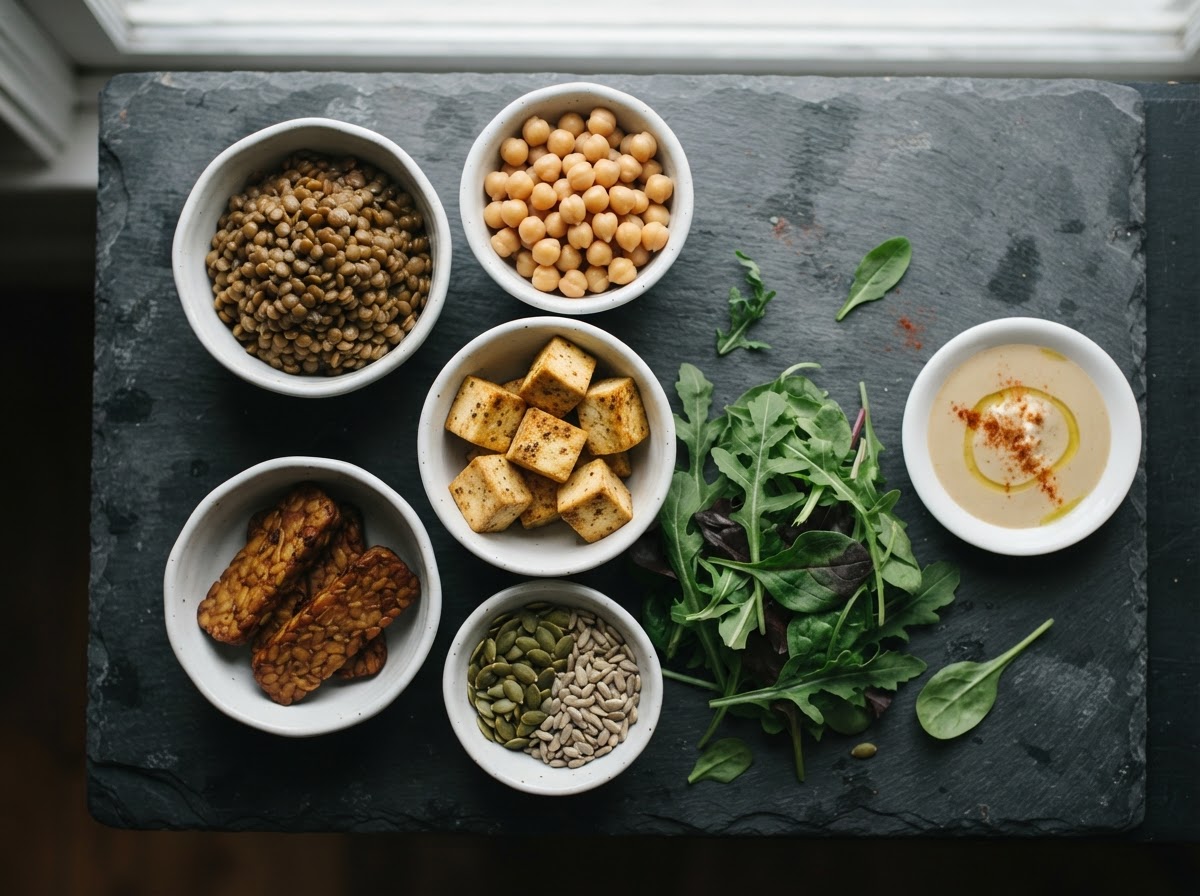
Read that last clause carefully, because it is the most actionable sentence in the document for anyone eating this way: preparation technique — soaking, sprouting, fermenting — is named as a lever on mineral absorption. Our guide to nutrients on a plant-based diet covers which ones matter most.
The ladder, not the traffic light
Diet articles love a three-colour chart: good, neutral, dangerous. No federal source supports one. What exists instead is a ladder of how much evidence there is, and it looks like this.
Mediterranean and DASH sit at the top as the well-studied benchmarks — that is StatPearls’ own comparison, and DASH additionally has a live federal programme behind it.
Keto has the strongest clinical pedigree of any diet here, and it is not for weight loss. StatPearls describes epilepsy as “its only universally accepted, guideline-supported indication”, and the diet has been used for that since 1920, before anticonvulsant drugs existed. For weight loss the same sources call the effect moderate, adherence poor, and report no difference from ordinary eating by two years. Standard composition is roughly 55–60% fat, 30–35% protein, 5–10% carbohydrate; the weight-loss version runs 60–75% fat and 20–50 g of carbohydrate a day. Documented downsides run from nausea, constipation and headache in the short term to dyslipidemia, hepatic steatosis, kidney stones and reduced bone mineral density over time. Our guide to the ketogenic diet goes through all of it.
Paleo is the interesting case, because its most telling feature is an absence. It is not mentioned by the Dietary Guidelines, by CDC, by NIDDK, by NCCIH or by MedlinePlus. The one federal-host description is the StatPearls chapter, which supplies its macronutrient ranges — roughly 19–35% protein, 28–58% fat, 22–40% carbohydrate — the ranking quoted above, and a specific warning: excluding grains, dairy and legumes “may significantly reduce calcium and vitamin D intake”. See our breakdown of the paleo diet.
Low-carb generally. Carbohydrates have an AMDR of 45–65% of calories, which on 2,000 calories is 225–325 g — a 100-gram spread entirely inside the recommendation. There is no single correct number. StatPearls also notes that “carbohydrates are not considered essential nutrients because the body can synthesize carbohydrates endogenously”, a sentence both sides of the argument quote half of. Our article on what federal sources actually say about carbs has the rest.
Intermittent fasting: no federal source uses the term you do
Start with a small, checkable oddity. No US federal source prints the string “16:8”. The phrase everybody searches is not in any of them. What they give instead are windows, and they do not agree with each other: NIDDK describes a 6-to-8-hour eating window, NIH’s MedlinePlus Magazine describes eating within a 12-hour period and elsewhere an eight-hour one, and a StatPearls review names only the “5:2” approach — restricting calories one full day a week, or two non-consecutive days.
The most substantive American material is an interview NIDDK published in its Diabetes Discoveries & Practice blog in May 2024 with the researcher Dr. Krista Varady. It is her assessment, not the institute’s position, and it is refreshingly blunt:
“Both diets resulted in about 5% weight loss over 12 months. So, I don’t think intermittent fasting is better than anything else; I think it’s just another option for people who are tired of tracking calories.”
That is the comparison most articles avoid: over a year, intermittent fasting and ordinary calorie counting produced about the same result. Varady defines the approaches simply — “Intermittent fasting is defined as a period of eating followed by a period of not eating”; alternate-day fasting “typically involves a fast day, where people can either have only water or 500 to 600 calories in a day.”
On who should not do it, she is specific: pregnant women, “since no studies have been conducted in this group just yet,” and she flags older adults, because “people do lose a bit of lean mass” with any weight loss and the risk is excessive muscle loss. NIH’s MedlinePlus Magazine, quoting NHLBI’s Charlotte Pratt, adds that it “is not safe for everyone, especially those with health conditions like diabetes, kidney disease, or heart-related issues,” and should be approached with a dietitian or physician.
A StatPearls review notes one more thing worth knowing before you try it: a tension-type headache is a common effect in the early days, with hypoglycaemia, dehydration and caffeine withdrawal among the proposed reasons.
Low-FODMAP is not a diet. It is a protocol.
This one is miscategorized everywhere, and the federal source is unambiguous. NIDDK describes it only in the context of irritable bowel syndrome, and every sentence is about a doctor directing it: “Your doctor may recommend that you try a special diet—called the low FODMAP diet—to reduce or avoid certain foods that contain carbohydrates that are hard to digest.”
The time horizon is weeks, not life: “Your doctor may suggest that you try the low FODMAP diet for a few weeks to see if it helps with your symptoms.” And it is explicitly designed to be reversed: “If your symptoms improve, your doctor may recommend slowly adding foods that contain FODMAPs back into your diet.”
So: an elimination-and-reintroduction protocol for a specific condition, doctor-directed, measured in weeks. Not a way of eating, not a weight-loss plan, and not something the federal source suggests choosing for yourself. (NIDDK’s page is dated November 2017, which is worth knowing for a field that has moved.)
Every diet in one table
What follows is not our ranking. It is a list of which US federal sources say anything at all about each of these, and what they actually say.
| Diet | Which federal source says anything | What it says |
|---|---|---|
| Mediterranean | NIA; NHLBI evidence review 2013; StatPearls | NIA describes it and calls the cognitive evidence “mixed”; 2013 review reports 6–7/2–3 mmHg for counseling versus minimal low-fat advice; StatPearls treats it as a well-studied benchmark |
| DASH | NHLBI; MedlinePlus; ODS | Fully specified serving targets; sodium 2,300 and 1,500 mg; 5.5/3.0 mmHg in three documents |
| MIND | NIA only | Hybrid of the other two; a trial in 600 adults found only small cognitive gains, similar to a mild calorie-restriction control |
| Ketogenic | StatPearls | Epilepsy is its only guideline-supported indication; documented long-term risks; adherence is hard |
| Paleo | StatPearls | Evidence “less robust” than Mediterranean and DASH; may significantly reduce calcium and vitamin D intake |
| Intermittent fasting | NIDDK (interview); NIH MedlinePlus Magazine; StatPearls | About 5% weight loss at 12 months, same as calorie counting; no federal source defines “16:8” |
| Low-FODMAP | NIDDK | A doctor-directed elimination protocol for IBS, for a few weeks, with reintroduction |
| Vegetarian / vegan | Dietary Guidelines 2025–2030 | Treated as a group to watch for nutrient gaps; fifteen nutrients plus protein listed for vegan diets |
| Carnivore | None | We checked nine federal hosts and found no statement of any kind |
| “Anti-inflammatory” | None by that name | NCCIH’s own review of nutrition and inflammation never uses the phrase |
| Detoxes and cleanses | NCCIH; FTC | No compelling research; weight returns when normal eating resumes; the FTC has sued over detox-tea claims |
And one sentence from a StatPearls review on NIH’s NCBI Bookshelf, by Palanikumar Balasundaram and Sharon F. Daley, covers the rest: “No one weight-loss diet has been proven superior.” It appears in a section on family-based interventions, listing Mediterranean, DASH, intermittent fasting and ketogenic diets together as options.
What no source supports
These are the claims to stop paying for.
“Detox” teas and cleanses. The Federal Trade Commission has warned specifically that detox tea claims are not supportable, and more broadly that miracle weight-loss products are unlikely to work. That is a consumer-protection agency saying so, which is a different and blunter kind of source than a health agency hedging.
“This diet is dangerous.” No US federal source describes keto, paleo, Atkins or any other popular diet as dangerous. They describe risks, gaps and weak evidence. If you see a chart sorting diets into safe and dangerous, it is somebody’s editorial judgment, not a government classification — and we are not going to redraw it here.
“Carbs make you gain weight.” Not stated by any federal source. What MedlinePlus does link to weight gain is added sugar: “Eating too much added sugar… can make you gain weight.”
“Grains and legumes cause inflammation.” Nothing supports this anywhere we looked.
The carnivore diet. Nothing. We searched nine federal hosts — NCCIH, NIDDK, NHLBI, the Office of Dietary Supplements, CDC, FDA, FTC, MedlinePlus and NCBI Bookshelf — and found no statement of any kind about it, for or against. The only hit anywhere on an allowed domain was a clinical case report by outside authors in a journal CDC publishes, which is not the same thing as a CDC position. A diet with well over a hundred thousand US searches a month, and the federal record is silent.
The “anti-inflammatory diet”. NCCIH is the agency whose remit is exactly this kind of question, and it has a clinical digest on nutritional approaches to pain and inflammation. The phrase “anti-inflammatory diet” does not appear in it. What the digest discusses is supplements, and its verdict there is: “in general, there is insufficient evidence to support the use of many of these approaches for inflammatory conditions.” On turmeric specifically, “in spite of its long history of use for inflammatory disorders, there is insufficient evidence to support the use of turmeric supplementation for these disorders.”
Detoxes and cleanses. Here there is something to cite, and it is unflattering. NCCIH reports that “a 2015 review concluded that there was no compelling research to support the use of ‘detox’ diets for weight management or eliminating toxins from the body,” and that a 2017 review found juicing and detox diets “can cause initial weight loss because of low intake of calories, but they tend to lead to weight gain once a person resumes a normal diet.” It also warns that colon cleansing “may have side effects, some of which can be serious,” and that living on water and herbal tea for days “could lead to dangerous electrolyte imbalances.” Note the attribution: these are reviews NCCIH is reporting, not NCCIH’s own trials.
Seven weight-loss claims the FTC says are always false
This is the most directly useful thing in the article, and it comes from a consumer-protection agency rather than a health one, which gives it a different kind of force. The Federal Trade Commission publishes a reference guide telling media outlets which weight-loss claims to refuse outright. Its framing: “If one of these seven claims crosses your desk, do a gut check.” A product that claims to:
- cause weight loss of two pounds or more a week for a month or more without dieting or exercise;
- cause substantial weight loss no matter what or how much the consumer eats;
- cause permanent weight loss even after the consumer stops using product;
- block the absorption of fat or calories to enable consumers to lose substantial weight;
- safely enable consumers to lose more than three pounds per week for more than four weeks;
- cause substantial weight loss for all users;
- cause substantial weight loss by wearing a product on the body or rubbing it into the skin.
The FTC’s own words for what such an advertisement signals: “it’s likely to be a tip-off to deception.” (The third item reads “stops using product” without an article in the original; that is the agency’s wording, not ours.)
It enforces this, too. In a consumer alert about the tea company Teami, the FTC said the company “did not have reliable scientific evidence to back up their claims — as required by law,” having made weight-loss claims for a detox tea and claims that other teas “could fight cancer, clear clogged arteries, relieve migraines, and prevent common colds and the flu.”
FAQ
Is the Mediterranean diet officially recommended in the US?
Not by name, not any more. The Dietary Guidelines for Americans 2025–2030 do not contain the word “Mediterranean” — we checked twice. Federal sources still describe the diet favorably, with hedges, and a StatPearls review on NIH’s NCBI Bookshelf treats it as one of the well-studied approaches. What changed is the shape of the guidance, not a finding against the diet.
So what does the US recommend now?
Principles rather than patterns: prioritize protein at every meal, eat vegetables and fruit through the day, focus on whole grains, incorporate healthy fats, consume dairy, and limit highly processed foods, added sugars, refined carbohydrates, sodium and alcohol. The scientific volume calls the single flexible pattern the “Eat Healthy Your Way Dietary Pattern”.
Is DASH still a thing?
Yes. It is absent from the Dietary Guidelines but NHLBI still runs it, and updated the page in February 2026.
How many servings does DASH actually allow?
At 2,000 calories: grains 6–8 a day, meat/poultry/fish 6 or less a day, vegetables 4–5 a day, fruit 4–5 a day, low-fat dairy 2–3 a day, fats and oils 2–3 a day, sodium 2,300 mg a day — and then, in a separate weekly column, nuts, seeds, dry beans and peas 4–5 a week and sweets 5 or less a week.
Does intermittent fasting work better than counting calories?
Not on the comparison NIDDK published. Interviewed on its blog, the researcher Krista Varady reported about 5% weight loss over 12 months on both, and said she does not think intermittent fasting is better than anything else — “just another option for people who are tired of tracking calories.” That is her assessment, not the institute’s position.
Is the MIND diet proven to protect the brain?
No. NIA calls the evidence mixed and reports a trial in 600 older adults with a family history of dementia in which the MIND diet produced only small cognitive improvements, similar to a control diet of mild calorie restriction.
What do US agencies say about the carnivore diet?
Nothing at all. We checked nine federal hosts and found no statement for or against it.
Which diet has the best evidence behind it?
For general health, the only federal-host ranking we found puts Mediterranean and DASH above paleo as “well-studied approaches”. For a specific condition, keto has the strongest standing of any diet here — for epilepsy, and only for epilepsy.
Is the keto diet safe?
No federal source calls it dangerous, and several document real risks over time, including dyslipidemia, kidney stones and reduced bone mineral density. Separately, and worth knowing: very-low-carbohydrate eating does not cause ketoacidosis. Nutritional ketosis and diabetic ketoacidosis are different things.
What about vegetarian and vegan diets?
The current guidelines treat them as a group to watch for nutrient gaps rather than as a recommended pattern, and list the shortfalls explicitly — for vegan diets that list runs to fifteen nutrients plus protein. The advice is to diversify plant proteins, supplement in a targeted way, monitor nutrient status, and use preparation methods that improve mineral absorption.
What to do with this
If you were following the Mediterranean diet because the US government recommended it, the honest update is that the government no longer names it — and that nothing has been published saying it stopped working. The foods it is built on are the same ones the new guidance describes in different words: plants, fish, olive oil, whole grains, minimal processing.
If you want a pattern that is actually written down, it is DASH. It is the only one an American agency has specified serving by serving, it is still maintained, and its sodium footnote gives you the one lever with a number attached. The Mediterranean diet is not worse for lacking that — it is just that nobody, including the trials, ever pinned down exactly what it is.
The more useful shift is what replaced the patterns. Current American guidance is organized around how processed your food is, and around a handful of numbers you can actually check: protein by body weight, three vegetables and two fruits a day, saturated fat under 10% of calories, 10 g of added sugar in a meal, sodium under 2,300 mg. Those do not require you to pick a diet with a name.
Related: ultra-processed foods and what the government will not define, foods that lower cholesterol, daily sodium intake guidelines, the truth about carbohydrates.
This content is for educational purposes only and is not medical advice. Always consult a qualified healthcare professional for personalised guidance.