Restaurant meals can challenge your fitness goals with hidden calories, oversized portions, and added fats you wouldn’t use at home. But eating out while maintaining progress is entirely possible when you know what to look for and how to order strategically. The difference often comes down to a few deliberate choices you make before your food arrives. Cooking the same kind of meal at home puts those choices back in your hands: our roasted potatoes with apples and chicken sausage is one tray.
Why restaurant meals challenge eating out fitness goals
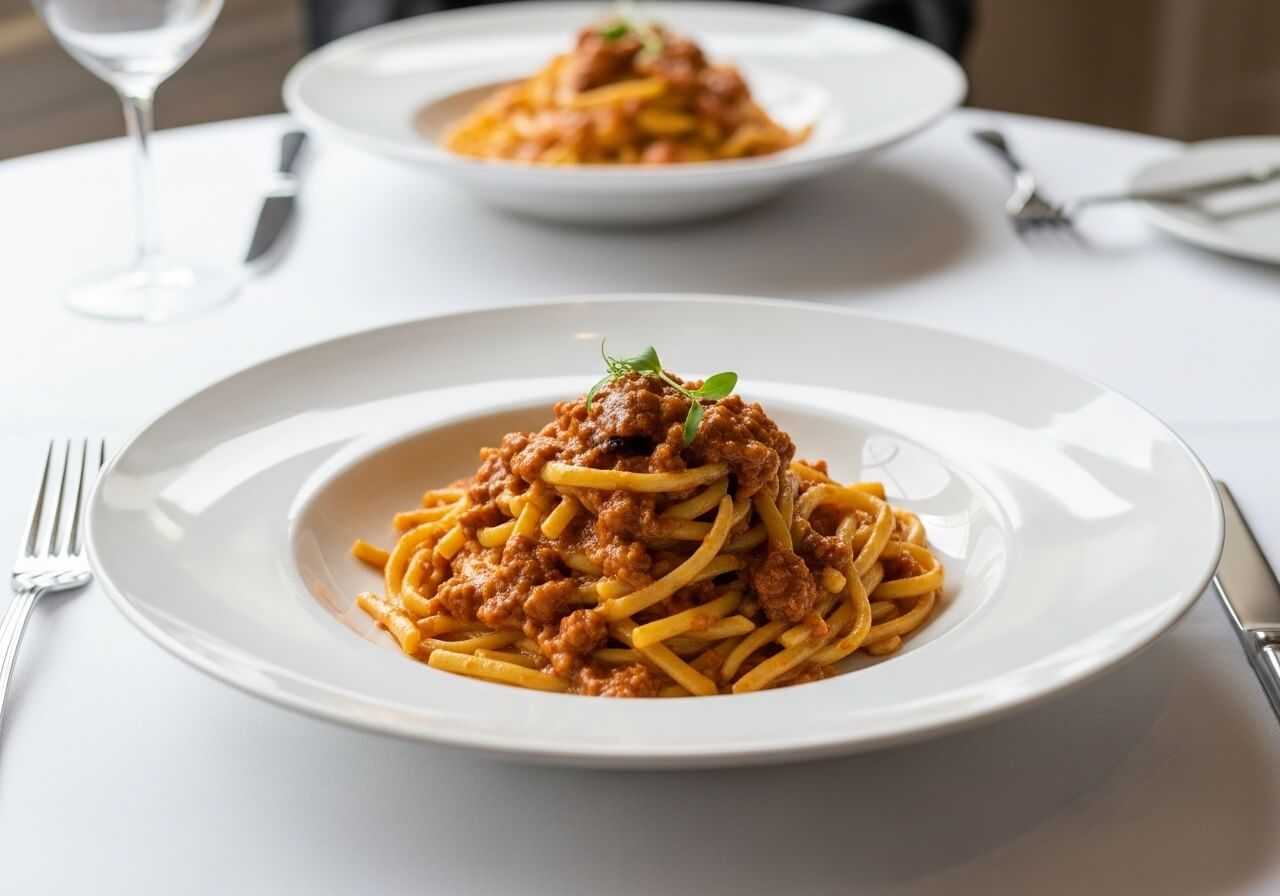
Restaurant food differs from home cooking in ways that directly affect your calorie intake. The main issue is portion size—restaurants typically serve larger portions than a single serving should be, which can push total calories well above what seems reasonable for a single meal.
Hidden fats and oils that double calorie counts
Restaurant kitchens rely on added fats to improve taste and texture. A dish that sounds straightforward—like grilled chicken—often arrives coated in butter or oil. Even “healthy” menu items can be surprisingly calorie-dense once you account for the cooking fat used behind the scenes.
Sauces and dressings add another layer of hidden calories. A Caesar salad can contain 400-600 calories just from the dressing and cheese before you’ve touched the greens. Cream-based sauces, glazes, and marinades all contribute fat and sugar that wouldn’t appear in a home-cooked version of the same dish.
Sodium and processed ingredients that cause bloat
Restaurant meals are commonly higher in saturated fat, sodium, and added sugars than comparable home-cooked versions. High sodium content can cause water retention that temporarily masks progress on the scale, even when you’re making solid choices elsewhere.
Menu navigation techniques that save calories
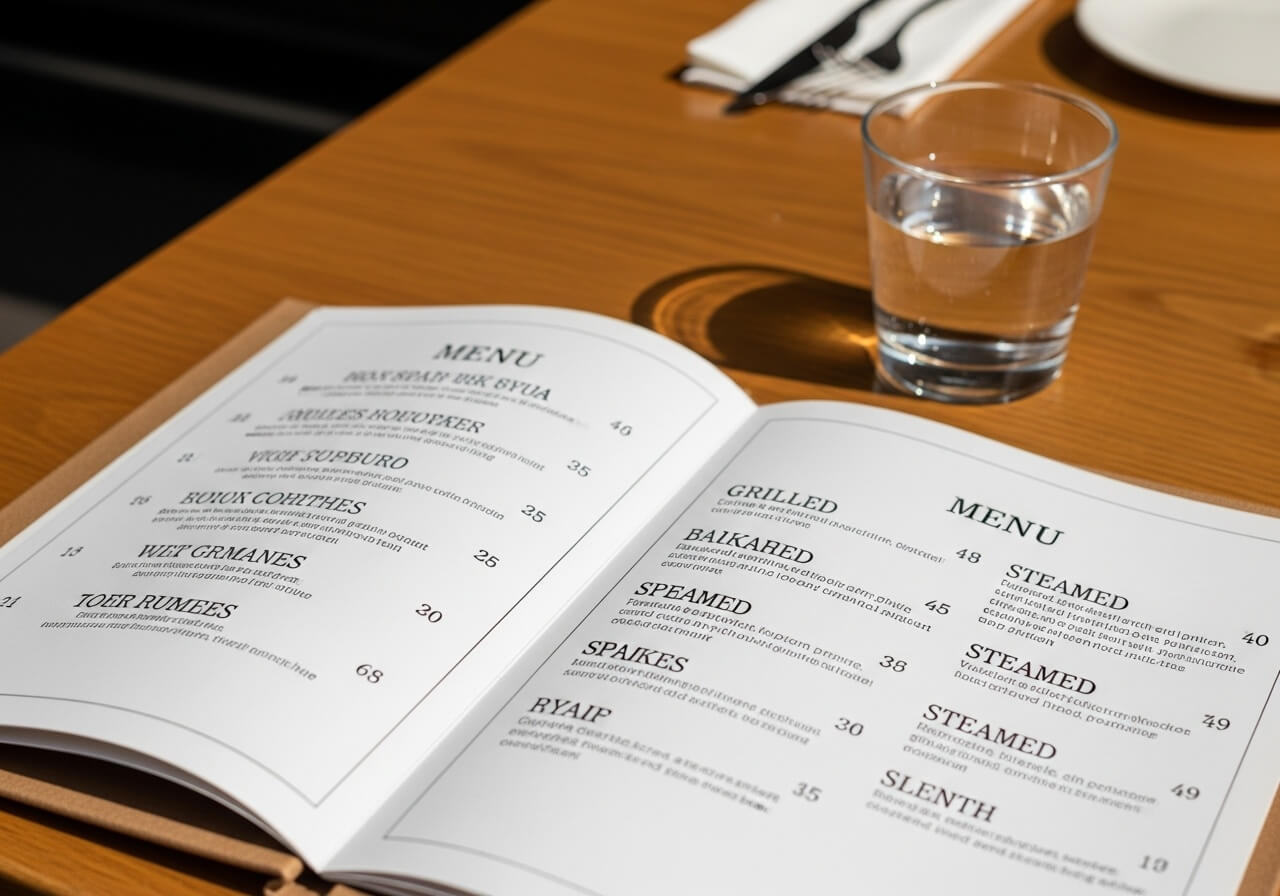
Reading a menu for healthy restaurant choices starts with identifying the cooking method—your fastest signal about calorie density.
Scan for grilled, baked, and steamed cooking methods
Dishes prepared by grilling, baking, steaming, broiling, or roasting avoid added fats from frying or heavy sauces. Look for these words in menu descriptions. When you see “pan-fried,” “crispy,” “creamy,” or “rich,” expect extra fat that will increase calories significantly.
Be aware that “grilled” or “baked” doesn’t automatically mean low-calorie. A grilled chicken breast can still be brushed with oil or butter during cooking. But these methods generally start with less added fat than frying or sautéing, giving you a better baseline to work with.
Prioritize dishes with vegetables and lean proteins
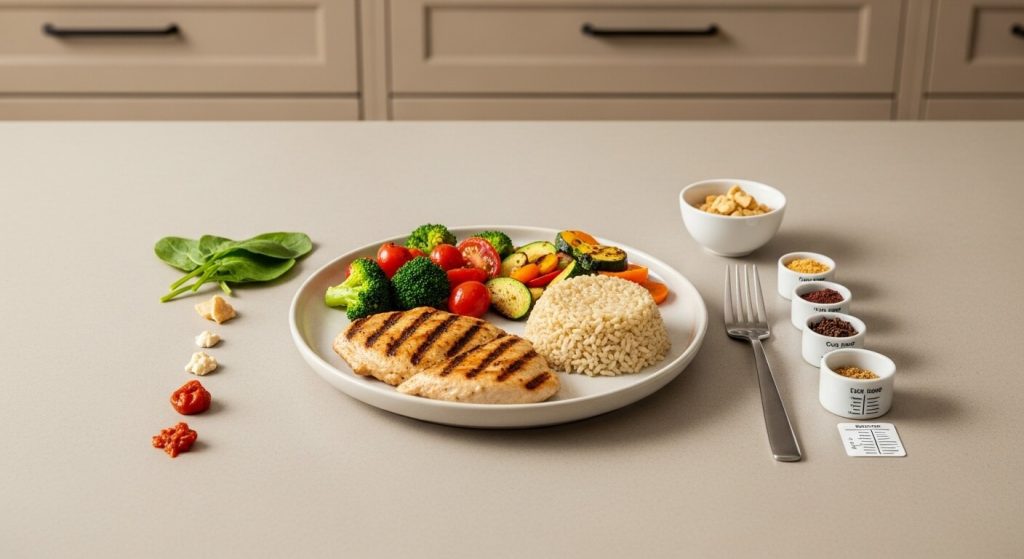
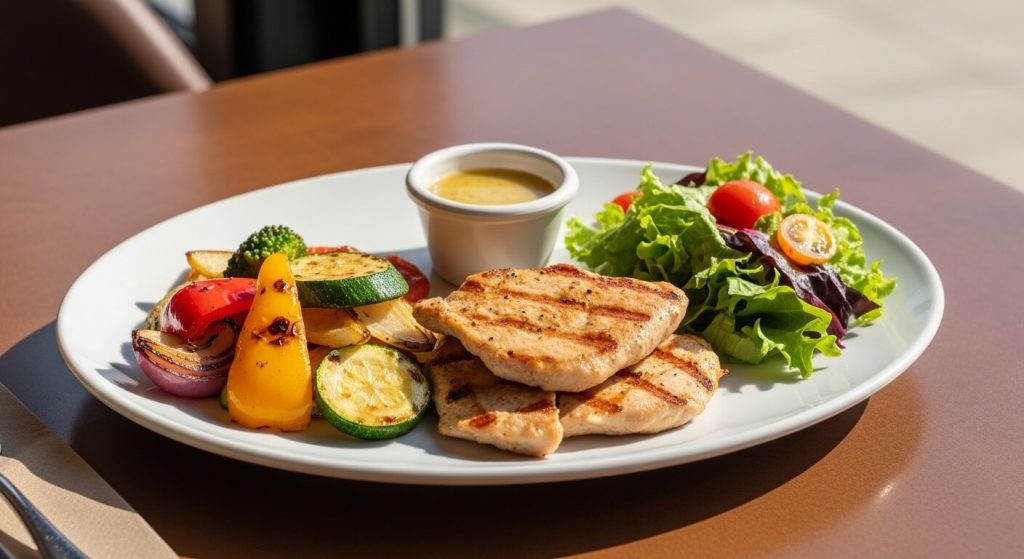
Look for menu items that pair lean protein with vegetables as the main components. Grilled salmon with roasted broccoli, chicken breast with asparagus, or turkey with steamed green beans are practical examples. These combinations naturally reduce energy density because vegetables are filling relative to their calorie content.
If a menu doesn’t list vegetables as part of the dish, ask what vegetable sides are available. Most restaurants have them. You’re making an active choice to add volume and nutrition to your plate rather than accepting whatever comes standard.
Smart ordering swaps that preserve flavor
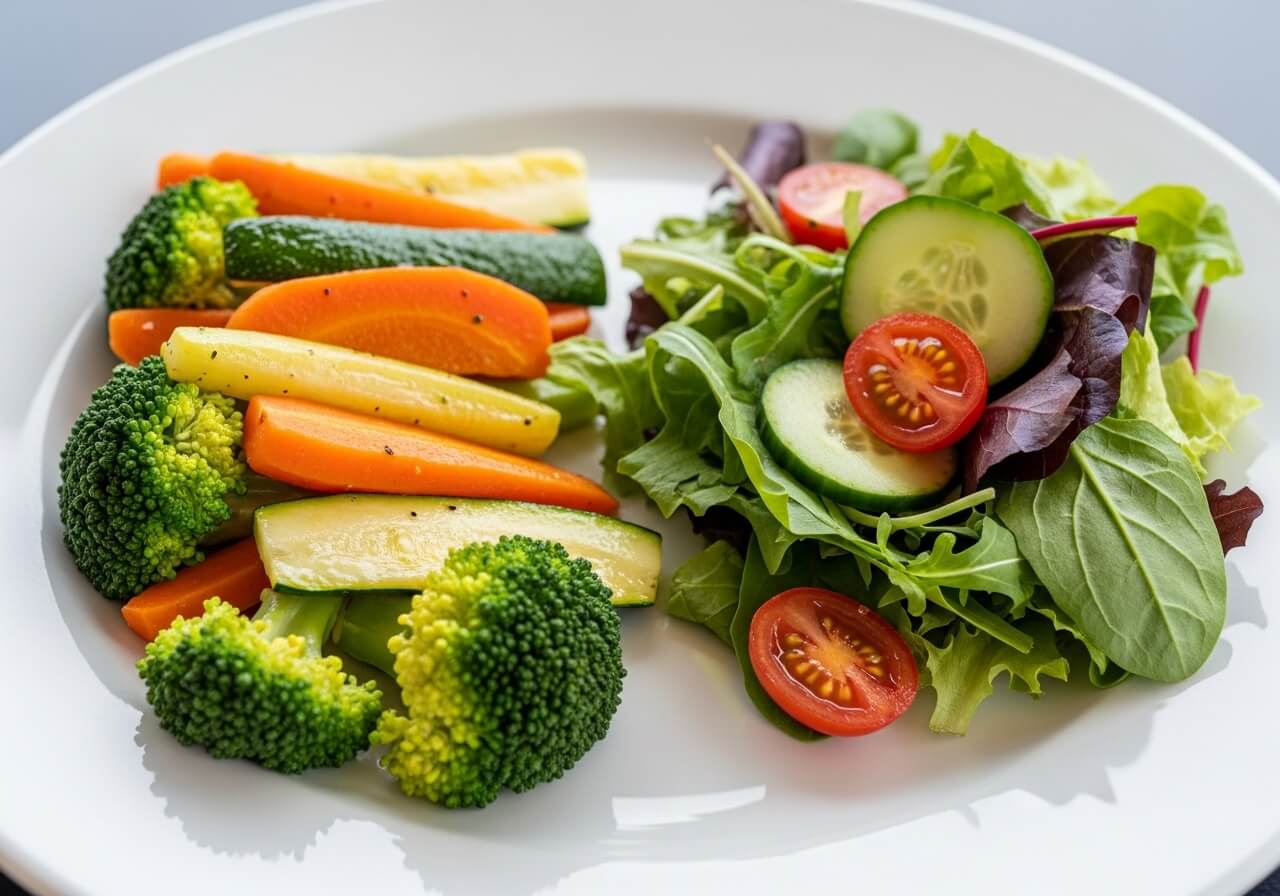
The most effective swaps aren’t about eating bland food—they’re about redirecting calories toward things that satisfy you more.
Replace fries with extra vegetables or side salad
When fries or chips come automatically with your entrée, swapping them for vegetables or salad cuts 200-300 calories while adding fiber and volume that keeps you fuller. You still get a complete meal; the calories just come from sources that support your goals better.
If a dish comes with cheese or bacon as standard but you’re managing calories, ask the kitchen to leave it off or reduce the amount. Most kitchens accommodate this easily because it actually simplifies their prep.
Ask for dressings and sauces on the side
Requesting dressings, sauces, and condiments on the side lets you control how much added fat, sodium, and sugar you consume. This isn’t about eliminating flavor—it’s about using the sauce strategically rather than having it pre-mixed throughout the dish. You often end up using less than what the kitchen would add while still tasting everything.
Pay attention to how proteins are described. “Crispy” chicken or fish usually means it’s been fried or coated in batter. “Pan-seared” often means cooked in butter. If you want protein cooked simply, ask for it grilled without added oil, or request that oil be used sparingly. Be specific—”cooked without butter” is clearer than “keep it light.”
FAQ
What makes a restaurant dish secretly high in calories?
The most common hidden-calorie culprits are portions that exceed what you’d normally eat at home, added oils and butters used during cooking, and cream-based sauces or dressings. Nuts, croutons, and cheese added to salads also accumulate quickly. Dishes served with bread, fries, or creamy sides add another 200-400 calories on top of the entrée itself. The key is that these additions taste subtle—you don’t notice the extra oil or butter the way you would if you added it at home.
How do you order healthy without annoying the kitchen staff?
Restaurant kitchens handle customization requests constantly, so reasonable modifications are normal. Be clear and specific—ask for “steamed vegetables instead of fries” or “dressing on the side” rather than “make it healthy.” Most standard swaps like replacing a side, removing cheese, or cooking something without butter take no extra time. The kitchen becomes frustrated when requests feel unclear or when someone essentially orders a completely different dish than what’s on the menu. If you’re unsure whether a request is reasonable, ask politely when you order.
Can you eat out regularly and still hit your protein goals?
Yes, if you choose proteins strategically. Most restaurants offer grilled chicken, fish, turkey, lean beef, or seafood as main proteins. These typically deliver 25-35 grams of protein per serving, which aligns with most fitness goals. The challenge isn’t finding protein—it’s that restaurant portions often exceed what you’d normally eat, so you may consume more calories than intended even while hitting protein targets. If you eat out multiple times per week, focus on lean protein choices and box half your meal before you start eating, or share an entrée.
Conclusion
Start by identifying cooking methods and making one or two simple swaps—like dressing on the side or vegetables instead of fries. These habits work because they’re practical to execute across different restaurant types and cuisines. With practice, navigating restaurant menus for your fitness goals becomes natural, letting you enjoy social meals without abandoning your progress.
This content is for educational purposes only and is not medical advice. Always consult a qualified healthcare professional for personalised guidance.