For building strength there are exactly two nutrition levers with solid numbers behind them: enough protein spread across the day, and creatine. Everything else in the supplement aisle is either weakly evidenced, narrowly evidenced, or evidenced for someone who is not you. Here is each one with its dose and its limits.
The short version
- Protein: 1.2–2.0 g/kg/day per NIH ODS; a physique-athlete review goes to 1.8–2.7 g/kg.
- Per serving: 20 g beats 5 or 10 g, and the response plateaus around 40 g.
- Timing showed no significant effect on hypertrophy once daily total was controlled for.
- Creatine: 20 g/day for 5–7 days, then 3–5 g/day — or 3–6 g/day with no loading. Safe, including over several years.
- Protein powders are no more effective than other high-quality protein. They are more convenient.
Protein: the number and the spread
ODS puts athlete requirements at 1.2 to 2.0 g/kg body weight per day, noting no safety concerns reported at daily recommended intakes for athletes of up to about 2.0 g/kg body weight. A review of physique-athlete nutrition goes higher, recommending 1.8-2.7 g/kg/day, or up to 3.5 g/kg/day for those specifically attempting to mitigate hunger while dieting.
Note what the higher figure is for: it comes from a competitive-physique context, and the top of it is justified by appetite control during a cut, not by extra muscle. For a 80 kg lifter, ODS’s range is 96–160 g a day.
Per serving, the evidence is unusually specific: a 20 g dose of egg protein stimulated MPS to a greater degree than smaller doses of 5 g or 10 g, with a plateau at a larger dose of 40 g. And spreading beats stacking: the even spread of protein servings over the course of the day is theorized to maximize the 24 hour MPS area under the curve.
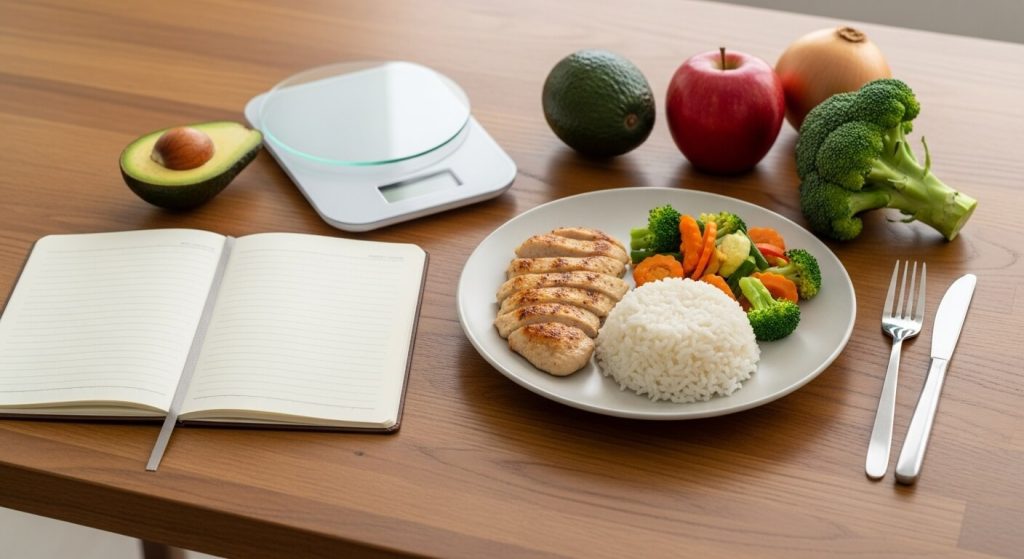
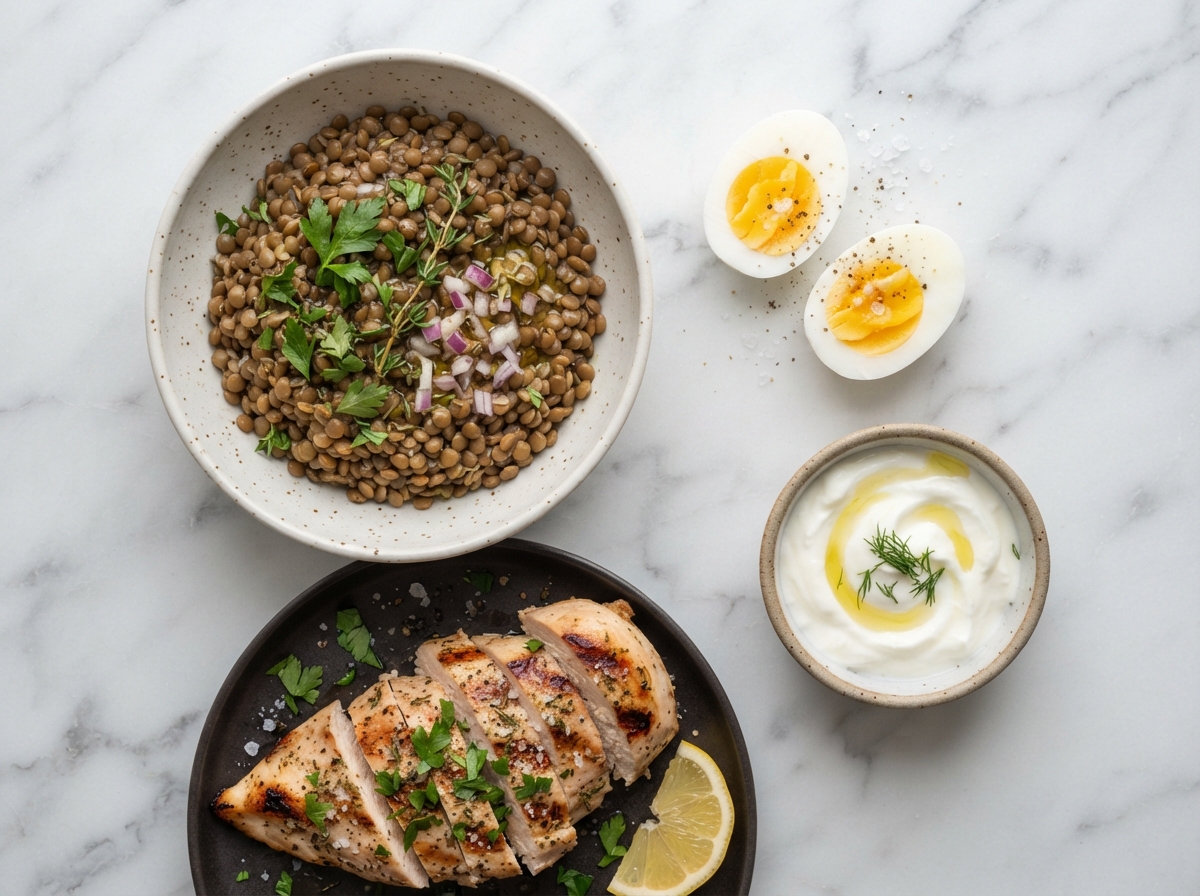
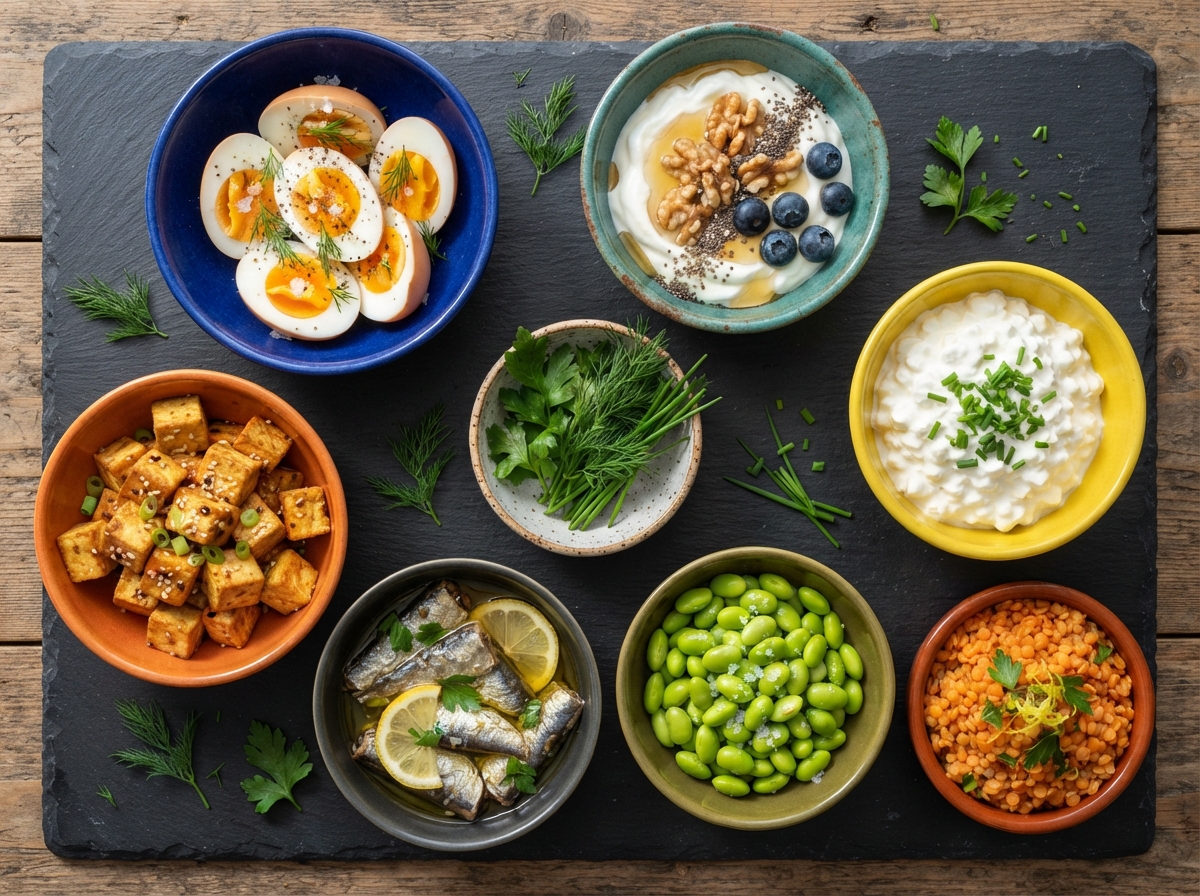
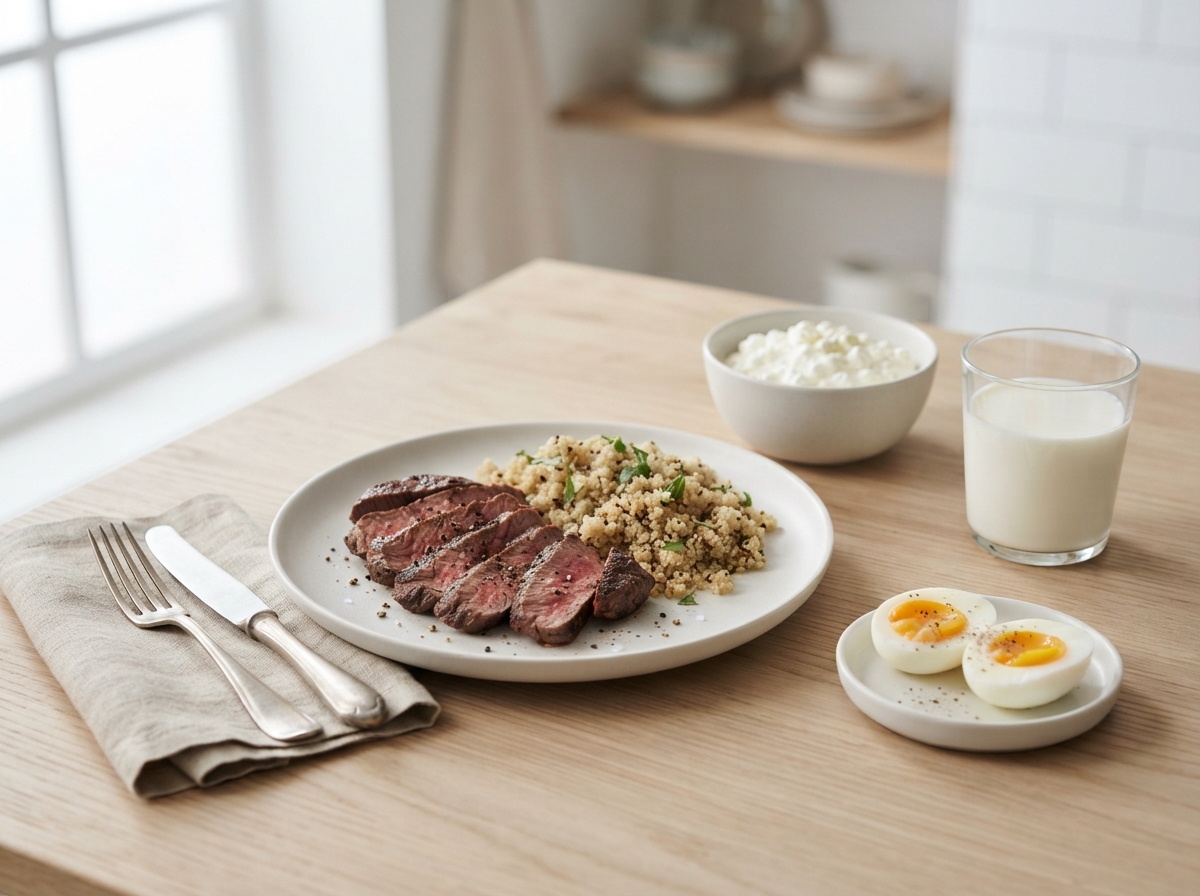
Where to get it, with values on our cards: chicken breast, Greek yogurt, eggs, tuna, lentils, cottage cheese. A ranked list is in foods for muscle growth.
The window that is not there
The finding is direct: no significant effect on hypertrophy when controlling for total daily protein intake in longitudinal studies, regardless of timing.
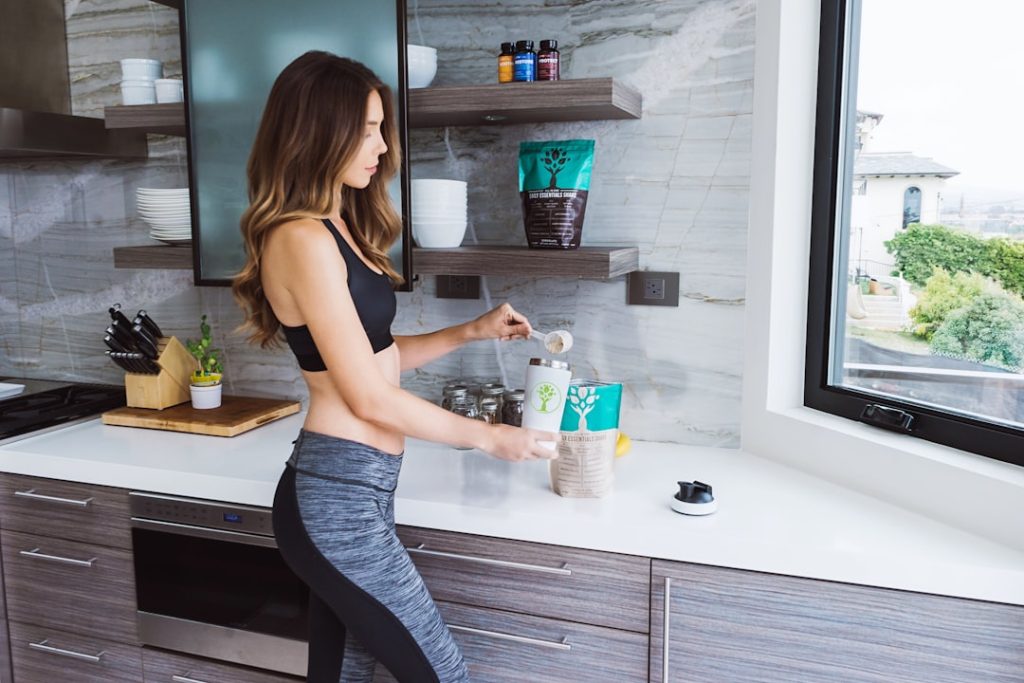
That is worth what it costs to internalise. The rush to a shaker inside thirty minutes has been selling supplements for two decades. What predicted growth in the studies was the daily total, not the clock.
The same review is equally unsentimental about the powder: protein powders are not inherently more efficacious than any other high-quality protein source and are generally viewed as a convenient means. MedlinePlus goes further and advises against the amino-acid aisle entirely: amino acid supplements and eating a lot of protein are not recommended, since athletes, even body builders, need only a little bit of extra protein to support muscle growth.
Creatine: the one that earns its place
ODS describes the standard protocol as a loading phase for 5–7 days, when users consume 20 g/day creatine monohydrate in four portions of 5 g, followed by a maintenance phase of 3–5 g/day. Loading is optional: an alternative is single doses of about 3–6 g/day (0.03–0.1 g/kg body weight) for 3 to 4 weeks, without a loading phase.
On effect: it often significantly increases strength (e.g., for bench presses) and power (e.g., for cycling). On safety: creatine is considered safe for short-term use by healthy adults, and ODS adds that evidence shows that use of the product for several years is safe.
It is also specific: ODS calls it of little value for endurance sports, such as distance running or swimming. Right tool, narrow job.
The next tier, with their caveats
Beta-alanine. Studied at 4.8 g/day for 5–6 weeks. Expect the side effect: ODS notes that consuming a conventional dose of beta-alanine of at least 800 mg or exceeding 10 mg/kg body mass can provoke moderate to severe paresthesia — the tingling is the dose, not a defect.
HMB. ODS calls it safe at daily intakes of 3 g for 3 to 8 weeks and says HMB helps speed up recovery from exercise of sufficient amount and intensity to induce skeletal muscle damage. But an evidence table from the sports-nutrition position stand puts the limit plainly: benefits appeared primarily in untrained subjects performing novel exercises, while trained athletes in established programs showed minimal benefits. If you already train, this one is probably not for you.
What the supplement aisle does not tell you
ODS documents a concrete adulteration case: of six commercial deer-antler-velvet supplements tested, five of them contained no deer IGF-1, and four were adulterated with human IGF-1. Five out of six did not contain the advertised ingredient; four contained a hormone instead.
And the standard sellers are meant to meet: FTC requires that claims about the health benefits or safety of foods, dietary supplements, drugs, and other health-related products require substantiation in the form of competent and reliable scientific evidence, and states that anecdotal evidence about the individual experiences of consumers is never sufficient to substantiate claims. Every testimonial on a supplement page is, by FTC’s own standard, not evidence.
What we are not claiming
- A 30-minute anabolic window. The evidence we found points the other way.
- That BCAAs build muscle. No source on our approved list addresses it, so we say nothing either way.
- That any supplement burns fat. ODS describes these in terms of strength, power, endurance and recovery only.
- Protein figures above 2.0 g/kg as generally recommended. The higher range comes from a physique-competition review, and we cite it as such.
- That creatine causes kidney damage or requires cycling off. ODS reports safety over several years; we found no source supporting the warnings, and none supporting a required break either.
FAQ
How much protein to build muscle? 1.2–2.0 g per kg per day per NIH ODS. Physique-competition guidance goes higher, to 1.8–2.7 g/kg.
How much protein per meal? Around 20 g does most of the work; the response plateaus near 40 g. Spread servings across the day.
Do I need protein straight after lifting? No. Timing showed no significant effect once daily total was controlled for.
How do I take creatine? Either 20 g/day split into four doses for 5–7 days then 3–5 g/day, or simply 3–6 g/day from the start.
Is creatine safe? ODS considers it safe for short-term use in healthy adults and says several years of use is safe.
What to do with this
Set your daily protein number from body weight, divide it into three or four servings of roughly 20–40 g, and stop thinking about timing. If you want one supplement, make it creatine — it is the only one here with both a clear effect on strength and a multi-year safety record. Spend nothing on the rest until those two are consistent for a few months.
Related: protein per meal, the four numbers that matter.
Educational content, not medical advice. If you have kidney disease or take prescription medication, clear any supplement with your clinician first.
This content is for educational purposes only and is not medical advice. Always consult a qualified healthcare professional for personalised guidance.