“Cycle syncing” — eating differently in each phase of the menstrual cycle — is everywhere online. It is not on any US federal health page we could find. We searched the Office on Women’s Health, NIH’s Office of Dietary Supplements, MedlinePlus and CDC: the concept does not appear, in either direction. What is documented is narrower and more useful: specific advice for premenstrual symptoms, and a serious, quantified iron issue.
The short version
- No federal source describes or evaluates phase-based eating or “cycle syncing”.
- The one phase-specific dietary advice that exists: reducing caffeine, salt and sugar in the two weeks before a period may lessen PMS symptoms.
- Calcium has the strongest wording of the PMS nutrients; magnesium research is described as mixed.
- Iron matters more than any of it: women 19–50 need 18 mg a day against 8 mg for men.
- Heavy bleeding accounts for roughly a third to two-fifths of iron-deficiency anemia in women of reproductive age.
What we looked for and did not find
The Office on Women’s Health is the natural federal home for this topic, and its page on the menstrual cycle and PMS contains no mention of cycle syncing, phase-based nutrient timing, or adjusting macronutrients by follicular and luteal phase. Nor does anything we could find at ODS, MedlinePlus or CDC.
As with other absences we have reported on this site: that is not proof the idea is wrong. It means the agencies that publish detailed nutrient guidance — down to milligrams of calcium per dose and percentages of zinc absorbed — have not found this worth documenting. Read it as a claim without institutional support rather than a claim that has been tested and rejected.
The phase-specific advice that does exist
One piece, and it is about symptoms rather than performance. The Office on Women’s Health states that avoiding foods and drinks with caffeine, salt, and sugar in the two weeks before your period may lessen many PMS symptoms.
Note what that is: a timed reduction of three things, aimed at symptom relief. It is the closest federal guidance comes to eating differently across the cycle, and it is considerably less elaborate than the charts circulating online.
Nutrients for premenstrual symptoms, ranked by how confidently they are stated
The wording differs between them, and the differences are the information.
Calcium gets the firmest statement: studies show that calcium can help reduce some PMS symptoms, such as fatigue, cravings, and depression. “Studies show” and “can help” — the strongest phrasing on the page.
Vitamin B6 is softer: it may help with PMS symptoms, including moodiness, irritability, forgetfulness, bloating, and anxiety.
Polyunsaturated fatty acids: taking a supplement with 1 to 2 grams of polyunsaturated fatty acids may help reduce cramps and other PMS symptoms — with an actual dose, which is unusual.
Magnesium is the weakest: it may help relieve some PMS symptoms, including migraines, and the same page describes the research as having shown mixed results.
Calcium and magnesium are both available from food — see the documented shortfalls for where dairy sits in the pattern.
Iron: the part that actually matters
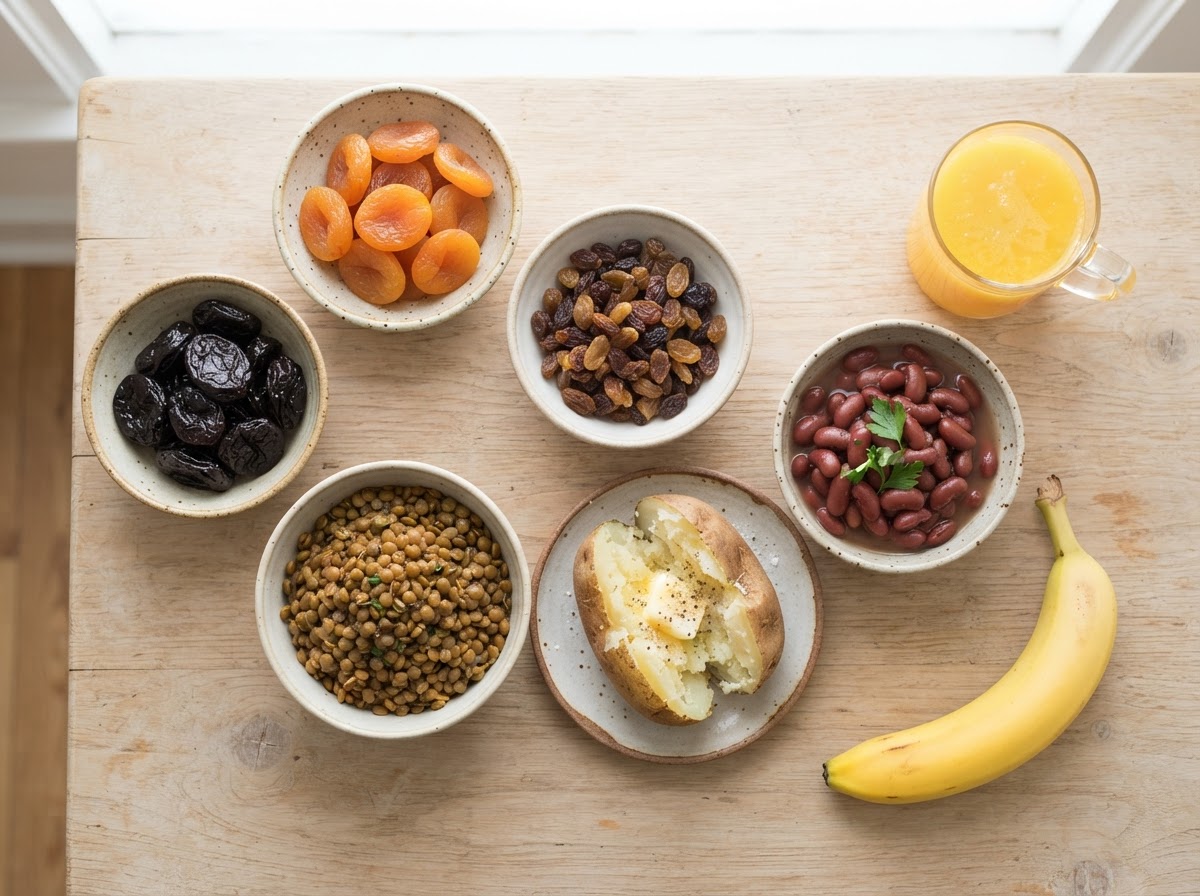
This is where the cycle genuinely changes nutritional requirements, and it is quantified rather than theorised. ODS sets the RDA at 18 mg/day for women 19–50 against 8 mg/day for men — more than double, entirely because of menstrual losses.
For heavier periods the risk is specific: women of reproductive age who have menorrhagia, or abnormally heavy bleeding during menstruation, have an increased risk of iron deficiency, and heavy bleeding may account for about 33% to 41% of cases of IDA in women of reproductive age. The Office on Women’s Health adds the population figure: up to 5% of women of childbearing age develop iron-deficiency anemia because of heavy bleeding during their periods.
Fatigue before a period gets attributed to hormones as a matter of course. In a meaningful minority of women it is iron, and that distinction is a blood test rather than a guess.
Two practical absorption points
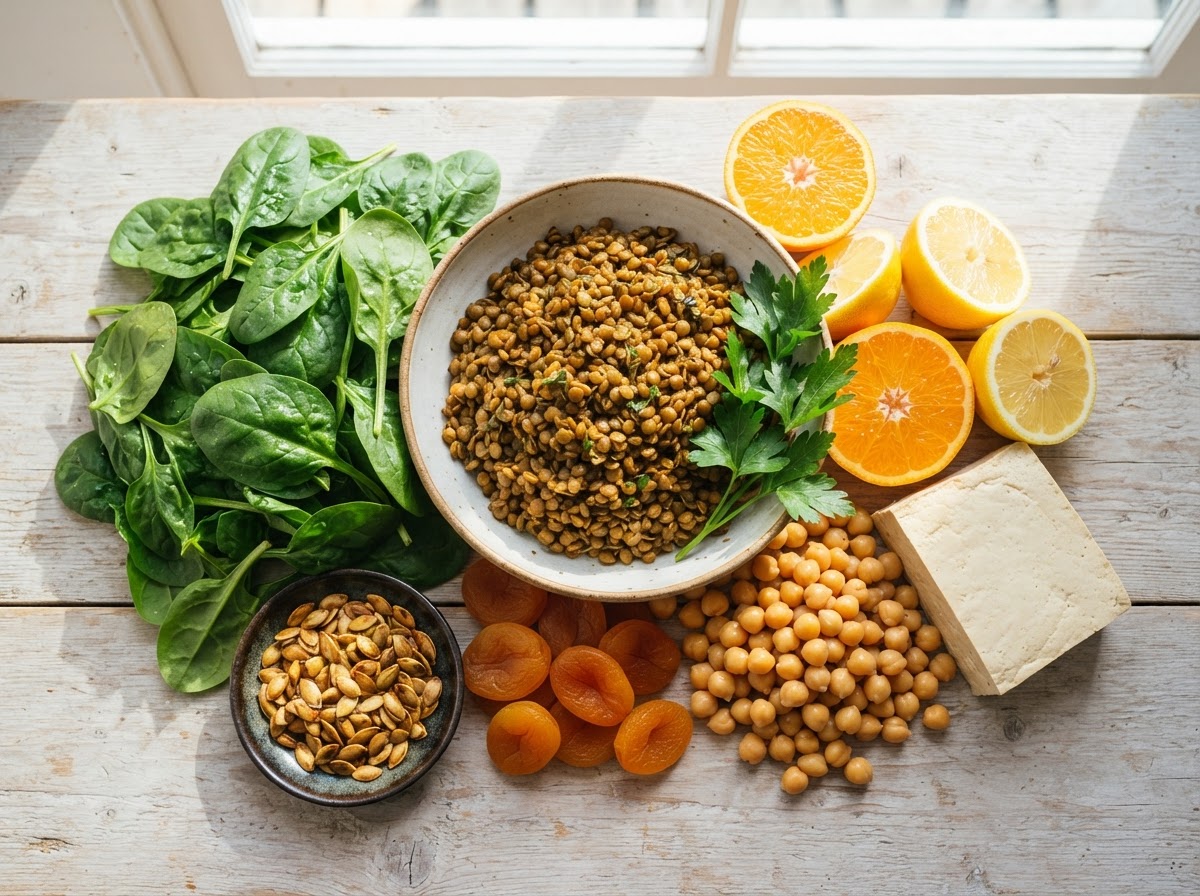
Both from the Office on Women’s Health, both easy to act on. Vitamin C helps your body absorb iron. Good sources of vitamin C include oranges, broccoli, and tomatoes. And on the other side: avoid drinking coffee or tea with meals, because they hinder absorption.
Notably, this is the one place a federal source does give explicit meal-composition advice — and it is about a specific mineral, not about food categories. More in iron sources and absorption.
What we are not claiming
- That cycle syncing does not work. We are reporting that no federal source discusses it, not that it has been tested and failed.
- Macronutrient targets by cycle phase. Nothing federal specifies them.
- That training should be periodised to the cycle. Outside anything we could source.
- That any food relieves cramps. The one dose we have is for a polyunsaturated fatty acid supplement, not a food.
- Metabolic rate changes across the cycle. Frequently claimed; not verifiable from our sources.
FAQ
Should I eat differently in each cycle phase? No federal source describes doing so. The only timed advice found concerns reducing caffeine, salt and sugar in the two weeks before a period.
How much iron do menstruating women need? 18 mg a day for ages 19–50, versus 8 mg for men.
Can heavy periods cause anemia? Yes — heavy bleeding may account for 33% to 41% of iron-deficiency anemia cases in reproductive-age women.
What helps PMS symptoms? Calcium has the firmest support; B6 and polyunsaturated fatty acids are described more tentatively; magnesium research is mixed.
Does caffeine make PMS worse? The Office on Women’s Health suggests avoiding caffeine, salt and sugar in the two weeks before a period may lessen symptoms.
What to do with this
Ignore the phase charts and do the two things with evidence: if your periods are heavy or you are persistently tired, get iron checked rather than assuming it is hormonal; and if PMS symptoms are the problem, the timed reduction of caffeine, salt and sugar plus attention to calcium is what federal guidance actually offers.
Educational content, not medical advice. Heavy bleeding, severe PMS, or symptoms that disrupt your life are reasons to see a clinician — several of them have treatable causes.
This content is for educational purposes only and is not medical advice. Always consult a qualified healthcare professional for personalised guidance.