Fiber is one of four nutrients US federal guidance singles out as under-consumed, and the shortfall is not marginal: Americans get roughly 58% of the recommended amount. This page covers what fiber does according to sources that will show you their working — and, just as usefully, which popular fiber claims no federal agency will back.
The short version
- The Daily Value on the Nutrition Facts label is 28 grams a day.
- Actual US intake averages about 8.1 grams per 1,000 calories against a recommended 14 — 58% of target.
- Two kinds of fiber, two different jobs: soluble gels and slows things down, insoluble adds bulk and speeds them up.
- Fiber has real, FDA-authorised health claims for cholesterol and heart disease. It has no authorised claim for weight loss, immunity or detox.
- Increase it gradually and drink more fluid, or you will feel it.
How much, and how far off most people are
FDA sets the label Daily Value at 28 g per day and states plainly that most Americans do not get the recommended amount of dietary fiber. On the label itself, FDA groups fiber with the nutrients Americans generally do not get the recommended amount of — the ones you are meant to get more of, not less. Our fiber intake calculator sets that target for your own age and sex and tracks what you have eaten against it.
The size of the gap comes from USDA’s Economic Research Service: the American diet averaged 8.1 grams of fiber per 1,000 calories in 2017–18, or 58 percent of the recommended 14 grams per 1,000 calories.
Different agencies express the target differently, which is worth knowing before you chase a single number. MedlinePlus gives adults 21 to 38 grams of fiber each day and notes the American average is about 16 grams daily. NIDDK, writing about constipation, says depending on your age and sex, adults should get 22 to 34 grams of fiber a day. The label’s 28 g sits in the middle of all of them.
Soluble and insoluble: two different jobs
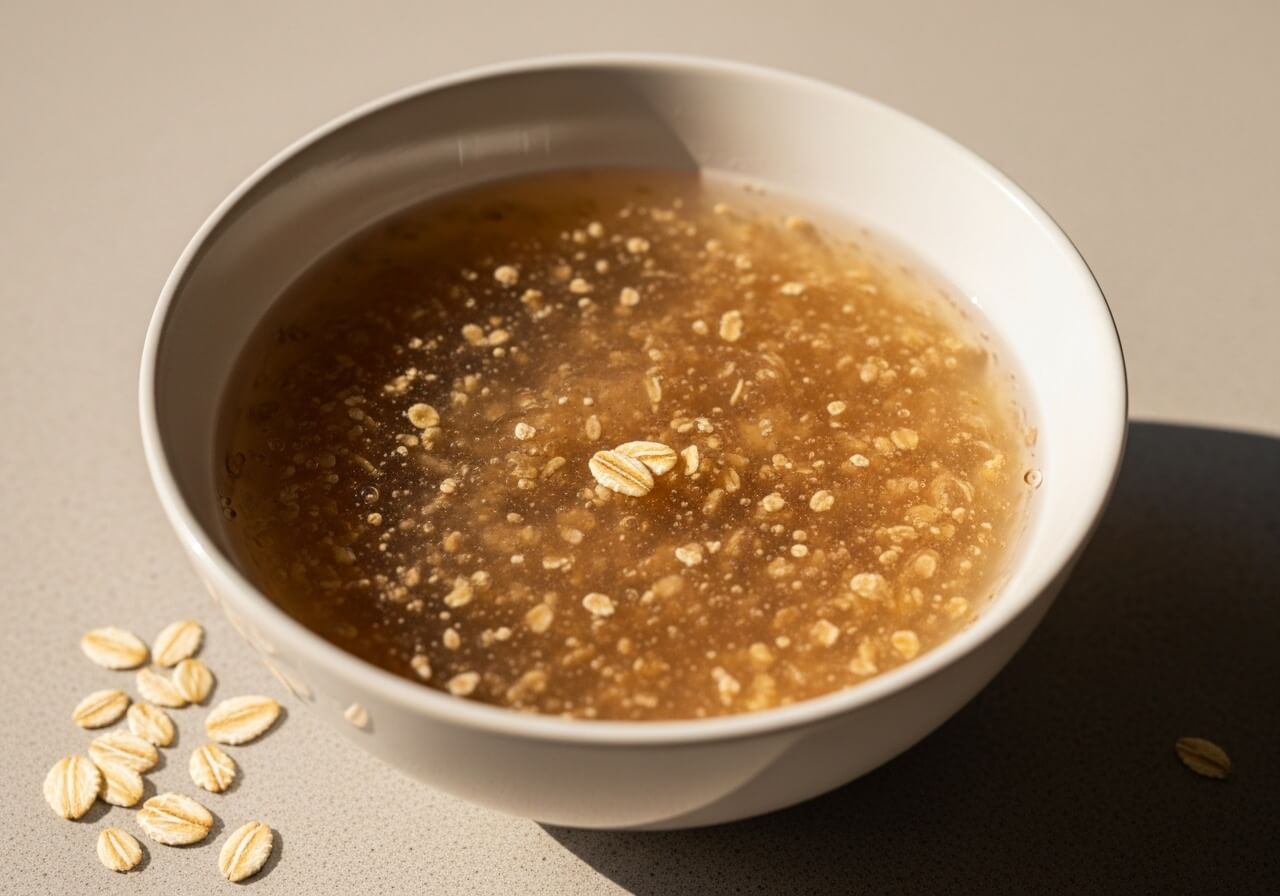
MedlinePlus draws the line simply. Soluble fiber attracts water and turns to gel during digestion, and it lowers cholesterol, which may help prevent heart disease. Insoluble fiber does the opposite job: it appears to speed the passage of foods through the stomach and intestines and adds bulk to the stool.
A clinical reference chapter on the NIH’s NCBI Bookshelf adds the mechanism: soluble fibers absorb water to form a gel that slows gastric emptying, delays glucose absorption, and blunts postmeal blood sugar spikes, while insoluble fibers reduce intestinal transit time and increase fecal bulk to promote digestive regularity.
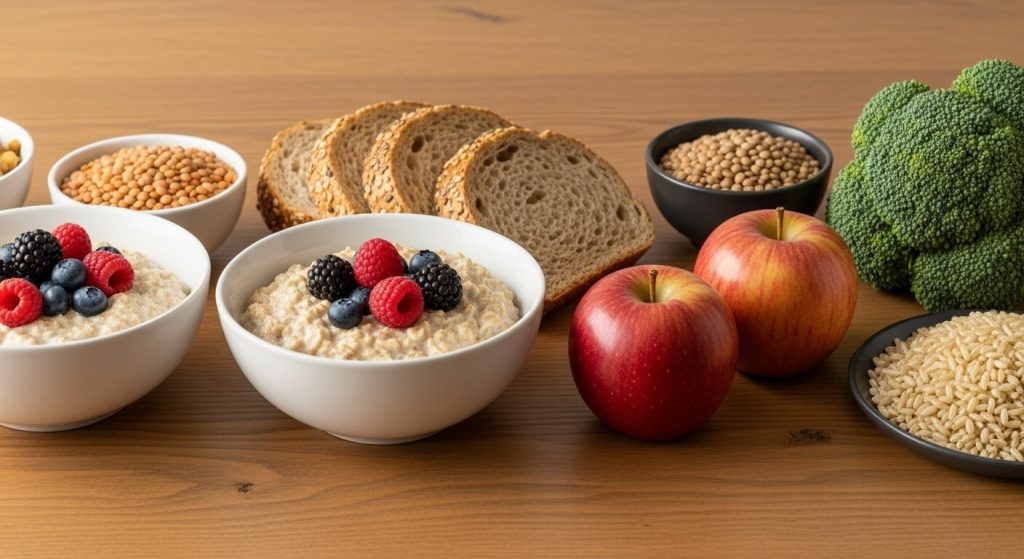
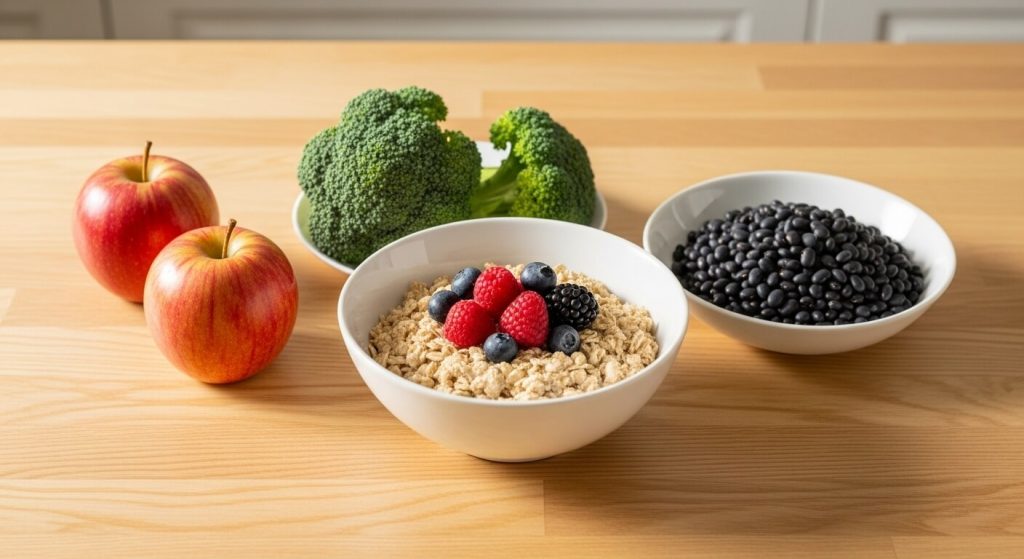
Practical consequence: if your problem is cholesterol, you want oats, beans and fruit. If your problem is regularity, you want whole grains and vegetables. Most people need both, which is why the advice ends up being “eat plants” rather than “buy a supplement”. We break the two types down further in soluble vs insoluble fiber.
What fiber is officially allowed to claim
This is where fiber differs from most things marketed as healthy: it has claims that cleared FDA’s highest evidentiary bar. FDA’s list of authorised health claims meeting the significant scientific agreement standard includes fiber-containing grain products, fruits, and vegetables and cancer (21 CFR 101.76); fruits, vegetables and grain products that contain fiber, particularly soluble fiber, and risk of coronary heart disease (21 CFR 101.77); and soluble fiber from certain foods and risk of coronary heart disease (21 CFR 101.81).
“Certain foods” in that third claim is specific. FDA’s labeling guide lists oat bran, psyllium and barley beta-glucan among the qualifying soluble fiber sources — not fiber in general.
NHLBI explains the cholesterol mechanism and gives the practical instruction in one place: soluble fiber blocks cholesterol and fats from being absorbed through intestinal walls into the bloodstream, and its program tells people to increase soluble fiber like in fruits, beans, and oats.
What counts as fiber on a label
Not everything on an ingredients list that sounds fibrous gets counted. FDA’s definition covers non-digestible carbohydrates and lignin that are intrinsic and intact in plants, plus isolated or synthetic ones FDA has specifically determined to have beneficial physiological effects.
FDA’s original approved list is beta-glucan soluble fiber, psyllium husk, cellulose, guar gum, pectin, locust bean gum and hydroxypropylmethylcellulose. FDA later added eight more, including inulin, polydextrose, resistant maltodextrin and high amylose starch (resistant starch 2).
The effects FDA accepted as qualifying are worth quoting, because they are narrower than the marketing: lowering blood glucose and blood cholesterol, reducing calorie intake, and increasing the frequency of bowel movements. That is the official list of what added fiber is recognized to do.
Fiber and weight: what the wording actually is
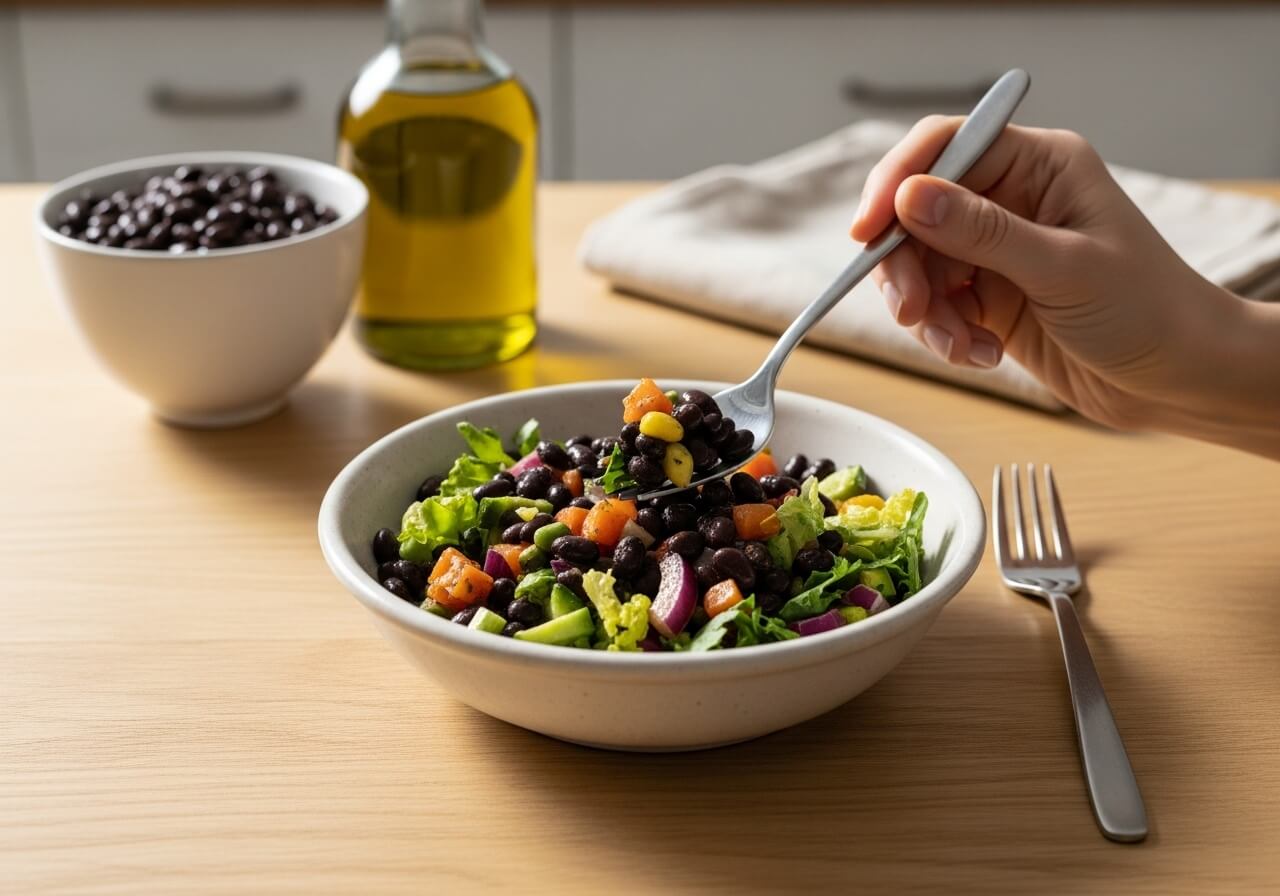
Read this section as much for the hedging as for the content. MedlinePlus says fiber makes you feel full faster, it can help with weight control — weight control, not weight loss, and “can help”, not “causes”. The NCBI Bookshelf chapter describes the mechanism at review level: soluble fiber delays gastric emptying and increases stomach viscosity, which promotes satiety, reduces total caloric intake, and aids in weight regulation.
Against that, NCCIH reviewed fiber-based weight-loss supplements and reported that of the products it examined, including chitosan, none have been shown to be effective for weight loss, and each of these has side effects.
So: fiber-rich meals plausibly help you eat less because they fill you up. A fiber pill sold for weight loss is a different product with a different, worse evidence base.
How to add it without regretting it
The failure mode is going from 15 g to 35 g on a Monday. MedlinePlus warns that increasing dietary fiber too quickly can lead to gas, bloating, and cramps, and advises adding fiber gradually over several weeks while drinking plenty of water. NIDDK gives the same instruction in its constipation guidance: drink plenty of water and other liquids if you eat more fiber or take a fiber supplement.
Where to get it: chia seeds, flaxseed, cannellini beans, chickpeas, lentils, rolled oats, bulgur, almonds. The full ranked table with per-100 g values is in fiber content in foods.
What we are not claiming
- “Fiber causes weight loss.” Not supported. The strongest federal wording is “can help with weight control,” and NCCIH found fiber-based weight-loss supplements were not shown to be effective.
- “Fiber improves your gut microbiome.” No US agency page we could reach states this. A review chapter mentions fermentation and short-chain fatty acids — that is a review, not an agency position, and we are not presenting it as one.
- “Fiber boosts immunity.” No support found anywhere in federal sources.
- “Fiber detoxifies the body.” Same — nothing supports it.
- “Fiber is anti-inflammatory.” Not a claim any agency makes about fiber.
- Exact gram thresholds for “good source of fiber” and “high fiber” labels. Those figures live in the Code of Federal Regulations, which we could not retrieve directly, so we are not quoting numbers we did not read.
- “Supplements are as good as food” (or worse than food). No federal source we found makes that direct comparison, so we do not make it either.
FAQ
How much fiber do I need per day? The Nutrition Facts label uses 28 g. MedlinePlus gives adults 21–38 g and NIDDK 22–34 g depending on age and sex.
What is the difference between soluble and insoluble fiber? Soluble fiber gels in water, slows digestion and lowers cholesterol. Insoluble fiber adds bulk and speeds transit.
Does fiber lower cholesterol? Soluble fiber does, and it is one of the few food claims FDA authorised at its highest evidence standard — specifically for sources like oat bran, psyllium and barley beta-glucan.
Why does more fiber make me bloated? Because you added it too fast. Increase gradually over several weeks and raise your fluid intake alongside it.
Should I take a fiber supplement? Federal sources do not rank supplements against food. What is documented is that fiber supplements marketed for weight loss have not been shown to work.
What to do with this
Work out your current intake before changing anything — most people are around 16 g and assume they are near 28. Add one high-fiber food per meal for two weeks, drink more water, then reassess. Every food named here has a Nutrition Facts card with its fiber value and the USDA record it came from.
Educational content, not medical advice. If you have a digestive condition, discuss fiber changes with your clinician before making them.
This content is for educational purposes only and is not medical advice. Always consult a qualified healthcare professional for personalised guidance.