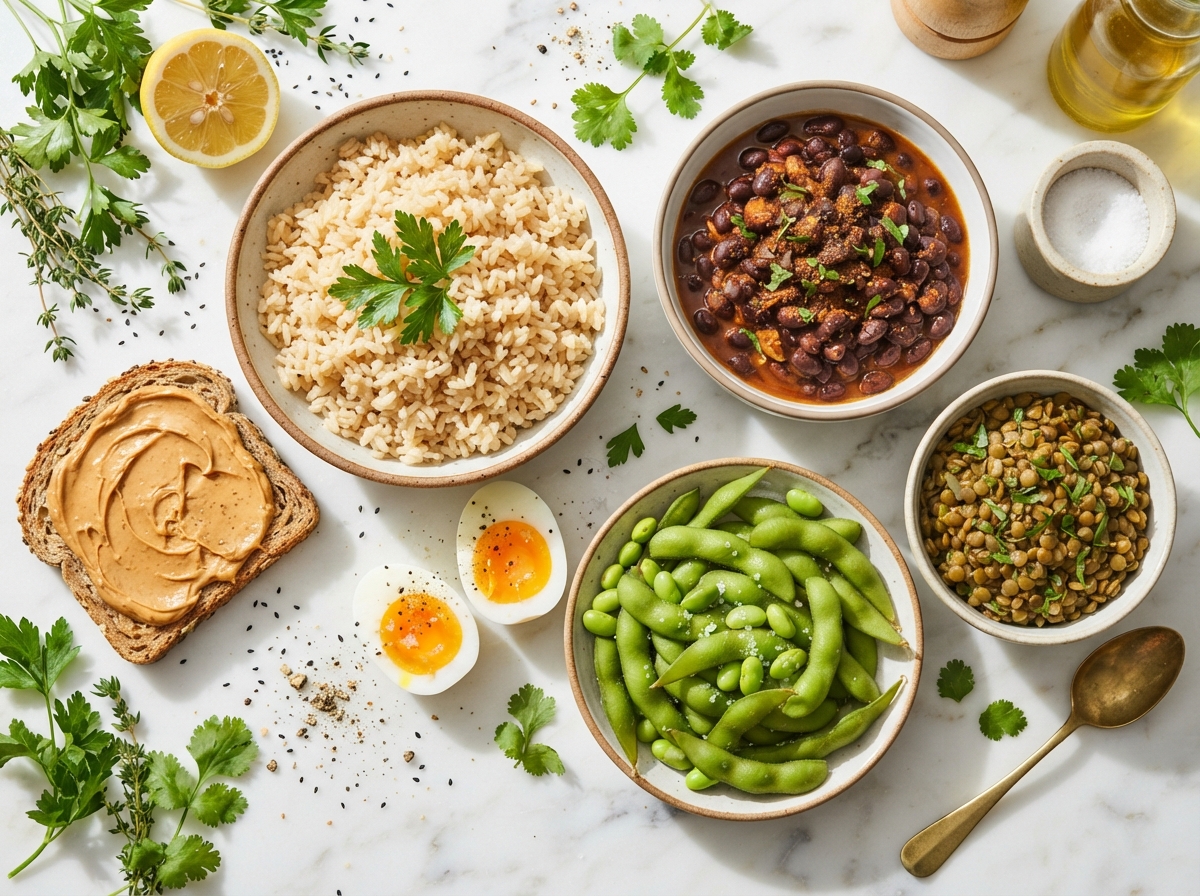

Fat loss has fewer sourced numbers than the internet implies. Federal agencies publish a safe rate, a realistic first goal, and activity amounts — and that is close to the whole list. Everything else you have read about stubborn fat, targeting your abdomen and hormonal fat traps is not something any US health agency has written down. This page separates the two piles.
The short version
- Safe rate: 1 to 2 pounds a week, and slower is associated with keeping it off.
- First goal: 5–10% of starting weight over six months — not a target physique.
- Activity: 150 minutes a week for health, 150–300+ to avoid regaining.
- Energy density does real work: the same volume of food at lower calories per gram means eating less without eating less food.
- No federal source addresses spot reduction or “stubborn fat” at all. We are not going to pretend otherwise.
The numbers that have a source
Rate. CDC states that people who lose weight at a gradual, steady pace — about 1 to 2 pounds a week — are more likely to keep the weight off. Note the claim: it is about maintenance, not about speed being safer in itself.
Goal. NIDDK recommends an initial weight-loss goal of 5% to 10% of your starting weight within 6 months, and elsewhere says losing 5% of your body weight over a period of 6 months may be a good initial goal. For a 90 kg person that is 4.5–9 kg in half a year. Most published “transformations” imply several times that.
Activity. NIDDK’s treatment guidance calls for at least 150 minutes per week of moderate-intensity aerobic physical activity. For keeping weight off it lists 150 to 300 minutes or more of physical activity per week — the requirement roughly doubles after you have lost the weight, which is the opposite of most people’s expectation.
CDC puts the same point bluntly: to lose weight and keep it off, you will need a high amount of physical activity unless you also adjust your diet.
Why the scale is a poor instrument for a fat-loss question
BMI, the number most tools give you, is not a body-fat measurement. NIDDK says so directly: it doesn’t directly measure the amount of fat in your body, and gives the obvious example — a person who is very muscular, like a bodybuilder, may have a high BMI without having a lot of body fat. It also notes that older adults tend to lose bone and muscle, and gain body fat, as they age — the same weight, a different body. Our body fat calculator uses the US Navy tape method for a rough percentage instead.
What we could not find is a federal table of healthy body-fat percentages. NIDDK discusses BMI’s limits without publishing percentage cutoffs to replace them, so anyone quoting you an official body-fat range is not quoting a US agency.
The mechanism that is actually documented: energy density
This is the part of fat loss with real, citable support. The 2025 Dietary Guidelines Advisory Committee’s scientific report defines energy density as the amount of energy per weight (g) of food or drink, and reports that portion size and energy density are independent and additive in their effects on energy intake in adults and older adults. Its practical conclusion: reducing food energy density may promote weight management by allowing individuals to eat satiating quantities of food while consuming less energy.
A National Academies review on the NIH’s NCBI Bookshelf shows the size of the effect in a controlled setting: subjects on the high-energy-density diet consumed nearly twice as many calories as those on the low-energy-density diet, and it states that daily energy intake is lower on low-energy density, high-fiber diets than on high-fat, energy-dense diets.
That is the lever worth pulling, and it is a food-choice lever, not a willpower one. We built a list of high-volume, low-calorie foods around it, with calories per 100 g from our own database.
What the same review says about fiber and soup
The mechanisms are unglamorous and they work. The Bookshelf chapter lists why fiber reduces intake — high-fiber foods take longer to eat, some fibers such as guar gum and pectin slow gastric emptying, fiber may reduce the digestibility of food — and reports that high-fiber foods consumed either at breakfast or lunch significantly reduce intake at the next meal.
Soup gets its own finding: meals that included soup were associated both with lower caloric intakes within the meals and with lower daily caloric intakes. Our page on what fiber does covers the intake side in more detail.
The claims that can never be true
Before you buy anything, read FTC’s list. The agency published seven weight-loss claims its consulted experts say cannot be true for any product, whatever the marketing says. Among them: that a product causes weight loss of two pounds or more a week for a month or more without dieting or exercise; that it causes substantial weight loss no matter what or how much the consumer eats; that it blocks the absorption of fat or calories to enable consumers to lose substantial weight; and that it causes substantial weight loss by wearing a product on the body or rubbing it into the skin.
FTC also sets the evidence bar for anyone advertising weight loss: randomized, controlled human clinical testing. That is worth remembering the next time an article says a food is “clinically proven” to burn fat.
What we are not claiming
- Spot reduction. We searched NIDDK, CDC, MedlinePlus and ODPHP. No federal source addresses targeted fat loss from a specific body area — neither supporting nor debunking it. We will not cite an agency for a position it has not taken.
- “Stubborn fat” and site-specific hormonal fat storage. Same result: nothing. This vocabulary comes from fitness marketing, not from public health agencies.
- That any food burns fat. No federal nutrition source names one, and FTC lists fat-blocking as a claim that can never be true.
- Healthy body-fat percentage ranges. NIDDK explains BMI’s limits but publishes no percentage cutoffs; we are not inventing any.
- “Toning” as a separate mechanism. Not a concept any federal source uses.
- A specific number of calories you should cut. See why the 3,500-calorie rule fails — including the part where CDC teaches it and hosts the paper refuting it.
FAQ
How fast can I safely lose fat? CDC describes 1–2 pounds a week as the pace associated with keeping weight off.
How much should I aim to lose? NIDDK’s starting goal is 5–10% of your current weight over six months, reassessed after that.
Can I lose fat from my stomach specifically? No federal health agency addresses this question. What is documented is overall energy balance; where your body draws from is not something a US agency has published guidance on.
Do I need to exercise more to keep the weight off than to lose it? The published amounts point that way: 150 minutes a week during, 150–300 or more after.
Does eating more protein burn fat? ODS uses hedged wording, saying protein and other dairy components “might modulate appetite-regulating hormones.” That is a hypothesis about appetite, not a fat-burning claim.
What to do with this
Set the goal from NIDDK’s number rather than a photo: 5–10% over six months. Change the energy density of what you eat before you change the amount — that is the mechanism with actual evidence behind it. Then hold the activity level after you reach the goal, because that is where the published amount goes up rather than down.
Next steps on this site: how to build a meal plan, what actually drives your metabolic rate, and a seven-day plan built on federal portion sizes.
Educational content, not medical advice. Talk to a clinician before starting a weight-loss program, especially if you take medication or have a chronic condition.
This content is for educational purposes only and is not medical advice. Always consult a qualified healthcare professional for personalised guidance.