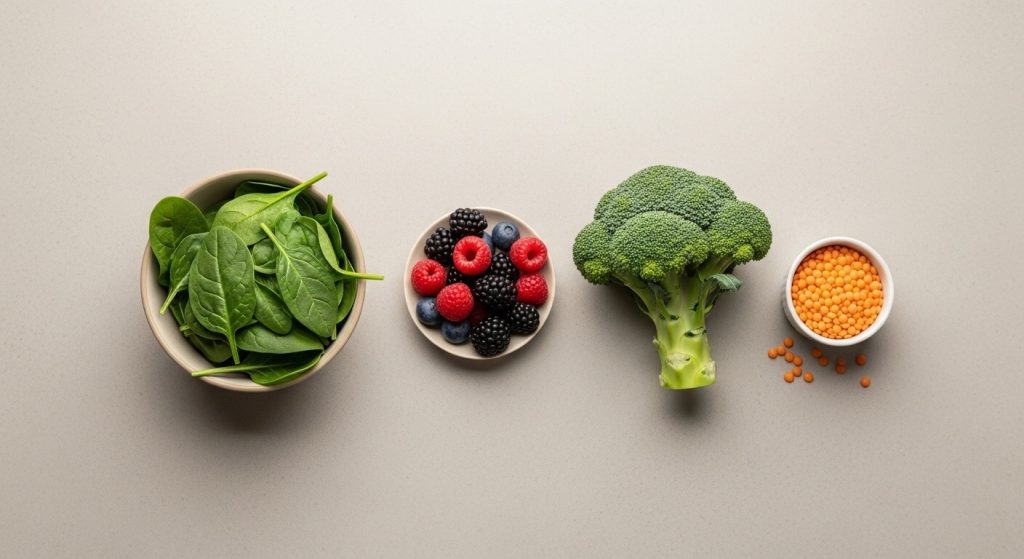
There is no US government weight-loss meal plan. NIDDK publishes principles, MyPlate publishes food-group targets, and neither is framed as a weight-loss menu.
What does exist, and what this week is built on, is NHLBI’s DASH eating plan — a federal publication with a full week of menus, defined serving sizes, and separate guidance for lowering its calories. That is the closest thing to an authoritative plan, and it has the advantage of being tested for something measurable rather than marketed.
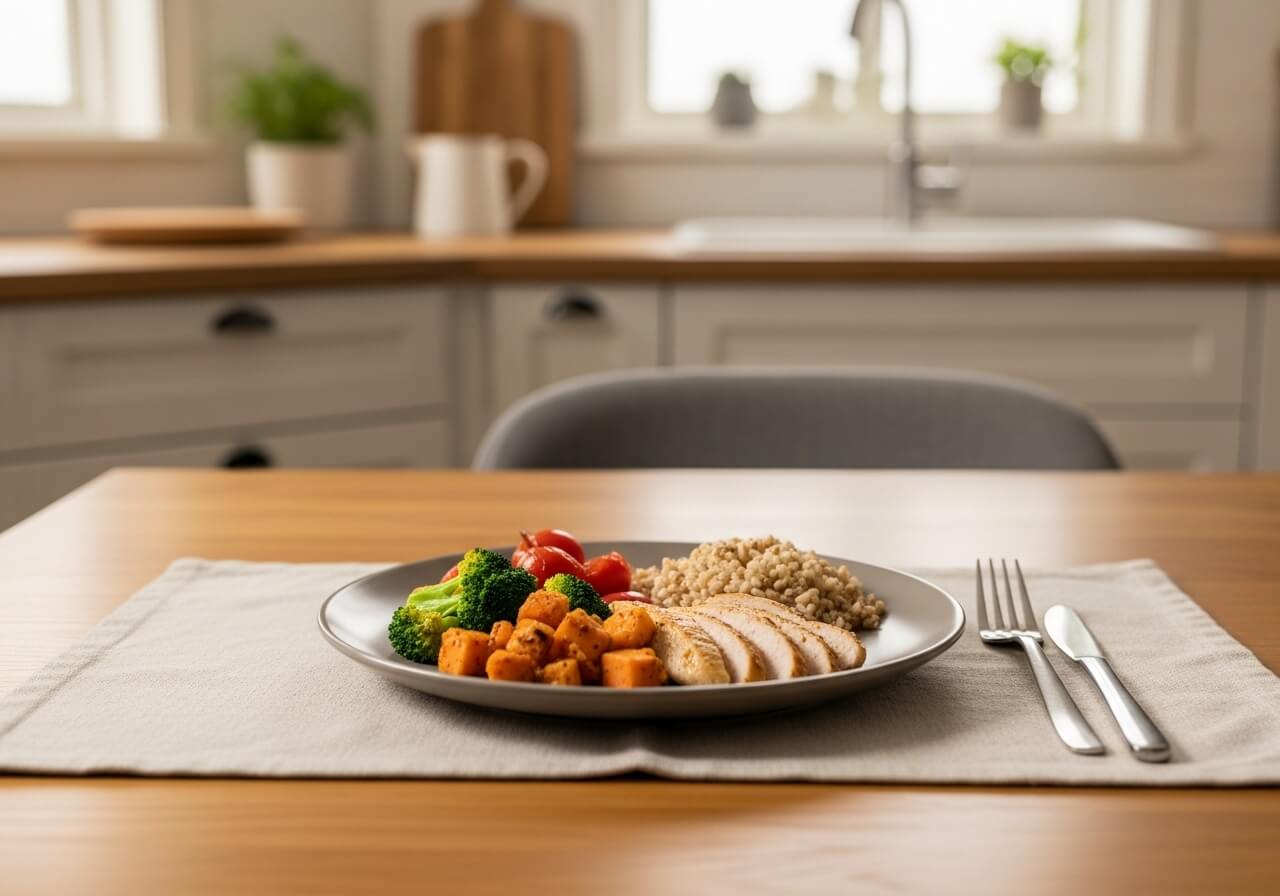
Before the menu: three numbers to set
The rate
CDC: “people who lose weight at a gradual, steady pace—about 1 to 2 pounds a week—are more likely to keep the weight off than people who lose weight quicker.”
The target
NIDDK: “experts recommend an initial weight-loss goal of 5% to 10% of your starting weight within 6 months.” For a 90 kg person that is 4.5–9 kg over half a year — a slower target than most plans advertise, and the one with evidence behind it.
The calorie level
This is individual, and no article can set it for you. NHLBI publishes “what’s on your plate” guidance at defined levels — 1,200 and 1,400–1,600 calories a day — and USDA’s MyPlate Plan generates food-group targets from your age, sex, height, weight and activity. MyPlate’s own advice: “talk with your health care provider about an eating pattern and physical activity program that is right for you.”
One caution on the arithmetic. Whatever number you land on will get less accurate as you lose weight. A paper hosted on CDC’s own server found the standard 3,500-calories-per-pound rule “ignores dynamic physiological adaptations to altered body weight” and overpredicts a year’s weight loss by “about 100%.” Plan to recalculate rather than to hold one number forever — the reasons are in why your diet stops working.
What one serving means
NHLBI’s DASH definitions, which make the plan below usable rather than vague:
| Grains | 1 slice bread; 1 oz dry cereal; ½ cup cooked rice or pasta |
| Vegetables | 1 cup raw leafy; ½ cup cooked; ½ cup juice |
| Fruit | 1 medium fruit; ¼ cup dried; ½ cup fresh, frozen or canned |
| Dairy | 1 cup milk or yogurt; 1.5 oz cheese |
| Meat, poultry, fish | 1 oz cooked; 1 egg |
| Nuts, seeds, legumes | ⅓ cup nuts; 2 Tbsp nut butter; ½ cup cooked legumes |
| Fats and oils | 1 tsp oil; 1 Tbsp mayonnaise; 2 Tbsp salad dressing |
The week
Built around the DASH pattern at a reduced calorie level. Adjust portion sizes to your own target rather than adding or removing meals.
| Day | Breakfast | Lunch | Dinner |
|---|---|---|---|
| Mon | Oats (½ cup cooked), plain yogurt, ½ cup berries | Lentil and vegetable soup, wholegrain roll, side salad | Baked white fish, ½ cup brown rice, roasted broccoli and peppers |
| Tue | Two eggs, wholegrain toast, tomato and spinach | Chicken and chickpea salad, olive-oil dressing | Turkey chilli with beans, ½ cup rice, green salad |
| Wed | Plain yogurt, 1 oz nuts, pear | Leftover chilli with leafy greens | Salmon, potatoes, green beans, lemon |
| Thu | Oats with 1 Tbsp nut butter and apple | Wholegrain wrap with tuna, salad leaves, cucumber | Stir-fried tofu or chicken with mixed vegetables, ½ cup rice |
| Fri | Wholegrain toast, cottage cheese, berries | Big salad with white beans, egg, wholegrain bread | Vegetable and lentil casserole, wholegrain side |
| Sat | Vegetable omelette, wholegrain toast | Grain bowl: ½ cup quinoa, roasted vegetables, feta | Lean beef or bean stew, potatoes, steamed greens |
| Sun | Yogurt, oats, fruit, seeds | Soup and a wholegrain sandwich | Roast chicken or baked tofu, two vegetables, small grain portion |
Snacks, if your target has room: a piece of fruit, plain yogurt, raw vegetables with hummus, a small handful of nuts (⅓ cup is one serving).
Why protein appears at every meal
Two reasons with numbers behind them. Processing protein costs 20–30% of its own calories, against 0–3% for fat. And lean tissue drives resting metabolic rate, which is 60–70% of daily energy expenditure — worth protecting while losing weight. Portion guidance is in how much protein per meal.
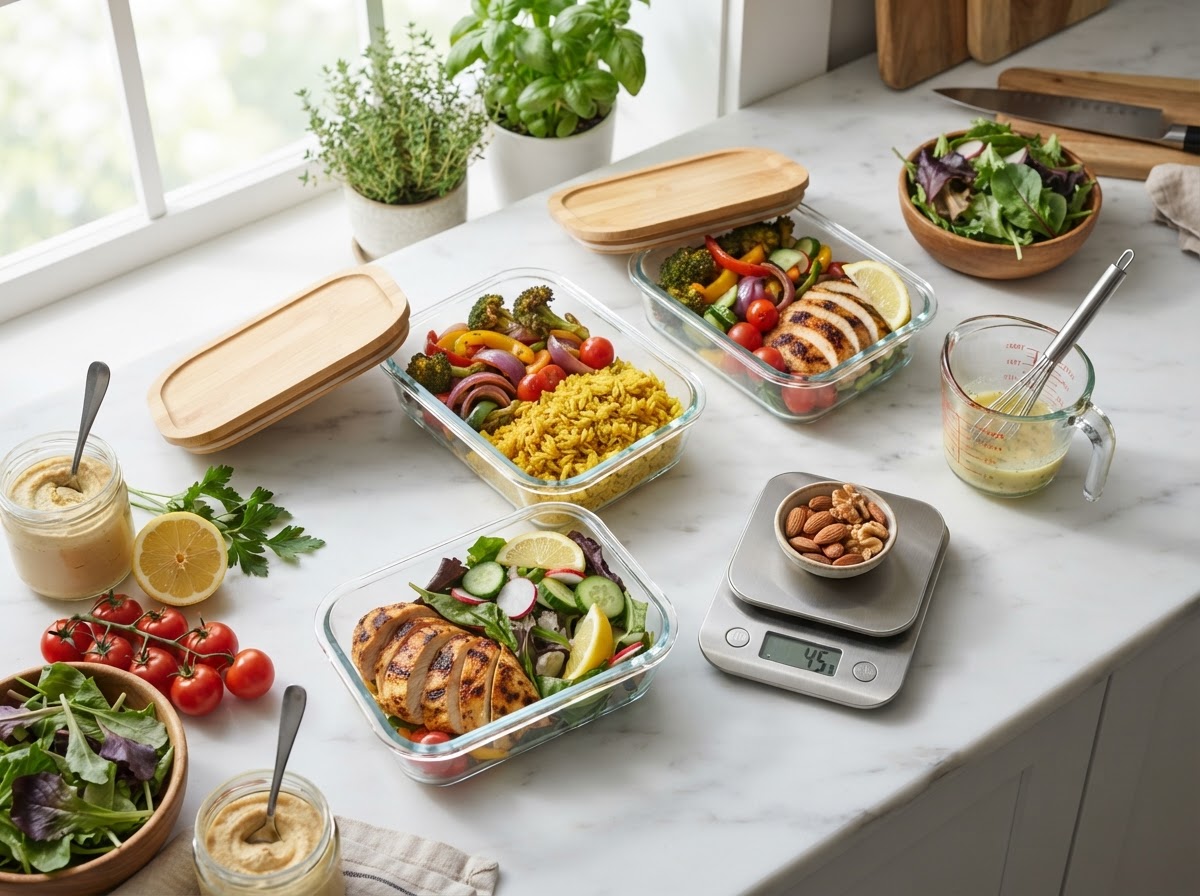
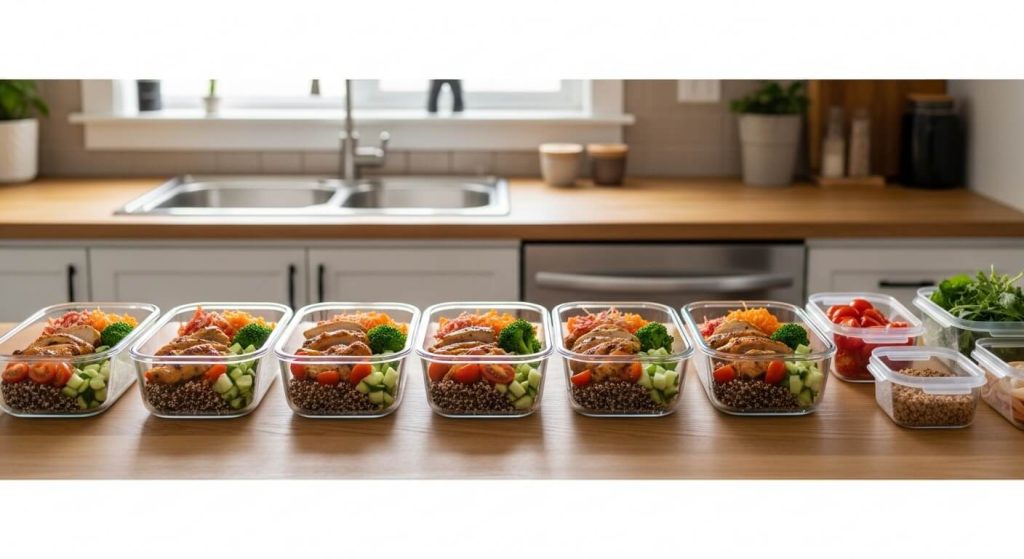
Making it survive a working week
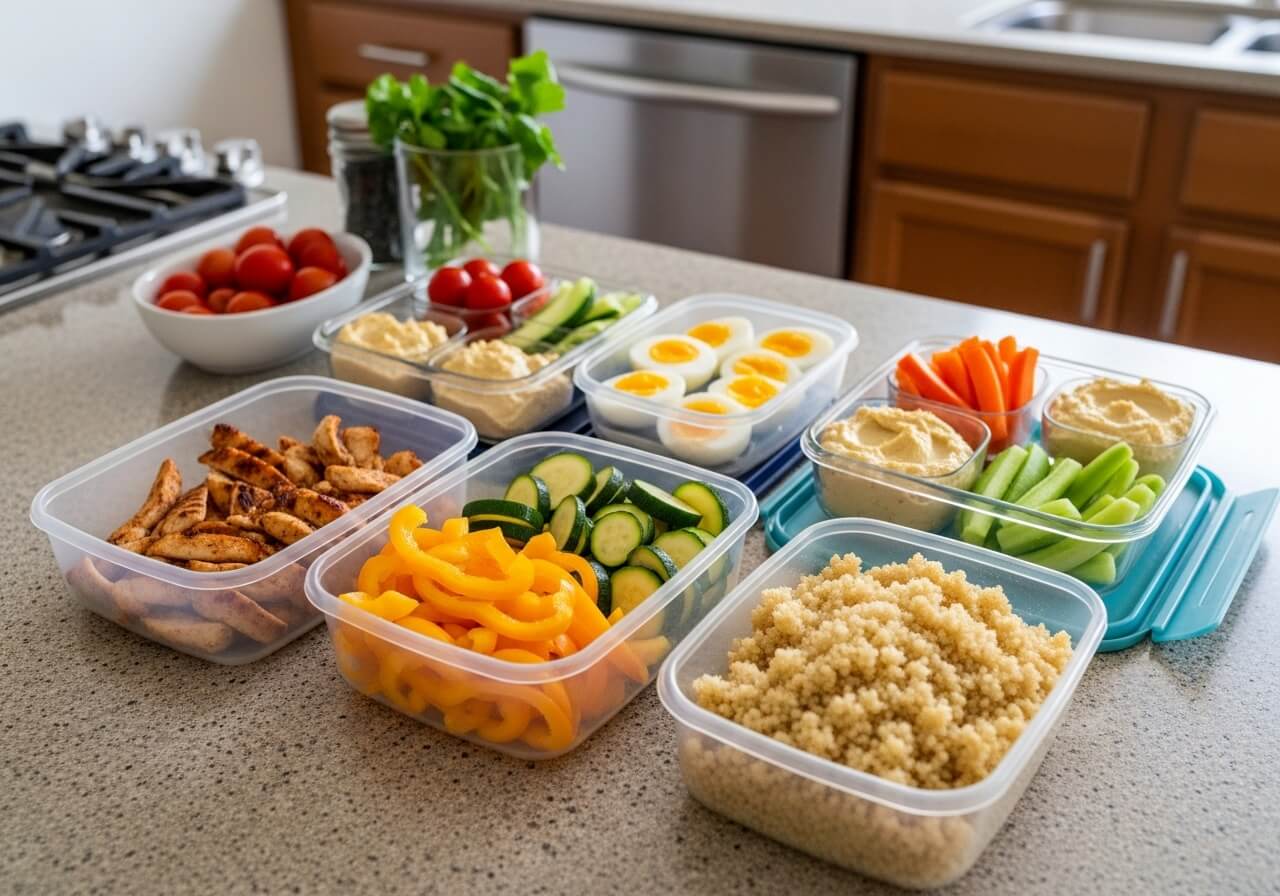
The plan above assumes you cook. USDA’s own tips, quoted, are aimed at exactly this:
- “Plan your weekly meals and snacks. Preparing in advance will help you know what you need”
- “Make a shopping list based on the money you have to spend and what foods you will need”
- “Have something to eat before you go shopping. It’s easier to stick to your shopping list when you are not hungry”
- “Buy only the amount of food you can use before it spoils. Remember, frozen, canned, or shelf-stable foods last longer!”
Cooked leftovers keep “3 to 4 days in the refrigerator or frozen for 3 to 4 months,” and must be refrigerated “within 2 hours of cooking,” in shallow containers, reheated to 165°F. Notice how the week above repeats dinners at lunch — that is deliberate, and it is the difference between a plan that runs on Tuesday and one that runs on Thursday.
A repeatable system is in building a sustainable meal prep system, and doing it cheaply in eating well on a budget.
Movement is part of the plan, not an extra
NIDDK’s targets: “moderate-intensity aerobic activity, such as brisk walking or dancing, for at least 150 minutes a week” plus “muscle-strengthening activities that involve all major muscle groups on two or more days a week.” For keeping the weight off, “at least 300 minutes a week.”
That doubling is worth noticing: the guidance itself expects maintenance to cost more effort than the losing did.
How to recognize a plan that is lying to you
The Federal Trade Commission publishes seven weight-loss claims it treats as false on their face. Any plan or product promising these is not merely optimistic:
| Claims the FTC treats as always false |
|---|
| Weight loss of two pounds or more a week for a month or more “without dieting or exercise” |
| Substantial weight loss “no matter what or how much the consumer eats” |
| Permanent weight loss “even after the consumer stops using product” |
| Blocking “the absorption of fat or calories” |
| More than three pounds a week for more than four weeks |
| Substantial weight loss “for all users” |
| Weight loss from wearing or rubbing something on the skin |
NIDDK adds its own list of red-flag promises: “lose weight without diet or exercise!”, “lose weight while eating as much as you want of all your favorite foods!”, “lose 30 pounds in 30 days!”, “lose weight in a specific part of your body!”
The last one is worth its own line: no plan targets fat loss by body region.
FAQ
How many calories should a weight-loss plan have?
That depends on your body and activity, and no article can set it responsibly. NHLBI publishes guidance at 1,200 and 1,400–1,600 calories; USDA’s MyPlate Plan generates targets from your details and advises checking with a clinician.
How fast should I expect to lose?
CDC’s figure is 1–2 pounds a week, and it notes that people losing at that pace keep it off better. NIDDK’s six-month target is 5–10% of starting weight.
Is there an official government meal plan?
Not for weight loss specifically. NHLBI’s DASH week is the only free, government-published multi-day menu set; NIDDK offers principles rather than menus.
Why does the plan repeat meals?
Because cooked leftovers keep three to four days refrigerated, and a plan you have to cook from scratch twice a day tends not to survive a working week.
Do I need to exercise as well?
The guidance treats it as part of the plan: at least 150 minutes a week of moderate activity plus strength work twice weekly, rising to 300 minutes for maintaining a loss.
Can I target belly fat with a meal plan?
No. NIDDK lists “lose weight in a specific part of your body” among the promises that mark a bogus program.
What if I stop losing?
Expected, and mostly arithmetic — a lighter body burns less, and expenditure falls faster than weight. Recalculate rather than cut deeper; see why your diet stops working.
This content is for educational purposes only and is not medical advice. Always consult a qualified healthcare professional for personalised guidance.