“Eating healthy is expensive” is the most repeated claim in this subject, and no federal source states it. USDA’s position is the opposite in structure: it publishes the Thrifty Food Plan as a costed, nutritious diet at the lowest of four price tiers, and describes all its food plans as representing “a nutritious diet at three different cost levels.”
That does not mean food is affordable for everyone — it plainly is not. But the honest framing is about burden, not about healthy food carrying a premium. Here are the actual published numbers, and the tactics USDA itself recommends.
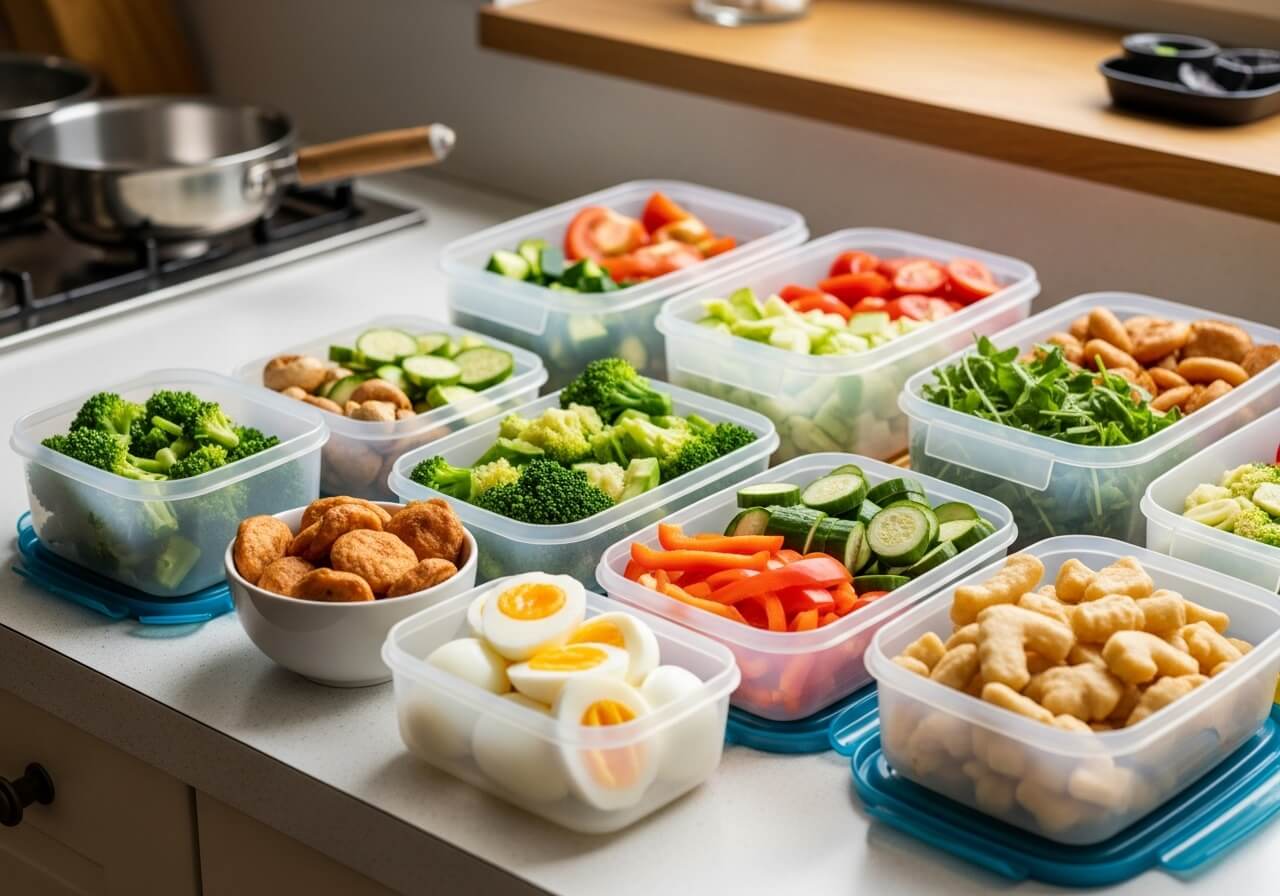
What USDA says a nutritious diet costs
These are the official figures from the Thrifty Food Plan, US average, July 2026 — the plan used to set the maximum SNAP allotment.
| Household | Per week | Per month |
|---|---|---|
| Reference family of four (two adults 20–50, children 6–8 and 9–11) | $236.50 | $1,024.90 |
| Woman, 20–50 | $58.60 | $253.90 |
| Man, 20–50 | $73.70 | $319.20 |
| Woman, 51–70 | $54.60 | $236.50 |
| Man, 51–70 | $64.90 | $281.40 |
One caveat USDA states itself: individual costs assume you are part of a four-person household. For other sizes it advises adjusting — “1-person—add 20 percent; 2-person—add 10 percent; 3-person—add 5 percent; 4-person—no adjustment; 5- or 6-person—subtract 5 percent.” Cooking for one genuinely costs more per head.
The Low-Cost plan, one tier up, runs $317.40 a month for a man aged 19–50 and $276.10 for a woman.
USDA publishes no per-day figure. Only weekly and monthly costs, by age and sex, rounded to ten cents. Any “$8 a day” number you see is someone’s arithmetic on rounded figures for one specific household shape — not a government statistic.
The real story is share of income, not price of food
Here is where the “healthy food is expensive” feeling comes from, and the numbers justify the feeling without supporting the claim.
In 2025 US consumers spent an average of “9.7 percent of disposable personal incomes on food.” But split by income, per USDA’s Economic Research Service (2024 data):
| Income group | Share of before-tax income spent on food |
|---|---|
| Lowest fifth | 33.0% |
| Middle fifth | 12.2% |
| Highest fifth | 6.4% |
A third of income versus a sixteenth. The food is not priced differently; the burden is five times heavier. That is the accurate version of the claim.
For context on where prices are heading, USDA’s forecast for 2026 is grocery prices up 2.5% and restaurant prices up 3.6%.
Frozen and canned: the biggest single saving
This is where most of the money is, so it is worth being precise about the evidence.
CDC: “frozen or canned vegetables and fruits can be just as nutritious as the fresh varieties” — with the condition that you “choose those without added salt, sugar, or syrup.”
USDA: “frozen and canned fruits are available year round, can save you money, and have similar nutrition values to fresh.” And on cost specifically: “frozen and low-sodium canned vegetables often cost less than fresh and can save time in the kitchen—no washing, slicing, or chopping.”
One honest caveat, because a federal source partly disagrees. MedlinePlus says: “overall, vegetables fresh from the farm or just picked are healthier than frozen or canned ones. But frozen and canned vegetables can still be a good choice” — provided “they need to be canned or frozen right after being harvested, when they still have all of their healthy nutrients.”
So: produce straight from the farm is the ceiling; frozen and canned are a legitimate choice, not a compromise you should feel bad about; supermarket “fresh” that has traveled for a week is not obviously ahead of frozen. MyPlate confirms all forms count — “fruits may be fresh, canned, frozen, or dried, and may be whole, cut-up, or pureed.”
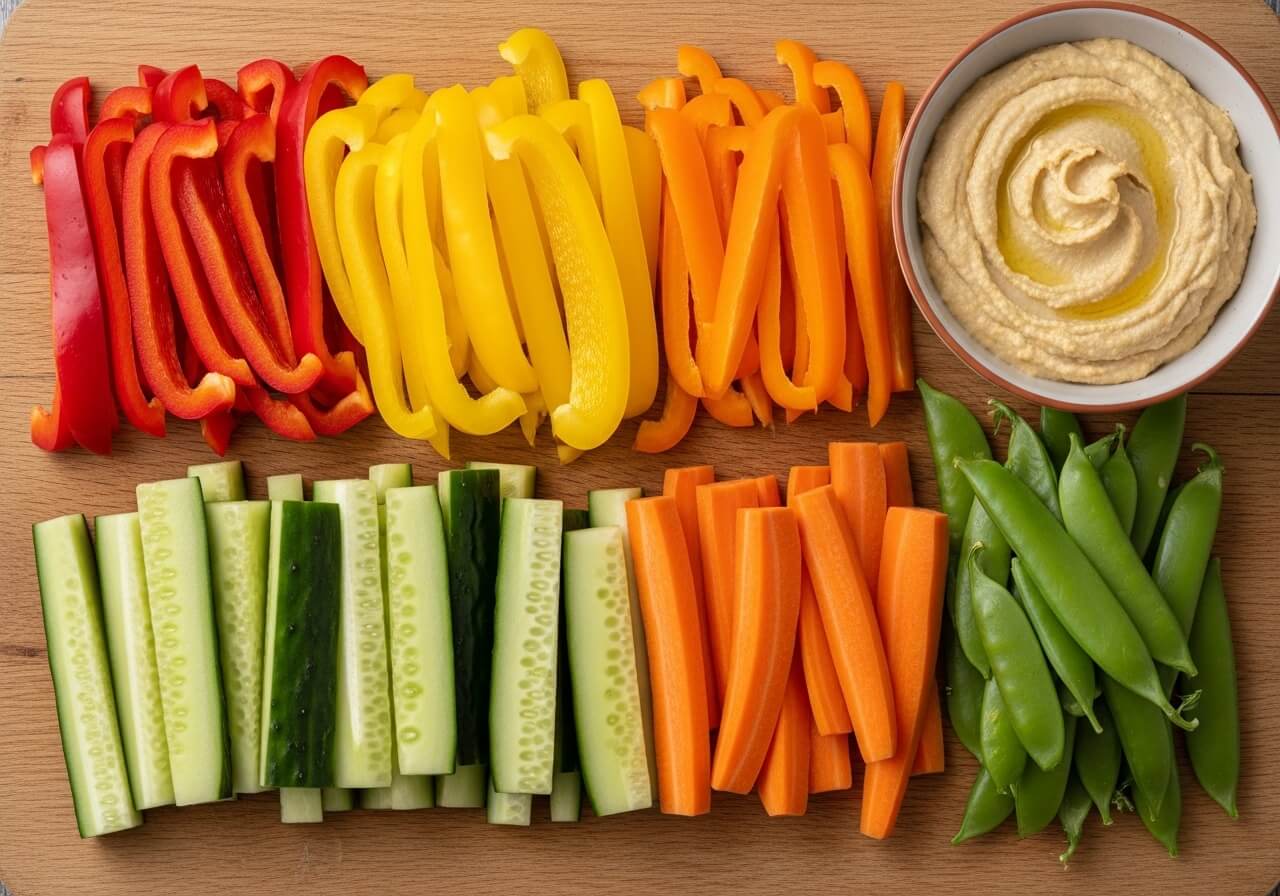
The cheapest proteins, named by USDA
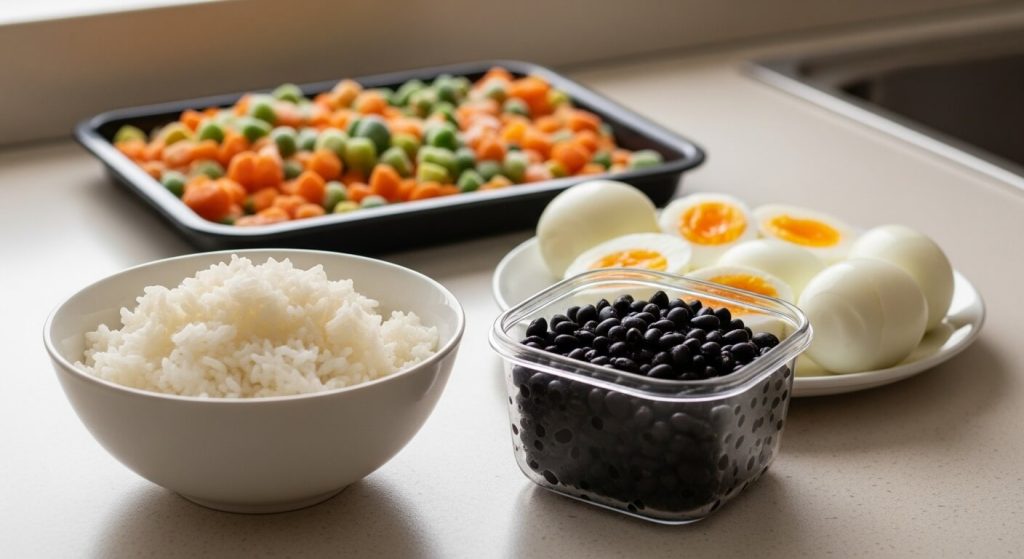
USDA does not leave this to inference: “beans and eggs are low-cost healthy protein foods.”
On dried beans specifically: “dried beans and peas are a good source of protein and fiber. They can last a year or more without spoiling.” That shelf life is the underrated part — nothing you buy spoils before you use it.
The equivalences, from USDA’s own handout:
| Food | Counts as |
|---|---|
| One whole egg | 1 ounce of protein |
| ½ cup cooked black beans | 2 ounces of protein |
| Half a small chicken breast | 2–3 ounces of protein |
Note that half a cup of beans does the work of two eggs. USDA also advises to “stock up on canned beans and peas when they are on sale,” and notes that “canned tuna packed in water is an inexpensive healthy protein choice” and that “canned fish usually costs less.”
Beans are unusual in counting toward two food groups at once — MyPlate places them in both, since “the nutrition found in beans, peas, and lentils are similar to foods in both the Vegetable Food Group and the Protein Foods Group.” They are “excellent sources of fiber, folate, and potassium” and “excellent sources of plant protein, also providing iron and zinc.”
If you are eating for training, the same ground is covered from that angle in affordable high-protein foods.
USDA’s own shopping tactics
Quoted verbatim, because these come from SNAP-Ed rather than from a lifestyle blog:
- “Plan your weekly meals and snacks. Preparing in advance will help you know what you need”
- “Make a shopping list based on the money you have to spend and what foods you will need”
- “Have something to eat before you go shopping. It’s easier to stick to your shopping list when you are not hungry”
- “Try store brands. They are the same quality and cost less”
- “Buy only the amount of food you can use before it spoils. Remember, frozen, canned, or shelf-stable foods last longer!”
- “Use store circulars and go online to look for coupons, sales, and store specials”
- “Buy large bags of frozen vegetables”
The store-brand line is worth pausing on — USDA states flatly that they are “the same quality and cost less.” That is a government agency saying the premium on a brand name buys nothing nutritionally.
Waste is the hidden cost
Two of the tips above are really about throwing less away: buy only what you will use, and prefer frozen or shelf-stable for anything you might not get to.
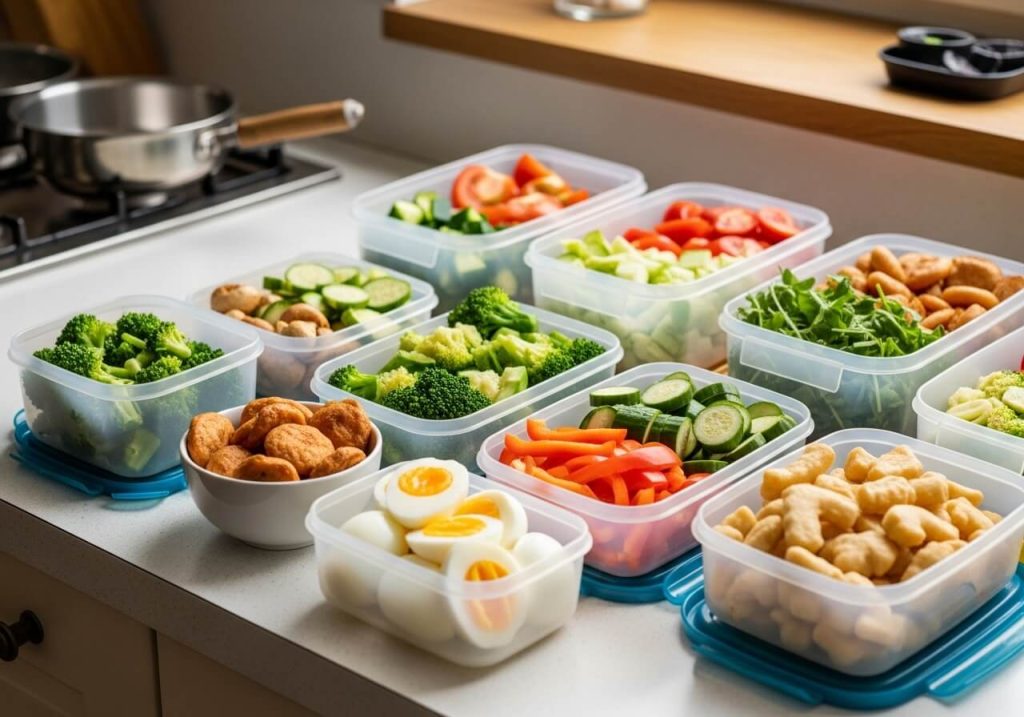
The federal storage rules make this concrete. Cooked leftovers keep “3 to 4 days in the refrigerator or frozen for 3 to 4 months,” and must be refrigerated “within 2 hours of cooking.” Soups, stews and baked casseroles are also three to four days. Egg, chicken and tuna salads keep three to four days but “do not freeze well.”
Cooking a large batch and freezing half is not just convenient — it converts food you would have binned into meals. A repeatable system is in building a sustainable meal prep system.
Building the week around cheap staples
The Dietary Guidelines’ targets do not require expensive food. Three vegetable servings, two fruit, two to four whole grains, protein at 1.2–1.6 g/kg — every one of those is reachable from the cheapest aisle in the shop:
| Target | Cheapest route |
|---|---|
| Vegetables, 3/day | Large bags of frozen; low-sodium canned; whatever is in season |
| Fruit, 2/day | Frozen berries; canned in juice not syrup; bananas and apples |
| Whole grains, 2–4/day | Oats, brown rice, whole wheat bread — all store brand |
| Protein | Dried and canned beans, eggs, canned tuna, cheaper cuts |
| Dairy, 3/day | Store-brand milk and plain yogurt; buy plain and add fruit yourself |
That last one saves twice — plain yogurt is cheaper than flavored and avoids the added sugars the Guidelines cap at 10 g per meal.
Three claims we are not making
| Common claim | What the sources say |
|---|---|
| “Eating healthy costs more than eating badly” | No federal source states it. USDA publishes the Thrifty Food Plan explicitly as a costed nutritious diet. The verified claim is about burden: 33% of income in the lowest fifth versus 6.4% in the highest |
| “Fresh is always better than frozen” | CDC says frozen and canned can be just as nutritious; MedlinePlus says farm-fresh is the ceiling. Neither supports “always” |
| “You can eat well on $X a day” | USDA publishes no daily figure at all — only weekly and monthly costs by age and sex |
FAQ
What does USDA say a healthy diet costs?
Under the Thrifty Food Plan, US average July 2026: $236.50 a week or $1,024.90 a month for a family of four. For a single adult aged 20–50, $58.60–$73.70 a week — plus 20% if you are a one-person household.
Is healthy food really more expensive?
No federal source says so. What is documented is unequal burden: the lowest income fifth spends 33.0% of before-tax income on food, against 6.4% for the highest.
Are frozen vegetables as good as fresh?
CDC says frozen or canned can be just as nutritious, if they have no added salt, sugar or syrup. MedlinePlus adds that produce eaten straight from the farm is the ceiling, and that frozen and canned should be processed right after harvest.
What is the cheapest healthy protein?
USDA names beans and eggs. Dried beans keep a year or more, and half a cup of cooked black beans counts as two ounces of protein — the same as two eggs.
Are store brands worse?
USDA’s own guidance says they are “the same quality and cost less.”
How do I waste less food?
Buy only what you will use before it spoils and favor frozen and shelf-stable for the rest. Cooked leftovers keep three to four days refrigerated or three to four months frozen, and must go into the fridge within two hours.
Does cooking for one cost more?
Yes, and USDA quantifies it: add 20% to the published per-person figures for a one-person household.
This content is for educational purposes only and is not medical advice. Always consult a qualified healthcare professional for personalised guidance.