Most “start eating healthy” advice fails for the same reason: it hands you an entire new way of living and expects you to adopt it on a Monday.
The federal guidance on changing habits says the opposite. NIDDK‘s position is “start with small changes,” because “small changes can lead to healthy habits worth keeping.” USDA’s own beginner tool is framed the same way: “meet healthy eating goals one at a time.”
So this guide is sequenced. One change at a time, each traceable to a source, in an order that makes the next one easier.
Before you change anything: how change actually goes
NIDDK describes habit change as passing through stages rather than happening at once — from “I’m thinking about it,” to “I have made up my mind to take action,” to “I have started to make changes,” to “I have a new routine.”
Two things follow from that, and both matter more than any food advice below.
Setbacks are part of it, not evidence against you. In NIDDK’s words: “a setback does not mean you have failed. All of us experience setbacks. The key is to get back on track as soon as you can.”
You do not need new recipes. “Try making your old favorite recipes in healthier new ways. For example, you can trim fat from meats and reduce the amount of butter, sugar, and salt you cook with.” Your existing cooking is the starting material. Our baking calculators give the amounts for the common swaps: butter and oil, buttermilk, eggs and flour.
If you take one thing from this page: pick a single change from the list below, do it until you stop thinking about it, then pick the next. That is slower than a whole-diet overhaul and it is the only approach federal guidance actually endorses.
Step 1: Add vegetables to what you already eat
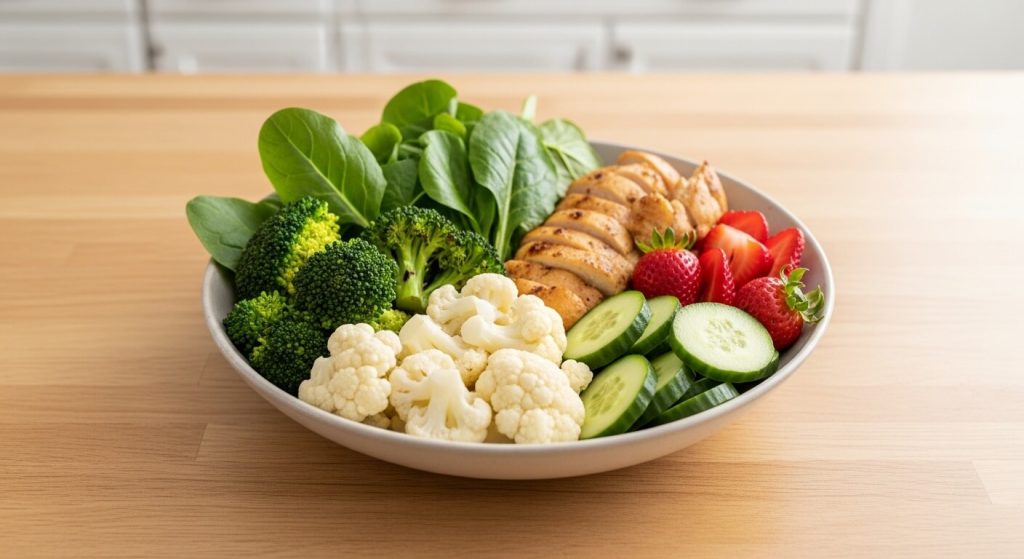
Adding is easier than removing, so it goes first. The current Dietary Guidelines ask for three servings of vegetables and two of fruit a day, and specify “eat whole vegetables and fruits in their original form.”
If you want the numbers behind the swaps in these steps, our cards carry the full USDA breakdown: broccoli, spinach, carrots and sweet potatoes.
CDC‘s swaps are deliberately small:
- Breakfast: “cut back on the amount of cereal in your bowl to make room for bananas, peaches, strawberries, or blueberries”
- Lunch: “add crunch to your sandwich, wrap, or burrito by swapping some of the higher-calorie ingredients with diced, sliced, or chopped leafy greens”
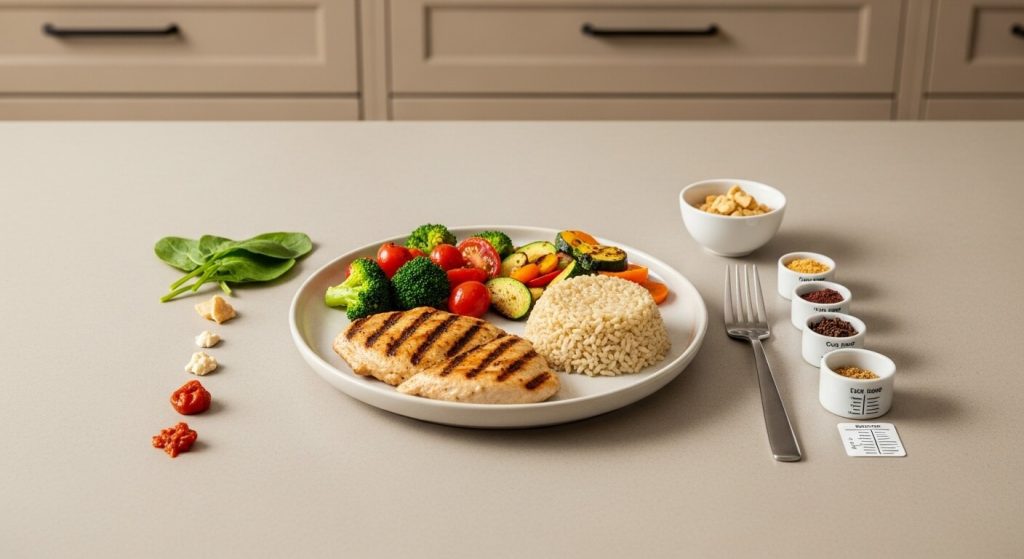
- Dinner: “replace 1 cup of rice or pasta in your favorite dish with 1 cup of vegetables”
One serving is smaller than people assume — NHLBI‘s definition is one cup raw leafy, or half a cup cooked. Three servings is a handful of spinach, half a cup of peas and a side salad. If you bake without eggs, egg substitutes for baking gives the amounts.
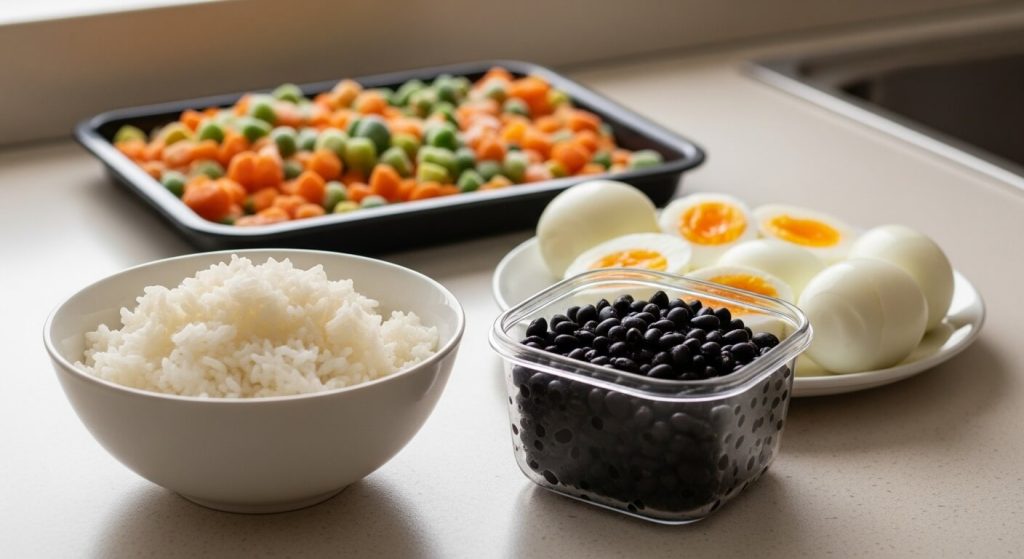
And you do not need fresh: CDC states that “frozen or canned vegetables and fruits can be just as nutritious as the fresh varieties,” as long as you “choose those without added salt, sugar, or syrup.”
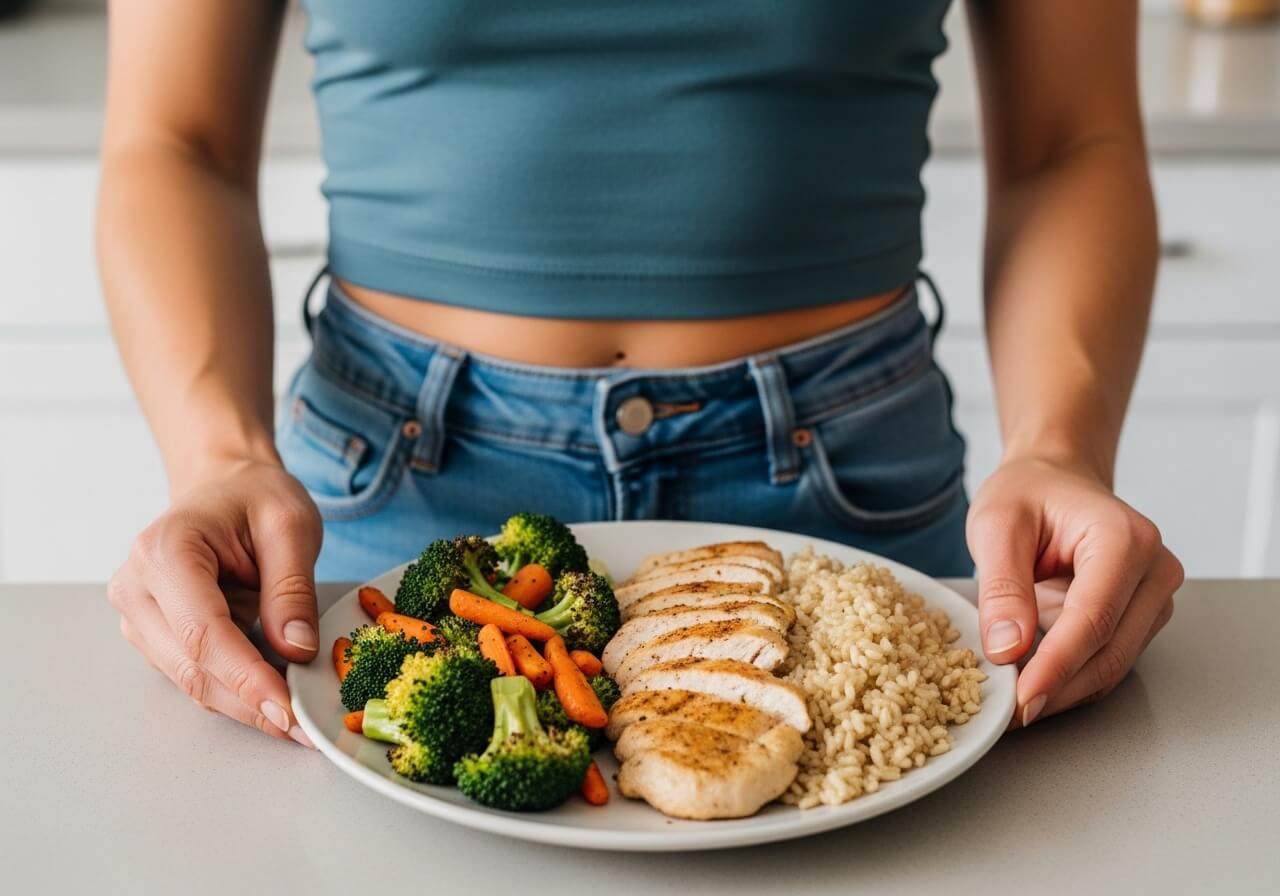
Step 2: Get protein into breakfast
This is the meal where the pattern usually breaks. The Dietary Guidelines set protein at “1.2–1.6 grams of protein per kilogram of body weight per day” — for a 70 kg adult, 84 to 112 g — and most people’s breakfasts contribute almost none of it.
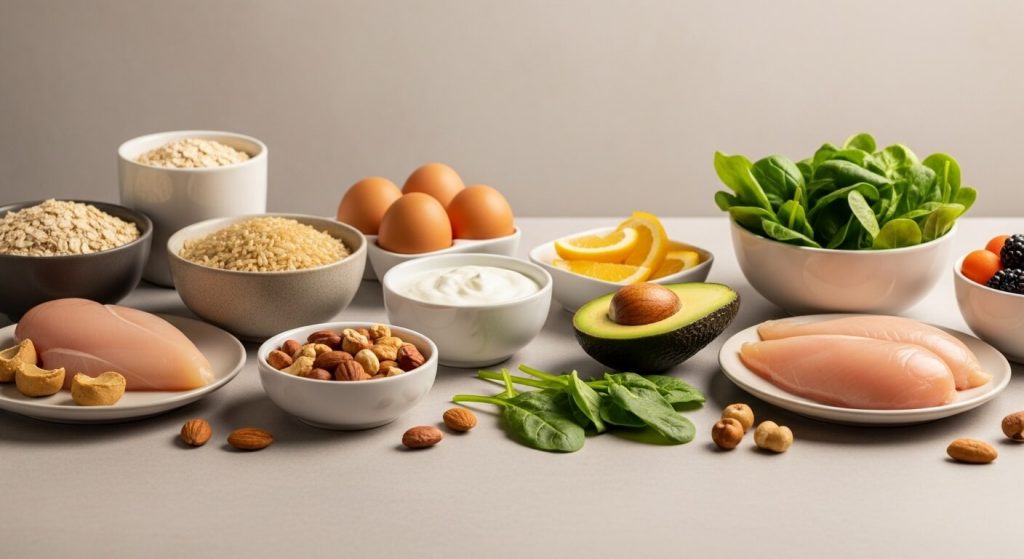
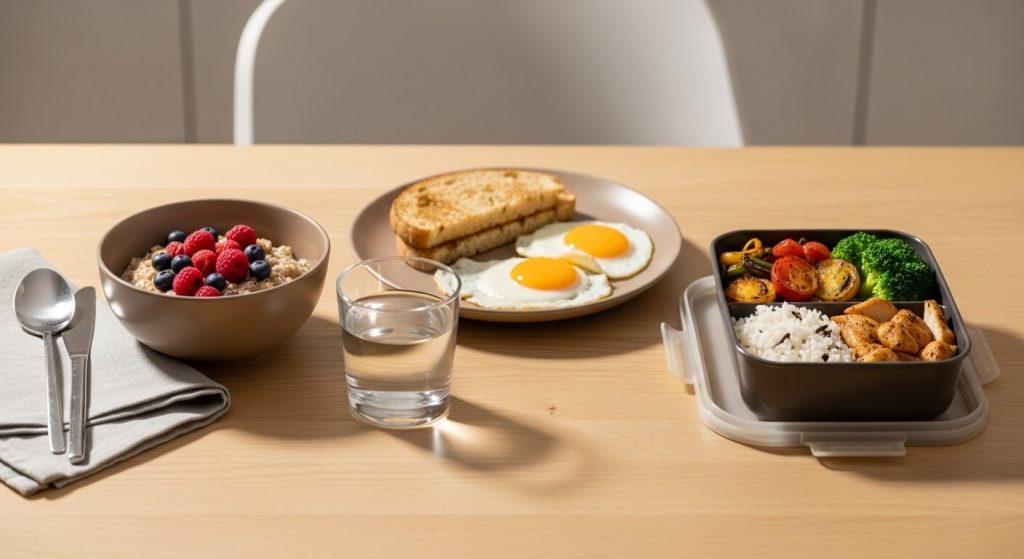
Breakfast proteins with full numbers: eggs, Greek yogurt, cottage cheese and oats. If you want a target rather than a habit, the protein calculator gives one.
Protein-food equivalents, from USDA: one egg is one ounce-equivalent; a quarter cup of cooked beans, peas or lentils is another; half an ounce of nuts, or a tablespoon of nut butter, another. Two eggs and a yogurt is a real breakfast in a way that toast and cereal is not.
The Guidelines also ask for variety across sources — “eggs, poultry, seafood, and red meat, as well as a variety of plant-sourced protein foods, including beans, peas, lentils, legumes, nuts, seeds, and soy.” More on portion size in how much protein per meal.
Step 3: Change what you drink
The single highest-yield swap, and the one with an arithmetic that speaks for itself. CDC: “water has no calories, so replacing sugary drinks with plain water can help reduce caloric intake.” Their worked figure: “cutting out two regular sodas per day would reduce total calories by 2,100 in a week.”
Worth knowing what counts as a sugary drink, because the category is wider than soda — CDC includes “regular sodas, fruit drinks, sports drinks, energy drinks, and sweetened waters.”
The Dietary Guidelines’ instruction is simply: “choose water (still or sparkling) and unsweetened beverages.” No volume target is attached — the whole hydration question is covered in how much water you should actually drink.
Step 4: Switch half your grains to whole
MyPlate‘s rule is easy to hold: “at least half of the grains you eat should be whole grains.” The Dietary Guidelines put it as “prioritize fiber-rich whole grains,” two to four servings a day.
One serving is one slice of bread, one ounce of dry cereal, or half a cup of cooked rice or pasta. Switching half means one of your two daily bread slices, or the rice at dinner but not the pasta at lunch. It is not a whole-pantry replacement.
Step 5: Learn to read the label — starting with what it is not
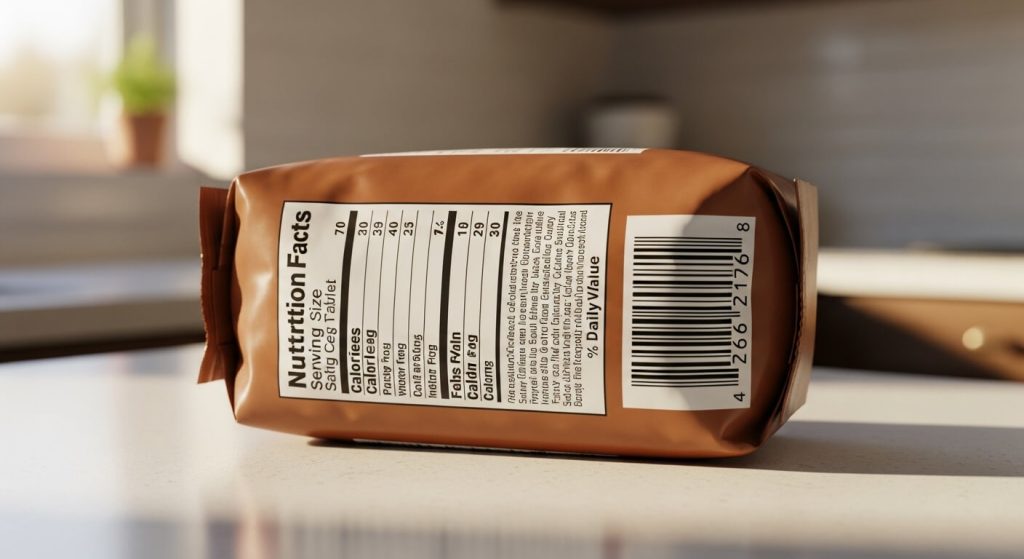
The most useful thing to know about a Nutrition Facts panel is what the serving size means. FDA is explicit: “the serving size is not a recommendation of how much to eat or drink.” It “must be based on the amount of food people typically consume, rather than how much they should consume.”
After that, one rule does most of the work: 5% DV or less of a nutrient is low, 20% or more is high. Full walkthrough in how to read nutrition labels.
The three numbers the current Guidelines put ceilings on:
| Added sugars | “One meal should contain no more than 10 grams” — about 2½ teaspoons |
| Saturated fat | “Should not exceed 10% of total daily calories” |
| Sodium | “Less than 2,300 mg per day” for ages 14 and up |
Step 6: Cook a bit differently
Two instructions from the Guidelines that cost nothing and change no shopping: “swap deep-fried cooking methods with baked, broiled, roasted, stir-fried, or grilled cooking methods,” and “consume meat with no or limited added sugars, refined carbohydrates or starches, or chemical additives.”
On fats, the Guidelines name where the good ones live: “meats, poultry, eggs, omega-3–rich seafood, nuts, seeds, full-fat dairy, olives, and avocados.”
Step 7: Plan the week, roughly
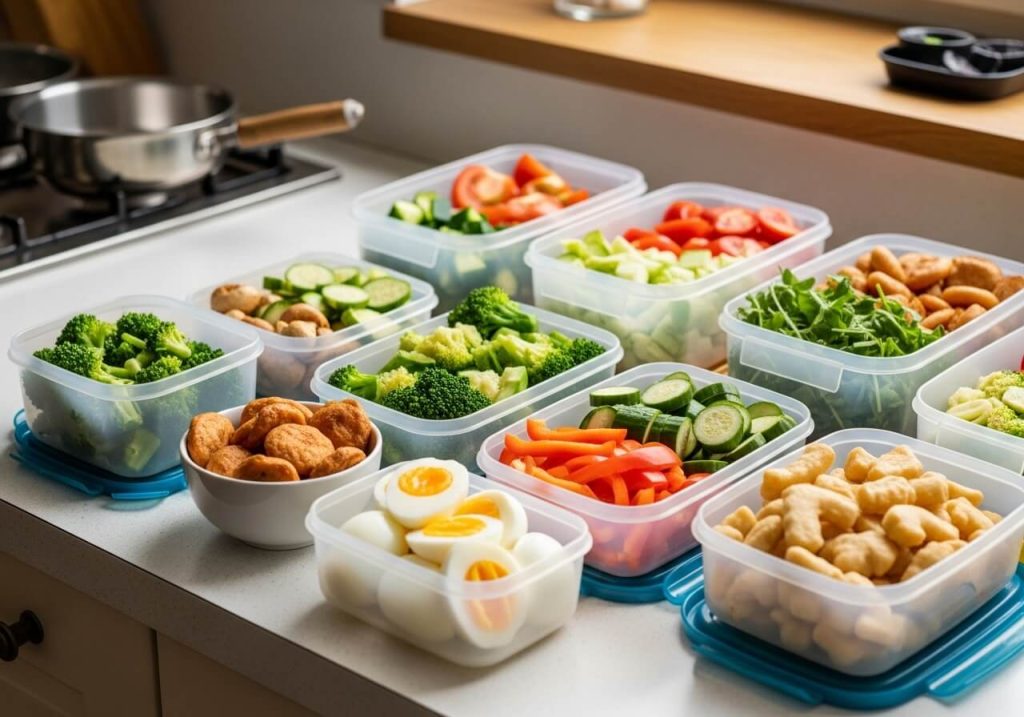
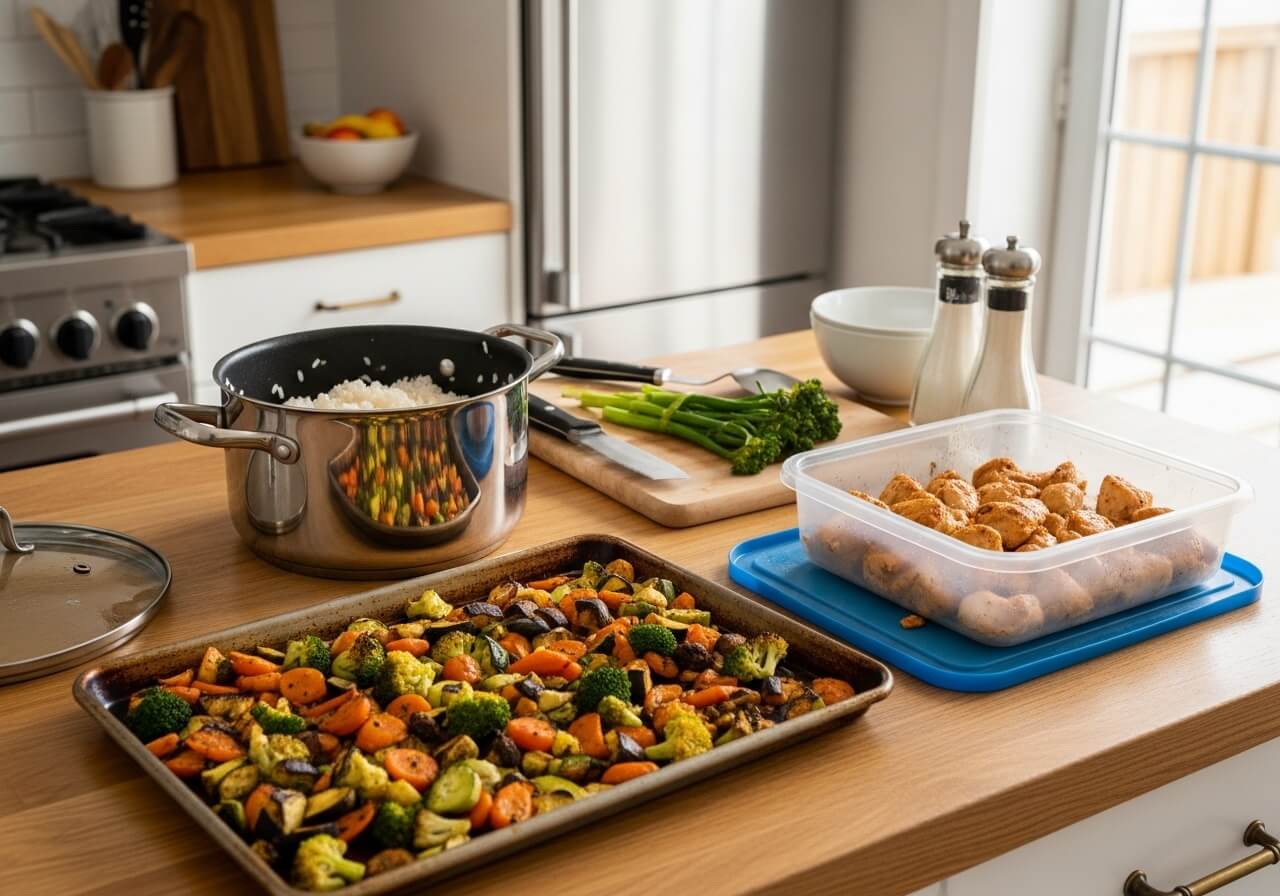
USDA‘s budget-and-planning advice doubles as beginner advice: “plan your weekly meals and snacks. Preparing in advance will help you know what you need,” and “make a shopping list based on the money you have to spend and what foods you will need.”
Two tools do the arithmetic here: the calorie calculator for a daily level and the meal calorie calculator for splitting it across meals.
One tip is oddly effective: “have something to eat before you go shopping. It’s easier to stick to your shopping list when you are not hungry.”
A repeatable system is in building a sustainable meal prep system, and doing it cheaply in eating well on a budget.
What you can safely ignore
| Advice you will hear | What the sources say |
|---|---|
| “You must eat breakfast” | The current Dietary Guidelines contain no breakfast or meal-timing requirement anywhere |
| “Eat six small meals to stoke your metabolism” | No federal source supports it; the Guidelines are silent on meal frequency entirely |
| “Cut out carbs” / “cut out fat” | Neither is federal advice. The Guidelines ask for whole grains and name healthy fats explicitly |
| “Detox first” | Nothing in any federal source. The instruction is simply to eat real food |
| “You need supplements to start” | the Office of Dietary Supplements’ position is that nutritional needs “should be met primarily through the diet, including fortified foods” |
The order, in one place
- Add vegetables to meals you already make
- Put protein in breakfast — eggs, yogurt, beans, nuts
- Swap sugary drinks for water — the biggest single calorie change
- Make half your grains whole
- Learn the label: serving size is not a recommendation; 5% low, 20% high
- Bake, roast or grill instead of deep-frying
- Plan the week and shop from a list, not hungry
Seven changes, one at a time, is a year of small moves — and that is the pace federal guidance actually recommends. What the full picture looks like once you are there is in healthy eating fundamentals.
FAQ
Where should a complete beginner start?
With one change, not a diet. NIDDK’s guidance is to start small, and USDA‘s is to meet goals one at a time. Adding vegetables to meals you already cook is the easiest first move because it adds rather than removes.
Do I need to throw out the food I have?
No. NIDDK explicitly suggests adapting your existing favourite recipes — trimming fat from meats, using less butter, sugar and salt — rather than replacing what you cook.
How long until this feels normal?
Federal guidance gives no timeline, but it describes habit change as a staged process ending in “I have a new routine,” and treats setbacks along the way as expected rather than as failure.
Is frozen food a cop-out?
No. CDC states frozen and canned vegetables and fruits can be just as nutritious as fresh, provided they have no added salt, sugar or syrup.
Do I have to count calories?
The Guidelines do not ask you to. They say calorie needs depend on age, sex, height, weight and activity, and advise paying attention to portion sizes for higher-calorie foods and drinks.
What is the single most effective change?
Replacing sugary drinks with water, by CDC’s own arithmetic — two fewer regular sodas a day is about 2,100 calories a week.
Should I start taking a multivitamin?
NIH‘s position is that nutritional needs should be met primarily through diet, and that no US health agency or professional organization promotes regular multivitamin use.
This content is for educational purposes only and is not medical advice. Always consult a qualified healthcare professional for personalised guidance.