
Oats Nutrition Facts
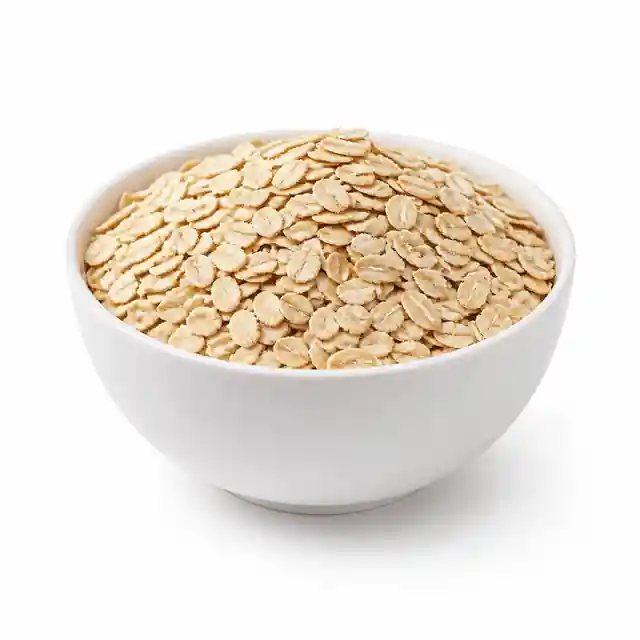
Oats are a grain food whose nutrient profile depends on whether the kernel is whole, pearled, refined, or milled. They provide protein, dietary fiber, potassium, and magnesium.
Calories381
Protein12.5 g
Carbs69.8 g
Fat5.8 g
ProteinCarbsFat
Nutrition for 100 g
Calories381 kcal
Protein12.5 g
Total Fat5.8 g
Carbohydrates69.8 g
Fiber12 g
Sodium0 mg
Total SugarsNot reported
Full nutrient profile
Proximates
Water10.14 g
Nitrogen2.146 g
Protein12.51118 g
Total lipid (fat)5.8 g
Ash1.798 g
Carbohydrates
Carbohydrate, by difference69.75082 g
Total dietary fiber (AOAC 2011.25)11.95 g
High Molecular Weight Dietary Fiber (HMWDF)11.21 g
Low Molecular Weight Dietary Fiber (LMWDF)0.7024 g
Beta-glucan5.44 g
Starch54.9 g
Minerals
Calcium, Ca51.34 mg
Iron, Fe3.801 mg
Magnesium, Mg128.6 mg
Phosphorus, P417.3 mg
Potassium, K375.9 mg
Sodium, Na0.3113 mg
Zinc, Zn2.843 mg
Copper, Cu0.4113 mg
Manganese, Mn3.414 mg
Selenium, Se29.04 ug
Molybdenum, Mo163.5 ug
Vitamins and other components
Thiamin0.3338 mg
Niacin0.9263 mg
Vitamin B-60.1189 mg
Biotin22 ug
Folate, total29.99 ug
Not On The List
FDA's gluten-free rule names only wheat, rye, barley and their hybrids as gluten-containing grains; oats are not among them. Oats sold as gluten-free still have to come in under 20 ppm, because the issue is contact with those grains, not the oat itself.
Source: FDA
How to choose and store Oats
How to choose
Choose well-sealed packages with no moisture, clumping, or off smell.
Storage
Store in a cool, dry place in an airtight container; follow the package date.
Related foods
View all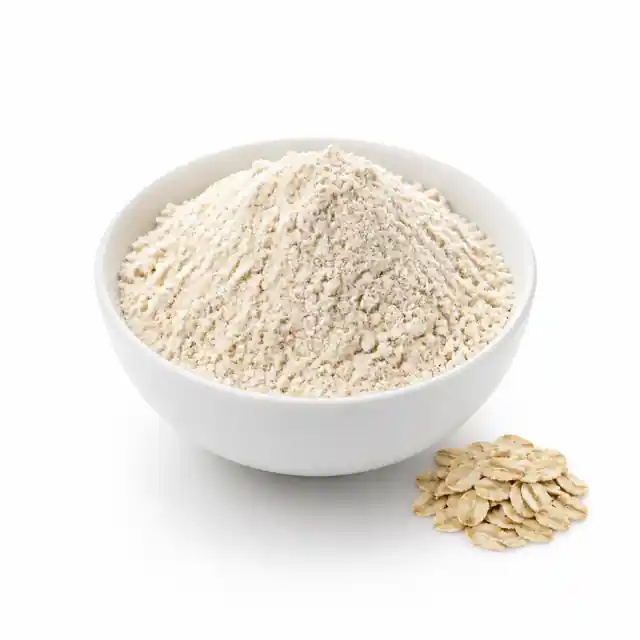
Grains
389 kcalOat Flour
100 g
P 13.2gC 69.9gF 6.3g
Grains
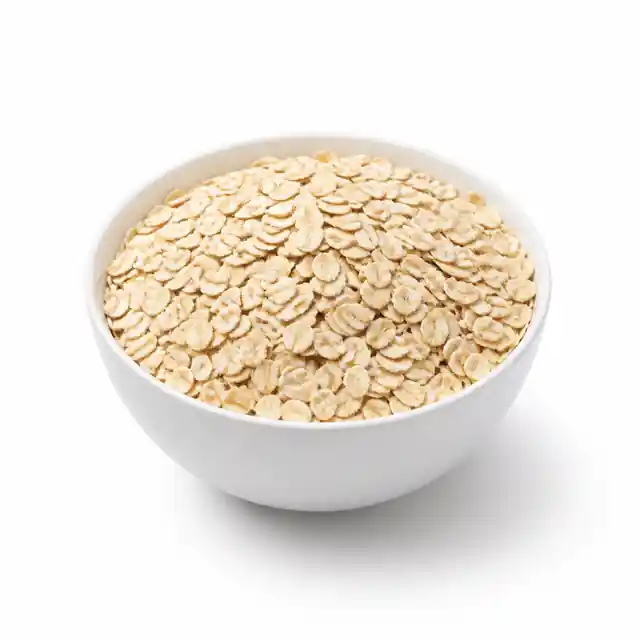
382 kcalRolled Oats
100 g
P 13.5gC 68.7gF 5.9g
Grains
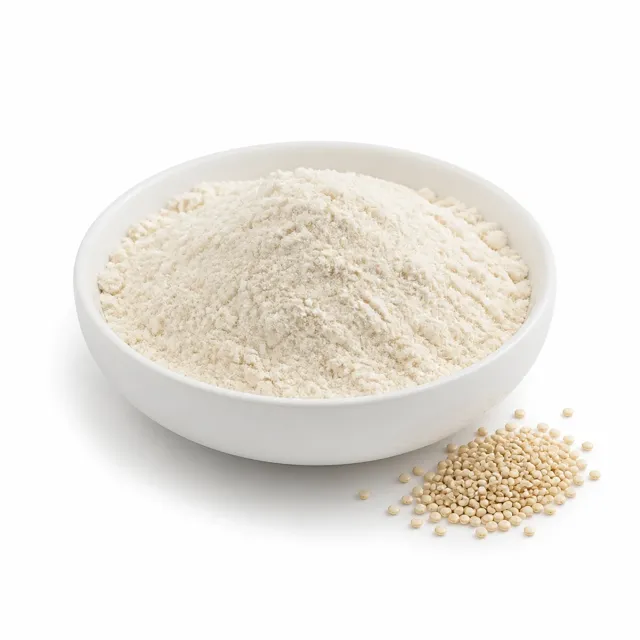
385 kcalQuinoa Flour
100 g
P 11.9gC 69.5gF 6.6g
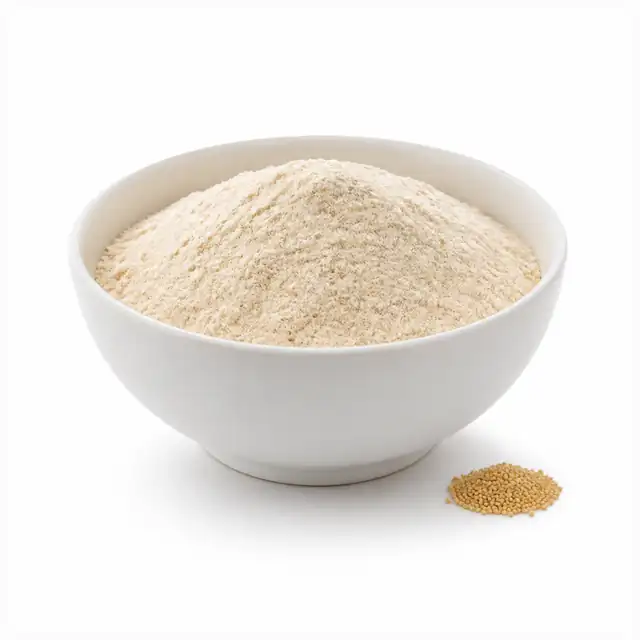
Grains
384 kcalAmaranth Flour
100 g
P 13.2gC 68.8gF 6.2g
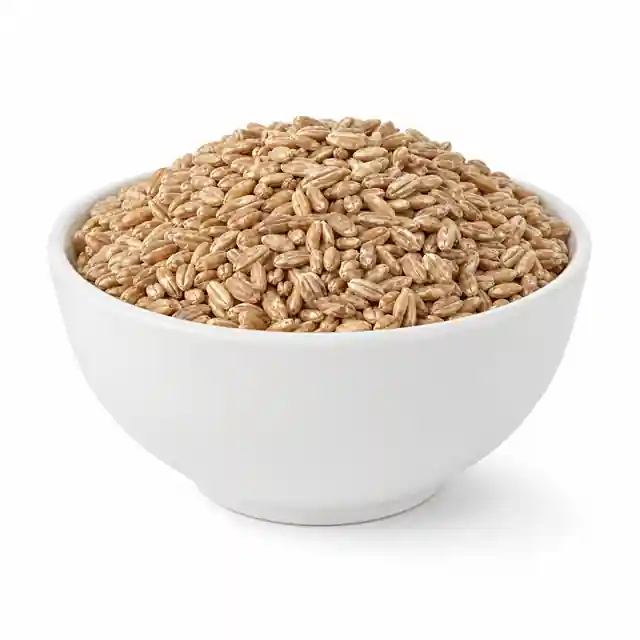
GrainsWheat
367 kcalFarro (Raw)
100 g
P 12.6gC 72.1gF 3.1g
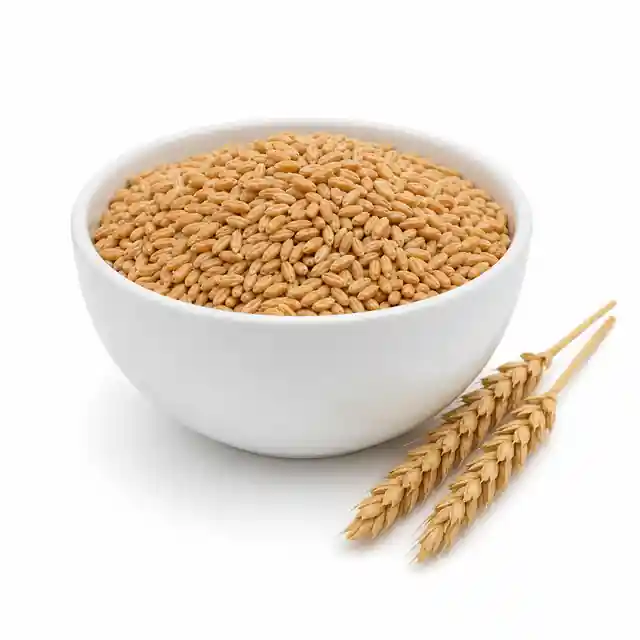
GrainsWheat
369 kcalEinkorn
100 g
P 15.1gC 68.7gF 3.8g
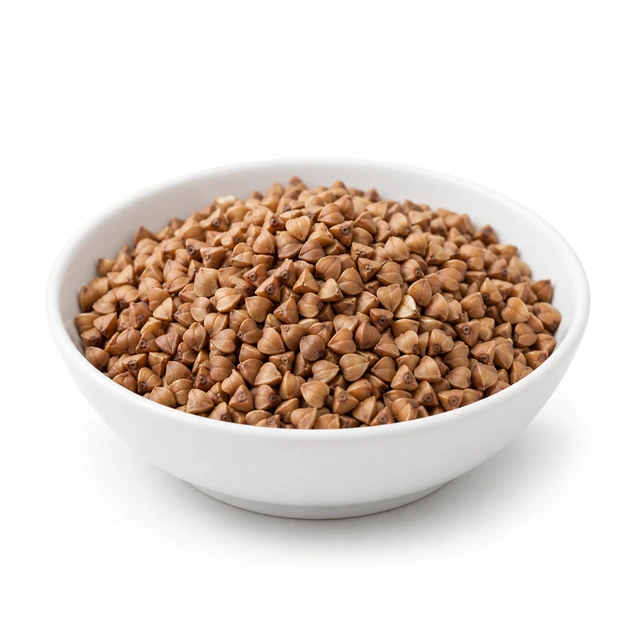
Grains
356 kcalBuckwheat
100 g
P 11.1gC 71.1gF 3g
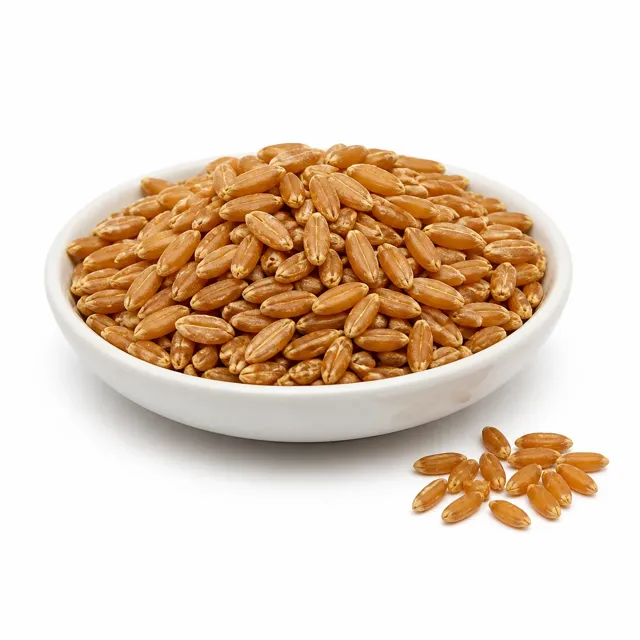
GrainsWheat
371 kcalKhorasan
100 g
P 14.8gC 71.8gF 2.8g
Put the numbers to work
View all