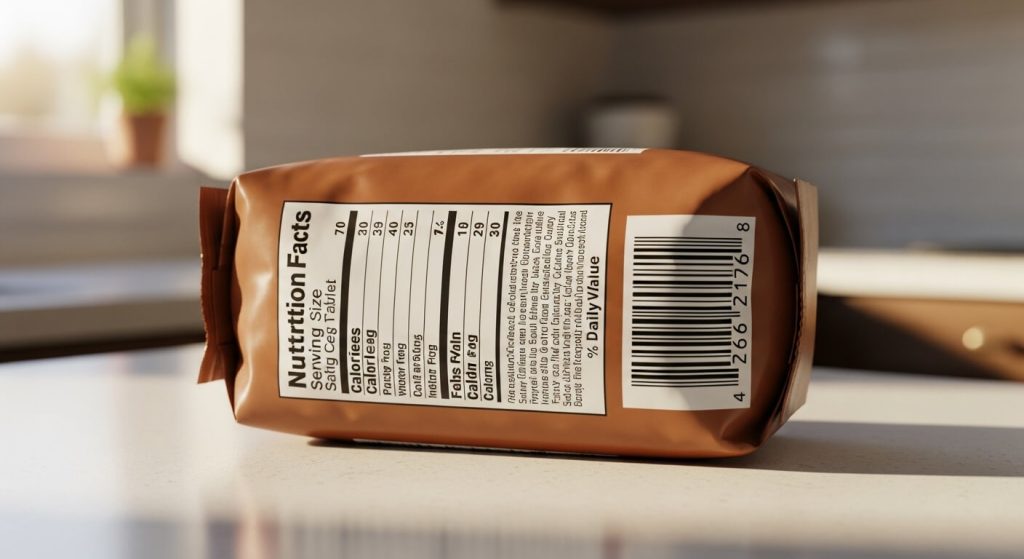
The serving size is the first line on a Nutrition Facts label and the one most people skim past. It is also the line that decides every number below it. Get it wrong and the calories, the sodium and the added sugars you read are not the ones you are about to eat. The number itself is not advice — the FDA is explicit that “the serving size is not a recommendation of how much to eat or drink.”
The short version
- Serving sizes are set by law from what people typically eat, not what a nutritionist thinks they should eat.
- They were updated to match reality: ice cream went from ½ cup to ⅔ cup, yogurt cups from 8 oz to 6 oz.
- A 20 oz soda and a 15 oz can of soup are now one serving, not two or three.
- Packages between two and three reference amounts must print two columns: per serving and per package.
- Measure your own portion once. After that you know your multiplier for good.
Where the number on the label actually comes from
Serving sizes are not chosen by the manufacturer’s marketing team, and they are not a health recommendation. By FDA rule, “serving sizes must be based on the amount of food people typically consume, rather than how much they should consume.” Each food category has a reference amount, and the label is built around it.
The size is then printed as a household measure — a cup, a tablespoon, a piece, a slice — followed by the metric weight in grams, so two products in the same category can be compared on the same basis.
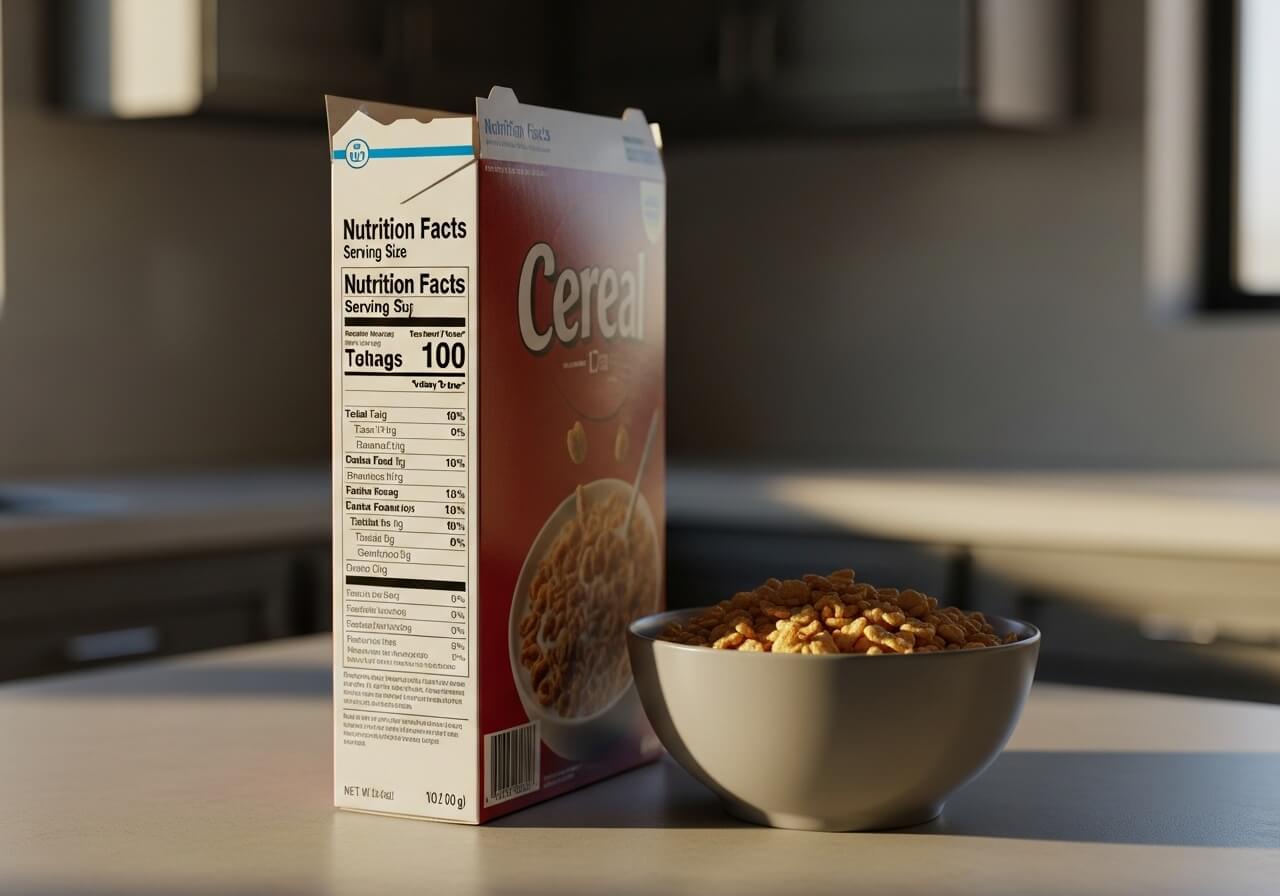
This is why a serving of cereal can look small next to the bowl you actually pour. The label is describing an average eater, not you.
What changed when the label was updated
The original reference amounts dated from the 1990s and had drifted away from how people eat. The FDA recalculated them, and the results are visible on shelves now:
| Food | Old serving | Now |
|---|---|---|
| Ice cream | ½ cup | ⅔ cup |
| Individually packaged yogurt | 8 oz container | 6 oz container |
| Large muffin | 2–3 servings | 1 serving |
| 20 oz bottle of soda | 2.5 servings | 1 serving |
| 15 oz can of soup | 2 servings | 1 serving |
The FDA’s own summary of the change is blunt: “The serving sizes listed on the Nutrition Facts label are not recommended serving sizes.” They are a measuring stick, updated to match what is really consumed in one sitting.
When the whole package counts as one serving
If a container holds more than 150% and less than 200% of the reference amount for that food, it is labeled as a single serving — because that is how it gets eaten. Nobody drinks half a bottle of soda and screws the cap back on for tomorrow.
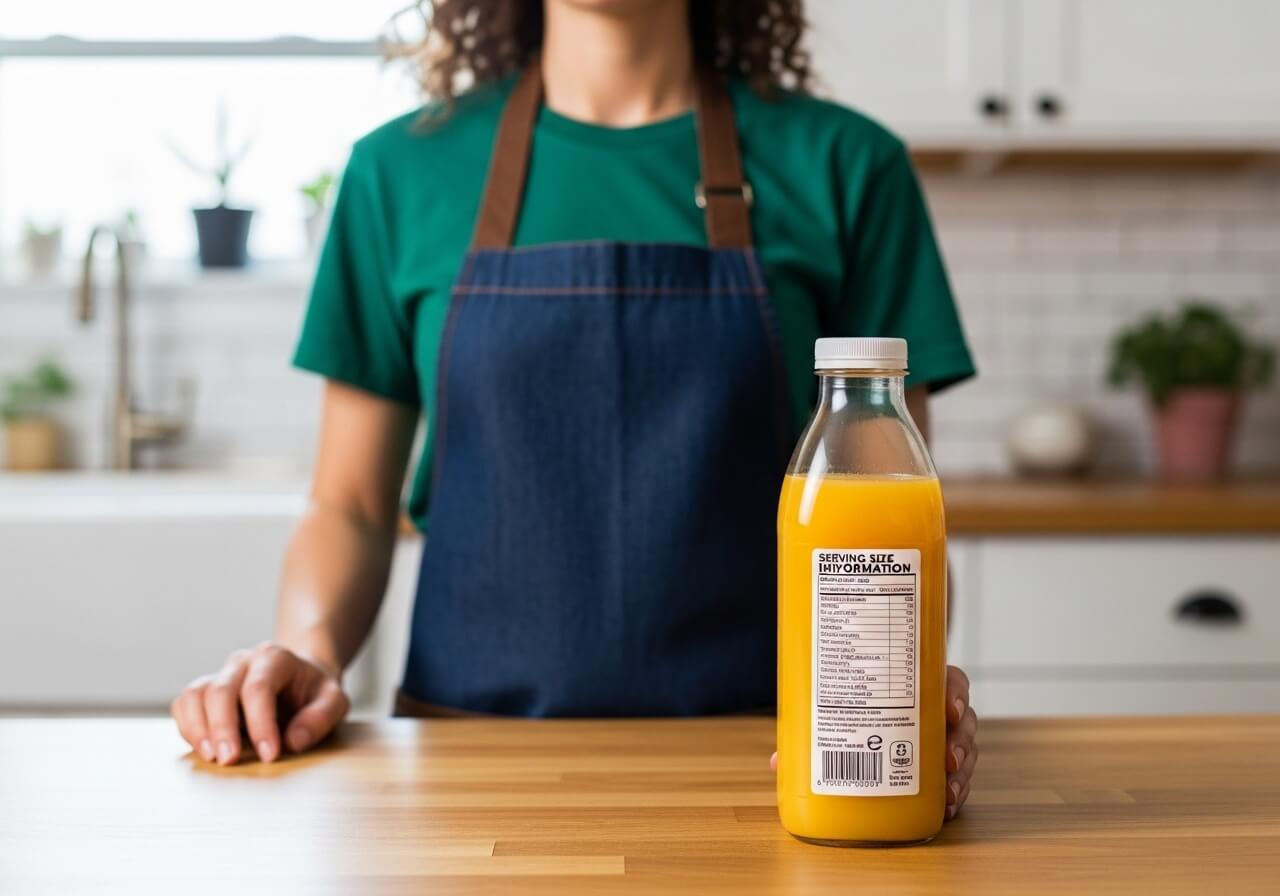
This one change moved a lot of numbers. A 20 oz soda used to print the calories for 8 fluid ounces, and you had to multiply by two and a half in your head. Now the calories on the bottle are the calories in the bottle.
When the label prints two columns
Between two and three reference amounts, the rules split the difference. The FDA requires a dual-column label when “a package contains at least two times the reference amount customarily consumed … and less than or equal to three times.” One column shows one serving, the other shows the entire package.
Read the column that matches your intent. A pint of ice cream shared between two people is the per-serving column. A pint eaten in front of a film is the per-package column. Same label, two honest answers — the label is not deciding for you, it is offering both.
Turning the label into your actual portion
The fix takes one minute, once per food. Measure what you normally pour or scoop, compare it with the serving size on the panel, and remember the ratio.
- Your cereal bowl holds 1½ servings → multiply everything on the label by 1.5.
- You eat half a frozen meal → halve it.
- You finish the bag → multiply by servings per container, the small number printed above the serving size.
Once you know your own multiplier for the five or six things you eat every week, you never need to measure again. And it is worth doing for the foods where the numbers are big: a label showing 230 calories per serving is a 345-calorie bowl at 1.5×.
Comparing two products on the shelf
Serving sizes within a category are built from the same reference amount, which is what makes shelf comparison possible at all. Two loaves of bread, two yogurts, two cereals — their panels are describing comparable amounts, so the numbers can be read side by side.
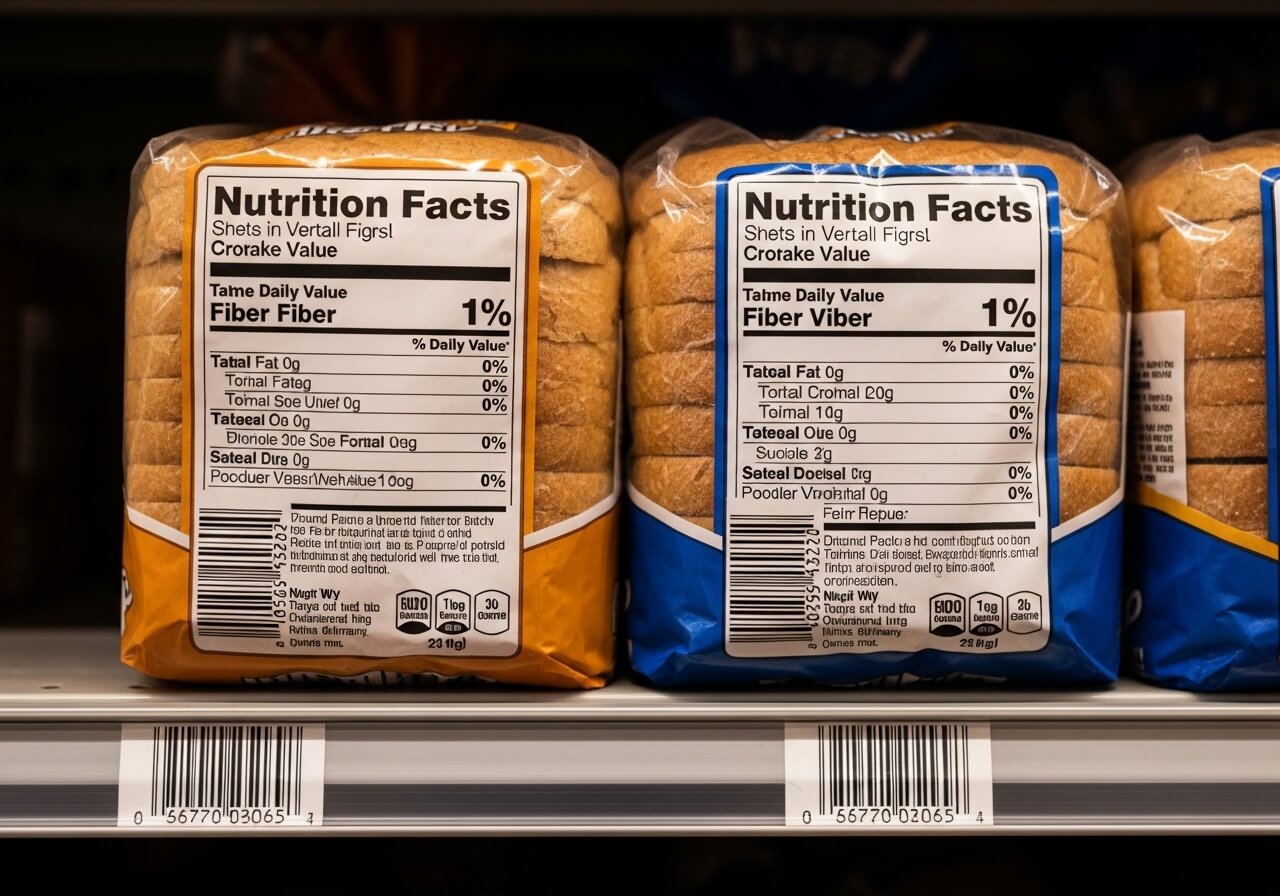
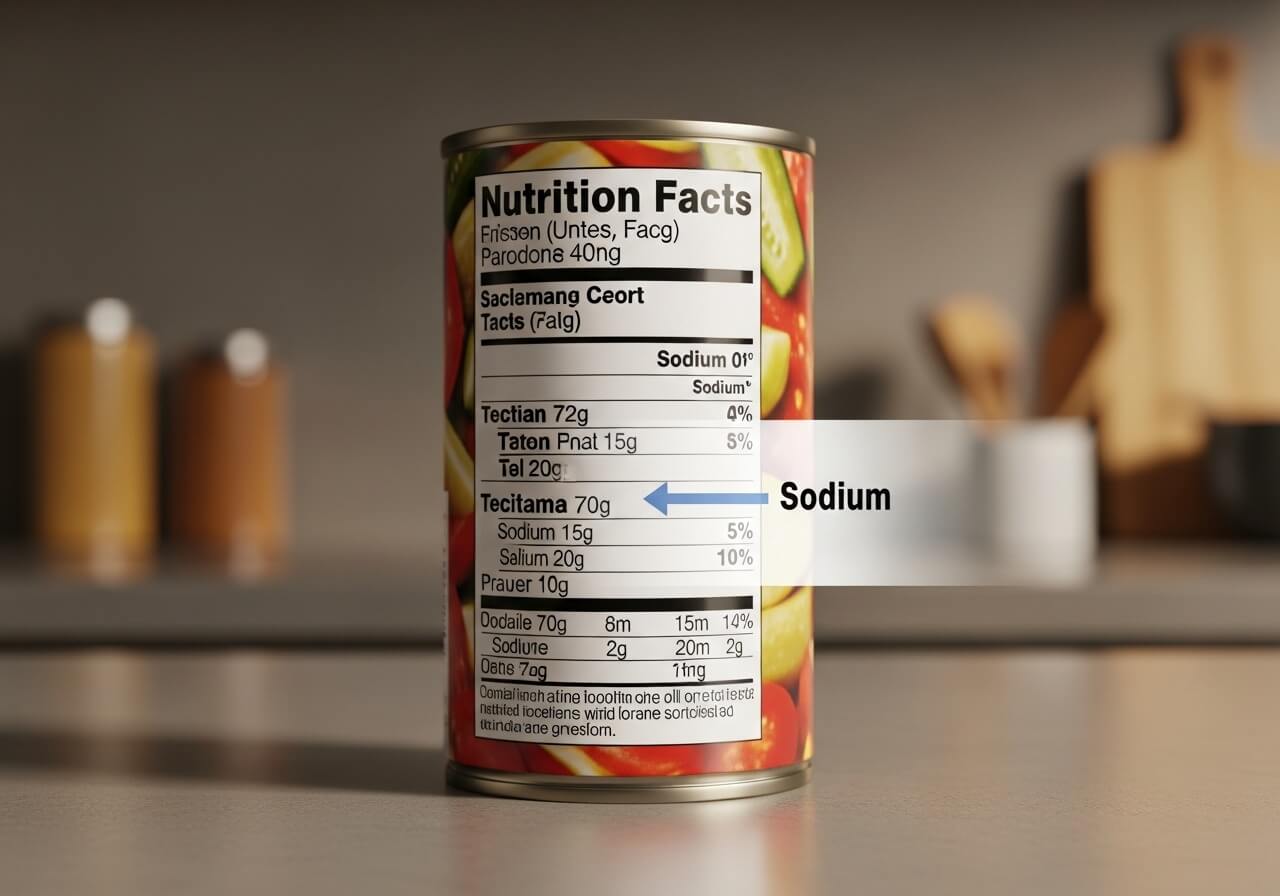
Two cautions. First, check that the serving sizes really do match before you compare — a granola that lists ⅓ cup against one that lists ½ cup will look deceptively lean. Second, compare on the line that matters to you rather than on calories alone; for most packaged foods that is sodium and added sugars.
FAQ
Is the serving size how much I should eat?
No. It reflects how much people typically eat, and the FDA states plainly that it is not a recommendation. Treat it as the unit the label is measured in, not as a portion guide.
Why is the serving size on my ice cream bigger than it used to be?
Because the reference amount was updated from ½ cup to ⅔ cup to match how people actually serve it. The ice cream did not change; the measuring stick did.
Why does one package show two columns of numbers?
The package holds between two and three reference amounts, so the label must show both per serving and per package. Read whichever matches what you plan to eat.
What is the fastest way to use serving size while shopping?
Look at servings per container first, then the serving size, then decide your multiplier before you read anything else on the panel. Everything below only makes sense once you have that number.
Where this fits
Serving size is step one of reading a label; the %DV column and the nutrients to watch come next. Those are covered in our guide to reading a nutrition label in 30 seconds. To see the numbers for a specific food rather than a package, look it up in the Nutrition Facts database or compare two options in Compare Foods.
Every figure here is linked to its source in the text: the U.S. Food and Drug Administration’s guidance on serving sizes and on the updated Nutrition Facts label. Checked against those sources on 1 September 2026. Educational information, not medical advice — see our medical disclaimer.
This content is for educational purposes only and is not medical advice. Always consult a qualified healthcare professional for personalised guidance.