
Broccoli Nutrition Facts
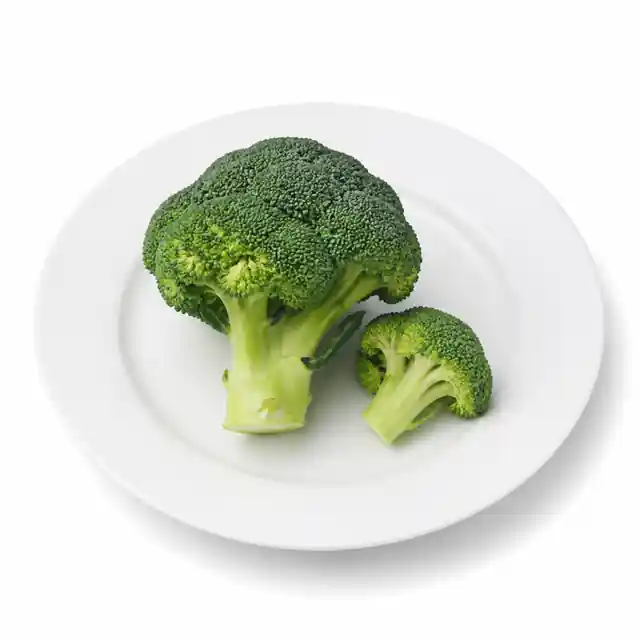
Broccoli is a low-calorie cruciferous vegetable that provides fiber, vitamin C, folate, potassium, and vitamin K. Its glucoraphanin can be converted into sulforaphane when plant cells are cut or chewed.
Calories31
Protein2.6 g
Carbs6.3 g
Fat0.3 g
ProteinCarbsFat
Nutrition for 100 g
Calories31 kcal
Protein2.6 g
Total Fat0.3 g
Carbohydrates6.3 g
Fiber2.4 g
Sodium36 mg
Total Sugars1.4 g
Full nutrient profile
Proximates
Water90 g
Nitrogen0.41 g
Protein2.57 g
Total lipid (fat)0.34 g
Total fat (NLEA)0.07 g
Ash0.83 g
Carbohydrates
Carbohydrate, by difference6.27 g
Carbohydrate, by summation3.8 g
Fiber, total dietary2.4 g
Fiber, soluble0 g
Fiber, insoluble2.4 g
Sugars, Total1.4 g
Sucrose0.01 g
Glucose0.58 g
Fructose0.82 g
Lactose0 g
Maltose0 g
Galactose0 g
Starch0 g
Sugars, Total1.7 g
Minerals
Calcium, Ca46 mg
Iron, Fe0.69 mg
Magnesium, Mg21 mg
Phosphorus, P67 mg
Potassium, K303 mg
Sodium, Na36 mg
Zinc, Zn0.42 mg
Copper, Cu0.059 mg
Manganese, Mn0.197 mg
Selenium, Se1.6 ug
Vitamins and other components
Vitamin C, total ascorbic acid91.3 mg
Thiamin0.077 mg
Riboflavin0.114 mg
Niacin0.639 mg
Pantothenic acid0.61 mg
Vitamin B-60.191 mg
Folate, total65 ug
Vitamin A, RAE8 ug
Carotene, beta93 ug
Carotene, alpha0 ug
Cryptoxanthin, beta0 ug
Lycopene0 ug
Lutein + zeaxanthin745 ug
Phytoene0 ug
Phytofluene0 ug
Vitamin E (alpha-tocopherol)0.15 mg
Tocopherol, beta0 mg
Tocopherol, gamma0.04 mg
Tocopherol, delta0 mg
Tocotrienol, alpha0.01 mg
Tocotrienol, beta0 mg
Tocotrienol, gamma0 mg
Tocotrienol, delta0 mg
Vitamin K (phylloquinone)102 ug
Vitamin K (Dihydrophylloquinone)0 ug
Vitamin D (D2 + D3), International Units0 iu
Folate, food63 ug
Betaine0.1 mg
Choline, total18.7 mg
Retinol0 ug
Vitamin B-120 ug
Folate, DFE63 ug
Vitamin A, IU623 iu
Vitamin B-12, added0 ug
Vitamin E, added0 mg
Folic acid0 ug
Vitamin D (D2 + D3)0 ug
Lipids
Fatty acids, total saturated0.039 g
SFA 8:00 g
SFA 10:00 g
SFA 12:00 g
SFA 14:00.001 g
SFA 15:00 g
SFA 16:00.029 g
SFA 17:00 g
SFA 18:00.006 g
SFA 20:00.002 g
SFA 22:00.002 g
Fatty acids, total monounsaturated0.011 g
MUFA 14:1 c0 g
MUFA 15:10 g
MUFA 16:1 c0 g
MUFA 17:10.001 g
MUFA 17:1 c0.001 g
MUFA 18:10.01 g
MUFA 18:1 c0.01 g
MUFA 20:10 g
MUFA 20:1 c0 g
Fatty acids, total polyunsaturated0.017 g
PUFA 18:20.017 g
PUFA 18:2 c0.017 g
PUFA 18:30.021 g
PUFA 18:3 c0 g
PUFA 18:3 n-6 c,c,c0 g
PUFA 20:2 c0 g
PUFA 20:2 n-6 c,c0 g
PUFA 20:30 g
PUFA 20:3 c0 g
PUFA 20:40 g
PUFA 20:4c0 g
Fatty acids, total trans0 g
SFA 4:00 g
SFA 6:00 g
PUFA 18:40 g
MUFA 22:10 g
MUFA 14:10 g
MUFA 16:10 g
PUFA 20:5 n-3 (EPA)0 g
PUFA 22:5 n-3 (DPA)0 g
PUFA 22:6 n-3 (DHA)0 g
Cholesterol0 mg
Amino acids
Tryptophan0.033 g
Threonine0.088 g
Isoleucine0.079 g
Leucine0.129 g
Lysine0.135 g
Methionine0.038 g
Cystine0.028 g
Phenylalanine0.117 g
Tyrosine0.05 g
Valine0.125 g
Arginine0.191 g
Histidine0.059 g
Alanine0.104 g
Aspartic acid0.325 g
Glutamic acid0.542 g
Glycine0.089 g
Proline0.11 g
Serine0.121 g
Other bioactive components
Alcohol, ethyl0 g
Caffeine0 mg
Theobromine0 mg
Two Days Of Vitamin C
One medium raw stalk carries 220% of the Daily Value for vitamin C. Because ascorbic acid dissolves in water and breaks down with heat, how you cook it decides how much survives.
Source: FDA
How to choose and store Broccoli
How to choose
Choose firm, unbruised produce with no soft spots or damage. If buying pre-cut or bagged, pick only packs kept refrigerated or on ice.
Storage
Refrigerate perishable produce at 40°F (4°C) or below, and refrigerate anything pre-cut or packaged. Wash under running water just before eating.
Related foods
View all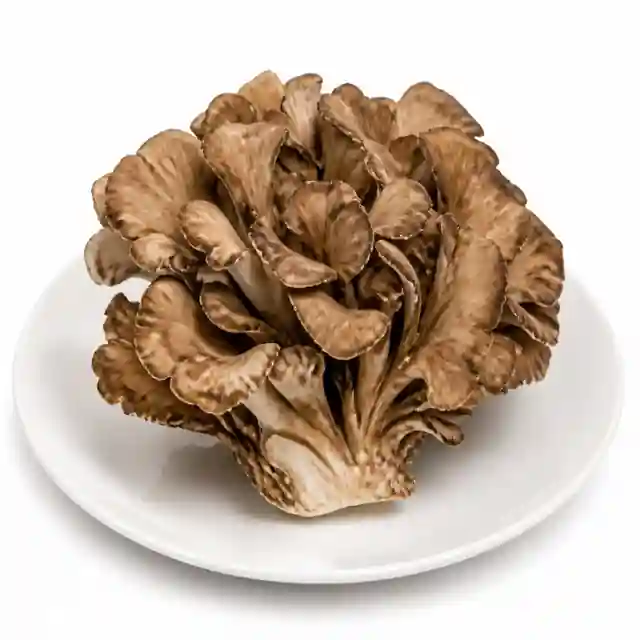
Vegetables
38 kcalMaitake Mushroom
100 g
P 2.2gC 6.6gF 0.3g
Vegetables
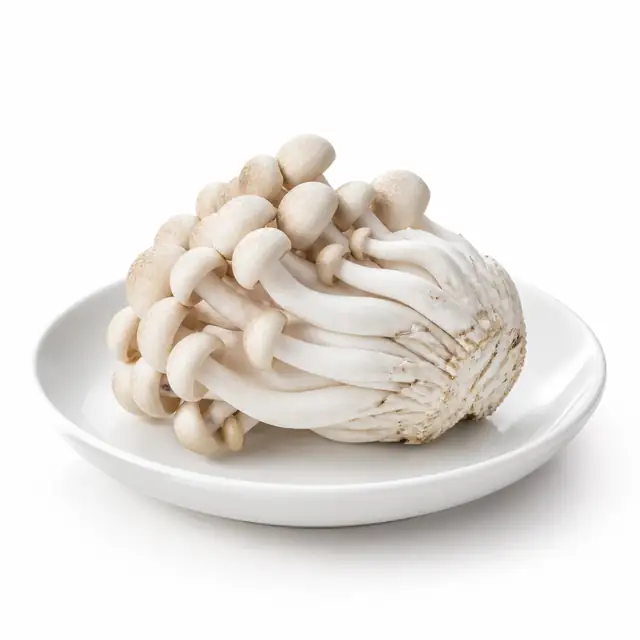
40 kcalBeech Mushroom
100 g
P 2.2gC 6.8gF 0.4g
Vegetables
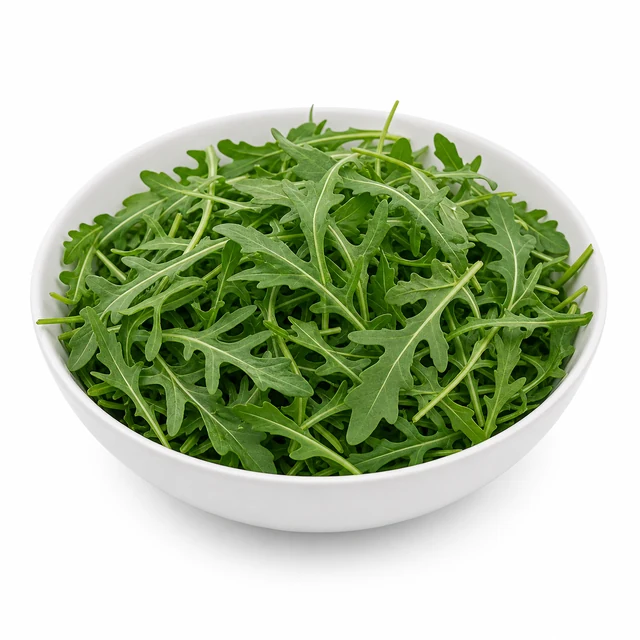
31 kcalArugula
100 g
P 1.6gC 5.4gF 0.3g
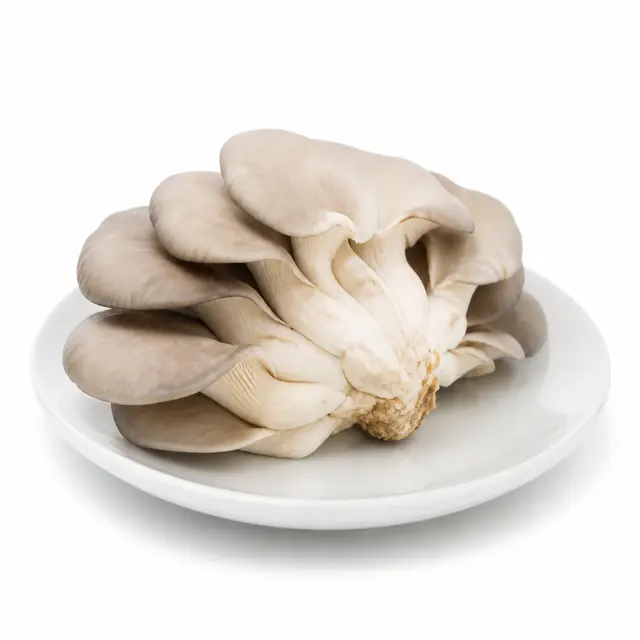
Vegetables
41 kcalOyster Mushroom
100 g
P 2.9gC 6.9gF 0.2g

Vegetables
32 kcalPortabella Mushroom
100 g
P 2.8gC 4.7gF 0.3g

Vegetables
34 kcalTomato (Sauce, Canned, Salted)
100 g
P 1.4gC 6.3gF 0.4g

Vegetables
36 kcalKale (Frozen, Unsalted)
100 g
P 2.9gC 5.3gF 1.2g
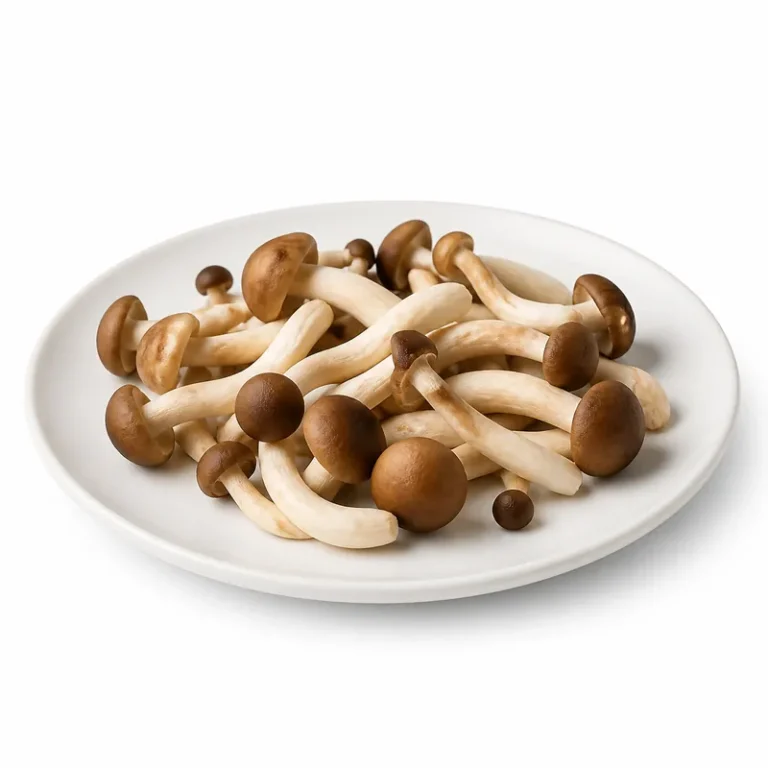
Vegetables
39 kcalPioppini Mushroom
100 g
P 3.5gC 5.8gF 0.2g

Put the numbers to work
View all