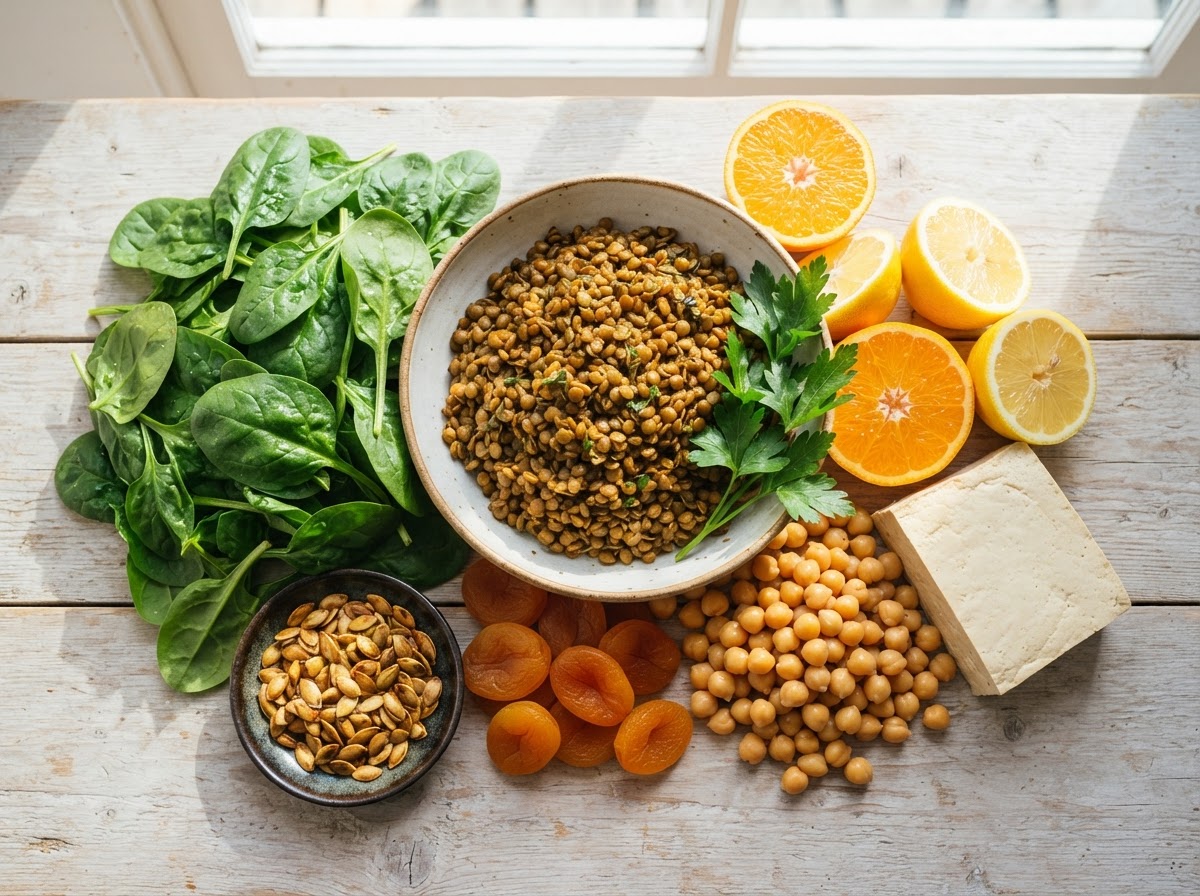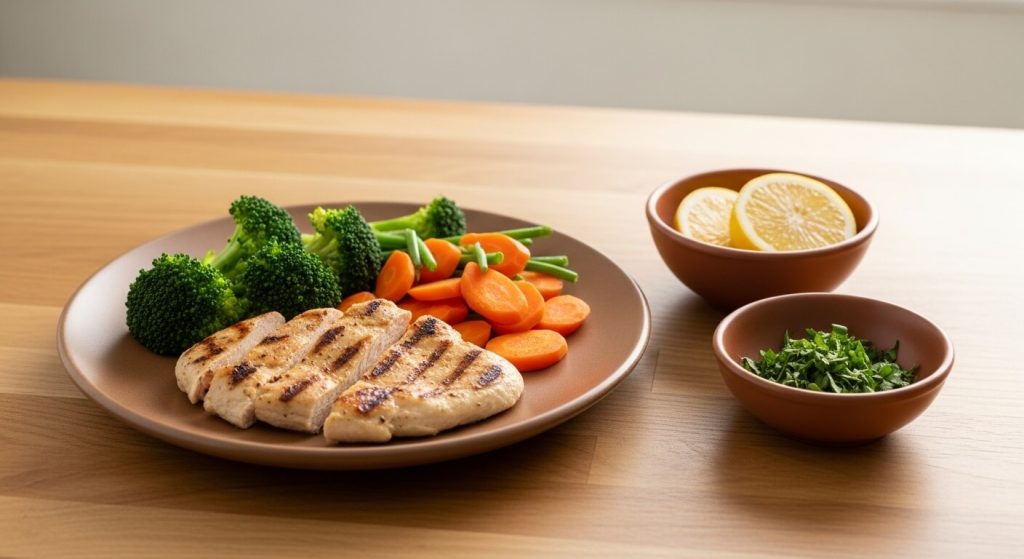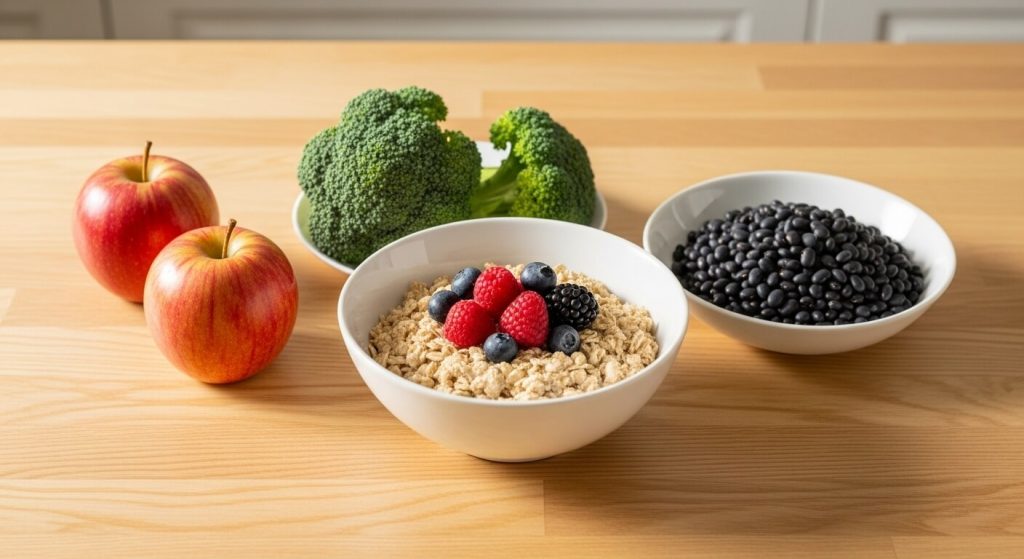
A pound of dried beans and a pound of ground beef sat in the same federal price table in August 2026 at $1.63 and $7.16. Put the protein figures next to those prices and the gap widens rather than narrows: the beans deliver about six times as much protein per dollar. That single comparison is most of what there is to say about eating protein cheaply, and the rest of this page is the detail behind it. Which bean you buy barely changes the nutrition: see black beans against pinto beans.
Below: what the government itself budgets for groceries, protein per dollar for five staples worked out in the open, what USDA actually says about beans and eggs, and the shopping moves that are officially recommended rather than merely popular.
Key takeaways. USDA’s Thrifty Food Plan for July 2026 budgets $73.70 a week for a man aged 20–50 and $58.60 for a woman. MyPlate states flatly that beans, peas and lentils “cost far less than a similar amount of other protein foods.” Bureau of Labor Statistics retail prices for August 2026 bear that out, and on protein per dollar dried beans beat ground beef roughly six to one. Prices move — eggs fell by more than a third in a year.
What the government budgets for groceries
USDA publishes a monthly estimate of what it costs to feed people at home on a thrifty budget. It is the basis for SNAP allotments, and it is the closest thing to an official answer to “what should food cost?” The July 2026 edition:
| Who | Per week | Per month |
|---|---|---|
| Man, 20–50 | $73.70 | $319.20 |
| Woman, 20–50 | $58.60 | $253.90 |
| Man, 51–70 | $64.90 | $281.40 |
| Woman, 51–70 | $54.60 | $236.50 |
| Child, 6–8 | $48.40 | $209.60 |
| Reference family of four | — | $1,024.90 |
One footnote matters more than the rest, and it is USDA’s own: these figures assume a four-person household, and for smaller households USDA states the adjustment plainly — “1-person—add 20 percent; 2-person—add 10 percent; 3-person—add 5 percent.” Applying USDA’s own rule, a man living alone is looking at roughly $383 a month rather than $319. That last step is our arithmetic on USDA’s stated adjustment, not a figure USDA prints.
For scale on how fast this moves: when USDA re-evaluated the plan in 2021 it reported that “the cost of the Market Baskets for the reference family is $835.57 per month” at June 2021 prices. Against $1,024.90 in July 2026, that is a rise of about 23% in five years for the same USDA-defined basket — again our calculation, from two USDA figures.
Protein per dollar, worked out in the open
Nobody publishes this figure, so here is how we built it. The prices are U.S. city average retail prices from the Bureau of Labor Statistics for August 2026, quoted exactly as BLS prints them. The protein figures come from our own nutrition cards, per 100 g. The division is ours, and it is on purchase weight — what you hand over at the till against what is in the bag.
| Food | BLS price, Aug 2026 | Protein / 100 g | Protein per $1 |
|---|---|---|---|
| Dried pinto beans | $1.63 / lb | 23.7 g | ~66 g |
| Eggs, grade A large | $2.27 / dozen | 6.28 g per large egg | ~33 g |
| Chicken breast, boneless | $4.17 / lb | 22.5 g | ~25 g |
| Cheddar cheese | $5.98 / lb | 23.3 g | ~18 g |
| Ground beef, 80/20 | $7.16 / lb | 17.5 g | ~11 g |
Three honest caveats on that last column. The egg row uses USDA’s published 6.28 g of protein per large egg rather than a per-100 g conversion. The meat and bean rows are raw and dry purchase weights — cooking changes the weight, not the protein. And BLS prices are a national average for one month; your shop will differ, and so will next month.
What survives all three caveats is the ranking, and the size of the gap. Beans are not slightly cheaper per gram of protein than beef. They are roughly six times cheaper, and about two and a half times cheaper than chicken breast, which is the food most people already think of as the budget option.
Why beans win, and what USDA says about them
USDA does not hedge on this one. Its Shop Simple with MyPlate guidance says: “Beans, peas, and lentils cost far less than a similar amount of other protein foods.”
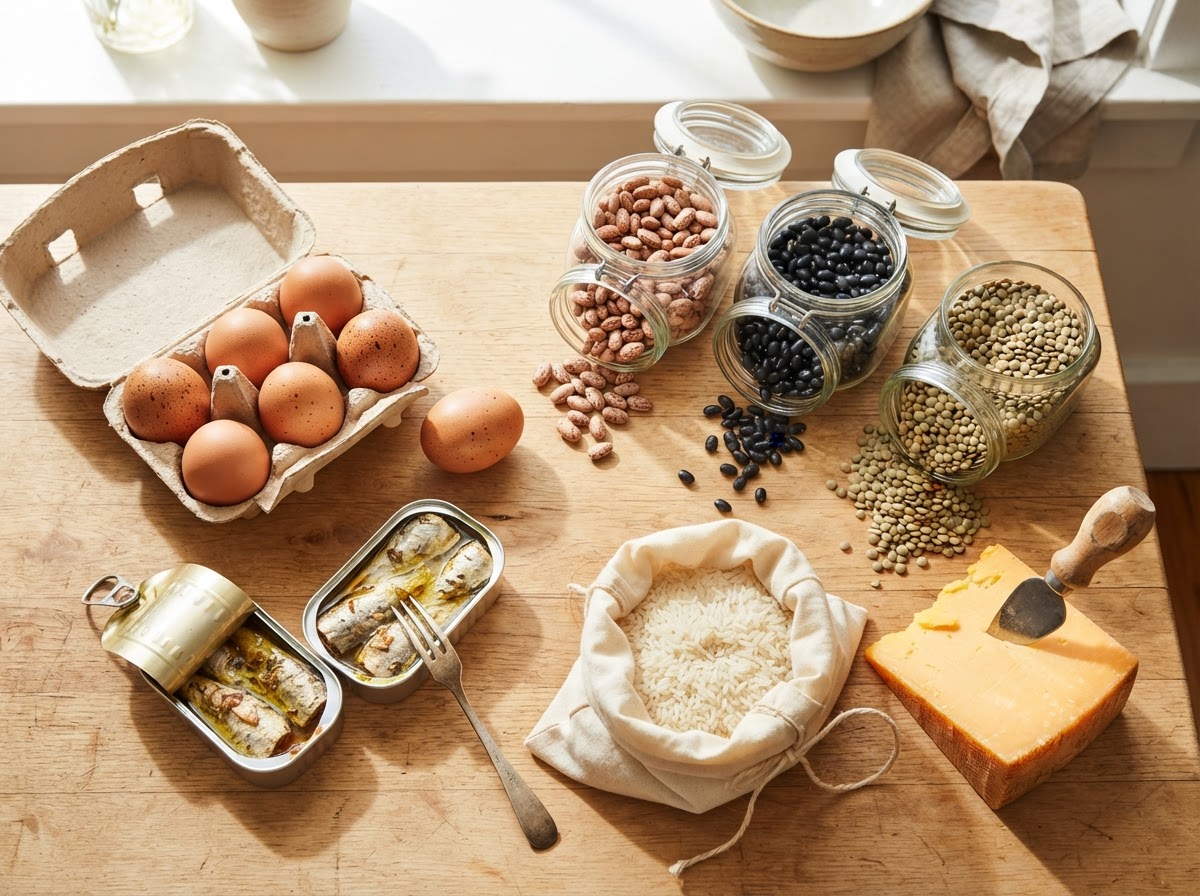
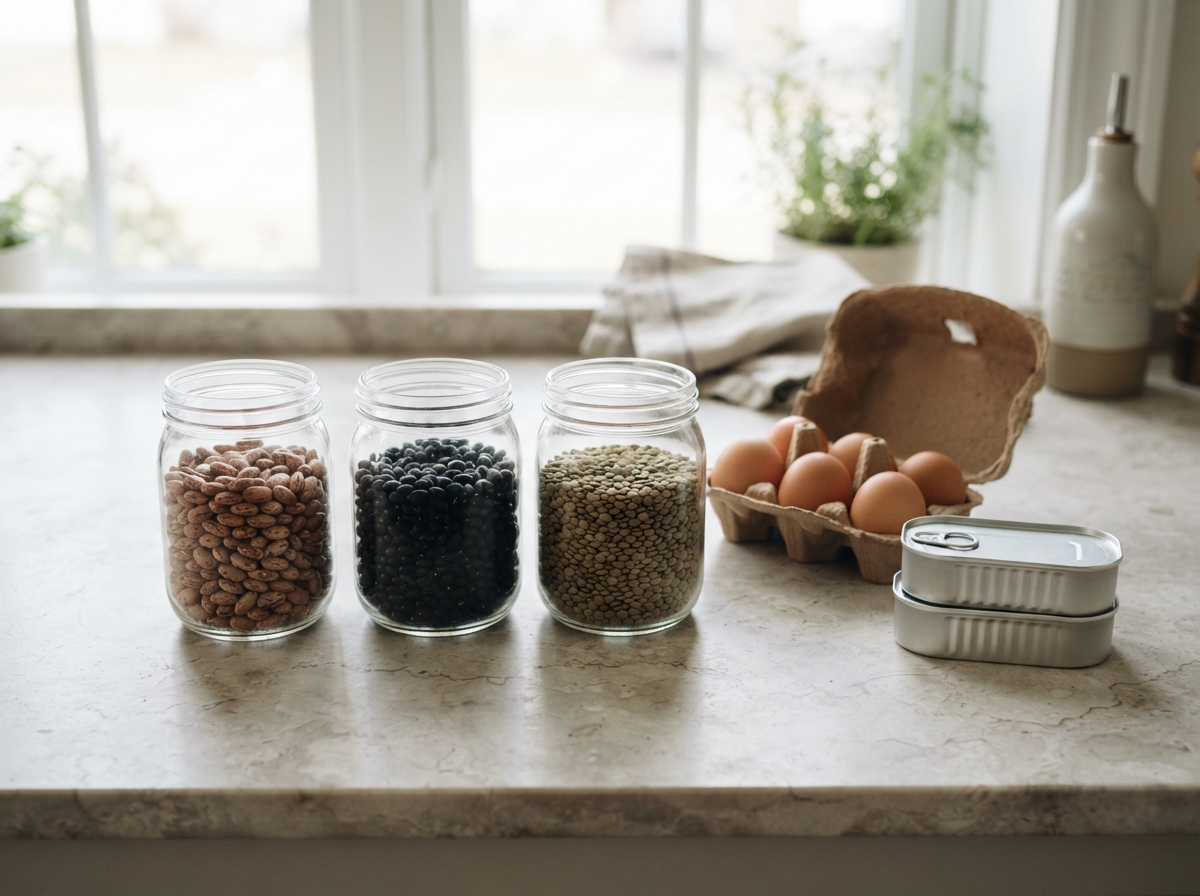
There is a structural reason. Lentils and dried beans are shelf-stable, need no refrigeration, no processing beyond drying, and no cold chain to your shop. Almost everything that makes other protein expensive has been removed. USDA Economic Research Service, pricing more than 150 fruits and vegetables from 2023 retail scanner data, found that “the least expensive options were fresh watermelon and dried pinto beans at $0.26 and $0.23 per cup equivalent, respectively.” Cheapest of the lot.
Beans also sit in two food groups at once, which is unusual. MyPlate explains why: “the nutrition found in beans, peas, and lentils are similar to foods in both the vegetables food group and the protein foods group.” One purchase, two boxes ticked.
The trade is time. Dried beans need sorting, soaking and cooking. Canned beans are, as USDA’s WIC Works materials put it, “the good kind of fast food because they’re already cooked, which is a great time-saver.” On sodium, the same source is practical: “opting for no-added-salt varieties is best, but rinsing and draining canned beans can be a heart-healthy way to reduce the sodium content.” FDA gives the same advice more broadly — “rinse sodium-containing canned foods, such as beans, tuna, and vegetables before eating. This removes some of the sodium.”
Worth saying clearly: we could not find any official source stating that dried beans cost less than canned. It is widely assumed and probably true, but nobody federal writes it down, so we are not going to put it in your mouth as a fact.
Eggs and canned fish, the other two officially cheap options
MyPlate says of eggs: “they’re a great low-cost option that’s easy to prepare.” The August 2026 price bears it out — $2.27 a dozen, which is a third what it was a year earlier.
On fish, the guidance is specific about the tin rather than the counter: “try buying canned tuna, salmon, or sardines – these store well and are a low-cost option.” That matters more than it looks, because seafood is the food group Americans miss by the widest margin, and a tin of light tuna is the cheapest route into it.
For meat, MyPlate’s advice is about how you buy rather than what: “to lower meat costs, buy the family-sized or value pack and freeze what you don’t use,” and “choose lean meats like chicken or turkey.”
What actually saves money at the till
These are the officially recommended moves, as opposed to the ones that circulate.
- Buy the dry staples in bulk. CDC: “if your shopping list includes nuts, beans, or grains, consider buying in bulk to save money and keep your pantry well stocked for future meal planning.”
- Take the store brand. CDC puts a number on it: “buying generic or store brand items can save you 20% to 30% on your food bill.”
- Shop the sales, then write the list. NIDDK: “plan meals for the week by checking store ads for sales then making your list.”
- Freeze the surplus. NIDDK again: “if you buy too much, freeze the extra for later so it doesn’t go to waste,” and use leftovers “by adding them to stews, soups, or casseroles.”
- Compare unit prices. USDA’s SNAP-Ed framework tracks whether participants “use unit pricing to find best values” as a food-resource-management behavior — it is measured, which tells you what USDA thinks of it.
Two of CDC’s tips come from its diabetes program, and its frozen-and-canned advice is specifically about produce rather than protein, so we are not stretching it to cover the meat aisle.
What changed in the last year
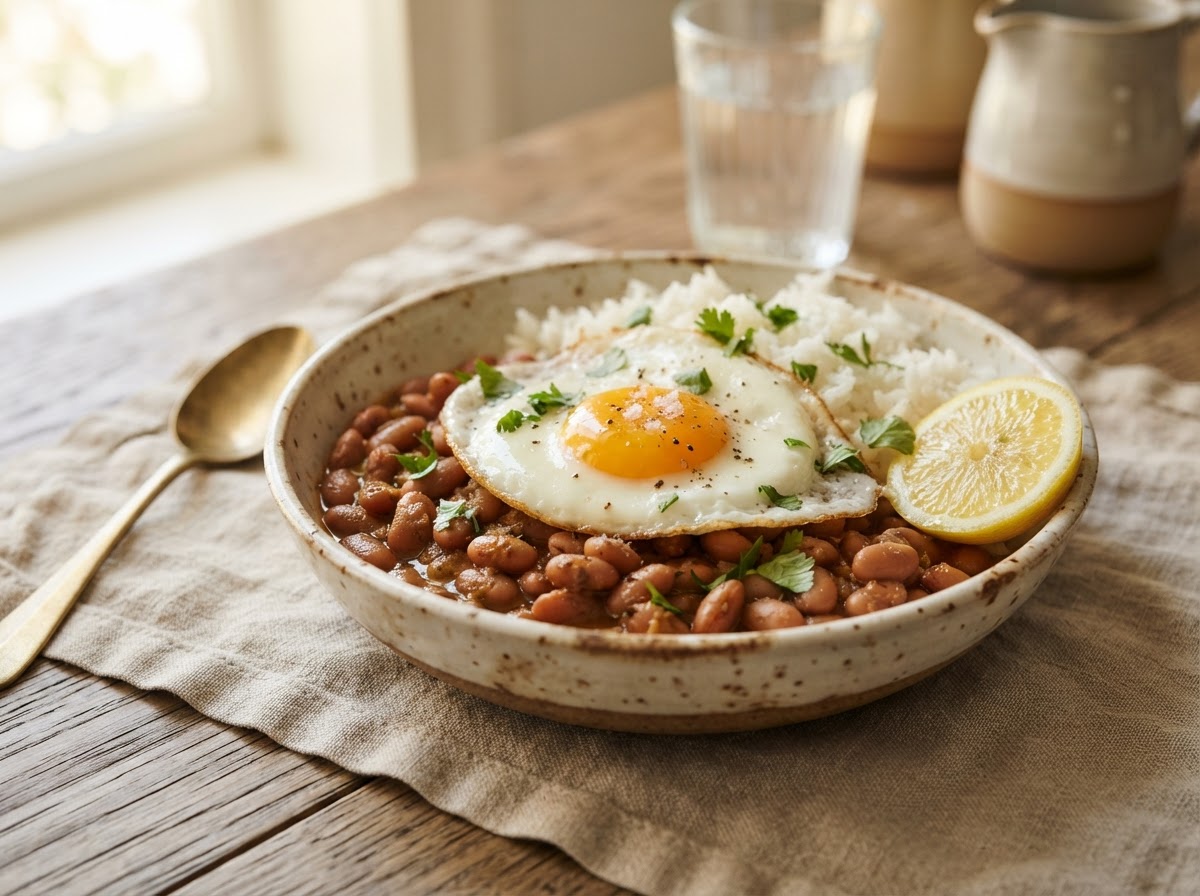
Food prices are not a fixed backdrop, and the same BLS table shows them moving in opposite directions. Between August 2025 and August 2026, eggs fell from $3.587 to $2.272 a dozen — down more than a third. Ground beef went the other way, from $6.631 to $7.158 a pound. Dried beans barely moved, $1.547 to $1.630.
The percentage changes there are our arithmetic; the dollar figures are BLS’s. The practical lesson is that the cheap protein in your basket is not a fixed list. It is worth re-checking the two or three items you buy most, once or twice a year.
For context on the whole picture, USDA Economic Research Service reports that “in 2025, U.S. consumers spent an average of 9.7 percent of disposable personal incomes on food, down from 10.4 percent in 1997,” split almost evenly between eating at home and eating out.
FAQ
What is the cheapest source of protein?
Dried beans and lentils, by a wide margin. On August 2026 prices against our own protein figures, dried pinto beans work out at roughly 66 g of protein per dollar, against about 11 g for ground beef. USDA says the same thing without the arithmetic: beans, peas and lentils “cost far less than a similar amount of other protein foods.”
How much should groceries cost per person?
USDA’s thrifty benchmark for July 2026 is $73.70 a week for a man aged 20–50 and $58.60 for a woman, both assuming a four-person household. USDA itself says to add 20 percent for someone living alone.
Is chicken breast actually cheap?
Cheaper than beef, and about half the price per pound — but around 25 g of protein per dollar against 66 g for dried beans. It is the cheapest of the meats, not the cheapest protein.
Are canned beans worth it over dried?
If time is the constraint, yes — USDA calls them “already cooked… a great time-saver.” Buy no-added-salt where you can, and rinse and drain otherwise. We could not find an official source comparing the two on price, so we are not going to claim one is cheaper.
Does buying in bulk really save money?
CDC recommends it specifically for nuts, beans and grains — the shelf-stable things that will not spoil before you get through them. That qualification is the whole trick.
What to do with this
Move one meal a week onto beans or lentils. That is the single change with the largest effect on a grocery bill, it is the one USDA explicitly endorses on cost, and it happens to fix the food group Americans miss most. Keep eggs and canned fish as the fast options. Buy the meat you do want in value packs and freeze it. And check your two or three most-bought items against current prices once or twice a year, because the answer moves.
All prices on this page are U.S. national averages for August 2026 from the Bureau of Labor Statistics, and USDA budget figures are for July 2026. They will go out of date; the ranking is far more stable than the numbers.
Related: high-protein vegetarian foods for the fuller list of plant sources; high-protein snacks for the per-100 g comparison across sixteen foods; everything you need to know about protein for how much you actually need; and eating healthy without breaking the bank for the wider shop.
Educational content, not medical advice.
This content is for educational purposes only and is not medical advice. Always consult a qualified healthcare professional for personalised guidance.