Search “best foods for fitness” and you get lists. Kale, quinoa, salmon, blueberries, sweet potato — the same dozen items, arranged differently, with no explanation of what any of them is supposed to do for your training.
The sports nutrition position stands do not work that way. They set targets — grams of protein per kilogram of bodyweight, grams of carbohydrate scaled to training hours, a fluid-loss ceiling — and then food is simply whatever gets you to those numbers. No single food is required. That reframing is the whole article: below are the actual published targets, and the foods that make hitting them straightforward.
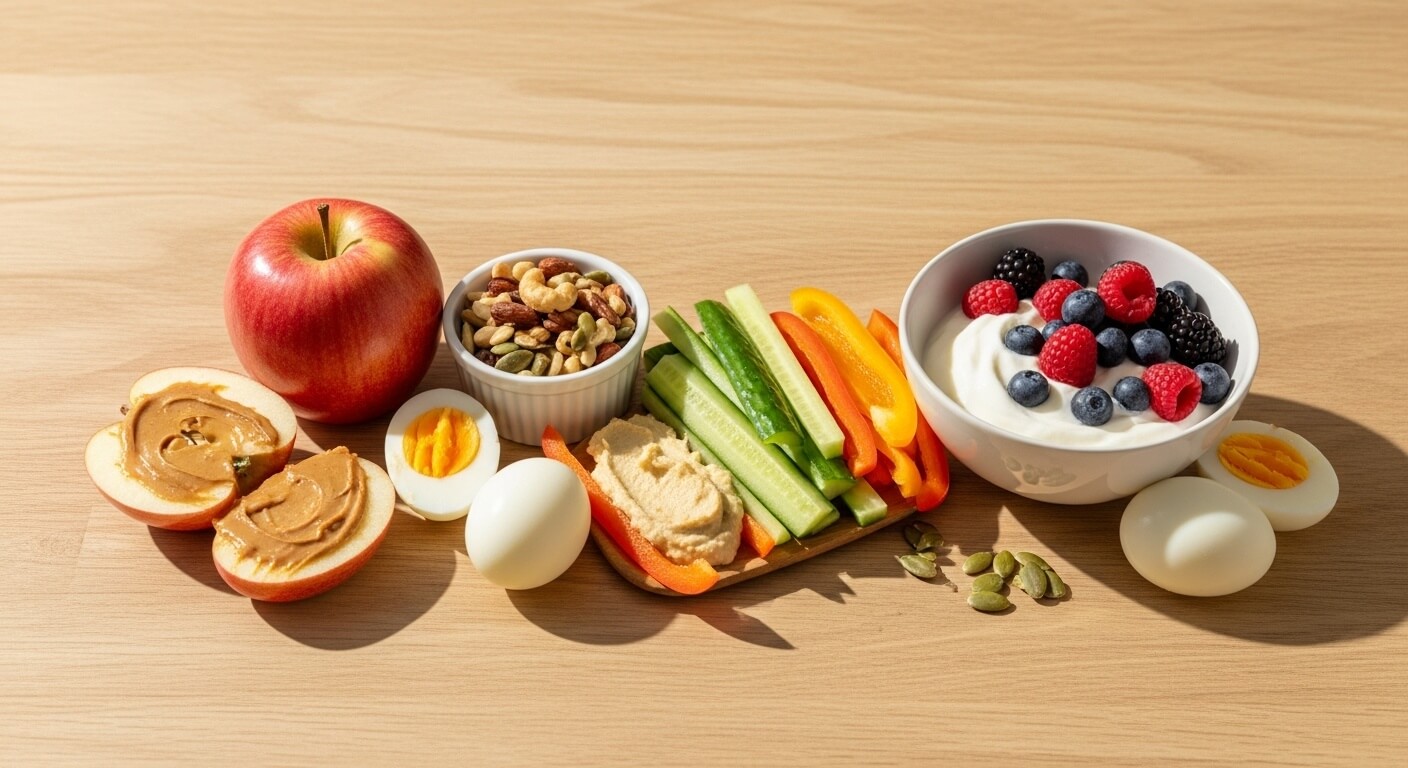
First: “superfood” is not a real category
It is worth clearing this out of the way, because it shapes every list you will read elsewhere.
The US Food and Drug Administration regulates three kinds of statement on a food label: “health claims, nutrient content claims, and structure/function claims.” “Superfood” is not among them — it is not defined, not approved, and not regulated.
UK and EU law is more explicit still. Guidance on the EU nutrition and health claims regulation puts “superfood” in the same bucket as “healthy option”: a claim about “general, non-specific benefits of a food for overall good health” that is only lawful “if they are accompanied by a specific permitted health claim.” On its own, the word is legally empty.
What this means for you: when a food is called a superfood, that tells you the marketing budget, not the nutrition. Ask what nutrient it supplies and how much — that question has an answer.
Protein: how much, and how often
Two independent position stands converge on almost the same daily range.
Full nutrition breakdowns for the staples in this section: chicken breast, salmon, eggs, Greek yogurt, cottage cheese, lentils and edamame. For your own target, use the protein calculator. For cooking fats, extra virgin olive oil versus canola oil does the same side by side.
The International Society of Sports Nutrition states that “1.4–2.0 g protein/kg body weight/day (g/kg/d) is sufficient for most exercising individuals.” The joint stand from the Academy of Nutrition and Dietetics, Dietitians of Canada and the American College of Sports Medicine puts it at “1.2 to 2.0 g/kg/d.”
For a 70 kg (154 lb) adult who trains, that is roughly 85–140 g of protein a day.
Higher intakes have one specific evidenced use. ISSN: “Higher protein intakes (2.3–3.1 g/kg/d) may be needed to maximize the retention of lean body mass” — that is, while dieting. It is not a general training recommendation. Our lean body mass and FFMI calculator estimates the lean body mass those per-kilogram figures are meant to protect.
Per meal
ISSN gives the dose as “0.25 g of a high-quality protein per kg of body weight, or an absolute dose of 20–40 g,” repeated “evenly distributed, every 3–4 h, across the day.” The ACSM/AND/DC stand lands in the same place with a tighter number: “0.25-0.3g/kg BW or 15 to 25 g protein across the typical range of athlete body sizes,” taken “every 3 to 5 hours over multiple meals.”
Going bigger does not appear to buy more: “Higher doses (i.e., >40 g dietary protein) have not yet been shown to further augment MPS” (muscle protein synthesis).
Quality matters alongside quantity. ISSN specifies that each dose should “contain 700–3000 mg of leucine and/or a higher relative leucine content, in addition to a balanced array of the essential amino acids.” Note the range — this is not a single threshold you cross. We go into which foods carry a full amino acid profile in complete amino acid foods, and into why the protein on a label is not always the protein you absorb in protein bioavailability and absorption.
Foods that get you there
USDA MyPlate defines protein foods in ounce-equivalents rather than grams per serving. We use their units here because they are traceable to a government source; grams-per-portion figures circulating online usually are not.
| 1 ounce-equivalent of protein food |
|---|
| 1 ounce cooked lean beef, goat, ham, lamb, or pork |
| 1 ounce cooked (without skin) chicken, ostrich, or turkey |
| 1 ounce cooked finfish |
| 1 egg |
| ¼ cup of cooked beans, peas or lentils |
| ½ ounce of nuts |
| 1 tablespoon of almond, cashew, peanut, or sunflower butter |
| 6 tablespoons hummus |
MyPlate’s daily amounts for adults 19–30 are “5 to 6½ oz-equiv” for women and “6½ to 7 oz-equiv” for men. Those are general population figures — if you train, the g/kg targets above are the ones to work from, and they will usually land higher.
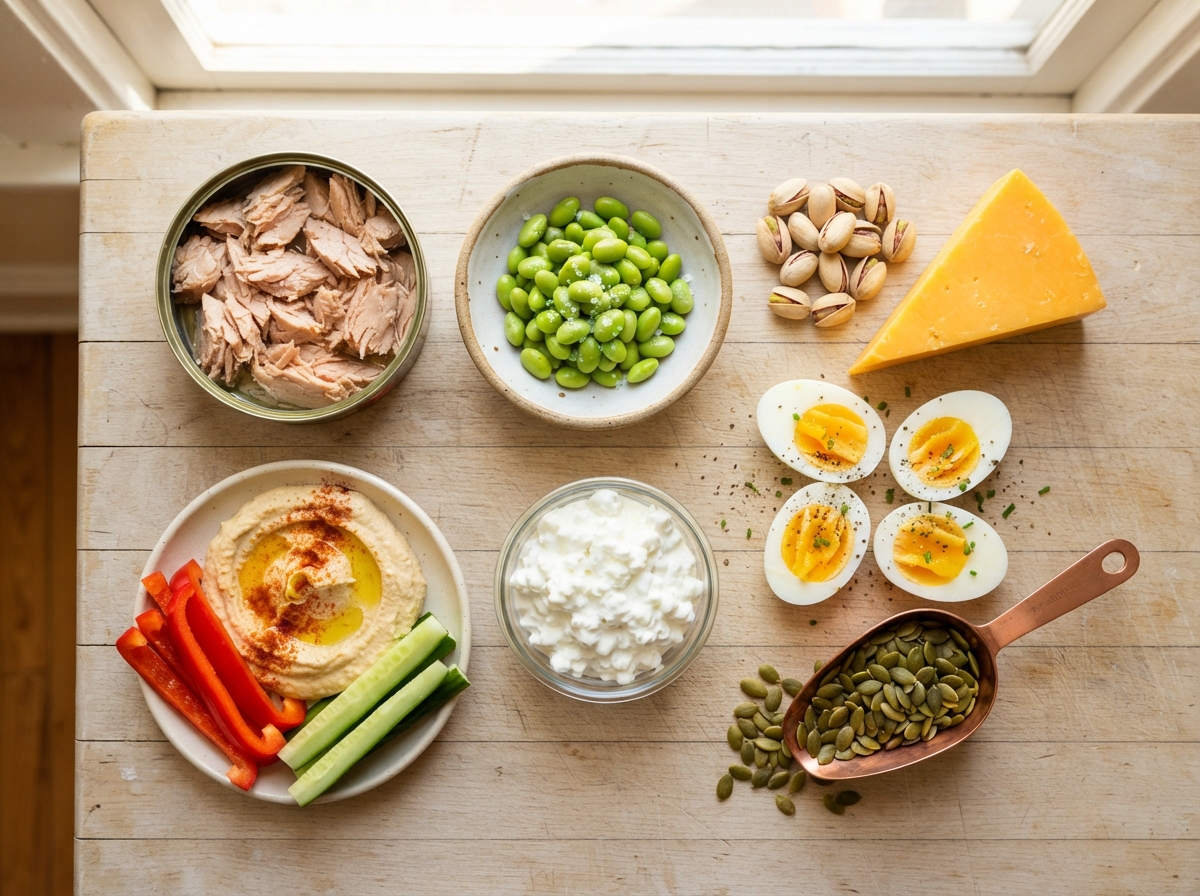
A few USDA Standard Reference figures, for scale: 3 oz of cooked wild coho salmon supplies 23.26 g of protein; 3 oz of roasted turkey breast, 25.61 g; one large egg, 6.28 g; a 6 oz container of plain low-fat yogurt, 8.93 g.
ISSN is direct about whether you need powders: “it is possible for physically active individuals to obtain their daily protein requirements through the consumption of whole foods.” Supplements are called “a practical way of ensuring intake” — convenience, not necessity. If budget is the constraint, see affordable high-protein foods.
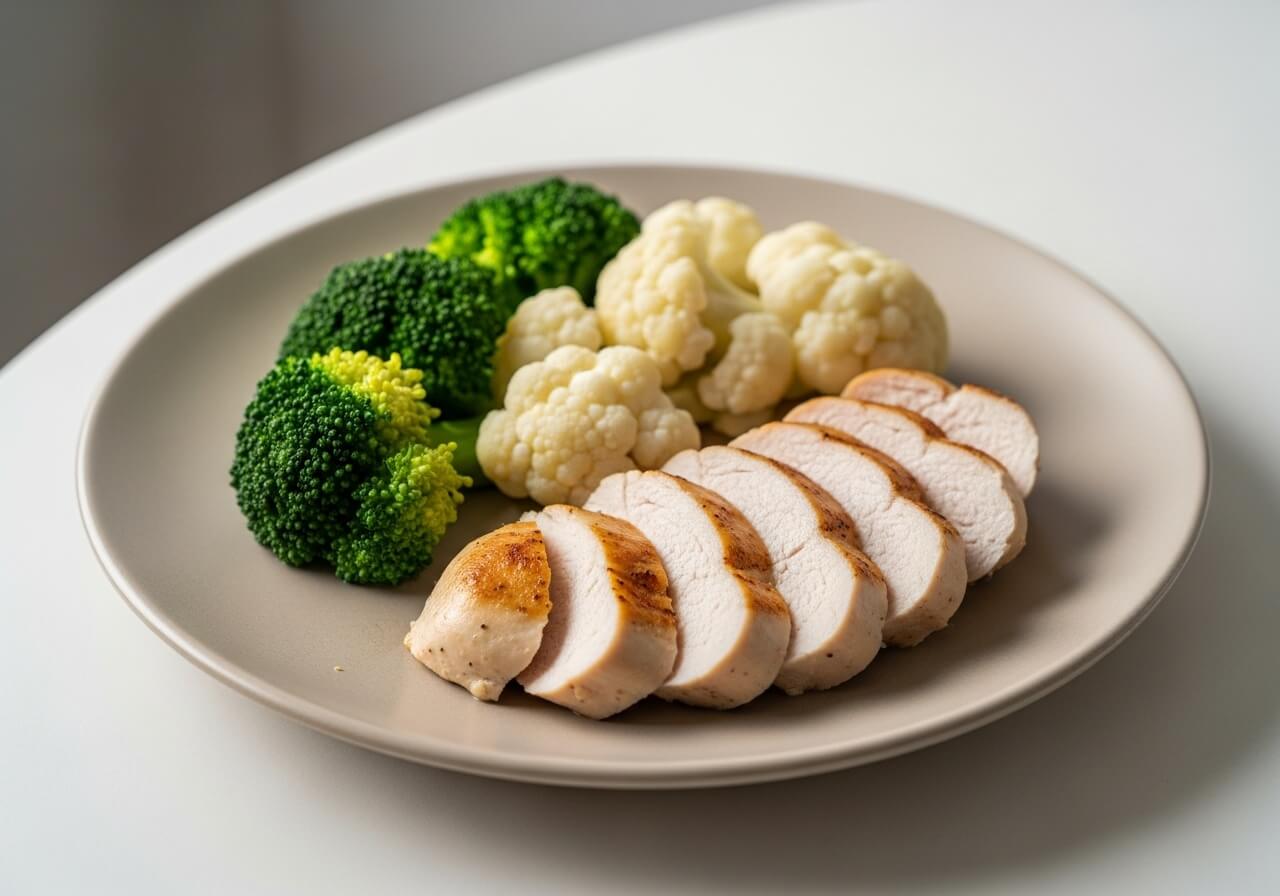
Carbohydrate: scaled to how much you actually train
This is where most “fitness food” advice goes wrong — it hands everyone the same carbohydrate advice regardless of whether they lift twice a week or ride four hours a day. The ACSM/AND/DC stand tiers it:
Carbohydrate staples with full numbers: oats, rice, whole-grain pasta, sweet potatoes and bananas. Your training-day calorie level comes out of the TDEE calculator.
| Training load | Carbohydrate target |
|---|---|
| Low intensity or skill-based activities | 3–5 g/kg bodyweight/day |
| Moderate exercise program (e.g., ~1 h/d) | 5–7 g/kg/day |
| Endurance program (e.g., 1–3 h/d moderate–high intensity) | 6–10 g/kg/day |
| Extreme commitment (e.g., >4–5 h/d moderate–high intensity) | 8–12 g/kg/day |
Most recreational gym-goers sit in the first two rows. The 6–10 g/kg figure that gets quoted as “what athletes eat” belongs to people doing one to three hours a day of endurance work. For a 70 kg person training an hour a day, 5–7 g/kg is 350–490 g of carbohydrate — from grains, potatoes, fruit, dairy and legumes, not from a specific branded product.
MyPlate counts grains in ounce-equivalents too: “½ cup, cooked” oatmeal, or “1 ounce (⅓ cup), dry”; one regular slice of bread; “½ cup, cooked” rice or pasta. Adults 19–30 are advised “6 to 8 oz-equiv” (women) or “8 to 10 oz-equiv” (men) of total grains daily, with at least half whole grain.
If you compete in endurance events, deliberate carbohydrate manipulation before a race is its own subject — we cover it in carbohydrate loading for athletes.
Fat: the floor matters more than the ceiling
The position stand does not give athletes a special fat target. It says intake “should be in accordance with public health guidelines and should be individualized based on training level and body composition goals.”
It does set a floor, and the reasoning is about food variety rather than fat itself: athletes “should be discouraged from chronic implementation of fat intakes below 20% of energy intake since the reduction in dietary variety often associated with such restrictions is likely to reduce the intake of a variety of nutrients such as fat-soluble vitamins and essential fatty acids.”
Practically: olive oil, nuts, seeds, avocado, whole eggs and oily fish. Oily fish does double duty — it is also one of the few foods with meaningful vitamin D, which we come back to below.
Fluids: a target, not a number of glasses
The performance-relevant figure is a loss, not an intake. Per the ACSM/AND/DC stand, “fluid deficits of >2% BW can compromise cognitive function and aerobic exercise performances,” with anaerobic decrements “more commonly seen when 3% to 5% of BW is lost.”
Their practical protocol:
- Before: “5-10 ml/kg BW in the 2 to 4 hours before exercise”
- During: roughly “0.4 to 0.8 L/h”, aiming to keep the deficit under 2% of bodyweight
- After: “1.25-1.5 L fluid for every 1 kg BW lost” — that is 125–150% of what you lost
To know your own number: “Routine measurement of pre- and post-exercise BW … can help the athlete estimate sweat losses.” Weigh yourself before and after a typical session; each kilogram lost is roughly a liter of sweat.
More is not better. The same stand identifies “over-drinking fluids in excess of sweat and urinary losses” as “the primary cause of hyponatremia” — a dilution of blood sodium whose listed consequences run to “seizures, respiratory distress, loss of consciousness, and possibly death.” CDC/NIOSH heat guidance sets a hard cap: “Do not drink more than 48 oz (1½ quarts) per hour!”
What about the 3.7 L / 2.7 L figures you have seen? Those are the National Academies‘ Adequate Intakes for total water for adults 19–30 — and total water includes food. The same report attributes roughly “19 percent of total water intake” to food, putting the beverage share at 3.0 L for men and 2.2 L for women. It also warns that “the AI should not be interpreted as a specific requirement.” For different training modes and durations, see hydration strategy by exercise type.
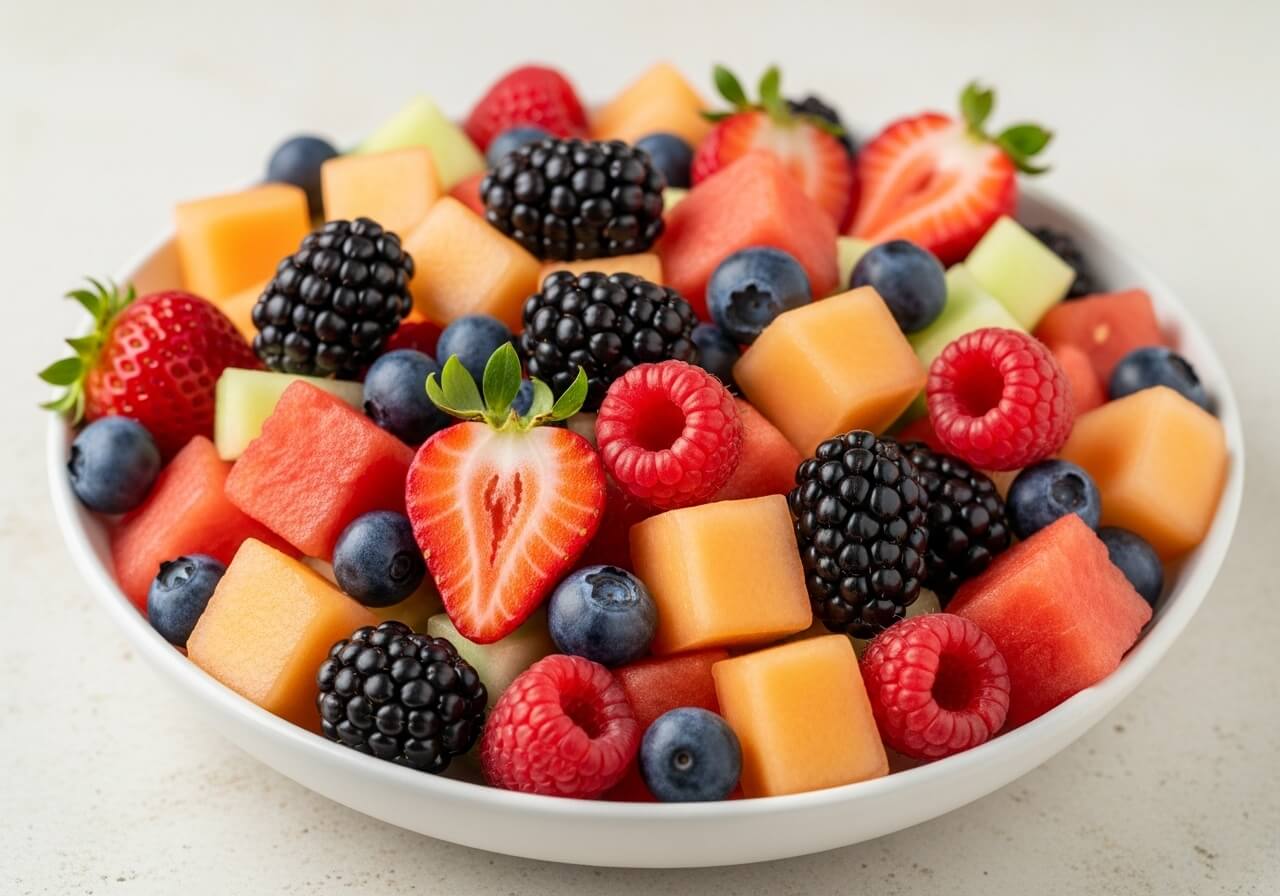
Electrolytes: fewer people need them than are sold them
The threshold is specific. Sodium replacement during exercise is indicated for “athletes with high sweat rates (> 1.2 L/h)” or “prolonged exercise exceeding 2 hours.” Sweat sodium “approximates 50 mmol/L (~1 g/L).” For a 45-minute gym session, water and your next meal cover it.
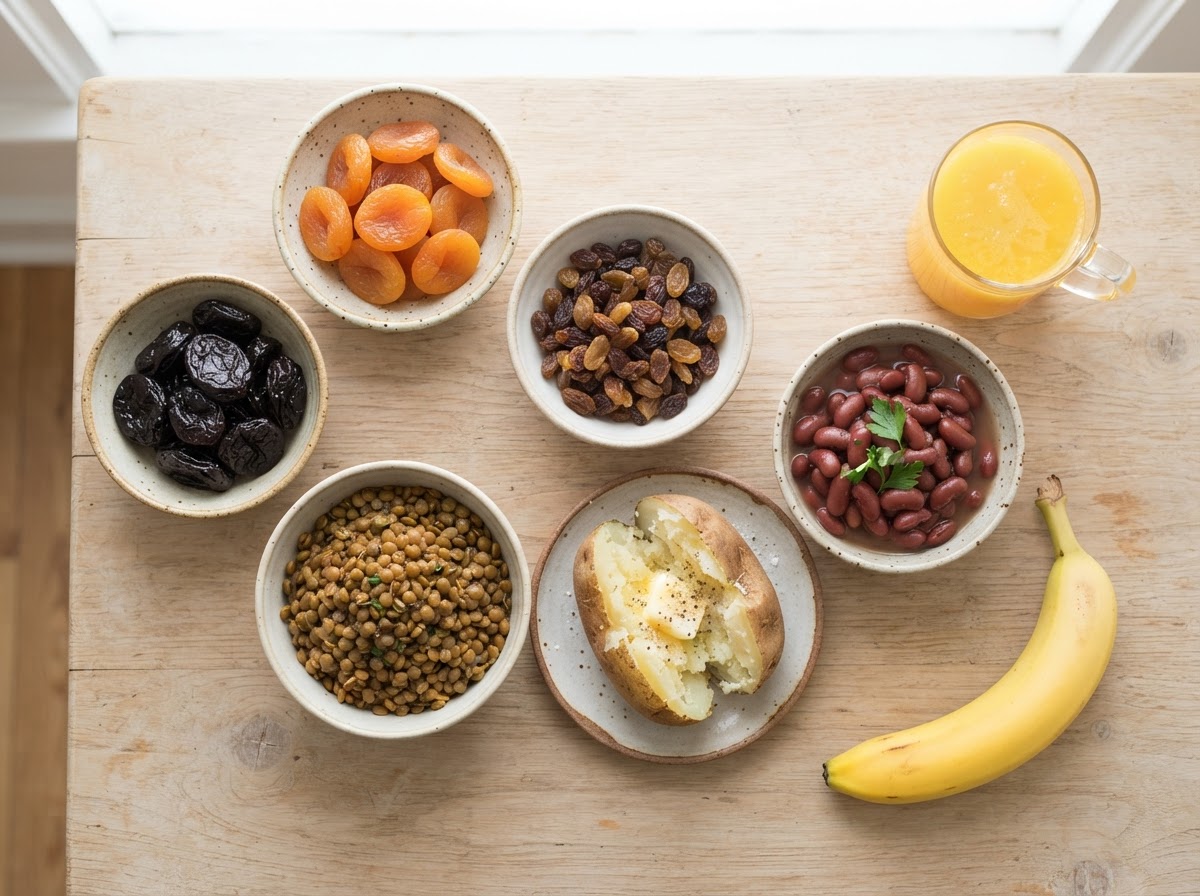
Potassium is the one people worry about needlessly: NIH’s Office of Dietary Supplements notes that “a very small amount is lost in sweat.” Its dietary sources are ordinary — “milk, coffee, tea, other nonalcoholic beverages, and potatoes” lead US intake, with a baked potato supplying about 610 mg and a serving of lentils 731 mg. Note that the 4,700 mg figure on food labels is the FDA Daily Value; the current Dietary Reference Intake is 3,400 mg for men and 2,600 mg for women.
The micronutrients that actually run short
The position stand names them, and the list is shorter than the supplement aisle suggests. Shortfalls occur “most frequently in the case of calcium, vitamin D, iron, and some antioxidants” — and mainly among athletes who “frequently restrict energy intake, rely on extreme weight-loss practices, eliminate one or more food groups from their diet, or consume poorly chosen diets.”
Iron. The RDA is 8 mg for men and 18 mg for women aged 19–50. The stand adds that “iron requirements for all female athletes may be increased by up to 70% of the estimated average requirement.” Form matters: “lean meat and seafood are the richest dietary sources of heme iron, while nuts, beans, and vegetables contain nonheme iron,” and absorption runs “approximately 14% to 18% from mixed diets” versus “5% to 12% from vegetarian diets.”
Vitamin D. The RDA is 600 IU (15 mcg) for adults to age 70, 800 IU after. Food sources are thin: “the flesh of fatty fish (such as trout, salmon, tuna, and mackerel) and fish liver oils are among the best sources,” while “beef liver, egg yolks, and cheese have small amounts.” Most US intake comes from fortification — “almost all of the U.S. milk supply is voluntarily fortified with about 3 mcg/cup (120 IU).” Beyond bone, ODS notes vitamin D “is also needed for the normal development and growth of muscle fibers.”
Calcium. MyPlate’s dairy group counts “1 cup milk” or “1 cup yogurt (dairy or fortified soy)” as a cup-equivalent, with 3 cups a day for adults 19–30.
Before you buy anything: the position stand is unambiguous that “the intake of vitamin and mineral supplements does not improve performance unless reversing a pre-existing deficiency.” It also advises against guessing — rather than “self-diagnosing the need for micronutrient supplementation,” athletes should “seek clinical assessment of their micronutrient status.” For iron in particular, the Office of Dietary Supplements describes “conflicting evidence on whether milder iron deficiency without anemia impairs exercise performance.” Unprescribed iron is not a performance product.
What a day looks like
Pulling the targets together for a 70 kg adult training around an hour a day:
| Target | Amount | Where it comes from |
|---|---|---|
| Protein | ~98–140 g/day, in 20–40 g doses every 3–4 hours | Eggs, fish, poultry, lean meat, dairy, legumes, tofu, nuts |
| Carbohydrate | ~350–490 g/day (5–7 g/kg) | Oats, rice, pasta, bread, potatoes, fruit, legumes, dairy |
| Fat | Public-health guidance; not chronically under 20% of energy | Olive oil, nuts, seeds, avocado, whole eggs, oily fish |
| Fluid | Keep session losses under 2% of bodyweight; replace 125–150% after | Water; food contributes ~19% of total water |
| Micronutrients | Cover iron, vitamin D, calcium through food first | Oily fish, fortified dairy, lean meat, leafy greens, legumes |
Notice what is absent: no single hero food, no mandatory powder, no branded drink. Notice also that timing is not in the table — that is a separate question, and a smaller one than it is usually made out to be. We handle it in the science of nutrient timing and protein timing for muscle building.
Six claims we are not going to make
Each of these appears in most “best fitness foods” articles. Each is either unsupported by the position stands or contradicted by them.
| Common claim | What the sources actually say |
|---|---|
| “Eat 1 g of protein per pound of bodyweight” | ≈2.2 g/kg exceeds both stands’ ranges. The 2.3–3.1 g/kg figure applies only to preserving lean mass in a calorie deficit. |
| “Your body can only use 30 g of protein per meal” | No source describes an absorption cap. ACSM says doses over 40 g simply “have not yet been shown to further augment MPS.” |
| “You have a 30-minute anabolic window” | ISSN: the anabolic effect of exercise “is long-lasting (at least 24 h).” |
| “Drink eight glasses of water a day” | The National Academies panel that set the water intakes stated: “We don’t offer any rule of thumb based on how many glasses of water people should drink each day.” |
| “Superfood X boosts performance” | Not a regulated or defined category in US, UK or EU food law. |
| “A multivitamin gives you an edge” | Only “reversing a pre-existing deficiency” is supported. |
FAQ
Is there a single best food for fitness?
No, and no position stand names one. The published targets are for protein, carbohydrate, fat and fluid — any combination of ordinary foods that meets them works. Foods that make it easier are the ones dense in what you are short of, which differs from person to person.
Do I need protein powder?
Not to meet the targets. ISSN states plainly that daily protein requirements can be met “through the consumption of whole foods” and describes supplementation as “a practical way of ensuring intake” — a convenience.
How much protein should I eat in one sitting?
ISSN: “0.25 g of a high-quality protein per kg of body weight, or an absolute dose of 20–40 g.” The ACSM/AND/DC stand gives 0.25–0.3 g/kg, or 15–25 g for typical body sizes. Spacing doses every three to four hours is recommended by both.
Do I need a sports drink for a gym session?
Almost certainly not. Sodium replacement during exercise is indicated for sweat rates above 1.2 L/h or sessions over two hours. Below that, water and your next meal cover it.
How do I know if I am drinking enough?
Weigh yourself before and after a typical session. Losing more than 2% of your bodyweight means you were under-drinking; each kilogram lost is roughly a liter of sweat, and the stand advises replacing 125–150% of it afterwards.
Should I take iron if I train hard?
Not without testing. Female athletes do have elevated needs — the stand puts the increase at up to 70% of the estimated average requirement — but the Office of Dietary Supplements describes conflicting evidence for supplementing iron deficiency without anemia, and the position stand advises clinical assessment over self-diagnosis.
This content is for educational purposes only and is not medical advice. Always consult a qualified healthcare professional for personalised guidance.