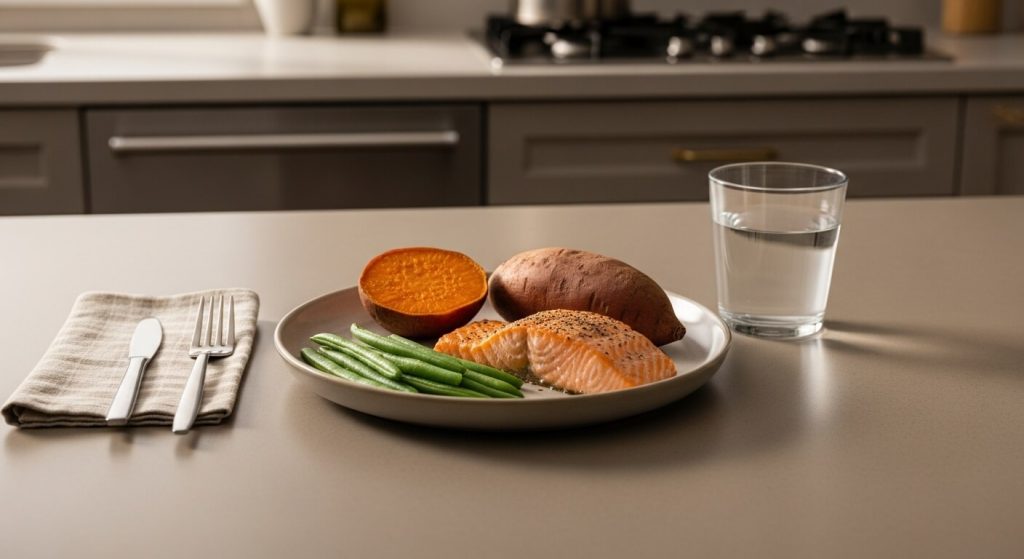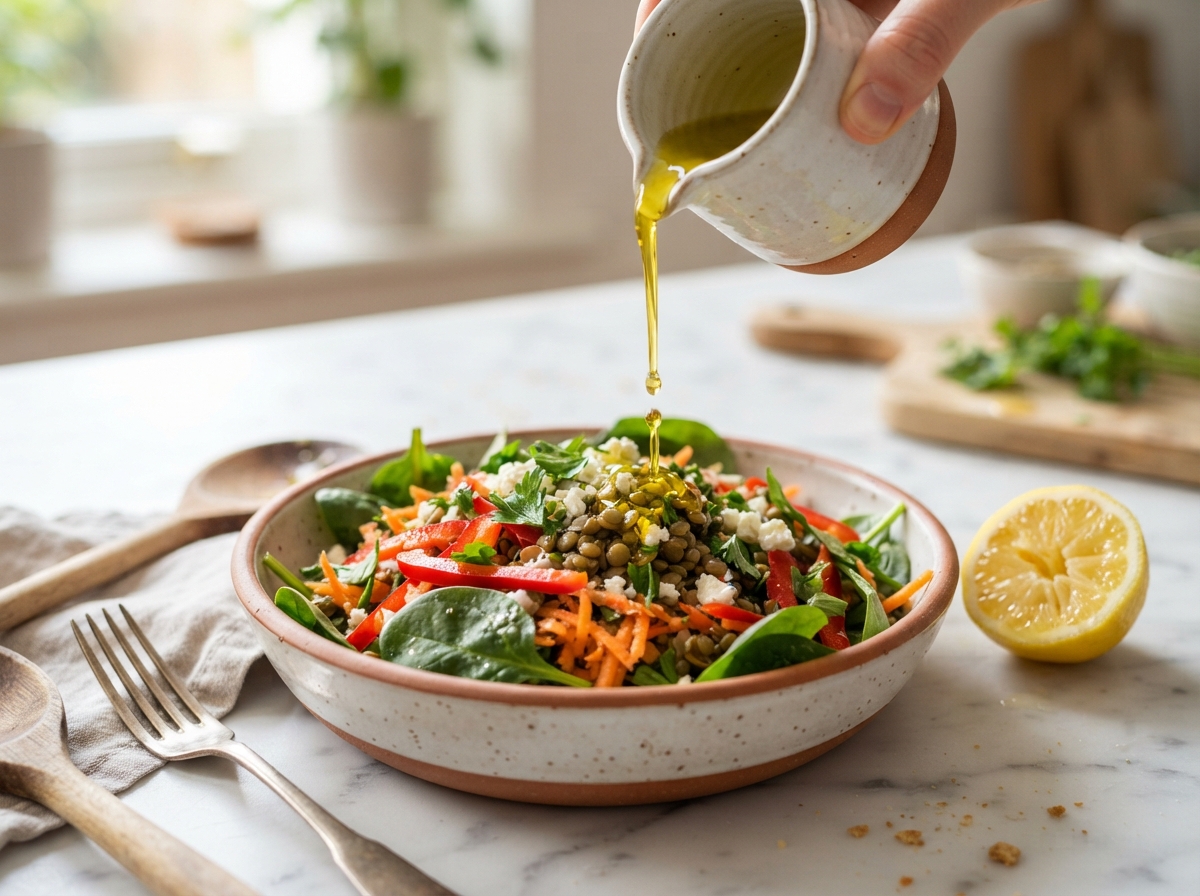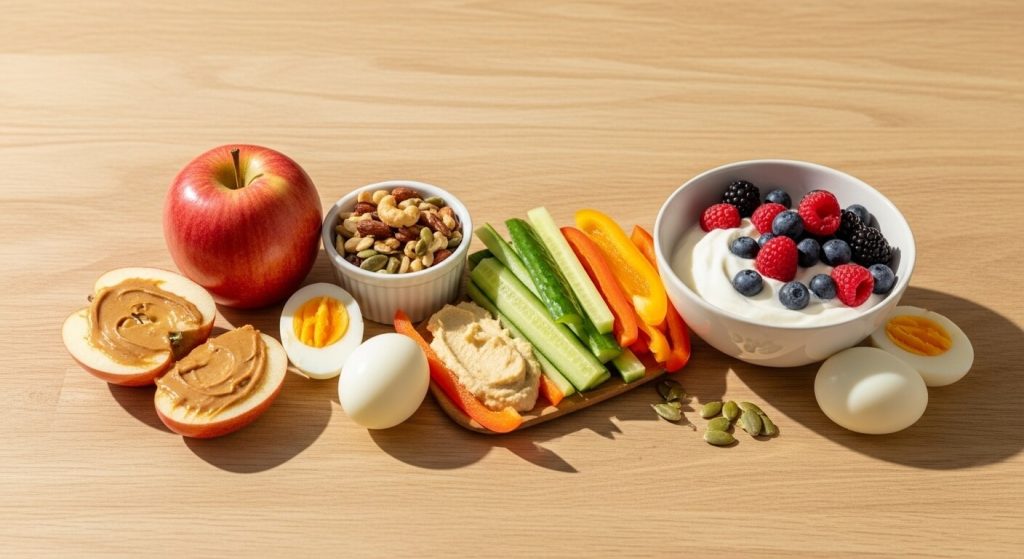
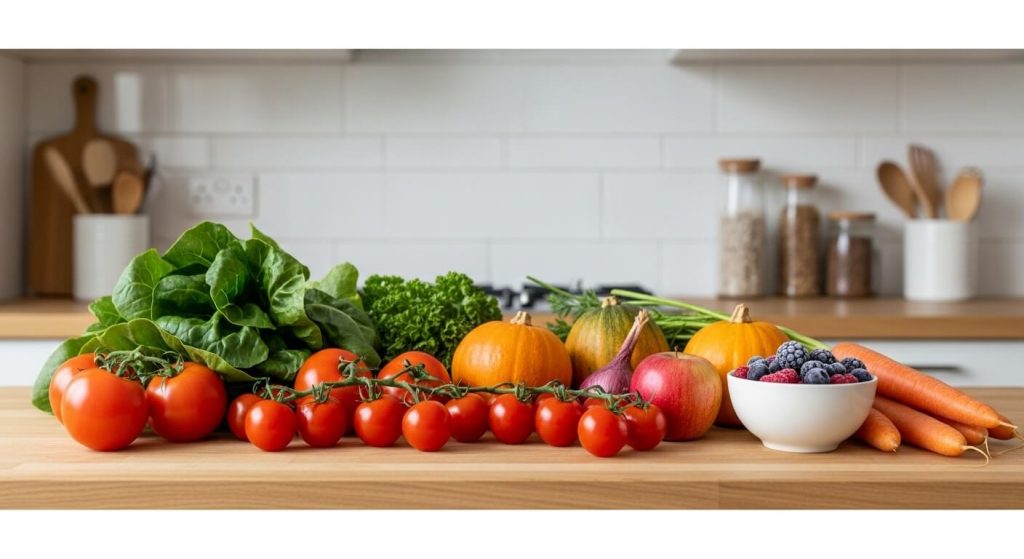
Seasonal eating is sold on a nutritional promise. That promise turns out to be the one part of it with no official support: no US agency claims seasonal or locally grown produce is more nutritious. What does change is real, measurable and worth knowing — it is just not what the marketing says. What we cook from the autumn list: vegetable soup and butternut squash with black beans.
The short version
- No agency says seasonal produce is more nutritious. USDA’s own seasonal guide frames the benefit as cost and variety.
- Storage changes nutrients far more than the calendar does — and not always downward.
- Frozen is comparable to fresh on most vitamins, with named exceptions that go both ways.
- Cooking method costs more vitamin C than shipping does: boiling broccoli loses about a third.
- “Local” has no general labeling standard — only a 400-mile definition for one federal program.
- Only about one American in ten meets the vegetable recommendation. Getting more in, in any form, beats optimising the form.
What the agencies actually say
USDA publishes a Seasonal Produce Guide. It never claims a nutritional advantage. Its framing is availability and variety — “fresh, frozen, canned, and dried: fruits and vegetables are a delicious way to make every bite count” — and it notes that what is in season varies by location and climate.
USDA’s consumer advice on seasonal buying is about money: “It’s true that buying seasonal fruits and veggies can save you money.” The same page recommends frozen and canned as budget-friendly alternatives when you need out-of-season items.
And the Dietary Guidelines for Americans 2025–2030 do not mention seasonality or local sourcing anywhere. Their instruction is simpler: “Eat a variety of colorful, nutrient-dense vegetables and fruits,” three servings of vegetables and two of fruit a day on a 2,000-calorie pattern.
What storage does — the real numbers
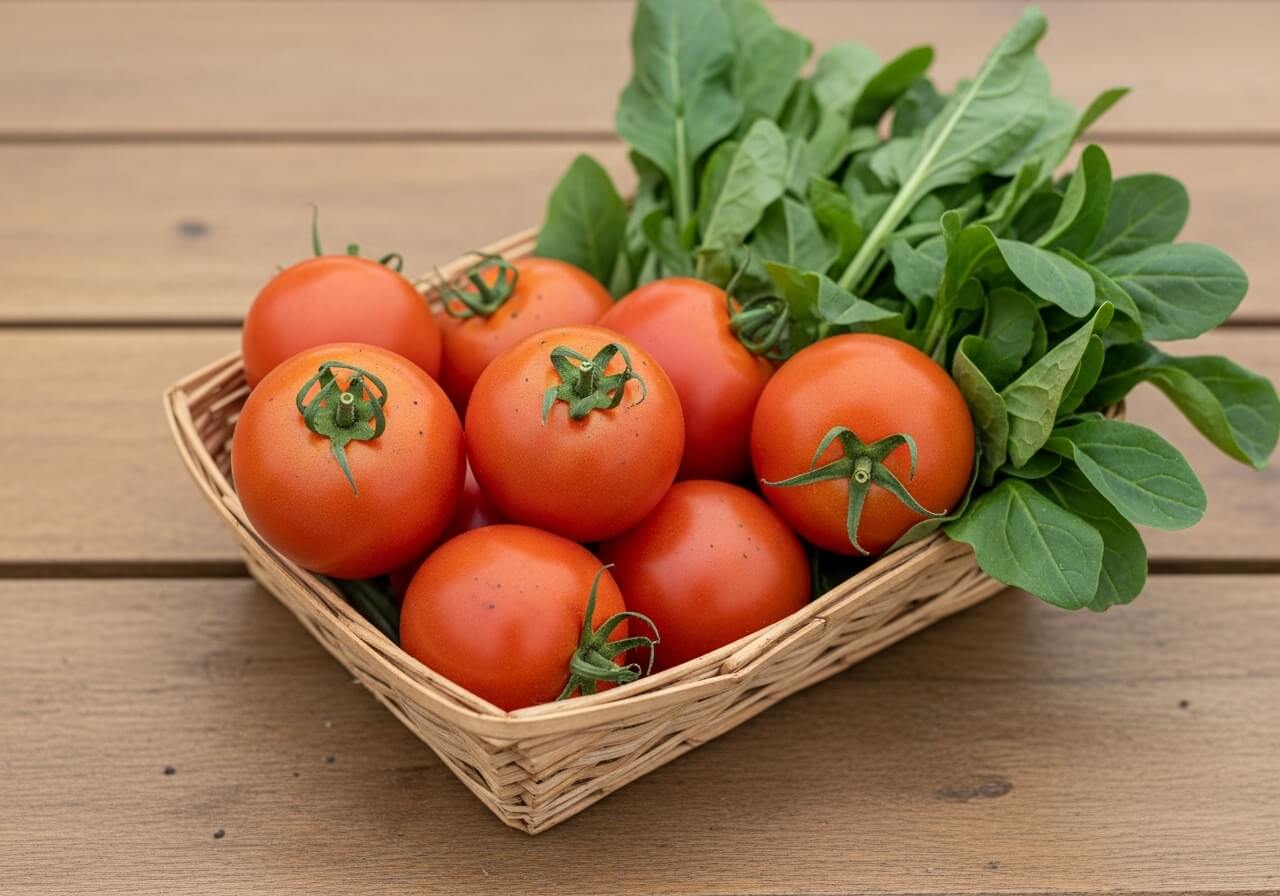
Here is where measurable change happens. The NIH states the principle: “The vitamin C content of food may be reduced by prolonged storage and by cooking because ascorbic acid is water soluble and is destroyed by heat.” No percentage — because it depends entirely on the food.
A 2017 study measured vitamin C after 15 days in a refrigerator at 4 °C:
| Food | Vitamin C after 15 days at 4 °C |
|---|---|
| Tomato | −71.8% |
| Sugar beet | −49.4% |
| Spinach | −32.0% |
| Pomegranate | +34.4% |
The pomegranate result is why a single headline figure for “produce” cannot be defended. Storage effects run in both directions and differ by an order of magnitude between foods.
Temperature matters more than time. Research at Penn State found fresh spinach kept at 39 °F retained only 53% of its folate after eight days — but at 50 °F, 47% was lost within six days, and at 68 °F comparable loss happened in four. The researchers’ summary: “substantial nutrient-loss occurred at all storage temperatures.”
The comparison nobody makes. Cooking costs more vitamin C than shipping. In broccoli, measured losses by method are 16% microwaved, 24% fried, 33% water-boiled and 38% boiled then fried — with steaming causing minimal loss. If vitamin C is the concern, switching from boiling to steaming does more than sourcing ever will.
Frozen versus fresh, honestly
A controlled study compared fresh, refrigerated-for-five-days and frozen versions of eight foods — corn, carrots, broccoli, spinach, peas, green beans, strawberries and blueberries. Its headline: “the vitamin content of the frozen commodities was comparable to and occasionally higher than that of their fresh counterparts.” Vitamin C showed no significant difference in five of eight, and was higher frozen in the other three.
Two things stop that from becoming “frozen is always as good”:
- The same study found “β-Carotene… was found to decrease drastically in some commodities” — peas, carrots and spinach were lower frozen.
- A second study found frozen spinach lowest of all three forms on vitamin C: 14.5 mg/100 g frozen against 25.2 fresh and 19.6 refrigerated. Its authors also disclose funding from the Frozen Food Foundation, which is worth knowing when reading a favourable result.
The same second study’s broader finding still holds and is the practical one: across most comparisons there were no significant differences, and frozen outperformed refrigerated-fresh more often than the reverse. A bag of frozen peas beats the fresh ones that have been in your drawer since Tuesday.
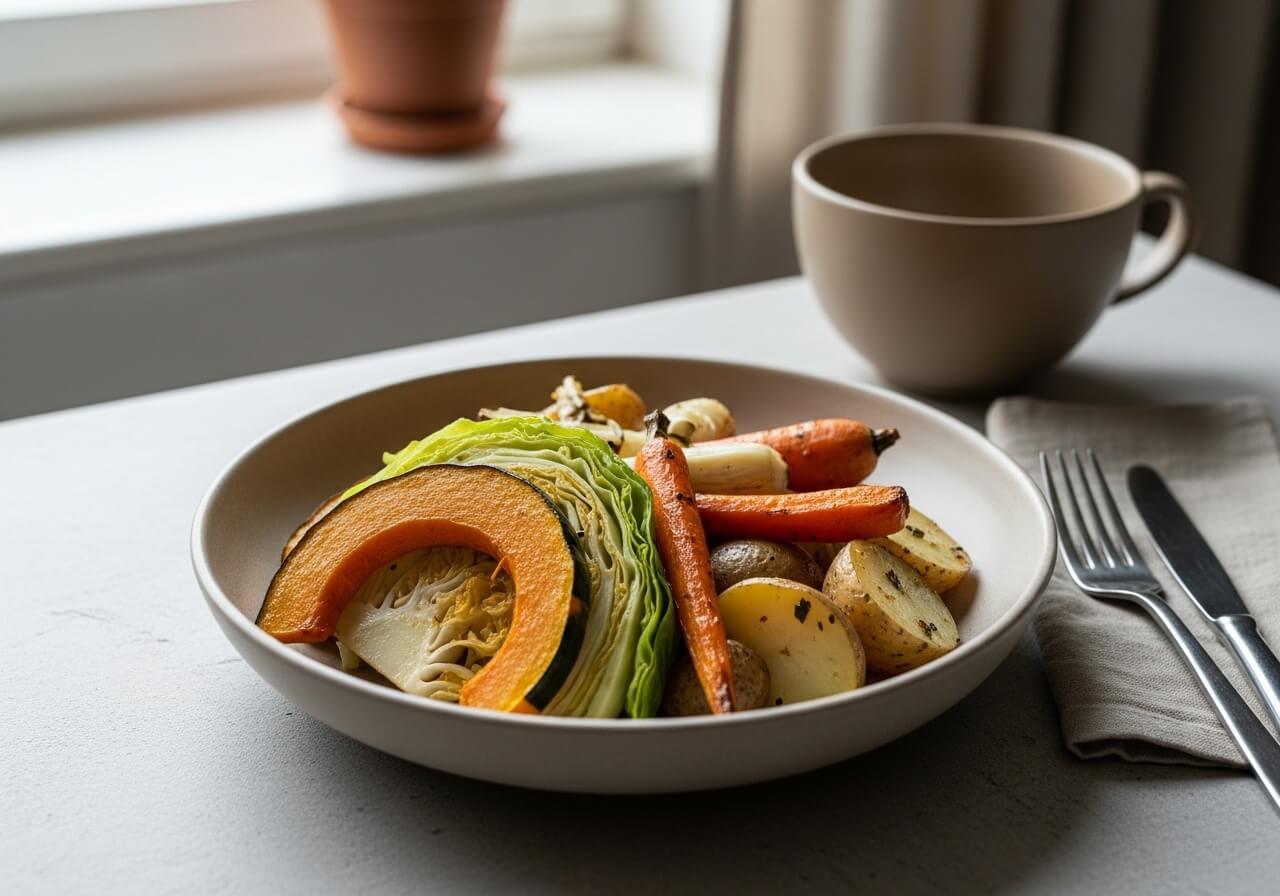
The agencies treat form as neutral, with one condition. The Dietary Guidelines say “frozen, dried, or canned vegetables or fruits with no or very limited added sugars can also be good options” — the condition being the added sugars and, for canned vegetables, the sodium. How to check both is in our guide to reading a nutrition label.
“Local” — what it does and does not mean
There is a statutory definition, and it covers exactly one thing: eligibility for a federal program. Under the 2008 Farm Act, a locally or regionally produced agricultural food product is one transported “less than 400 miles from its origin, or within the State in which it is produced.”
For a label in a shop, there is nothing. USDA’s own report states it plainly: “Unlike organic food, there is no legal or universally accepted definition of local food.” Compare that with “healthy”, which the FDA defines by rule, or “organic”, which USDA certifies — words covered in our guide to what food label claims legally mean.
The same USDA report notes the evidence is insufficient to say whether local food availability even improves diet quality. Buying local supports nearby farms and often tastes better. Those are good reasons. Nutrition is not one of them.
What genuinely changes with the season: price
This is the part with real data behind it. USDA’s Economic Research Service prices 155 fresh and processed products per cup-equivalent. In its 2023 data, fresh watermelon cost $0.26 and dried pinto beans $0.23 per cup-equivalent, against canned cherries at $4.28 — the most expensive fruit product measured.
Processing is not reliably the expensive option either. Fresh apples were $0.50 per cup-equivalent against $0.65 for applesauce — but canned corn was $0.68 against $1.42 fresh, and frozen raspberries $2.05 against $2.65 fresh.
And a fact that quietly undercuts the whole seasonal frame. Between 2007 and 2023, imports rose from 50% to 59% of US fresh fruit availability and from 20% to 35% for fresh vegetables. As ERS puts it, “Imports play an increasingly important role in ensuring that fresh fruit and vegetables are available year-round in the United States.” Much of what looks seasonal on a US shelf is in season somewhere else.
The number that matters more than any of this
CDC data from 2019, published in 2022, found that “12.3% of adults met fruit recommendations … and 10.0% met vegetable recommendations.” USDA puts the average American at 0.9 cups of fruit and 1.4 cups of vegetables a day against targets roughly double that.
Against a gap that size, the fresh-versus-frozen question is a rounding error. The useful move is more plants in any form you will actually eat — and seasonal shopping helps mainly because in-season produce is cheaper, so more of it ends up in the basket.
FAQ
Is seasonal produce more nutritious?
No agency or systematic review says so. USDA’s seasonal guide makes no nutritional claim, and the Dietary Guidelines do not mention seasonality at all. The reliable benefits are price, flavor and variety.
Does produce lose most of its vitamins in transit?
There is no defensible single figure. Measured storage effects range from −72% vitamin C in tomatoes to +34% in pomegranates over the same fifteen days. Temperature and the specific food decide it.
Is frozen as good as fresh?
Comparable on most vitamins, and often better than fresh produce that has sat in your fridge for days. The exceptions are real: beta-carotene fell in some frozen vegetables, and frozen spinach measured lowest in vitamin C in one study.
Is local food better for me?
Not nutritionally, on the available evidence. “Local” also has no general labeling standard — only a 400-mile definition used for federal program eligibility.
What should I actually change?
Steam rather than boil, keep greens cold and eat them sooner, and buy whatever form of vegetable you will eat most of. Only about one adult in ten currently meets the vegetable recommendation.
Where this fits
For what is actually available when, and how to pick and store it, see our seasonal produce guide. For checking the added sugars and sodium in canned and frozen options, see reading a nutrition label in 30 seconds, and for the words on the front of the pack, what food label claims legally mean.
Every figure here is linked to its source in the text: USDA (SNAP-Ed, Economic Research Service and the Dietary Guidelines for Americans 2025–2030), the NIH Office of Dietary Supplements, the CDC, and peer-reviewed studies in Antioxidants, Foods, the Journal of Agricultural and Food Chemistry and the Journal of Food Composition and Analysis. Checked against those sources on 2 September 2026. Educational information, not medical advice — see our medical disclaimer.
This content is for educational purposes only and is not medical advice. Always consult a qualified healthcare professional for personalised guidance.