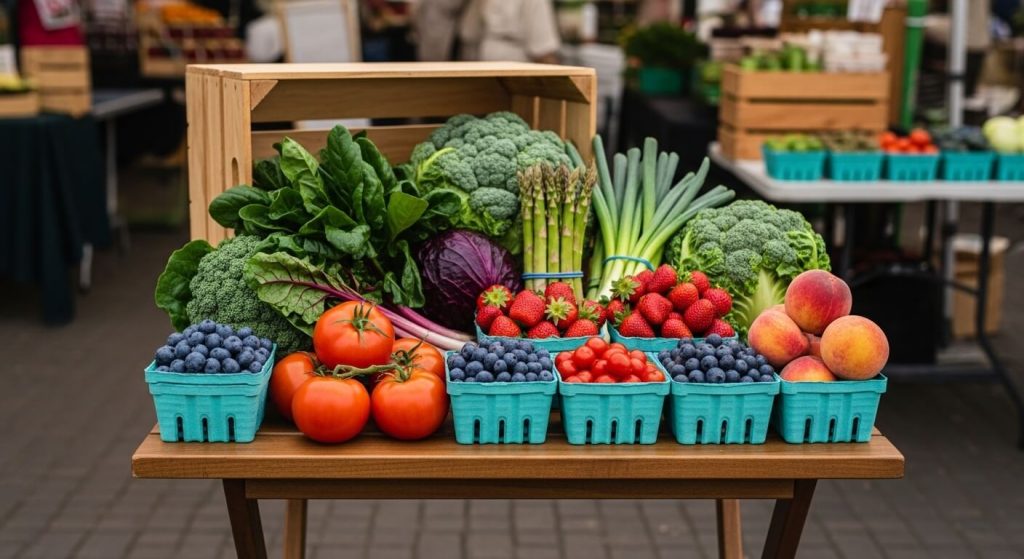
USDA publishes a seasonal produce guide, and it is more useful than most of what is written about it — provided you know what it is. It is an availability guide, not a peak-flavor or peak-nutrient calendar, and the agency says outright that what is in season varies by location and climate. Below are its four lists as published, plus the parts nobody quotes: how to choose and store each item, and the food-safety rules that actually matter. Cooking from it: maple sweet potatoes, roasted potatoes with apples and chicken sausage and apple crisp.
The short version
- Apples appear in all four seasons on USDA’s own guide. Bananas, lemons, limes and plantains appear in three or four. It is about supply, not harvest.
- Never wash produce with soap or a commercial produce wash — the FDA advises against it.
- Anything pre-cut goes in the fridge, at 40 °F or below, no exceptions.
- Winter squash keeps for months on a counter; sweet potatoes for a month somewhere cool and dry.
- “Certified” farmers market is a state term, not a federal one — and market counts are self-reported listings, not a census.
- A cup of sliced strawberries carries 108 mg of vitamin C — more than a day’s requirement.
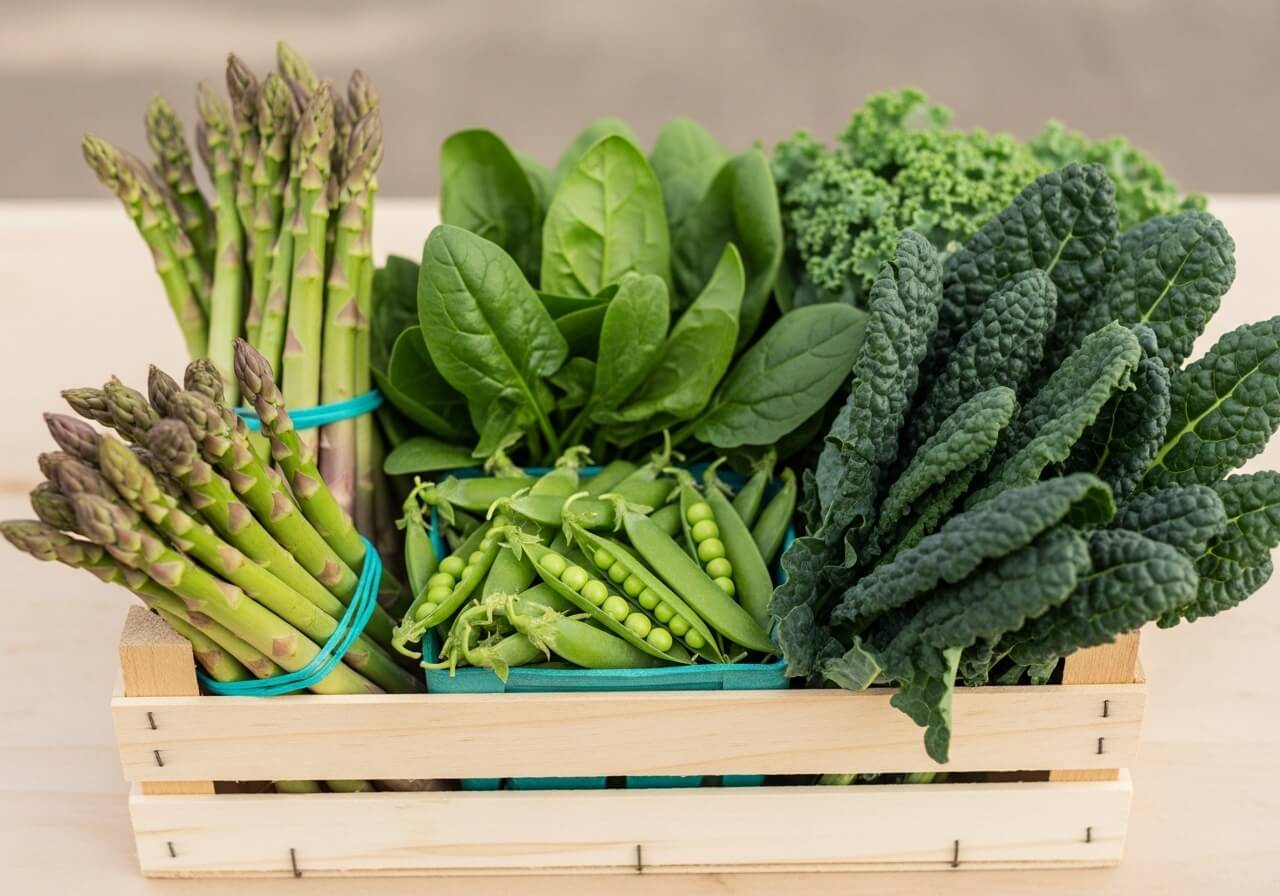
Spring
| Fruits | Vegetables |
|---|---|
| Apples, apricots, avocados, bananas, blackberries, kiwifruit, lemons, limes, pineapples, plantains, strawberries | Asparagus, broccoli, cabbage, carrots, celery, collard greens, garlic, herbs, kale, lettuce, mushrooms, onions, peas, radishes, rhubarb, spinach, Swiss chard, turnips |
Source: USDA SNAP-Ed, spring.
Summer
| Fruits | Vegetables |
|---|---|
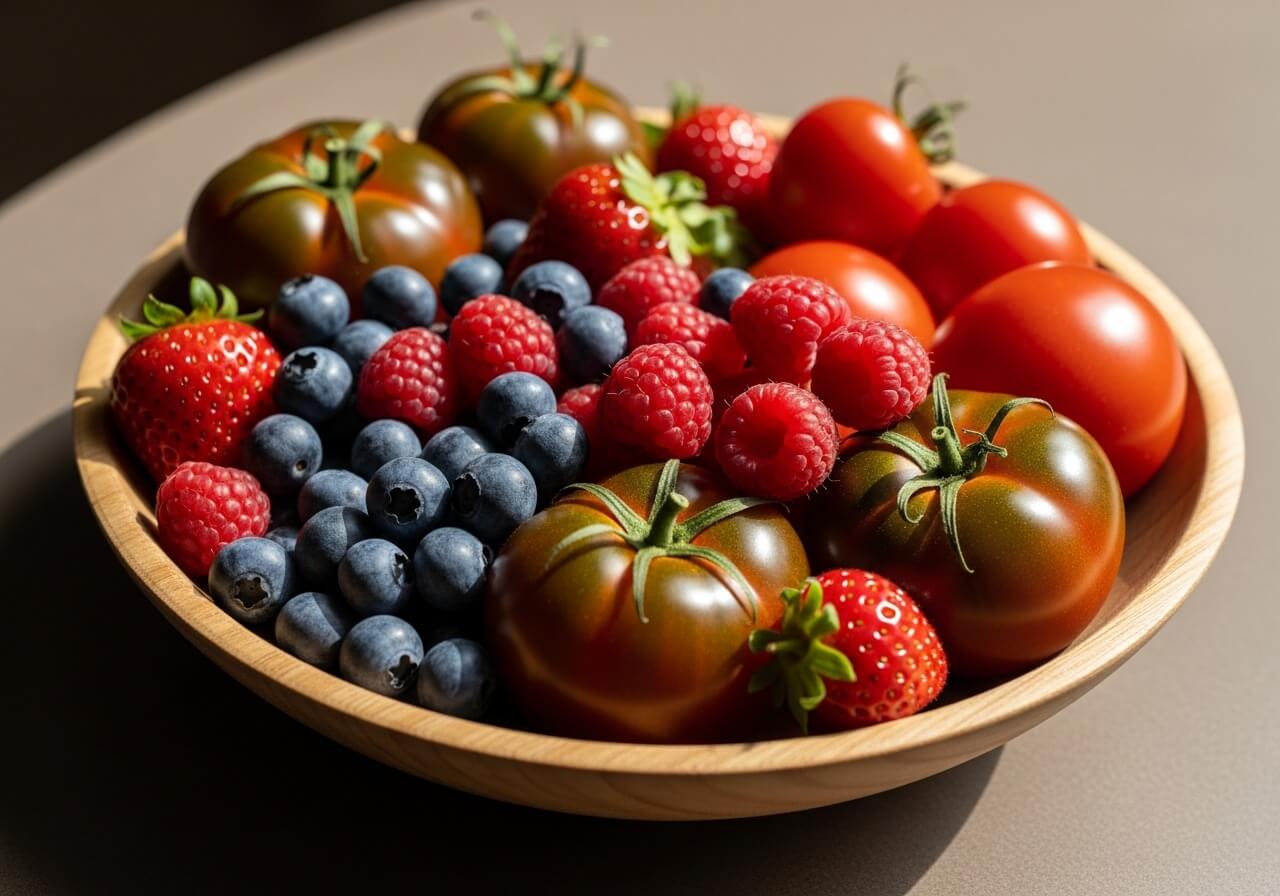
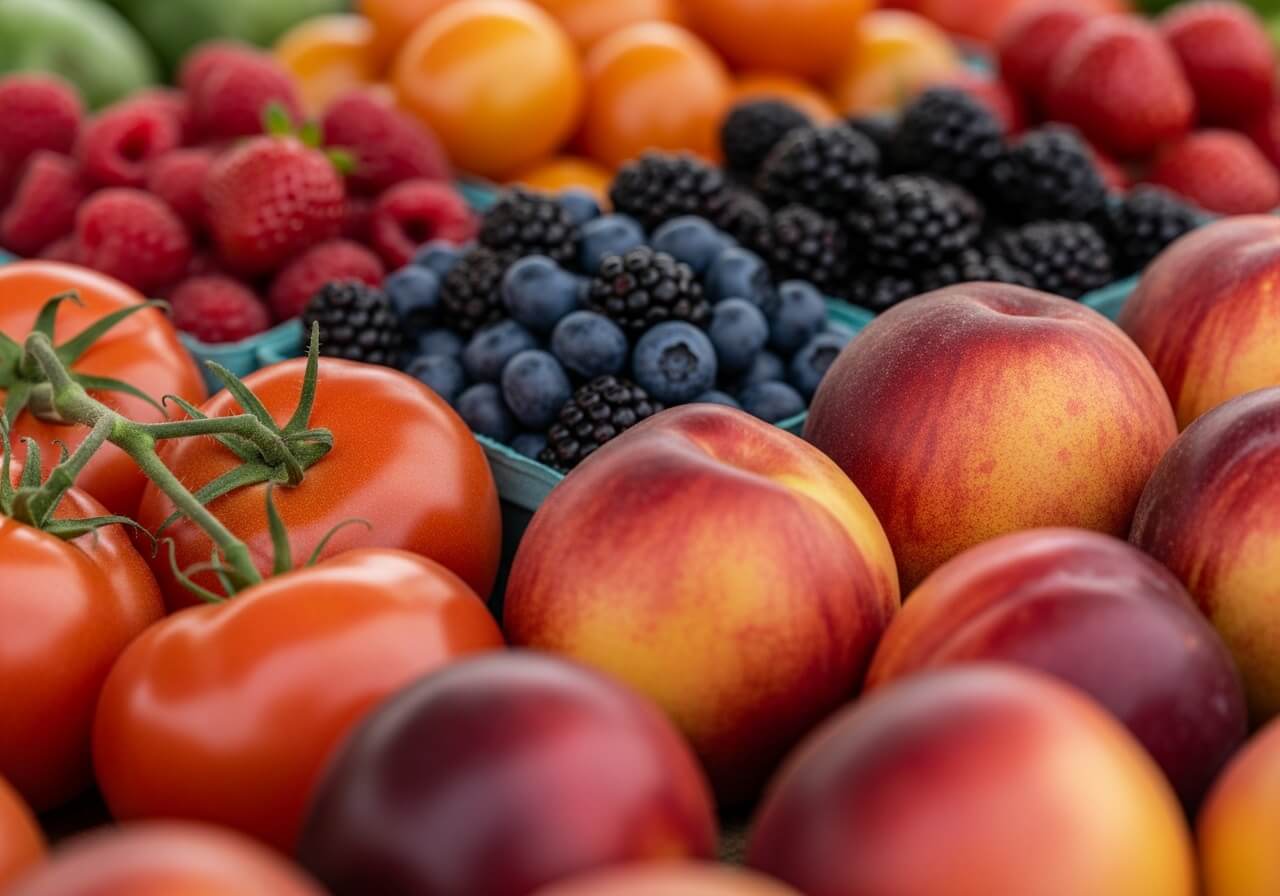
| Apples, apricots, avocados, bananas, blackberries, blueberries, cantaloupe, cherries, grapes, honeydew, lemons, limes, mangos, peaches, pears, pineapples, plums, raspberries, strawberries, watermelon | Beets, bell peppers, carrots, celery, corn, cucumbers, eggplant, garlic, green beans, herbs, lima beans, okra, onions, peas, plantains, summer squash, tomatillos, tomatoes, zucchini |
Source: USDA SNAP-Ed, summer.
Fall
USDA lists fall as a single combined set of 41 items: apples, bananas, beets, bell peppers, broccoli, Brussels sprouts, cabbage, carrots, cauliflower, celery, collard greens, cranberries, garlic, ginger, grapes, green beans, herbs, kale, kiwifruit, lemons, lettuce, limes, mangos, mushrooms, okra, onions, parsnips, pears, peas, plantains, pomegranates, potatoes, pumpkin, radishes, raspberries, rutabagas, spinach, sweet potatoes and yams, Swiss chard, turnips, winter squash.
Source: USDA SNAP-Ed, fall.
Winter
| Fruits | Vegetables |
|---|---|
| Apples, avocados, bananas, grapefruit, grapes, kiwifruit, lemons, limes, oranges, pears, plantains, pomegranates | Beets, Brussels sprouts, cabbage, carrots, celery, collard greens, herbs, kale, leeks, onions, parsnips, potatoes, pumpkin, rutabagas, sweet potatoes and yams, Swiss chard, turnips, winter squash |
Source: USDA SNAP-Ed, winter.
Read the overlaps, not just the lists. Apples are tagged for all four seasons on their own USDA page. Bananas, lemons, limes, plantains, celery, carrots, garlic, herbs and onions appear in three or four. That is the guide telling you honestly that it tracks what is on the shelves, not what is being harvested nearby. If you want the evidence on whether seasonality changes nutrition at all, that is in seasonal eating: what actually changes.
Choosing and storing, in USDA’s words
| Item | What USDA says |
|---|---|
| Strawberries | “Ripe strawberries will be fully red, firm, and have a sweet smell” |
| Apples | “Apples stored in the refrigerator ripen slower than at room temperature” |
| Asparagus | “Wrap the ends of the asparagus stalks in a wet paper towel, place in a plastic bag and store in the refrigerator.” Steam, grill or roast |
| Winter squash | “Pick winter squash that has a firm outer shell and feels heavy for its size.” Store on a counter or in a pantry “for several months” |
| Sweet potatoes | “Store fresh sweet potatoes in a cool, dry place for up to one month” |
For anything not on that list, USDA maintains FoodKeeper, built with Cornell University and the Food Marketing Institute, which gives storage life item by item.
The washing rules most people get wrong
The FDA’s guidance on selecting and serving produce safely is specific, and two of its rules contradict common practice:
- Wash everything under running water — “including produce grown at home or bought from a grocery store or farmers’ market.”
- Do not use soap. “Washing fruits and vegetables with soap, detergent, or commercial produce wash is not recommended.”
- Scrub firm produce such as melons and cucumbers with a clean produce brush.
- Dry it afterwards with a clean cloth or paper towel — this “further reduce[s] bacteria that may be present on the surface.”
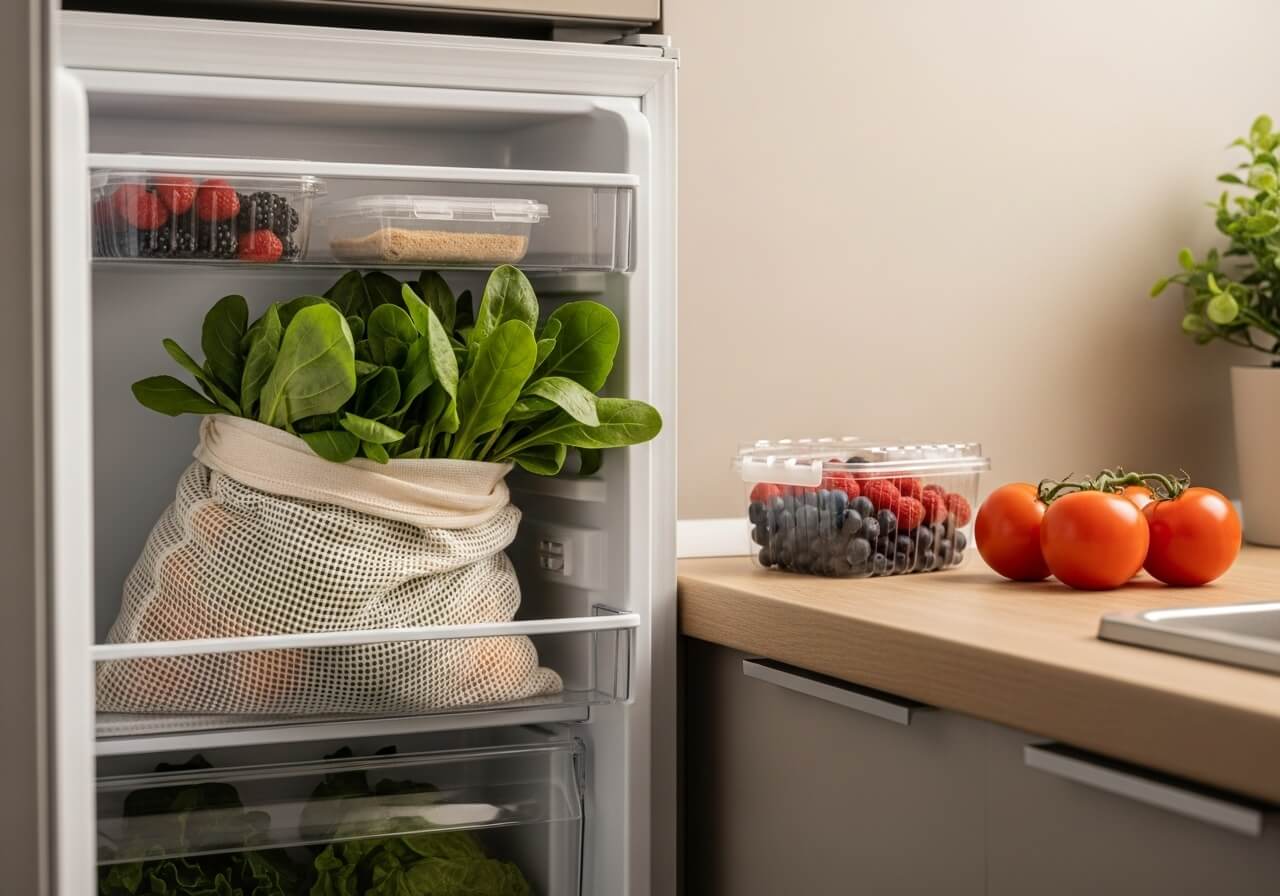
- Refrigerate the perishables — strawberries, lettuce, herbs, mushrooms — “at a temperature of 40° F or below,” and “refrigerate all produce that is purchased pre-cut or packaged.”
Two numbers to keep. The fridge should sit at or below 40 °F (4 °C) and the freezer at 0 °F (−18 °C). And produce that needs refrigeration should never sit at room temperature for more than two hours — one hour above 90 °F. Melon cut on a hot afternoon is on the clock.
Farmers markets: what the numbers mean
USDA’s Agricultural Marketing Service lists 8,764 farmers markets in its National Farmers Market Directory. Read that as a directory, not a census — AMS states on its own charts that the information is “voluntary and self-reported.”
To be listed, a market must “feature two or more farm vendors selling agricultural products directly to customers at a common, recurrent physical location.” That is the whole federal bar.
“Certified” is a state term with no single national meaning. In California a certified farmers market is approved by the county agricultural commissioner, and certified producers “may only offer for sale agricultural products which he or she produced” — which is the guarantee people usually assume the word carries. Alabama and Mississippi run their own separate programmes. So the word means something real, but what it means depends on the state.
A few numbers worth carrying
| Food | Vitamin C |
|---|---|
| Red bell pepper, raw, ½ cup | 95 mg |
| Orange, 1 medium | 70 mg |
| Broccoli, cooked, ½ cup | 51 mg |
| Strawberries, sliced, ½ cup | 49 mg |
Against a daily requirement of 90 mg for men and 75 mg for women — with an extra 35 mg a day for smokers — half a raw red pepper covers it. And per USDA’s own item pages: a medium apple is 95 calories with 4 g of fiber; a cup of sliced strawberries is 53 calories with 108 mg of vitamin C; a 5-inch sweet potato is 112 calories with 4 g of fiber.
FAQ
Why are apples listed in every season?
Because the guide tracks availability rather than harvest. Controlled storage keeps apples on shelves year-round, and USDA tags them for all four seasons on their own page.
Should I wash produce with vinegar or a produce wash?
The FDA does not recommend soap, detergent or commercial produce washes. Running water plus a brush for firm items, then drying, is the published guidance.
Do I need to wash pre-washed bagged salad?
The FDA’s rule is to refrigerate all produce purchased pre-cut or packaged. For bagged greens labeled ready to eat, additional washing is not the published requirement — keeping them cold is.
Does “certified” at a farmers market mean organic?
No. It is a state-level certification of who grew the produce, not how. Organic is a separate USDA certification.
Is seasonal produce more nutritious?
No agency says so. The evidence, including what storage actually does to vitamins, is covered in seasonal eating: what actually changes.
Where this fits
The evidence side of this topic — storage losses, frozen versus fresh, and what “local” legally means — is in seasonal eating: what actually changes. To check the added sugars in canned fruit or the sodium in canned vegetables, use our guide to reading a nutrition label, and look up specific items in the Nutrition Facts database.
Every figure here is linked to its source in the text: USDA SNAP-Ed, the USDA Agricultural Marketing Service, FoodSafety.gov, the FDA and the NIH Office of Dietary Supplements. Checked against those sources on 2 September 2026. Educational information, not medical advice — see our medical disclaimer.
This content is for educational purposes only and is not medical advice. Always consult a qualified healthcare professional for personalised guidance.