If a blood test has come back low, the honest answer to “what should I eat” starts with what food is and is not for. Every authoritative US source describes iron-rich food as part of managing low iron. None of them describes it as the treatment. The NHLBI calls oral iron “the most common treatment for iron-deficiency anemia” and puts iron-rich foods under a heading that begins “In addition to the steps above.” That distinction is the whole point of this page.
Below: how low iron is actually identified, who runs short and why, the two forms of dietary iron and what changes their absorption, the one number that matters if you do not eat meat, and the safety facts that pages about “iron foods” almost never mention.
Key takeaways. Iron deficiency is identified by a blood test, not by symptoms or a food diary. Food is part of the picture; oral iron is what US sources name as the usual treatment, and the dose and timeline belong to a clinician. Vitamin C and meat, poultry or seafood raise absorption of plant iron; phytate, some polyphenols and calcium lower it. If you do not eat meat, the Office of Dietary Supplements puts the requirement at 1.8 times higher. And iron supplements are the leading cause of fatal poisoning in young children — that part is not optional reading.
How low iron is actually identified
Iron-deficiency anemia is, in NHLBI’s words, “a type of anemia that develops if you do not have enough iron in your body.” NIH’s Office of Dietary Supplements describes what that does to the blood: “Red blood cells become smaller and contain less hemoglobin. As a result, blood carries less oxygen from the lungs throughout the body.”
It is found by testing. NHLBI: “your doctor will order a blood test to check your complete blood count (CBC), hemoglobin levels, blood iron levels, and ferritin levels.” ODS names the single most useful one: “Serum ferritin concentration, a measure of the body’s iron stores, is currently the most efficient and cost-effective test for diagnosing iron deficiency.”
And finding the deficiency is only half the job. StatPearls is blunt about the other half: “Once iron deficiency is confirmed, the next step is to identify the underlying cause.” Cleveland Clinic puts the same thing in plainer terms — low iron “can be a sign of a more serious medical condition, so it’s always best to talk to a provider.” Eating more spinach does not address a cause.
Who actually runs short
ODS lists the groups at raised risk: “Teen girls and women with heavy periods; Pregnant women and teens; Infants (especially if they are premature or low-birth weight); Frequent blood donors; People with cancer, gastrointestinal (GI) disorders, or heart failure.”
Some of those numbers are larger than people expect:
- Heavy periods. The HHS Office on Women’s Health reports that “Up to 5% of women of childbearing age develop iron-deficiency anemia because of heavy bleeding.”
- Pregnancy. “Iron-deficiency anemia affects one in six pregnant women.”
- Blood donation. ODS: “About 25% to 35% of regular blood donors develop iron deficiency.” This one surprises people who think of donating as unrelated to nutrition.
- Gut conditions. People with coeliac disease, ulcerative colitis or Crohn’s, or who have had certain GI surgery, “have an increased risk of iron deficiency.”
- Vegetarians. Harvard notes that those eating “a diet without heme iron from meats, fish, and poultry may develop IDA if they do not include adequate non-heme iron foods.”
The two forms, and why the same milligram is not the same milligram
ODS: “Dietary iron has two main forms: heme and nonheme. Plants and iron-fortified foods contain nonheme iron only, whereas meat, seafood, and poultry contain both heme and nonheme iron.” Heme makes up a small share of what people eat — “about 10% to 15% of total iron intakes in western populations” — but it behaves differently: “Heme iron has higher bioavailability than nonheme iron, and other dietary components have less effect on the bioavailability of heme than nonheme iron.”
That last clause matters more than the first. Heme iron is not just better absorbed; it is also less affected by everything else on the plate. Non-heme iron is the one you can actually influence.
What raises and lowers absorption
ODS puts both sides in one sentence: “In addition to ascorbic acid, meat, poultry, and seafood can enhance nonheme iron absorption, whereas phytate (which is present in grains and beans) and certain polyphenols in some nonanimal foods (e.g., cereals, legumes) have the opposite effect.” Calcium is the odd one out: “Unlike other inhibitors of iron absorption, calcium might reduce the bioavailability of both nonheme and heme iron.”
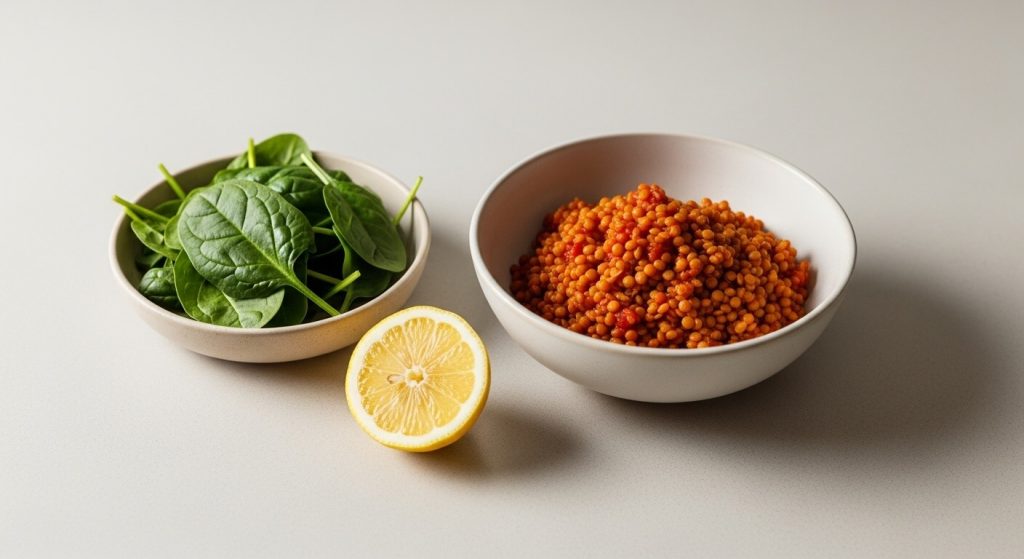
MedlinePlus gives a sense of the size of the meat effect — pairing plant iron with meat, fish or poultry “can improve absorption of vegetable sources of iron up to three times” — and names the vitamin C foods worth putting alongside: “citrus, strawberries, tomatoes, and potatoes.” On the other side, it singles out one drink: “black teas contain substances that bind to dietary iron so it cannot be used by the body.”
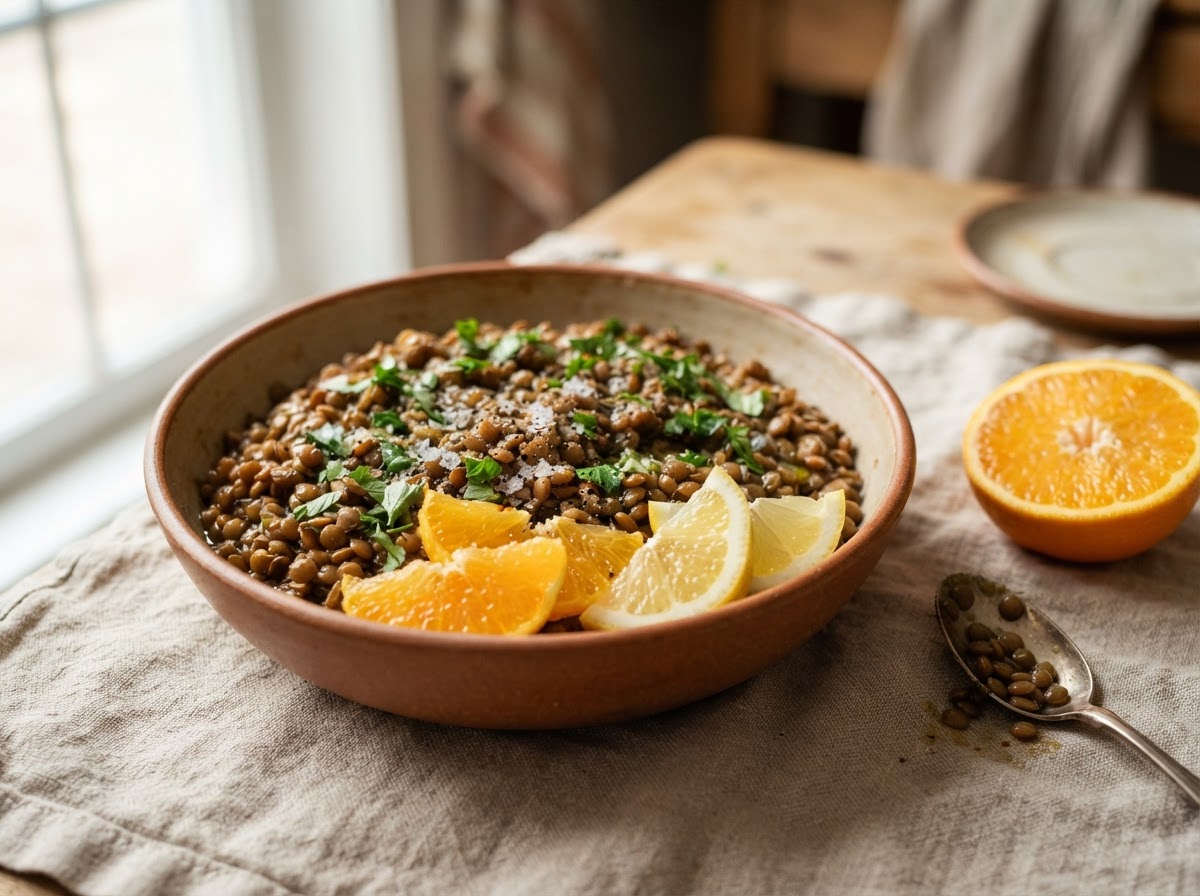
In practice that means an orange or tomatoes with the lentils, rather than tea with them. Our page on food pairings that change absorption covers the same mechanism across other nutrients.
The number that matters if you do not eat meat
This is the most concrete, most actionable figure in the whole topic, and most pages skip it. ODS: “The requirement for iron is 1.8 times higher for people who follow vegetarian diets than those for people who include animal products in their diet, such as meat.”
Applied to the adult RDAs that ODS publishes — 8 mg a day for men aged 19–50, 18 mg for women in the same band, 27 mg in pregnancy — a vegetarian woman of reproductive age is looking at roughly 32 mg rather than 18. That is a large gap to close from food, and it is the single best argument for planning rather than hoping. Our guide to high-protein vegetarian foods overlaps heavily with the iron-bearing ones.
What food can and cannot do
Here the sources are careful, and we are going to be careful with them.
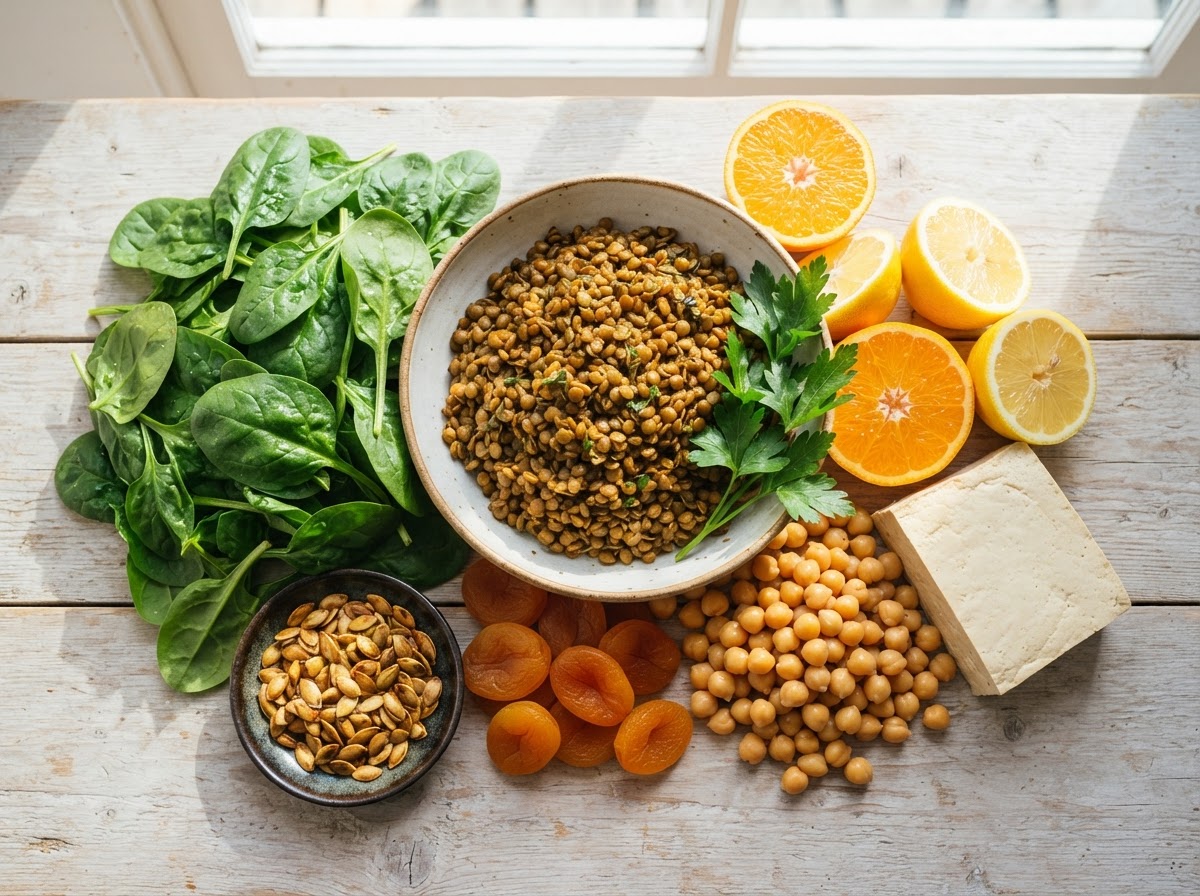
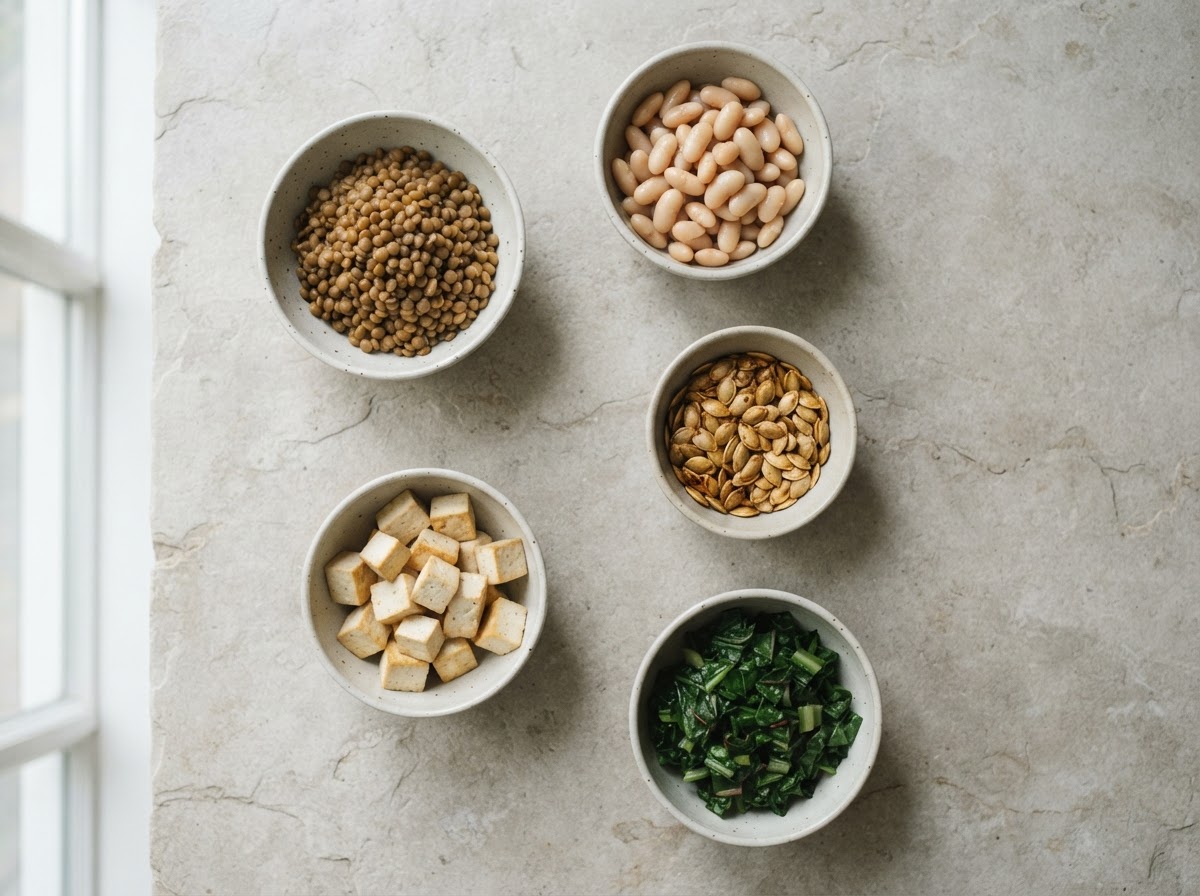
What they agree on. Food belongs in the picture. MedlinePlus: “Eating iron rich foods is a key part of treating anemia caused by low iron levels.” NHLBI advises choosing “iron-rich foods such as beans, dried fruits, eggs, lean red meat, salmon, iron-fortified breads and cereals, peas, tofu, and dark green leafy vegetables” and notes that “Foods that are rich in vitamin C can help your body absorb iron.”
What they name as the treatment. NHLBI calls oral iron “the most common treatment for iron-deficiency anemia”, and MedlinePlus adds the reason: “You may also need to take iron supplements to rebuild iron stores in your body.” Clinically, StatPearls reports that “The American Gastroenterological Association recommends oral iron supplementation as first-line therapy.” NHLBI gives the timeline for that route: “It often takes three to six months to restore your iron levels.”
Where they differ. Cleveland Clinic is more optimistic about food than the federal sources: low iron “can be treated by adding more iron-rich foods to your diet and, in some cases, starting an iron supplement or IV iron infusions.”
We are not going to resolve that disagreement for you, because it is not ours to resolve — it depends on how low your iron is, why it is low, and what else is going on. What we can say is that the decision, the dose and the timeline are a clinician’s, and that eating well alongside treatment is something every source endorses.
The safety part almost nobody includes
An article about iron that only talks about getting more of it is incomplete in a way that matters.
There is an upper limit. The Food and Nutrition Board sets a Tolerable Upper Intake Level of 45 mg a day for everyone aged 14 and over, and 40 mg for children up to 13 — figures ODS notes are “based on the amounts of iron that are associated with gastrointestinal effects following supplemental intakes of iron salts”.
Supplements have real side effects. ODS: “High-dose iron supplements can also cause gastrointestinal effects, including gastric upset, constipation, nausea, abdominal pain, vomiting, and diarrhea.” MedlinePlus adds a reassuring detail people often panic about: “Black stools are normal when taking iron tablets.”
And the one that belongs on every page about iron. The FDA requires this exact wording on iron-containing products: “WARNING: Accidental overdose of iron-containing products is a leading cause of fatal poisoning in children under 6.” ODS records what that has meant: “Between 1983 and 2000, at least 43 U.S. children died from ingesting supplements containing high doses of iron.” If there are iron pills in your house and children in it too, that is a storage question, not a nutrition one.
More is not universally better. Hemochromatosis is, per NIDDK, “a disorder in which extra iron builds up in the body to harmful levels”, and untreated it “can cause iron overload, a buildup of iron that can damage many parts of the body, including the liver, heart, pancreas, endocrine glands, and joints.” For those people the advice runs the other way: ODS notes that liver-disease specialists recommend “the avoidance of iron and vitamin C supplements.”
Which is why the Office on Women’s Health puts it as plainly as anyone does: “Do not take these pills without talking to your doctor or nurse first.” More on how that category is regulated in our guide to supplements.
Where to find each form
Full nutrition breakdowns on our cards: lean beef, salmon, eggs, lentils, black beans, chickpeas, spinach, pumpkin seeds and raisins. For the fuller treatment of how the two forms compare, see iron-rich foods and what your body absorbs.
What we are not claiming
- That any food will raise your iron levels or correct anemia. No source supports a food-specific efficacy claim. These are foods that contain iron, which is not the same as a remedy.
- That diet alone cannot correct diagnosed iron-deficiency anemia. That line appears all over the internet; we could not find an authoritative source that actually says it, so we are not saying it either.
- That diet alone is enough. The federal sources put oral iron first, and a single clinic source is more optimistic. That tension is real and belongs with your clinician, not with us.
- Any supplement dose. Not a starting dose, not a maximum, not “what most people take.”
- Milligrams of iron per 100 g of any food. We publish nutrient values only from USDA records we have verified ourselves, and we do not yet hold iron figures for these foods. Rather than copy numbers from elsewhere, we have left them out.
- That spinach iron is blocked by oxalates, or that cooking in cast iron adds meaningful iron. Both circulate widely; neither appears in the sources we checked.
- That coffee blocks iron absorption. The verified statement covers black tea, and caffeine only in the context of timing around an iron supplement.
- Absorption percentages for heme versus non-heme iron. ODS states heme is better absorbed but publishes no percentages we could cite.
FAQ
What are the best iron-rich foods for anemia?
The foods federal sources name are lean meat, seafood and poultry, fortified cereals and breads, white beans, lentils, spinach, kidney beans, peas, nuts and dried fruit. Which of them suits you is a separate question from whether food is the right answer to a diagnosed deficiency.
Can I fix low iron with diet alone?
That depends on how low it is and why, and it is a question for the clinician who ordered the test. US federal sources name oral iron as the usual treatment and position food alongside it.
How long does it take to raise iron levels?
NHLBI says three to six months with oral iron under medical care. That figure describes treatment, not dietary change, and should not be read as a timeline for eating differently.
Do vegetarians need more iron?
Yes, and the figure is specific: the Office of Dietary Supplements puts the requirement at 1.8 times higher than for people who eat animal products, because plant iron is absorbed less readily.
What should I not eat or drink with iron-rich meals?
Black tea binds dietary iron. Calcium reduces absorption of both forms. Phytate in grains and beans and some polyphenols reduce absorption of plant iron.
Should I just take an iron supplement to be safe?
No. Iron has an upper limit of 45 mg a day for adults, supplements cause real side effects, some people have a condition where extra iron is harmful, and accidental overdose is a leading cause of fatal poisoning in children under six.
What to do with this
If a test has come back low, the useful next step is the conversation about why — not a shopping list. Alongside whatever your clinician decides, the dietary levers with clear support are simple: include heme sources if you eat them, put vitamin C foods next to plant iron, and keep black tea and calcium away from the meals you are relying on. If you do not eat meat, plan around the 1.8× figure rather than assuming a normal diet covers it.
Related: iron-rich foods and what your body absorbs, food pairings that change absorption, high-protein vegetarian foods, how supplements are regulated.
Educational content, not medical advice. Iron deficiency is diagnosed and treated by a clinician. Do not start an iron supplement without talking to one, and keep iron products out of reach of children.
This content is for educational purposes only and is not medical advice. Always consult a qualified healthcare professional for personalised guidance.