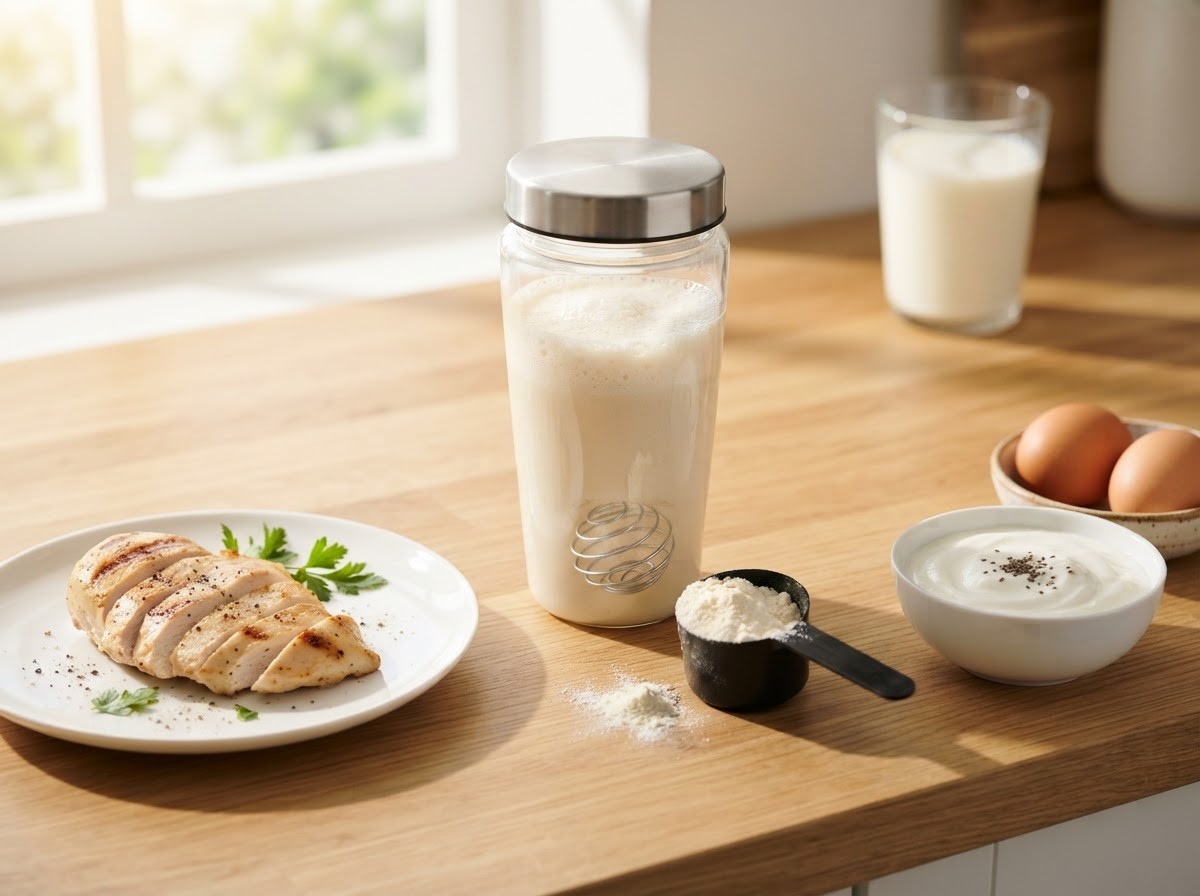
Protein powder builds muscle for exactly one reason: it makes hitting 1.4–2.0 g of protein per kilogram of body weight a day easy. That is the whole mechanism. A scoop is not stronger than a chicken breast, the timing barely matters, and the type — whey, casein, plant — changes the result far less than the daily total does. If you already eat enough protein, powder adds nothing; if you don’t, it is the cheapest, fastest fix there is.
Below: how much protein muscle gain actually requires and how to tell whether you need a supplement at all; whey vs casein vs plant in plain terms; the per-serving dose; why the “anabolic window” is mostly a myth; what to read on the label; and who should be careful.
Key takeaways. Target 1.4–2.0 g/kg of protein per day (the ISSN range for people who train) — 100–140 g for a 70 kg person. Split it into 20–40 g doses every 3–4 hours. Powder fills the gap between what you eat and that number; a typical scoop is about 25 g. Whey is the default; casein before bed; soy or a pea-rice blend if you avoid dairy. Timing around the workout matters “at best, minimally” once the daily total is met. Buy a product with a third-party seal (NSF Certified for Sport, Informed Sport), no proprietary blend, and no sugar in the first three ingredients.
Do you need it? Daily protein comes first
Start with the number, not the tub. The baseline for adults is 0.8 g per kilogram of body weight per day, but that is the minimum to avoid deficiency, not a muscle-building dose. The 2025–2030 Dietary Guidelines raised the general target to “1.2–1.6 grams of protein per kilogram of body weight per day,” and the International Society of Sports Nutrition puts it at “1.4–2.0 g protein/kg body weight/day” for exercising people — the range the NIH’s Office of Dietary Supplements also gives for athletes (1.2–2.0 g/kg).
| Body weight | 1.4 g/kg | 1.6 g/kg | 2.0 g/kg |
|---|---|---|---|
| 55 kg (121 lb) | 77 g | 88 g | 110 g |
| 70 kg (154 lb) | 98 g | 112 g | 140 g |
| 85 kg (187 lb) | 119 g | 136 g | 170 g |
| 100 kg (220 lb) | 140 g | 160 g | 200 g |
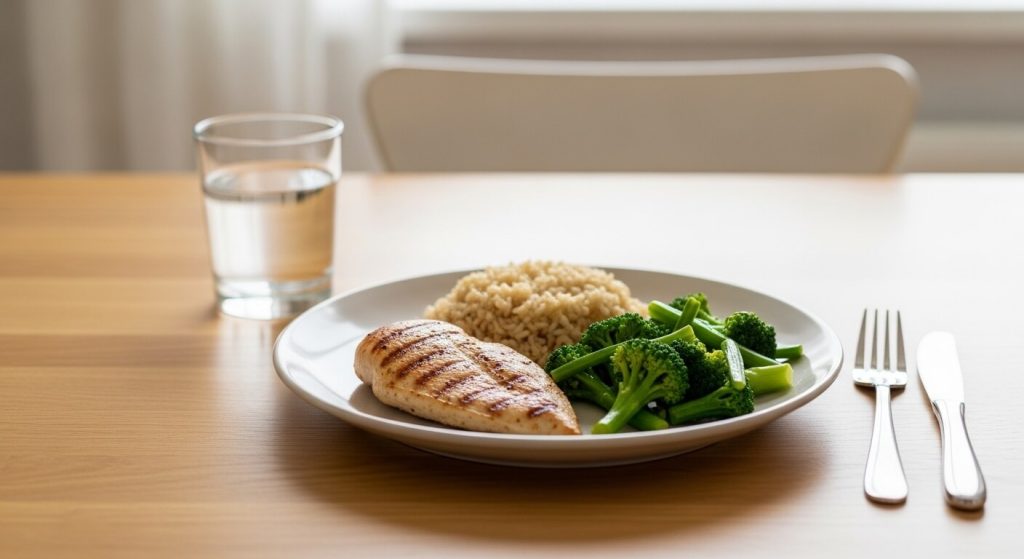
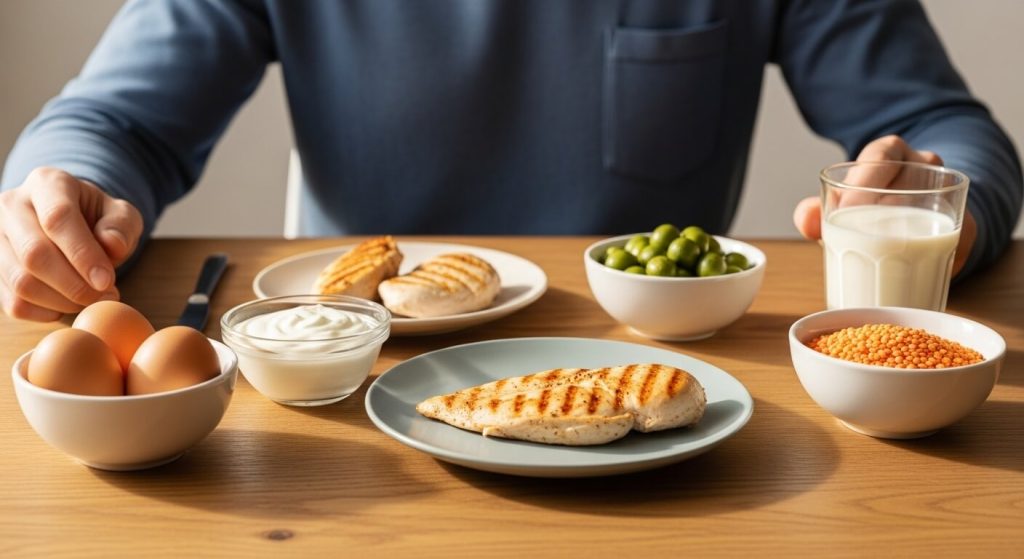
Our protein calculator does this for your weight and goal. Then count a normal day. A 70 kg lifter eating eggs at breakfast, a chicken salad at lunch and salmon at dinner is already near 100 g; the same person on toast, pasta and a stir-fry with little meat is at 50–60 g. The first one does not need powder. The second is 40–50 g short — two scoops.
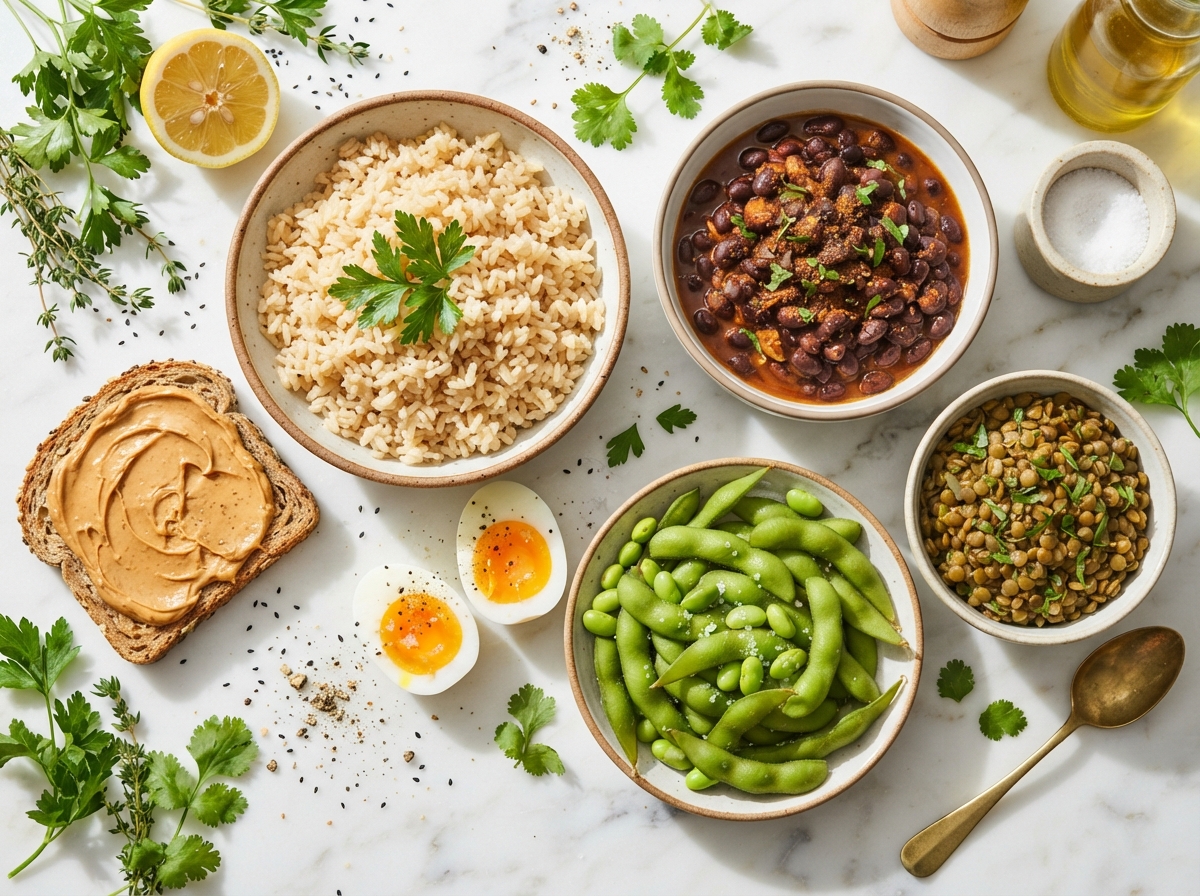
Every source is explicit that food comes first. The ISSN wants “physically active individuals to obtain their daily protein requirements through the consumption of whole foods,” calling supplementation “a practical way” to close a gap. The Mayo Clinic: “If you rely too much on protein shakes to replace daily meals, you’ll miss out on the healthy benefits of whole foods.” And the ODS consumer sheet adds the line most powder marketing skips: “there is no benefit to consuming more than recommended amounts.” More scoops past 2.0 g/kg do not mean more muscle; the ISSN notes intakes above 3 g/kg “may” help resistance-trained people lose fat, which is a different goal. For where those grams can come from without powder, see affordable high-protein foods.
Whey vs casein vs plant protein
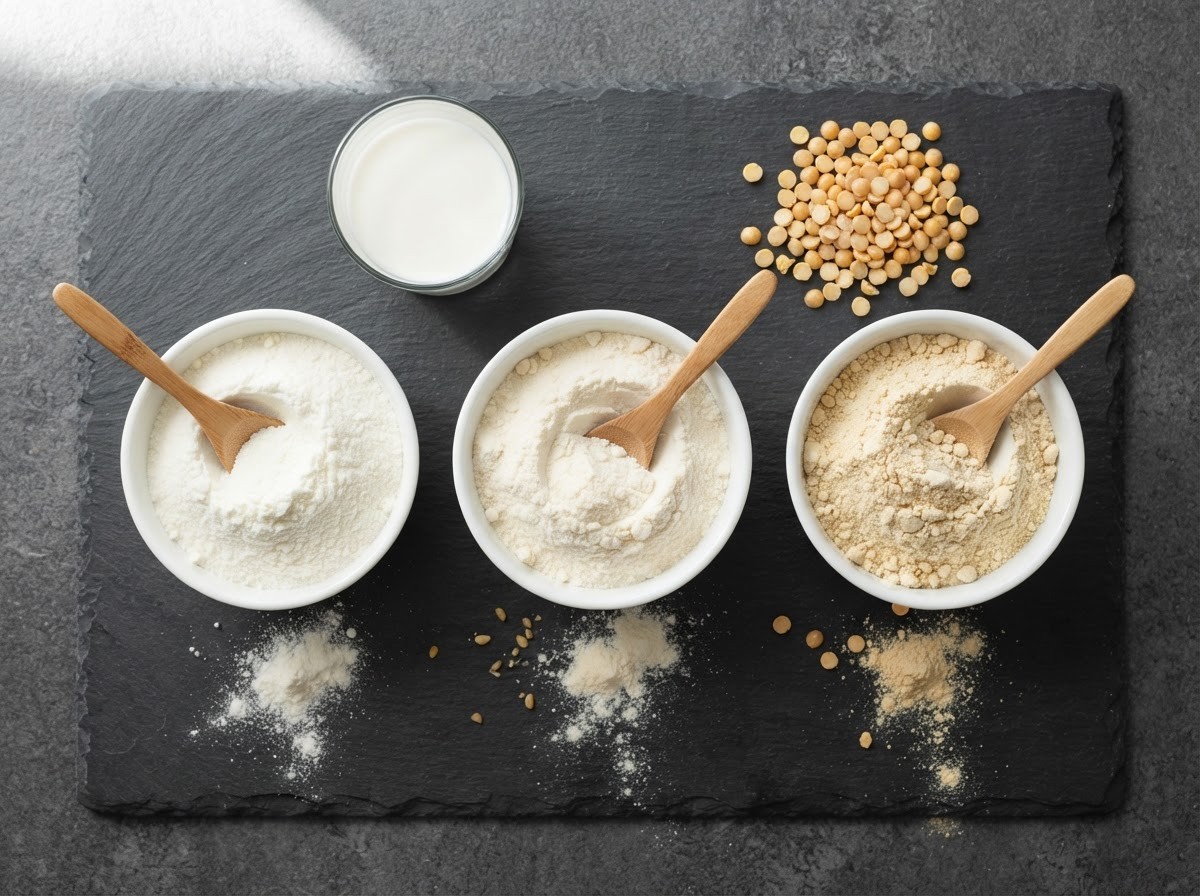
All three work. They differ in how fast they digest and how much leucine — the amino acid that switches on muscle protein synthesis — a serving carries. The ISSN’s summary: “Rapidly digested proteins that contain high proportions of essential amino acids (EAAs) and adequate leucine, are most effective in stimulating MPS,” and a useful dose contains “700–3000 mg of leucine.”
| Type | Digestion | Protein per scoop* | Best use | Watch for |
|---|---|---|---|---|
| Whey (concentrate / isolate / hydrolysate) | Fast | ~25 g per 32 g (USDA) | Default choice: any time of day, post-workout, shakes | Lactose in concentrate; isolate is low-lactose |
| Casein | Slow — coagulates in the gut | ~25 g | Before sleep, long gaps between meals | Thick texture; same milk allergens as whey |
| Soy isolate | Moderate | ~25 g per 28 g (USDA) | Complete plant protein, dairy-free | Some people avoid it for taste |
| Pea, rice, hemp (often blended) | Moderate | 15–25 g, varies by brand | Vegan, allergen-light | Research on training outcomes is limited; check leucine and serving size |
*USDA FoodData Central: whey-based protein powder is 78 g protein per 100 g; soy protein isolate is 88 g. Brands vary — read the panel.
Whey is the reference. It is, in the ISSN’s words, “water soluble, mixes easily, and is rapidly digested,” and in head-to-head comparisons “whey protein ingestion stimulated greater MPS at both rest and following exercise when compared to casein.” The military’s Operation Supplement Safety describes it as rich in essential amino acids, “especially leucine.” The Cleveland Clinic ranks the forms: isolate is “consistently high in protein and low in fat or lactose,” hydrolysate “the easiest to digest” and the most expensive; concentrate is the budget option with a little more lactose and fat.
Casein has one job the others cannot do: cover the night. The ISSN found that “pre-sleep casein protein intake (30–40 g) provides increases in overnight MPS and metabolic rate without influencing lipolysis” — a slow drip of amino acids over seven or eight hours. It is not better than whey after training; it is better before bed.
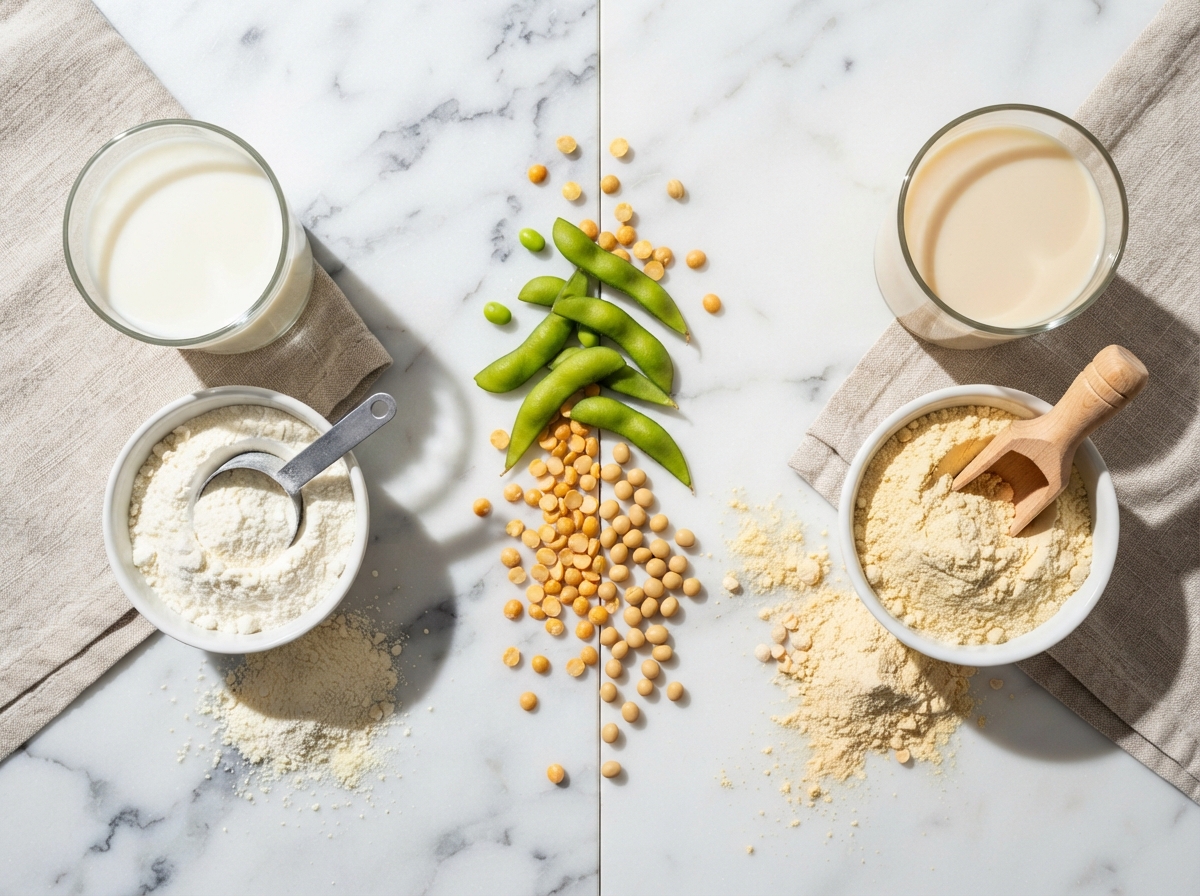
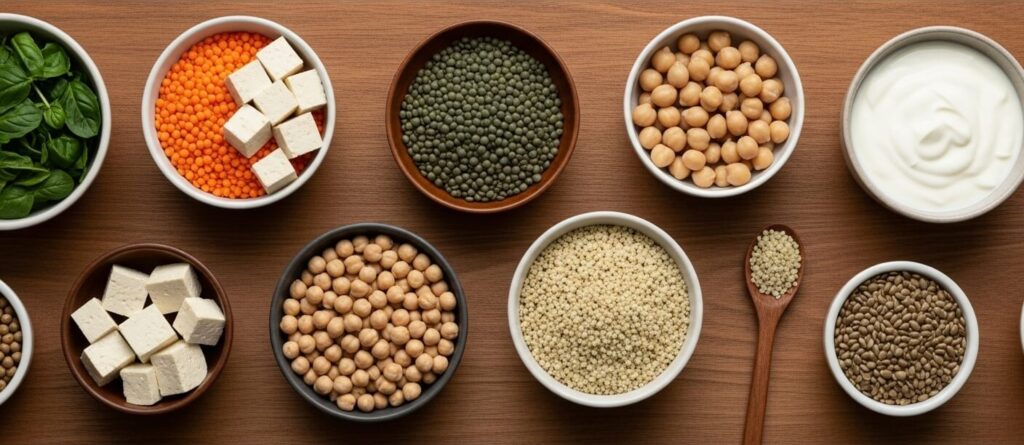
Plant proteins are where the honest answer is “less evidence.” The ISSN states that research on pea, rice and hemp for training adaptations “is limited,” while noting rice protein “may be a suitable alternative to whey” at a matched dose. Soy is a complete protein and the best-studied plant option. Practical rule: choose a soy isolate or a pea-rice blend, and take a serving that delivers at least 25 g of protein so the leucine lands in range. The full comparison is in plant vs animal protein for muscle, and which foods are complete in complete amino acid foods.
How much per day and per serving
Per day: the 1.4–2.0 g/kg above, minus what food already supplies. Per serving, both ISSN position stands land on the same dose — “0.25 g of a high-quality protein per kg of body weight, or an absolute dose of 20–40 g,” and “every three to 4 h” across the day. For a 70 kg person that is about 18–28 g per feeding, four or five times a day. One standard scoop (25 g) is one feeding; two scoops in one shake is not twice as useful, it is mostly a bigger snack.
| Body weight | Per-serving dose (0.25 g/kg) | Feedings per day at 1.6 g/kg |
|---|---|---|
| 55 kg | 14 g (use 20 g minimum) | 4–5 |
| 70 kg | 18 g (use 20–25 g) | 4–5 |
| 85 kg | 21 g (use 25–30 g) | 4–5 |
| 100 kg | 25 g (use 30–40 g) | 4–5 |
How this looks in a day: breakfast with 25 g from eggs and Greek yogurt, a scoop of whey mid-morning, lunch with 30 g, an afternoon shake or cottage cheese, dinner with 30 g — 130 g for a 75 kg lifter, with powder covering two of five feedings. Protein per meal works through the spacing, and protein shake for breakfast covers the morning slot specifically.
Timing: the anabolic window is mostly a myth
The 30-minute post-workout rush is the most persistent idea in gym nutrition and the least supported. The ISSN’s nutrient-timing position stand states that “muscles remain sensitized to protein ingestion for at least 24 h following a resistance training bout,” and that “when recommended levels of protein are consumed, the effect of timing appears to be, at best, minimal.” The protein stand goes further: “total protein intake was the strongest predictor of muscular hypertrophy and that protein timing likely influences hypertrophy to a lesser degree.”
What survives from the timing literature is modest. A dose within a couple of hours after training does stimulate synthesis — “post-exercise ingestion (immediately to 2-h post) of high-quality protein sources stimulates robust increases in MPS” — and taking whey before or after a session “can promote improvements in strength and hypertrophy, but the time upon which nutrients are ingested does not necessarily trump other feeding strategies.” The ISSN’s own advice is that pre- or post-workout is “likely a matter of individual tolerance.” So: have a feeding within a few hours on either side of training, and stop worrying about the clock. If you trained fasted and the next meal is hours away, that is the one case where a shake right after makes a real difference. The longer version is in the science of nutrient timing.
What to look for on the label
Protein powders are dietary supplements, and the FDA states plainly that it “does not have the authority to approve dietary supplements before they are marketed.” The manufacturer is responsible for safety and label accuracy. That puts the checking on you, and five things on the panel do most of the work.
| Check | What you want | Why |
|---|---|---|
| Third-party seal | NSF Certified for Sport, Informed Sport, BSCG or USP Verified | An independent lab has “verified its quality and manufacturing process” and tested for banned substances and contaminants (OPSS). The Office of Dietary Supplements names NSF, Informed-Choice and BSCG; the Cleveland Clinic recommends NSF or Informed Choice |
| Protein per serving vs serving size | ≥20 g protein; note the scoop weight | “25 g protein” per 40 g scoop is a 62% powder — the rest is filler, sugar or flavor |
| No proprietary blend | Every ingredient with its own amount | FDA rules let a blend show only its total weight, not what is in it |
| Added sugars | Sugar not in the first three ingredients; a few grams per serving at most | Cleveland Clinic’s rule; the FDA’s Daily Value for added sugars is 50 g |
| Amino acids listed as protein | The protein number should come from whole protein | FDA: “You may not declare protein on your products that contain only amino acids” — a label leaning on added glycine or taurine is a warning sign |
One caveat the certification bodies themselves make: a seal “does not mean the product has been evaluated for safety… or effectiveness.” It means what is on the label is in the tub and nothing banned is. That is still the single most valuable thing a label can tell you, given Harvard’s list of supplement risks that starts with heavy-metal contamination and unlisted ingredients. Ignore the front of the tub — “lean,” “anabolic,” “ultra” — and read the back. Our supplement guide covers the same checks for everything else on the shelf.
Safety
For healthy adults, the range is safe. The National Institute of Diabetes and Digestive and Kidney Diseases reports “no safety concerns reported at daily recommended intakes for athletes of up to about 2.0 g/kg body weight (e.g., 136 g for a person weighing 150 lb),” and the Mayo Clinic confirms that “diets high in protein aren’t known to cause medical problems in healthy people.”
Kidney disease is the exception. Mayo: “A high-protein diet may worsen how well a kidney works in people with kidney disease.” The NIDDK says some people with CKD need to moderate protein so waste doesn’t build up; the Cleveland Clinic suggests 10–15 g per serving with a provider’s sign-off. If you have any kidney or liver diagnosis, the dose above is not for you.
Lactose. Whey concentrate carries some lactose — the NIDDK lists “whey” among ingredient words that signal it — but most lactose-intolerant people tolerate about 12 g of lactose (a cup of milk) with mild or no symptoms, and isolate has far less. Bloating and gas on whey usually mean switch to isolate or a plant powder, not stop. A milk allergy is different: no whey, no casein.
Calories still count. A scoop in water is ~110 kcal; a scoop in whole milk with peanut butter and a banana can be 400–500. Mayo’s reminder: “Since protein has calories, consuming too much can make it harder to lose weight.” If the goal is muscle without fat, the shake is a protein delivery, not a dessert. For deliberate weight gain, see protein shakes for weight gain.
“Bodybuilding” products are a separate category. The FDA warns that “some bodybuilding products may illegally contain steroids or steroid-like substances” with reports of serious liver injury. A plain whey, casein or plant isolate with a third-party seal is not that category; a “mass” or “anabolic” blend without one might be. Anything that causes a reaction goes to the FDA’s Safety Reporting Portal.
What we are not claiming
- That protein powder builds muscle better than food with the same protein. It builds muscle the same way — by getting you to the daily total.
- That more than 2.0 g/kg builds more muscle. The ISSN links higher intakes to fat loss in trained people, not to extra hypertrophy.
- That the body “can only absorb” 20–40 g at a time. That range is the dose that best stimulates synthesis, not an absorption ceiling.
- That plant proteins are equal to whey per gram. The evidence is limited; matched doses of soy or rice look comparable, and blends are a sensible hedge.
- That a third-party seal proves a product is safe or works. It proves the label is accurate and the product is free of banned substances.
- Any specific number for teenage athletes or pregnancy. The general sources say protein needs are higher in both groups; ask a clinician before adding powder.
FAQ
Which protein powder is best for muscle gain?
Whey isolate or concentrate from a brand with an NSF Certified for Sport or Informed Sport seal, delivering 25 g of protein per scoop with under 3 g of added sugar. Casein for before bed; soy isolate or a pea-rice blend if you avoid dairy.
How much protein powder should I take a day?
Enough to reach 1.4–2.0 g/kg of total protein once food is counted — for most people that is one or two scoops, not more. If food already gets you there, none.
Should I drink protein right after a workout?
A feeding within a few hours either side of training is enough; muscles stay sensitized to protein for at least 24 hours. The exception is training fasted with no meal coming — then a shake straight after is worth it.
Is whey or plant protein better for building muscle?
Whey has the stronger evidence and more leucine per gram. Soy and rice at a matched 25–30 g dose look comparable in the studies that exist; pea and hemp have less research. Take a slightly bigger serving of a plant powder and the gap mostly closes.
Can protein powder damage your kidneys?
Not in healthy people at the recommended range — the Office of Dietary Supplements reports no safety concerns up to 2.0 g/kg. With existing kidney disease, high protein can worsen function, so the dose needs a doctor’s input.
Do I need protein powder if I eat meat?
Count a typical day. If you reach roughly 1.6 g/kg from meals, no. Most people who eat meat at two meals are close; powder is for the days and the people who are not.
This content is for educational purposes only and is not medical advice. Always consult a qualified healthcare professional for personalised guidance.