A protein shake for breakfast does three things the evidence actually supports: it keeps you fuller through the morning than a low-protein breakfast, it makes a daily protein target easier to hit, and — only if it replaces a higher-calorie meal — it can lower your daily calories. It does not burn fat, and it is not better than eggs or Greek yogurt with the same protein. If you would rather chew your breakfast, our protein pancakes are the same idea in solid form.
This guide goes through what a morning shake does for fullness, weight and muscle, when whole food wins, how to build one that is not a sugar bomb, and who should skip it.
Key takeaways. Aim for 20–40 g of protein in the shake. Whey digests fastest; casein and pea are fine alternatives. A shake helps weight loss only through calories, not through anything special about liquid protein. Check the label for added sugar — the newest Dietary Guidelines cap a meal at 10 g. If you have kidney disease, talk to your clinician before adding protein powder.
What protein at breakfast does for fullness
Protein is the most filling macronutrient per calorie. The Cleveland Clinic puts it plainly: “Protein takes longer to digest than other types of nutrients, so it can keep you satisfied for longer,” and “your body burns more calories digesting protein than carbohydrates.” That second effect — the thermic effect of food — is real but small; it will not offset a large breakfast on its own.
Moving protein earlier in the day seems to matter. Mayo Clinic notes that “certain recent studies show moving some protein from supper to breakfast can help with weight management by decreasing hunger and cravings throughout the day.” The best-known of those is a small crossover trial in 20 breakfast-skipping teenage girls: a 35 g-protein breakfast “reduced evening snacking of high-fat foods” compared with skipping, and increased daily fullness more than a 13 g-protein cereal breakfast — “although no differences in daily energy intake were observed.” Six days, 20 people, whole-food breakfasts rather than shakes: a signal, not a verdict.
The practical takeaway matches the Cleveland Clinic’s breakfast guidance: protein in the morning “may make it easier to avoid overeating or snacking later in the day.” A shake is one convenient way to get there.
How much protein to put in it
The International Society of Sports Nutrition gives the per-meal dose: “0.25 g of a high-quality protein per kg of body weight, or an absolute dose of 20–40 g,” ideally “evenly distributed, every 3–4 h, across the day.” For most adults that is one scoop of whey (check the label — typically 20–25 g) plus a protein-containing base such as milk or Greek yogurt.
Daily context: the National Academy of Medicine’s minimum is 0.8 g per kilogram; the Dietary Guidelines for Americans 2025–2030 now set “serving goals: 1.2–1.6 grams of protein per kilogram of body weight per day,” and the ISSN range for people who train is 1.4–2.0 g/kg. A breakfast shake covers roughly a quarter to a third of that. Our protein calculator gives your number; how much protein per meal covers the distribution question in detail.
| Body weight | Per-meal dose (0.25 g/kg) | Daily at 1.2–1.6 g/kg (DGA 2025–2030) |
|---|---|---|
| 60 kg (132 lb) | 15 g | 72–96 g |
| 70 kg (154 lb) | 18 g | 84–112 g |
| 80 kg (176 lb) | 20 g | 96–128 g |
| 90 kg (198 lb) | 23 g | 108–144 g |
Shake vs whole food: which is better?
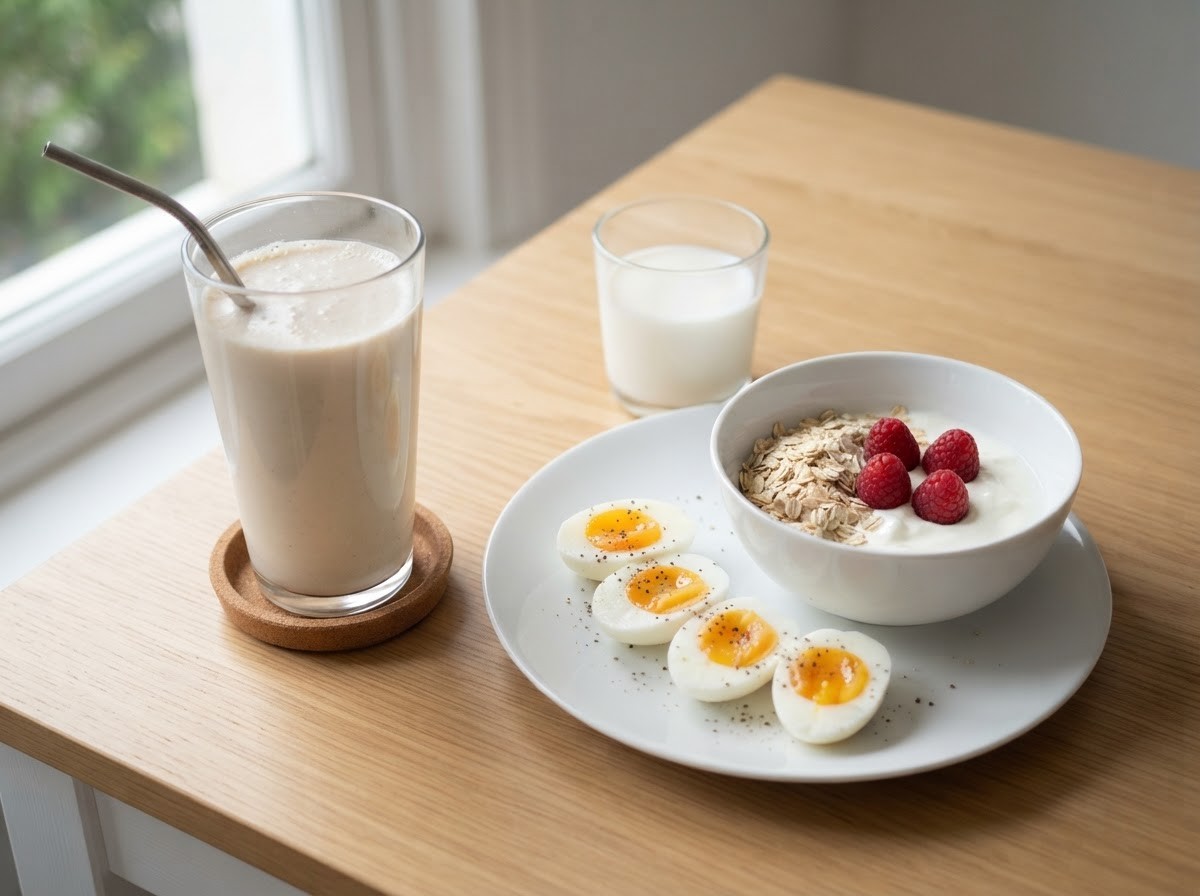
For protein itself, neither. Mayo Clinic’s advice is to “meet your dietary protein needs with these whole foods as opposed to supplements. Supplements are no more effective than food as long as energy intake is adequate.” A shake wins on speed and portability; whole food wins on everything else — fiber, micronutrients, chewing, cost.
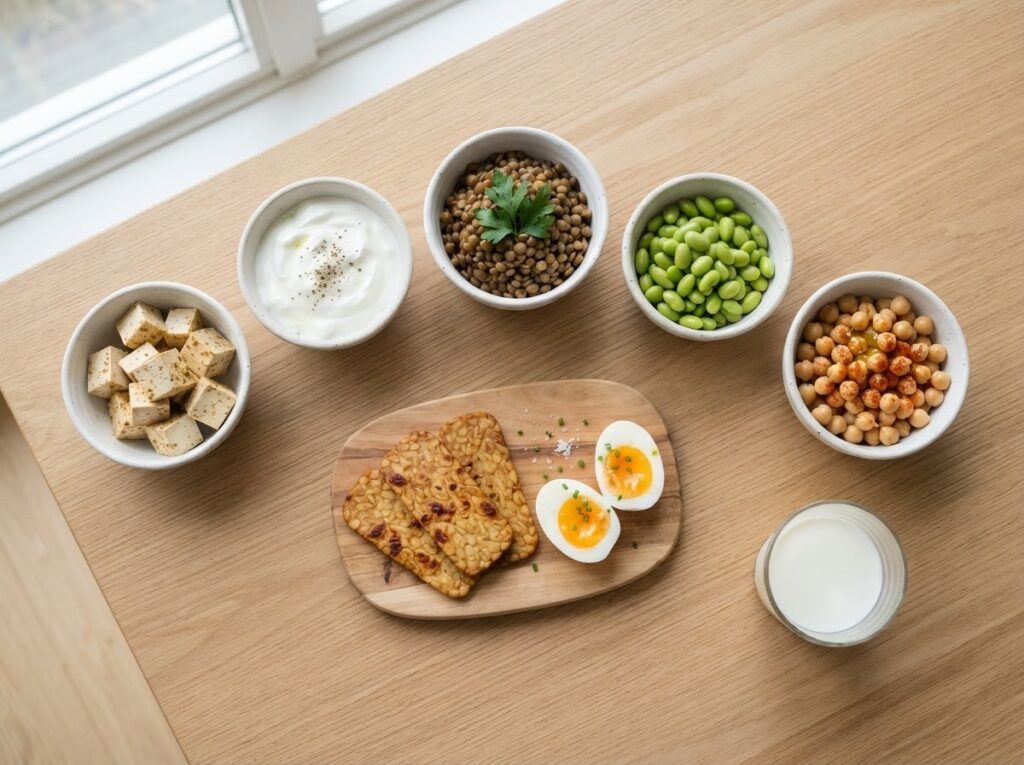
Per USDA data, these breakfast foods deliver protein without powder:
| Food | Serving | Protein |
|---|---|---|
| Greek yogurt, plain, low-fat | 200 g (¾ cup) | ~20 g |
| Eggs, large | 2 eggs | ~12 g |
| Milk, 1% | 1 cup (244 g) | ~8 g |
| Rolled oats, dry | ½ cup (40 g) | ~5 g |
| Whey protein powder | 1 scoop (check label) | typically 20–25 g |
Greek yogurt with oats and an egg on the side reaches the same 30 g as a shake, with fiber the shake does not have. If mornings are rushed, the shake is the realistic option — and a realistic breakfast beats a perfect one you skip. Our quick healthy breakfasts guide has the no-blender versions.
Whey, casein or plant: which powder
Harvard’s Nutrition Source summarizes the differences: whey “is water soluble and rapidly metabolized into amino acids”; casein “is digested more slowly than whey”; soy “is absorbed fairly rapidly … although it is not as bioavailable as animal-based proteins”; pea “is rich in eight of the nine essential amino acids; it is low in methionine.”
For a breakfast shake, speed is not the point — fullness is — so any of them works. Whey has the most leucine, the amino acid that triggers muscle protein synthesis; the NIH Office of Dietary Supplements notes whey “has more leucine than either casein or soy.” If you are lactose intolerant, whey isolate or a pea/rice blend is the easier choice; the NIDDK lists “milk-based meal replacement liquids and powders, smoothies, and protein powders” among products that may contain lactose. Our plant vs animal protein guide compares them for muscle.
How to build a balanced shake (not a dessert)
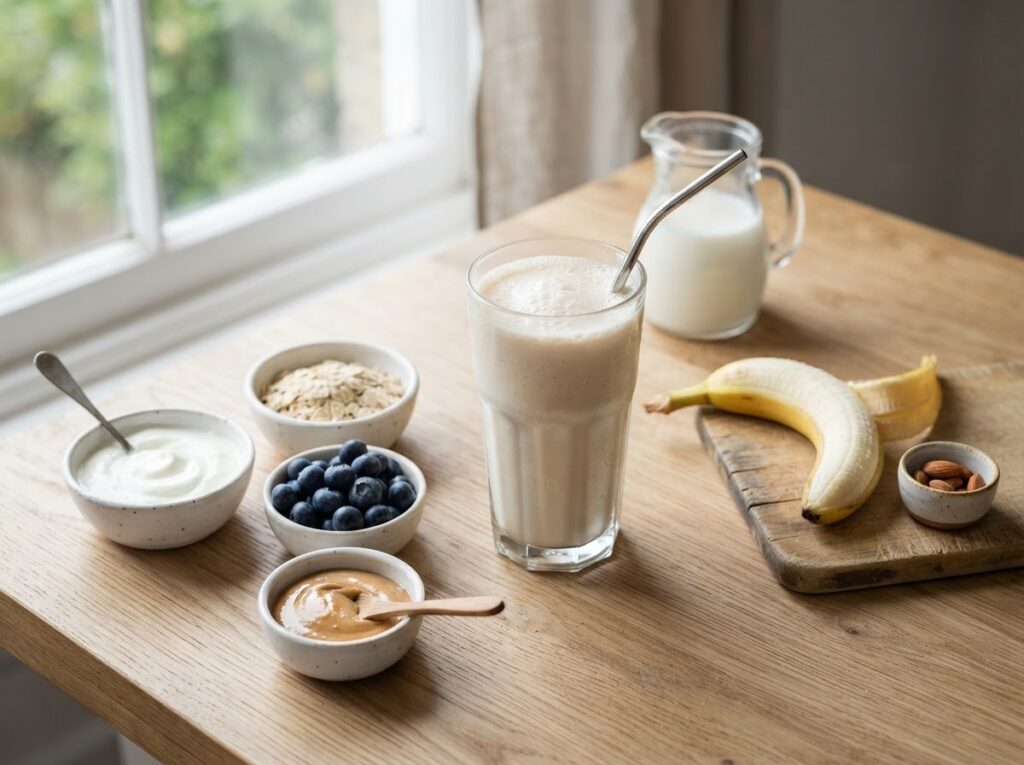
A shake becomes breakfast, not a snack, when it has protein, some carbohydrate with fiber, and a little fat. A template that lands at roughly 350–450 kcal and 30–35 g protein:
- Protein: 1 scoop powder (20–25 g) — or ¾ cup Greek yogurt if you prefer food.
- Liquid: 1 cup milk, soy milk or water. Milk adds ~8 g protein; water adds none.
- Carbohydrate and fiber: ½ banana or ½ cup berries, plus 2–3 tablespoons rolled oats. A medium banana carries ~27 g carbs and ~3 g fiber (USDA).
- Fat: 1 tablespoon nut butter or ground flaxseed.
- Skip: juice, honey, syrup, flavored yogurt, sweetened almond milk.
The sugar check matters more than any other ingredient choice. The Dietary Guidelines 2025–2030 state that “one meal should contain no more than 10 grams of added sugars”; the previous edition capped added sugar at “less than 10 percent of calories per day.” Many ready-to-drink shakes and flavored powders exceed 10 g per serving on their own. The Cleveland Clinic’s powder-buying advice: “Choose powders with no added sugars or dextrins/maltodextrins.” Read the Added Sugars line the same way you would on any label — our guide on hidden sugars in “healthy” foods covers the usual suspects.
Protein shakes for weight loss: what actually happens
Mayo Clinic is direct: “Protein shakes aren’t a magic way to lose weight.” The mechanism is ordinary: “Replacing meals with protein shakes may help you lower your daily calories, which can help you lose weight.” A 350-kcal shake that replaces a 700-kcal bagel-and-latte breakfast saves 350 kcal; a 350-kcal shake added to that breakfast adds 350 kcal.
Protein also helps keep muscle while you lose fat — the Cleveland Clinic notes it “can also help prevent muscle loss as you shed pounds” — which is the strongest argument for a higher-protein breakfast during a diet. Set the deficit first with the calorie deficit calculator, then decide whether the shake fits inside it.
Mayo’s caution applies too: “If you rely too much on protein shakes to replace daily meals, you’ll miss out on the healthy benefits of whole foods.” One shake a day is a tool; three is a meal-replacement diet, which is a different conversation. If your goal is the opposite — gaining — see protein shakes for weight gain.
Powder quality: what the label cannot tell you
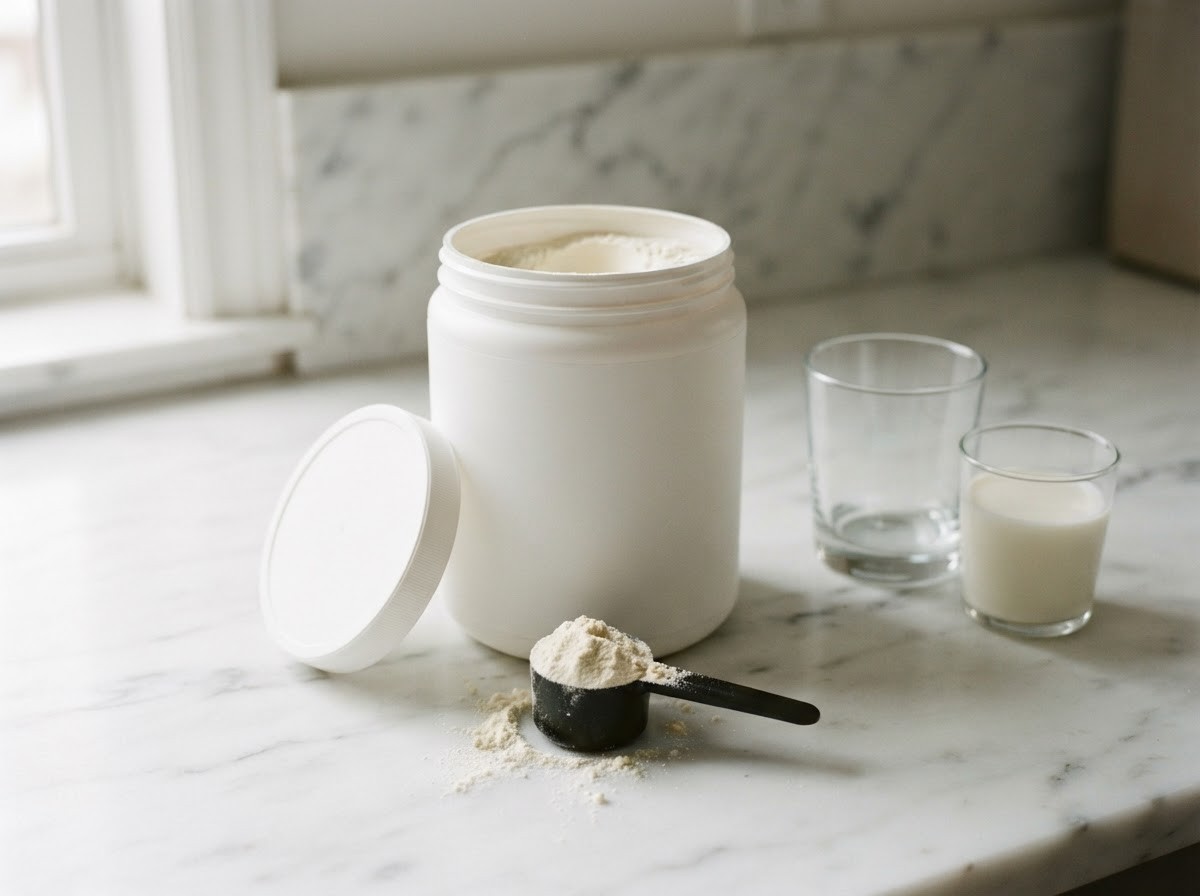
Protein powder is a dietary supplement, and the FDA “is not authorized to approve dietary supplements for safety and effectiveness before they are marketed.” Third-party seals help: the NIH Office of Dietary Supplements lists “ConsumerLab.com, NSF International, U.S. Pharmacopeia” as organizations that offer quality testing, while adding that “these seals do not guarantee that a product is safe or effective.” Look for NSF Certified for Sport or USP Verified on the tub, especially if you compete in tested sport.
Who should skip it, or ask first
- Kidney disease. The NIDDK: “Some people with CKD may need to consume moderate amounts of protein so waste doesn’t build up in the blood.” Do not add powder without your clinician or dietitian. For healthy adults, the NIH ODS reports “no safety concerns” at athlete intakes up to about 2.0 g/kg.
- Children and teens. The Cleveland Clinic: “In most Western countries, children already get two to three times the protein they need daily.” Whole foods, not powder.
- Pregnancy. Protein needs rise (the RDA is 71 g/day), but there is no good safety data on supplement powders — MedlinePlus advises talking to your provider about anything over-the-counter, and that includes powders.
- Lactose intolerance. Whey concentrate and milk bases can trigger symptoms; isolate, casein (lower lactose) or plant blends are the workarounds.
What we are not claiming
- That a protein shake at breakfast causes weight loss by itself. The only sourced mechanism is fewer calories when it replaces a bigger meal.
- That shakes “burn fat” or “boost metabolism.” The thermic effect of protein is real and modest; no source describes a fat-burning effect.
- That the body “can only absorb 30 g per meal.” The ISSN’s 20–40 g is a dose target for muscle protein synthesis, not an absorption ceiling.
- That a high-protein breakfast lowers total daily intake. The best-known trial found less evening high-fat snacking but no difference in daily calories.
FAQ
Is a protein shake a good breakfast?
Yes, if it is built as a meal: 20–40 g protein, some fiber-carrying carbohydrate, a little fat, and under 10 g added sugar. A scoop in water alone is a snack.
How much protein should a breakfast shake have?
About 0.25 g per kilogram of body weight — 20–40 g for most adults, per the International Society of Sports Nutrition.
Do protein shakes help you lose weight?
Only through calories. Mayo Clinic: replacing a meal with a shake “may help you lower your daily calories,” but shakes “aren’t a magic way to lose weight.”
Is it better to have a protein shake or eggs for breakfast?
For protein, equal; two eggs plus Greek yogurt matches a shake. Whole food adds fiber and micronutrients; the shake wins on speed. Mayo advises meeting needs from whole foods where you can.
Can I drink a protein shake every morning?
For healthy adults, yes — daily intakes up to about 2.0 g/kg carry no reported safety concerns per the NIH. People with kidney disease should ask their clinician first.
Which protein powder is best for breakfast?
Whey for the most leucine, casein for slower digestion and lower lactose, pea or soy if you avoid dairy. Whichever you choose, pick one with no added sugar and a third-party quality seal.
This content is for educational purposes only and is not medical advice. Always consult a qualified healthcare professional for personalised guidance.