Americans eat about 17 teaspoons of added sugar a day — roughly 68 grams, against a Daily Value of 50. Very little of it arrives as sugar you spooned into something yourself. Most of it is already inside food that reads as healthy: the yogurt, the granola, the pasta sauce, the bar in your bag. Since 2020 the label has a line that shows exactly how much, and once you know where to look, the guessing stops. If you bake and want to cut some of it, our sugar substitute calculator gives the swap amounts.
The short version
- Only one line matters: “Includes … Added Sugars.” Total Sugars has no Daily Value; Added Sugars has one, and it is 50 g.
- Apply the 5/20 rule to it: 2.5 g per serving is low, 10 g per serving is high.
- Sugar’s many names no longer hide the amount — every syrup, concentrate and -ose is counted on the same line. What they hide is the position in the ingredient list.
- “No added sugars” is not “sugar free.” They are two different legal claims with two different meanings.
- The fastest check in a store: compare the plain version of a food with the flavored version of the same brand.
Total Sugars and Added Sugars are different questions
Total Sugars counts everything sweet in the product, including the lactose in milk and the fructose in fruit. Added Sugars counts only what was put in. The FDA defines added sugars as “sugars that are added during the processing of foods … foods packaged as sweeteners …, sugars from syrups and honey, and sugars from concentrated fruit or vegetable juices” — and states that they do not include the sugars naturally found in milk, fruits and vegetables.
The regulation itself, 21 CFR 101.9, requires that the amount be indented under Total Sugars and printed as “Includes ‘X’ g Added Sugars.” That indent is the whole point: it separates what the food is from what was done to it.
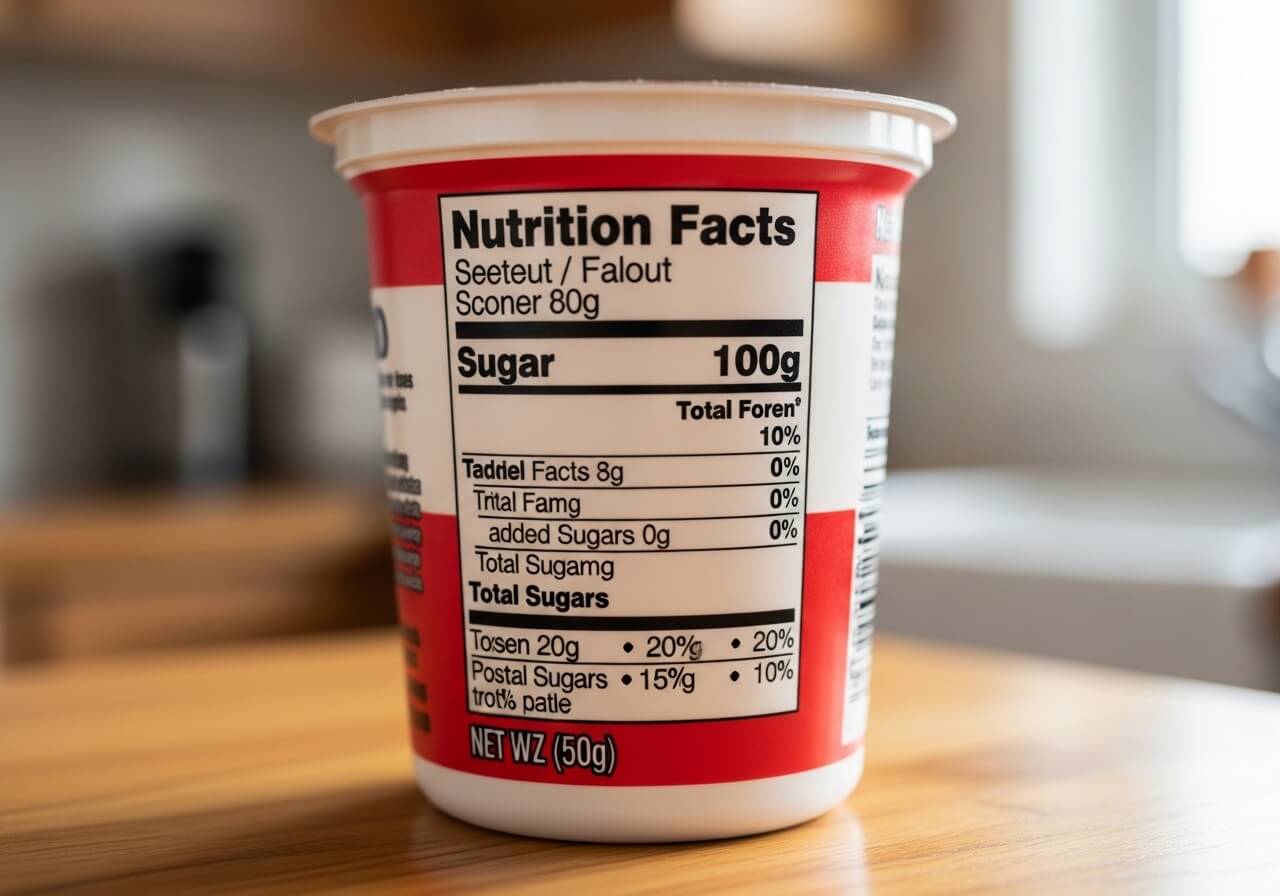
So a plain yogurt showing “Total Sugars 12 g, Includes 0 g Added Sugars” has not been sweetened at all — the 12 grams are milk sugar. A flavored version of the same yogurt might show the same total with 10 of those grams added. Same number on the top line, completely different products.
Why Total Sugars has no percentage next to it. The FDA is explicit: “There is no Daily Value for total sugars because no recommendation has been made for the total amount to eat in a day.” Added Sugars does have one — 50 g on a 2,000-calorie diet — which is why it is the only sugar line you can actually judge.
The names sugar goes under — and what they no longer hide
Under 21 CFR 101.4, ingredients are listed “in descending order of predominance by weight.” Split one sweetener into three — cane sugar, brown rice syrup and apple juice concentrate — and each lands lower down the list than their combined weight would justify. The product then reads as though sugar is a minor ingredient.
All of these count as added sugars under the FDA definition, and all of them are totalled on the same label line:
| Group | Names you will see on ingredient lists |
|---|---|
| Plain sugars | Sucrose, dextrose, glucose, fructose, maltose, invert sugar |
| Syrups | Corn syrup, high-fructose corn syrup, brown rice syrup, tapioca syrup, malt syrup, golden syrup |
| Wholesome-sounding | Honey, molasses, maple syrup, agave nectar, coconut sugar, date sugar, evaporated cane juice, raw sugar, turbinado |
| Juice-based | Fruit juice concentrate, apple or grape juice concentrate, fruit purée concentrate |
This is the part worth understanding properly. Before 2020, renaming sugar genuinely hid it — there was no line that added it all up. Now there is. The alias game no longer changes the number; it only changes where sugar appears in the ingredient list. So use the two documents for two different jobs: the Added Sugars line for how much, the ingredient list for whether sweeteners are the backbone of the product or an afterthought.
Where it actually hides in a healthy-looking cart
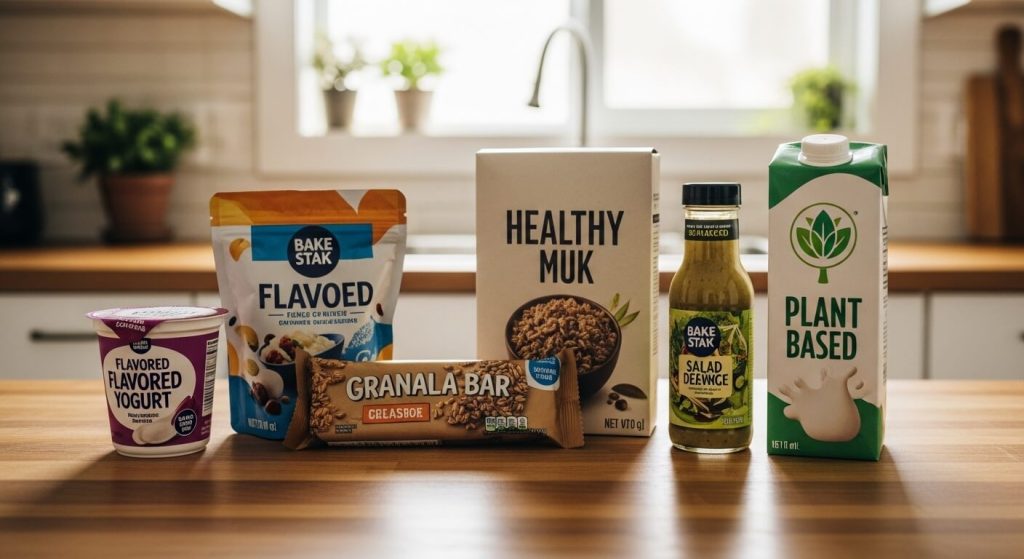
Added sugar concentrates in categories nobody thinks of as dessert. The CDC names sugar-sweetened beverages, desserts and sweet snacks as the leading sources — but the ones that quietly move a daily total are savoury and breakfast foods. Which leaves the question of what to reach for instead, which we take up in snacks that hold up when you are trying to lose weight.
| Food | Why it is worth checking |
|---|---|
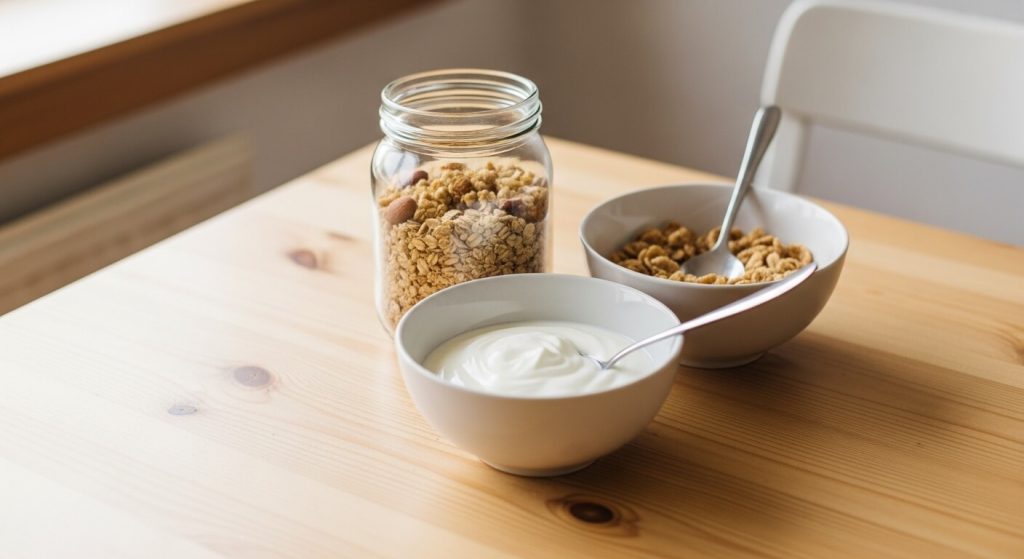
| Flavored yogurt | The fruit layer is usually sweetened. Compare against the plain version of the same brand. |
| Granola and “healthy” cereal | Oats are held together by a syrup. Check the serving size too — granola servings are small. |
| Protein and snack bars | Dates and syrups both bind and sweeten. The Added Sugars line separates the two roles. |
| Pasta sauce, ketchup, BBQ sauce | Sweeteners balance acidity. Unsweetened versions of all three exist on the same shelf. |
| Salad dressing and marinades | Often sweetened even in “light” versions, which reduce fat rather than sugar. |
| Bread, buns and wraps | Small amounts per slice that add up across a day. |
| Flavored instant oatmeal | Plain oats have no added sugars; the flavored sachets are where it enters. |
| Plant milks | “Original” is often the sweetened one. The unsweetened version says so on the front. |
| Dried fruit and fruit snacks | Some are sweetened, some are not — only the Added Sugars line tells them apart. |
The arithmetic, in the two numbers you need
The Daily Value for added sugars is 50 g, and the FDA’s 5/20 rule turns that into thresholds you can read without doing percentages:
2.5 g of added sugars per serving = 5% DV = low. 10 g per serving = 20% DV = high.
Roughly four grams is a teaspoon, so a 20% DV serving is about two and a half teaspoons of sugar. Two of those in a day — a flavored yogurt and a bowl of granola — is most of the daily allowance before lunch.
The 50 g figure is the FDA’s Daily Value, used to calculate the %DV on the label. Federal dietary guidance is stricter and framed differently: the Dietary Guidelines for Americans 2025–2030, published in January 2026, state that “while no amount of added sugars or non-nutritive sweeteners is recommended or considered part of a healthy or nutritious diet, one meal should contain no more than 10 grams of added sugars,” and that added sugars should be avoided “during infancy and early childhood.” Current US intake sits at 13.2% of calories, against a national target of 11.5%.
Note what that per-meal number does to the label math: 10 g of added sugars in one meal is exactly the FDA’s 20% DV “high” threshold. The two rules agree, they are just written in different units.
Claims that sound like less sugar
Four phrases appear on packages and mean four different things. Only two of them are defined by a number in 21 CFR 101.60:
| Claim | What it guarantees |
|---|---|
| Sugar free | Less than 0.5 g of sugars per serving — total, not just added |
| No added sugars | Nothing sweetening was added during processing. The food may still be high in natural sugars |
| Reduced sugar | At least 25% less than the regular version — which can still be a lot |
| “Made with real fruit,” “no high-fructose corn syrup,” “organic cane sugar” | Nothing about the amount of sugar. Organic cane sugar is counted as added sugar exactly like any other |
The last row is the one that catches people. Swapping high-fructose corn syrup for honey, agave or organic cane sugar changes the ingredient list and changes nothing on the Added Sugars line. If you want the wider set of rules behind words like these, they are in our guide to what food label claims legally mean.
The shelf test that takes ten seconds
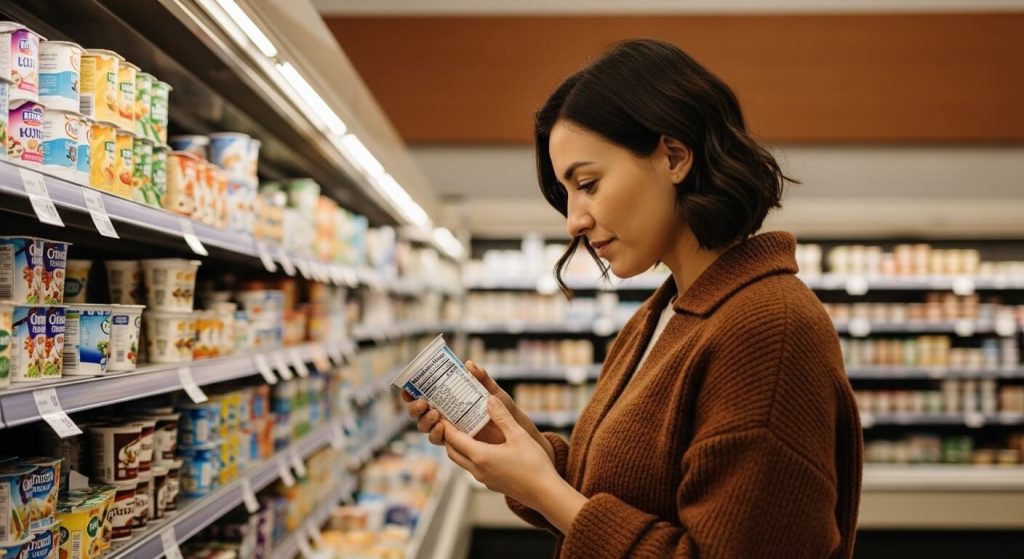
Pick up the plain version of the food and the flavored version of the same brand, and compare only the Added Sugars line. The difference is what the flavor cost you, with nothing else changing — same brand, same base, same serving size.
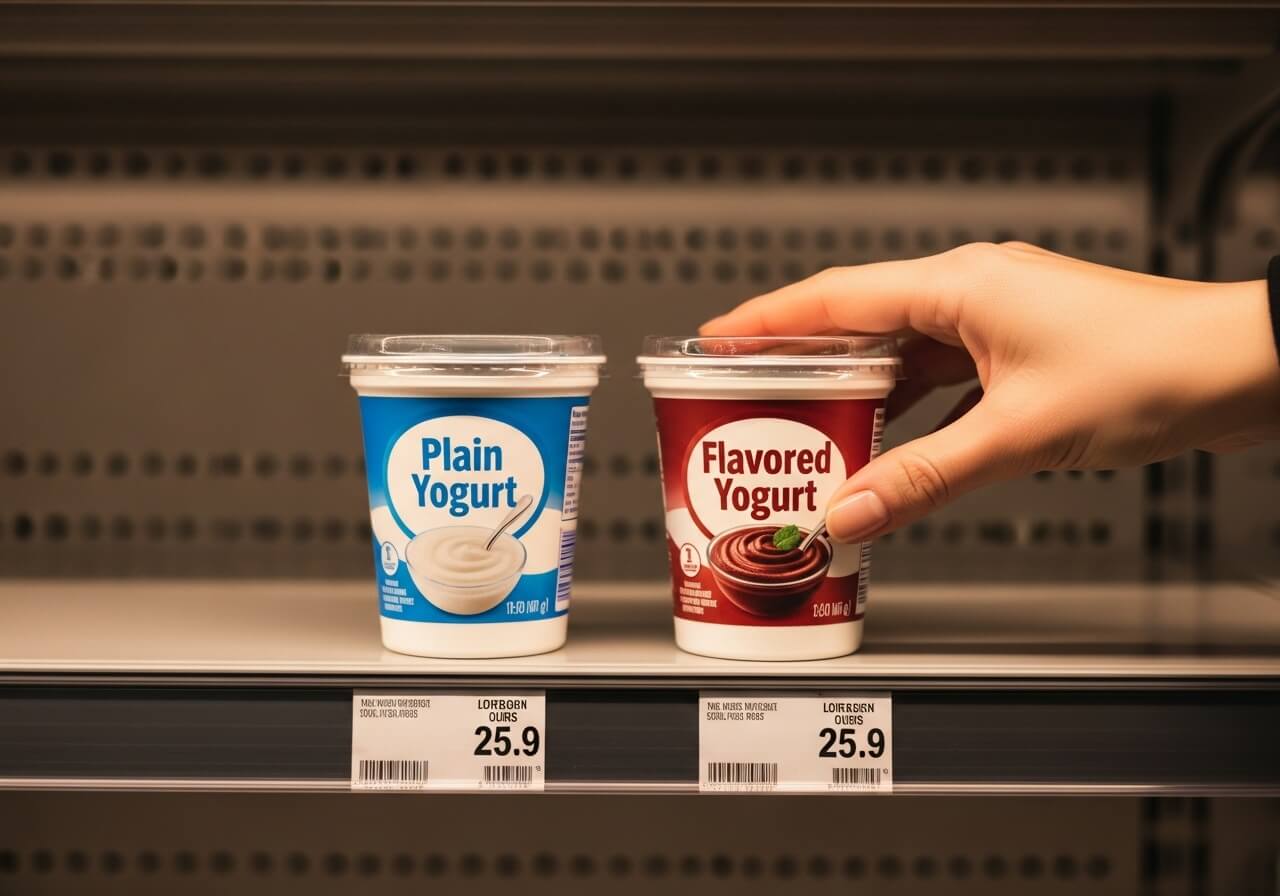
Two cautions before you compare. Check that the serving sizes match, because the numbers are meaningless otherwise — the rules behind that are in our guide to serving size on a nutrition label. And check servings per container, since a bottle or a pouch may hold two.
Check a product yourself
NOVA is a research classification, not a federal definition, but it is the one most studies on processed food use. Search any packaged food by name, brand or barcode to see its NOVA group, the processing markers in its ingredient list and its additives.
Product data: Open Food Facts (ODbL), crowdsourced — check the label on the pack. Processing level uses the NOVA classification.
This content is for educational purposes only and is not medical advice. Always consult a qualified healthcare professional for personalised guidance.