The Nutrition Facts panel tells you how much. The ingredient list tells you what the food actually is — and it is the one part of a package that cannot be styled, rounded or spun, because federal rules fix the order. Learning to read it takes about two minutes and changes what you notice on every shelf.
The short version
- Ingredients are ordered by weight, heaviest first. The first three are most of what you are buying.
- “Contains 2% or less of …” is a cut-off line. Everything after it is present in trace amounts.
- “Spices,” “natural flavor” and “artificial flavor” are legal collective names — they hide dozens of substances, legally, and say nothing about quality.
- Certified colors must be named (FD&C Yellow No. 5); other colors may just say “artificial color.”
- Nine major allergens must be declared — sesame joined the list on January 1, 2023.
- The list tells you the order, never the amount. For amounts, the panel above it is the only source.
Rule 1: the order is the information
Under 21 CFR 101.4, ingredients must be “listed by common or usual name in descending order of predominance by weight.” No exceptions for marketing, and no reordering to put the appealing ingredient first.
That single rule does most of the work. A cracker whose first ingredient is enriched flour is a refined-grain product no matter what the front says. A soup whose first two ingredients are water and cream is mostly water and cream. And a “berry” cereal whose berries appear after the fifth ingredient contains a decorative amount of berry.
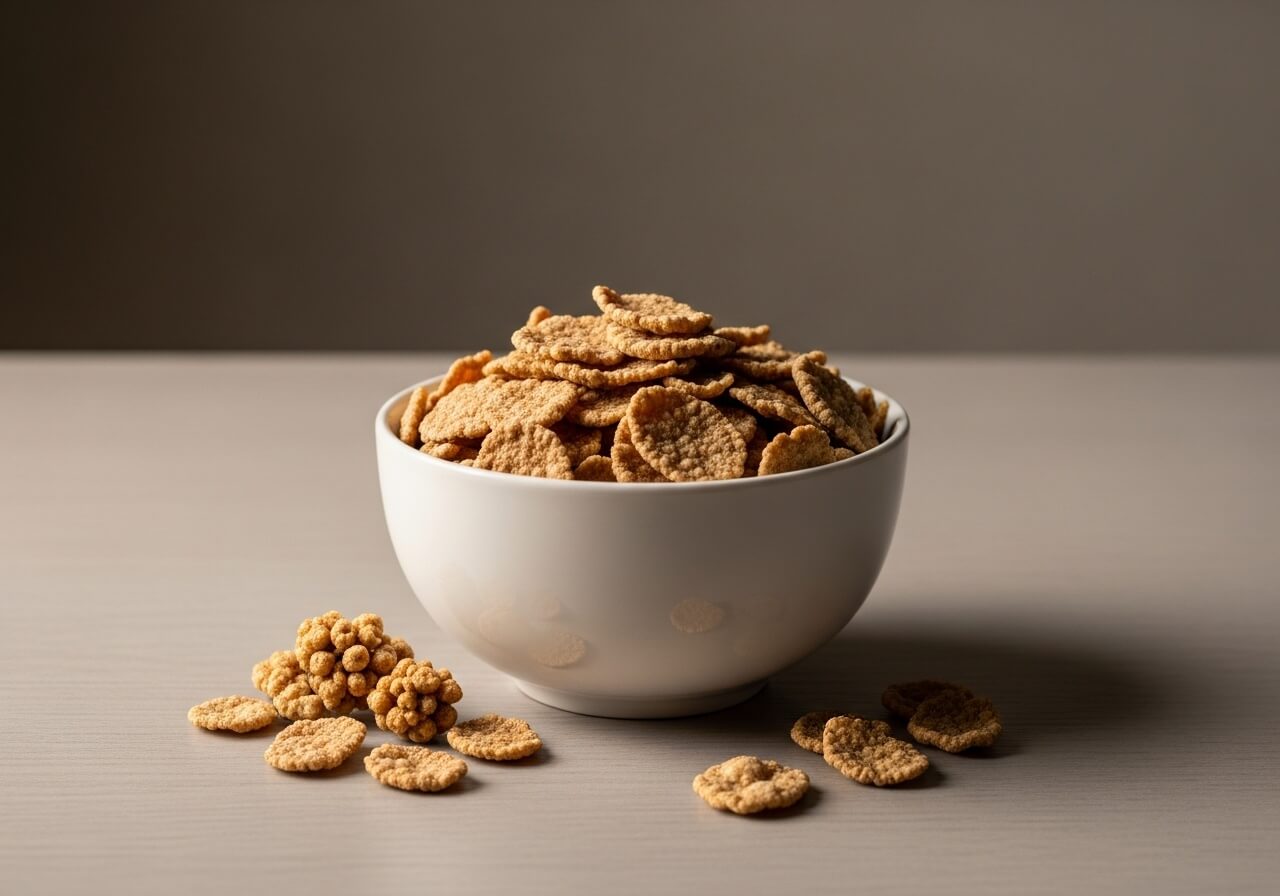
Read the first three and stop. That is usually enough to know what the product is, and it takes about four seconds.
Rule 2: the 2% line splits the list in half
The same regulation lets manufacturers group everything present at 2 percent or less into a separate block at the end, introduced by a phrase such as “Contains 2 percent or less of” or “Less than 2 percent of.” The threshold can be set at 2%, 1.5%, 1.0% or 0.5%.
What this means when you read. Ingredients before that phrase are ordered by weight and matter. Ingredients after it are in trace amounts and are not necessarily in order. So a long, alarming tail of unfamiliar names after “Contains 2% or less of” is usually a list of preservatives, emulsifiers and vitamins measured in fractions of a percent — while a short list of sweeteners before that line is what actually shapes the product.
Rule 3: “natural flavor” is a category, not a compliment
Spices, flavorings and colorings are declared under 21 CFR 101.22, which allows them to be named collectively rather than broken out. The definitions are about origin, not about health:
| What you see | What the rule means by it |
|---|---|
| Natural flavor | Flavoring constituents derived from a spice, fruit, vegetable, herb, bark, root, leaf, meat, seafood, poultry, eggs, dairy or fermentation products — as an essential oil, extract, distillate or similar |
| Artificial flavor | Any flavoring substance not derived from those sources |
| Spices | May be declared collectively as “spice” rather than named individually |
| Artificial color / Color added | Permitted generic wording for colorings that are not subject to certification |
| FD&C Yellow No. 5, FD&C Red No. 40, … | Certified color additives — these must be declared by their specific names |
The practical consequence: “natural flavor” tells you where a flavor came from, not how much processing produced it and not whether the food is good. It is a sourcing category the same way “organic” is a farming category — informative about origin, silent about nutrition.
Rule 4: the allergen declaration is separate and mandatory
Nine substances are classified as major food allergens in the United States: milk, eggs, fish, crustacean shellfish, tree nuts, peanuts, wheat, soybeans and sesame. Sesame became the ninth on January 1, 2023.
A label may declare an allergen in one of three ways: by its common name inside the ingredient list, in parentheses after the ingredient, or in a separate “Contains” statement below the list. All three are equally valid, which is why the absence of a “Contains” line does not mean the product is free of allergens — the declaration may be inside the list itself.
Rule 5: one ingredient can appear under several names
Because the order is set by weight, splitting one component across several named forms moves each of them further down the list. Sweeteners are the classic case: cane sugar, brown rice syrup and apple juice concentrate in one product each weigh less than their total, so none of them lands near the top. If you are baking and want to use one of those sweeteners instead of sugar, our sugar substitute calculator gives the amounts.
This no longer hides the amount — since 2020 the panel totals every one of them on the Added Sugars line — but it does change how the list reads at a glance. The full version of that check is in our guide to hidden sugars in healthy foods.

What the ingredient list cannot tell you
It gives order, never amounts. Second place could be 30% of the product or 3%. It also cannot tell you whether a nutrient is present in a useful quantity — a “made with whole grain” product may list whole wheat flour second and still deliver very little fiber per serving.
That is what the panel above it is for, and the two are meant to be read together: the panel for how much, the list for what. The method for the panel side is in our guide to reading a nutrition label in 30 seconds, and the words on the front of the pack are covered in what food label claims legally mean.
FAQ
Does the first ingredient have to be more than half the product?
No. It only has to weigh more than every other single ingredient. In a product with many components the first ingredient can be well under half.
Why is water listed as an ingredient?
Because it is one, and it is ordered by weight like everything else. In sauces, soups and beverages water is often first, which is accurate rather than deceptive.
Is “natural flavor” better than “artificial flavor”?
The regulation separates them by origin, not by safety or nutrition. Neither term describes the amount used, and both may cover many individual substances declared under one name.
If a product does not have a “Contains” statement, is it allergen-free?
No. The “Contains” statement is one of three permitted ways to declare an allergen. Read the ingredient list itself before concluding anything.
What does “Contains 2% or less of” actually mean?
Everything after that phrase is present at or below the stated threshold — 2%, 1.5%, 1.0% or 0.5%, whichever the manufacturer chose — and does not have to be in weight order.
Where this fits
The ingredient list is the honest half of the package. Pair it with the panel using our 30-second method for reading a nutrition label, check the portion against serving size rules, and look up specific foods in the Nutrition Facts database or in Compare Foods.
Every rule here is linked to its source in the text: the Code of Federal Regulations, Title 21, Part 101, and the U.S. Food and Drug Administration. Checked against those sources on 1 September 2026. Educational information, not medical advice — see our medical disclaimer.
This content is for educational purposes only and is not medical advice. Always consult a qualified healthcare professional for personalised guidance.