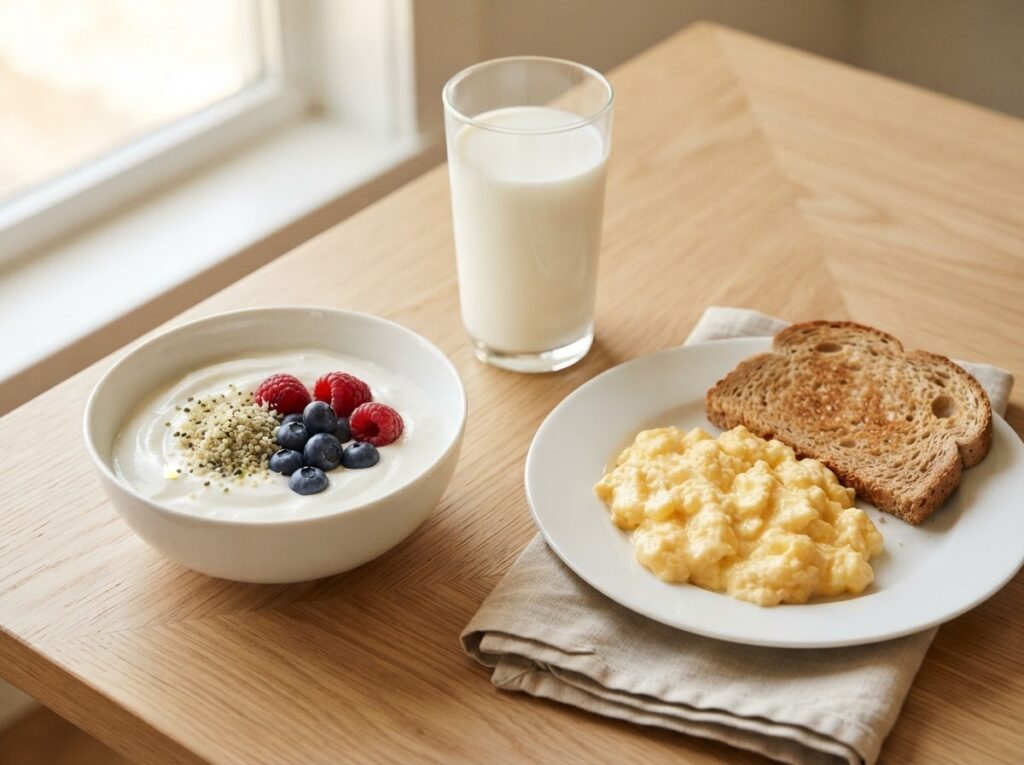
A high-protein breakfast is one that reaches about 20 to 30 g of protein — and most “healthy” breakfasts do not get there. Two eggs on toast is 17 g. A bowl of oatmeal with milk is 13 g. A container of Greek yogurt on its own is 17 g. The fix is rarely a new recipe; it is adding one dense protein food (a third egg, a scoop of cottage cheese, a spoon of hemp seeds) to a breakfast you already eat.
Below are 20 breakfast ideas that each clear 20 g of protein, with the grams counted item by item from USDA FoodData Central, grouped by how they are built: eggs, dairy, plant-based and savory. Then no-cook options for mornings with no time, how many days meal-prepped breakfasts keep, and where the sodium and sugar hide. One of them has a recipe of its own: protein pancakes.
Key takeaways. Aim for 20–30 g of protein at breakfast, the range the Cleveland Clinic recommends. The fastest routes there: a cup of cottage cheese (25 g), a scoop of whey in milk (31 g), three eggs with cheese (25 g), a container of Greek yogurt plus hemp seeds (27 g). Oats, egg whites, chia, bread and nut butter add 4–7 g each — useful add-ons, not the base of the meal. Meal-prepped egg dishes keep 3–4 days in the fridge; hard-boiled eggs keep a week.
Why 20 g of protein at breakfast
The daily minimum for adults is 0.8 g of protein per kilogram of body weight, and the Dietary Guidelines for Americans 2025–2030 now set “serving goals: 1.2–1.6 grams of protein per kilogram of body weight per day.” For a 70 kg (154 lb) adult that is 84–112 g. Spread over three meals, breakfast has to carry roughly 25–35 g of it — and the Mayo Clinic is explicit that “it’s better to spread out your protein consumption evenly throughout the day,” with “15–30 grams of protein at each meal.” The Cleveland Clinic narrows it for the first meal: “aiming for about 20 to 30 grams of protein at breakfast.” Our protein calculator gives your daily number; protein per meal explains how to split it.
The practical reason is hunger. Per the Cleveland Clinic, “protein helps you feel full and satiated, which may make it easier to avoid overeating or snacking later in the day.” Mayo adds a caveat worth keeping: some studies suggest moving protein from dinner to breakfast decreases cravings through the day, but “more research is needed before these claims are verified.” So the honest promise of a 25 g breakfast is a longer stretch before you want a snack — not a smaller waist.
How the grams were counted
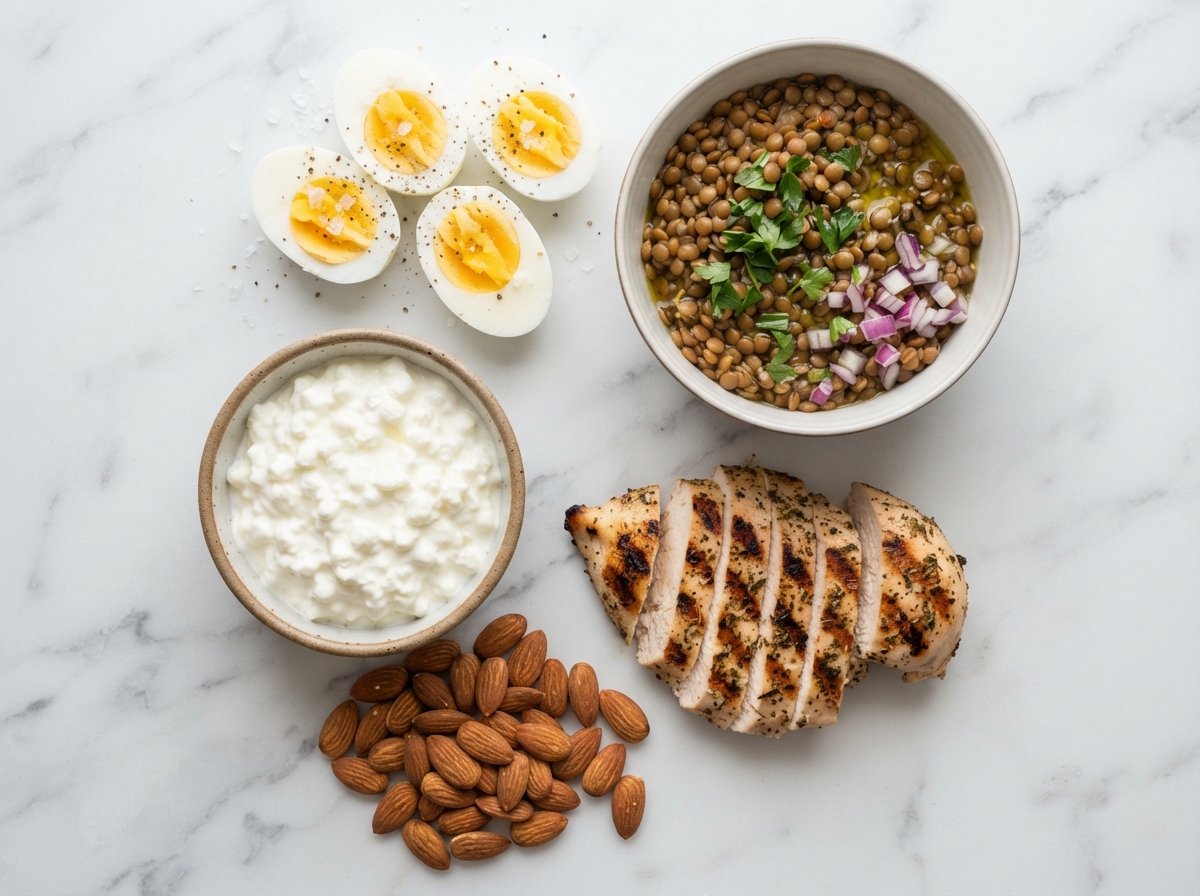
Every figure below comes from USDA FoodData Central for the exact portion listed, then rounded to the nearest gram. The building blocks, so you can assemble your own:
| Food | Portion | Protein |
|---|---|---|
| Cottage cheese, 2% | 1 cup (226 g) | 25 g |
| Whey protein powder | 1 scoop (30 g) | 23 g (check the label) |
| Ground turkey, 93% lean, cooked | 3 oz (85 g) | 23 g |
| Chicken breast, cooked | 3 oz (85 g) | 26 g |
| Tofu, firm | ½ cup (126 g) | 22 g |
| Greek yogurt, plain nonfat | 6 oz (170 g) | 17 g |
| Skyr, plain nonfat | 5.3 oz (150 g) | 17 g |
| Tempeh | 3 oz (84 g) | 17 g |
| Tuna, light, canned in water | 3 oz (85 g) | 17 g |
| Smoked salmon | 3 oz (85 g) | 16 g |
| Ricotta, part-skim | ½ cup (124 g) | 14 g |
| Hemp seeds, hulled | 3 tbsp (30 g) | 9.5 g |
| Edamame, shelled | ½ cup (78 g) | 9 g |
| Kefir, low-fat | 1 cup (243 g) | 9 g |
| Lentils, cooked | ½ cup (99 g) | 9 g |
| Milk, 2% | 1 cup (244 g) | 8 g |
| Turkey breast, deli | 2 oz (56 g) | 8 g |
| Quinoa, cooked | 1 cup (185 g) | 8 g |
| Black beans | ½ cup (86 g) | 8 g |
| Peanut butter | 2 tbsp (32 g) | 7 g |
| Cheddar | 1 oz (28 g) | 6.5 g |
| Egg, large | 1 (50 g) | 6.3 g |
| Almonds | 1 oz (28 g) | 6 g |
| Oats, dry | ½ cup (40 g) | 5 g |
| Chia seeds | 2 tbsp (28 g) | 4.6 g |
| Whole-wheat tortilla | 1 medium (45 g) / 1 large (71 g) | 4.4 g / 7 g |
| Whole-wheat bread | 1 slice (32 g) | 4 g |
| Egg white, large | 1 (33 g) | 3.6 g |
Two things stand out. Egg whites are not a protein shortcut: one white is 3.6 g, so swapping a whole egg (6.3 g) for a white loses protein, not just fat — see egg white vs whole egg. And the “high-protein” reputation of oats, chia and nut butter is relative: 5–7 g a serving is real, but three of them together still do not make a 20 g meal.
20 high-protein breakfast ideas, with the grams
Egg-based (5)
Eggs are the natural base, but at 6.3 g each you need three of them, or two plus a partner. Both Harvard and Mayo Clinic put the safe level for healthy people at about one egg a day, or seven a week; Harvard notes risk was higher in people with diabetes eating one or more daily. A three-egg breakfast is fine as one of the ideas in rotation, not every morning.
| # | Breakfast | What is in it | Protein |
|---|---|---|---|
| 1 | Three-egg omelet with cheddar and toast | 3 eggs (19 g) + 1 oz cheddar (6.5 g) + 1 slice whole-wheat toast (4 g), spinach and tomato | 29 g |
| 2 | Breakfast burrito | 2 eggs (13 g) + ½ cup black beans (8 g) + 1 oz cheddar (6.5 g) + 1 large whole-wheat tortilla (7 g), salsa | 34 g |
| 3 | Scrambled eggs and whites on toast | 2 eggs (13 g) + 2 egg whites (7 g) + 1 slice whole-wheat toast (4 g) | 24 g |
| 4 | Turkey sausage and egg | 3 oz 93% lean ground turkey, seasoned and pan-fried as patties (23 g) + 1 fried egg (6 g) | 29 g |
| 5 | Egg-white and turkey wrap | 3 egg whites (11 g) + 1 egg (6 g) + 2 oz deli turkey (8 g) + 1 large whole-wheat tortilla (7 g) | 32 g |
The burrito is the one to make in batches — our breakfast egg burritos recipe freezes well. Idea 5 is the highest in sodium on this list (about 500 mg from the deli turkey alone), which comes up again below. Which tortilla you wrap it in matters less than it looks: we put corn and flour tortillas side by side.
Dairy-based (6)
Greek yogurt, skyr and cottage cheese are the densest everyday proteins on the table above, and the Cleveland Clinic singles them out because they “can give you a feeling of fullness that lasts a little longer.” The Dietary Guidelines add one instruction that matters for flavored versions: “when consuming dairy, include full-fat dairy with no added sugars.” Plain, then add fruit.
| # | Breakfast | What is in it | Protein |
|---|---|---|---|
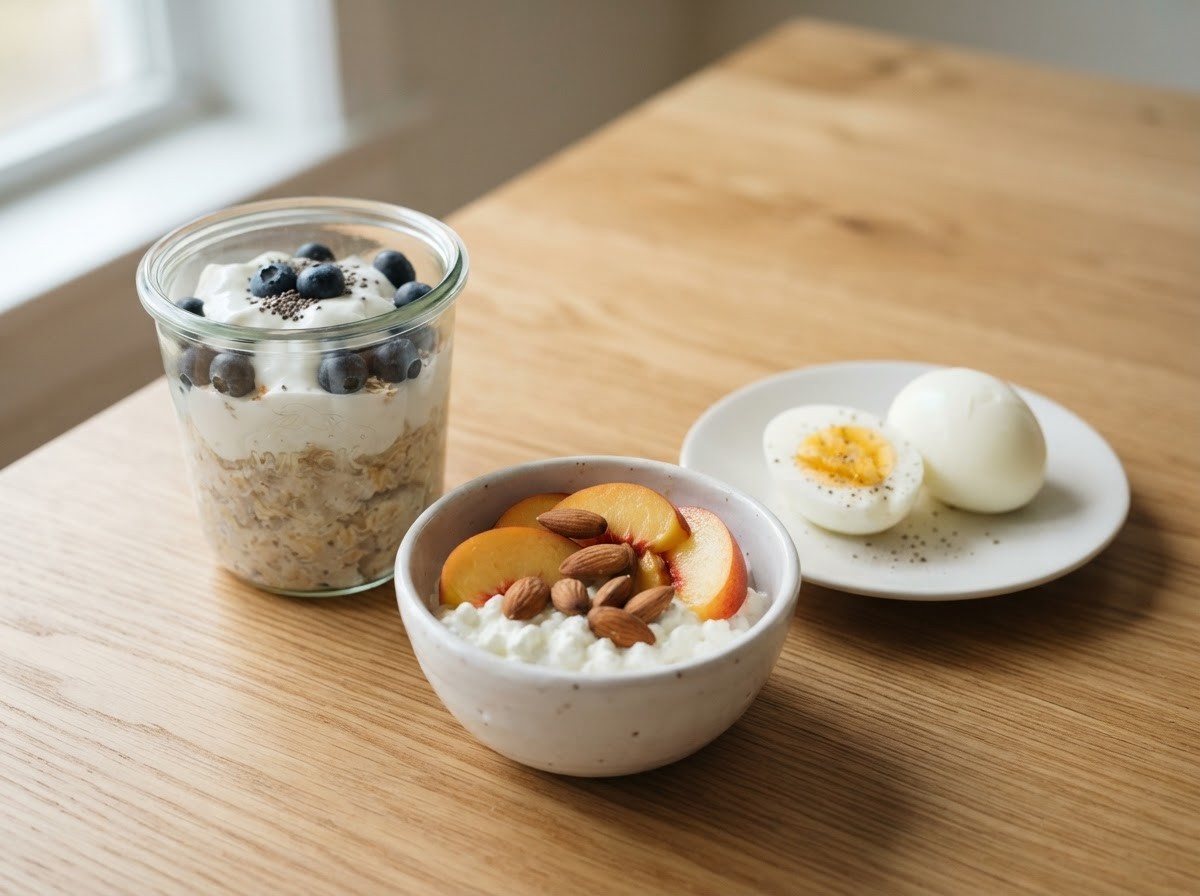
| 6 | Greek yogurt bowl with hemp seeds | 6 oz plain Greek yogurt (17 g) + 3 tbsp hemp seeds (9.5 g), berries | 27 g |
| 7 | Cottage cheese bowl | 1 cup 2% cottage cheese (25 g) + 1 oz almonds (6 g), peach or pineapple | 31 g |
| 8 | Greek yogurt overnight oats | ½ cup oats (5 g) + ½ cup 2% milk (4 g) + 6 oz Greek yogurt (17 g) + 1 tbsp chia (2 g) | 29 g |
| 9 | Cottage cheese pancakes | ½ cup cottage cheese (12 g) + 2 eggs (13 g) + ½ cup oats (5 g), blended and cooked as pancakes | 30 g |
| 10 | Skyr with almonds and berries | 5.3 oz plain skyr (17 g) + 1 oz almonds (6 g) | 23 g |
| 11 | Ricotta toast | ½ cup part-skim ricotta (14 g) + 2 slices whole-wheat toast (8 g) + 1 tbsp hemp seeds (3 g), honey or tomato | 25 g |
Idea 8 is the answer to “why are my overnight oats not filling”: oats and milk alone are 9 g; the Greek yogurt is what takes the jar to 29. The same logic builds our breakfast parfait.
Plant-based (4)
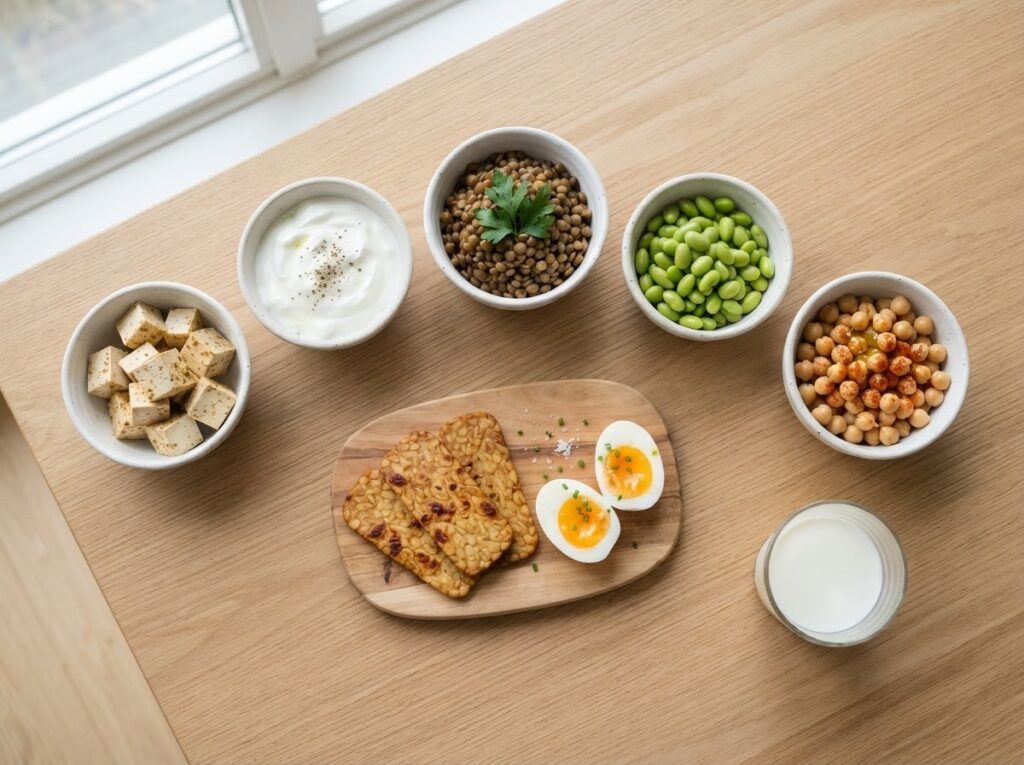
Firm tofu is the plant food that reaches 20 g on its own in a normal serving; tempeh, edamame and beans get there in pairs. The full ranking is in high-protein vegetarian foods.
| # | Breakfast | What is in it | Protein |
|---|---|---|---|
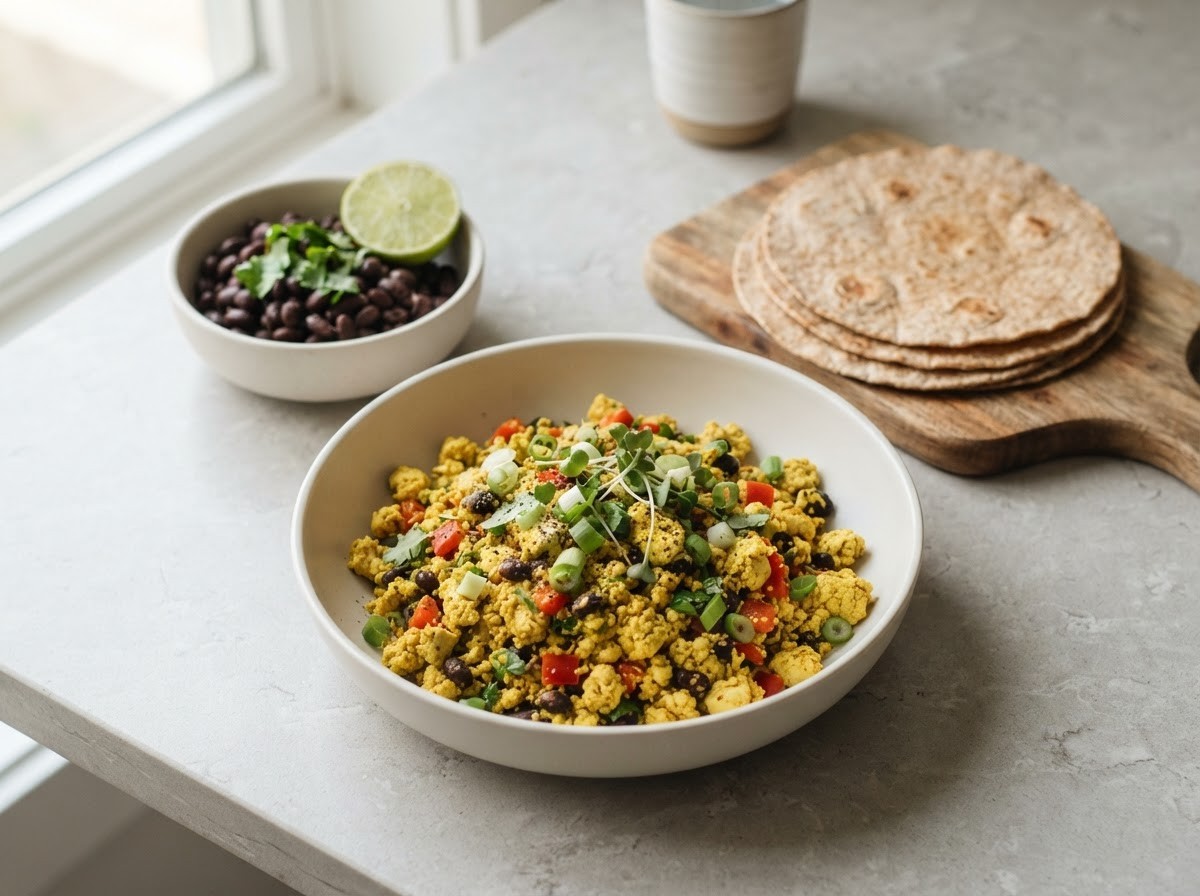
| 12 | Tofu scramble with black beans | ½ cup firm tofu, crumbled and cooked with turmeric (22 g) + ½ cup black beans (8 g) + 1 medium whole-wheat tortilla (4 g) | 34 g |
| 13 | Tempeh and eggs | 3 oz tempeh, sliced and pan-fried (17 g) + 2 eggs (13 g) | 30 g |
| 14 | Chia pudding with Greek yogurt | 2 tbsp chia (5 g) + 1 cup 2% milk (8 g) soaked overnight, topped with 6 oz Greek yogurt (17 g) | 30 g |
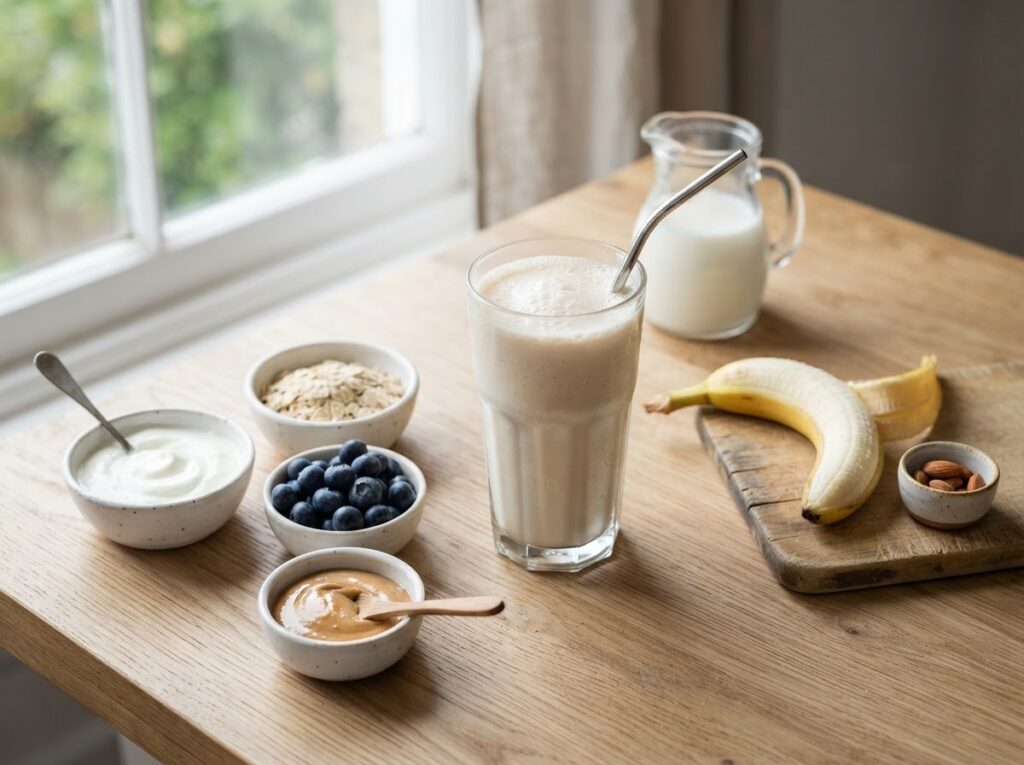
| 15 | Peanut butter banana smoothie | 6 oz Greek yogurt (17 g) + 1 cup 2% milk (8 g) + 2 tbsp peanut butter (7 g) + 1 banana | 33 g |
Only idea 12 is fully vegan; swap the Greek yogurt in 14 and 15 for a plant protein powder if that matters. Ideas 14 and 15 lean on dairy for the grams because the plant add-ons alone — chia, peanut butter, oat milk — do not reach 20.
Savory and shake-based (5)
Dinner foods at breakfast are the simplest high-protein move there is: the protein is already cooked. And a shake is the fastest — the trade-offs are in protein shake for breakfast.
| # | Breakfast | What is in it | Protein |
|---|---|---|---|
| 16 | Whey shake with milk | 1 scoop whey (23 g) + 1 cup 2% milk (8 g) + banana or frozen berries | 31 g |
| 17 | Smoked salmon on toast | 3 oz smoked salmon (16 g) + 2 slices whole-wheat toast (8 g), cucumber, dill, a little cream cheese | 24 g |
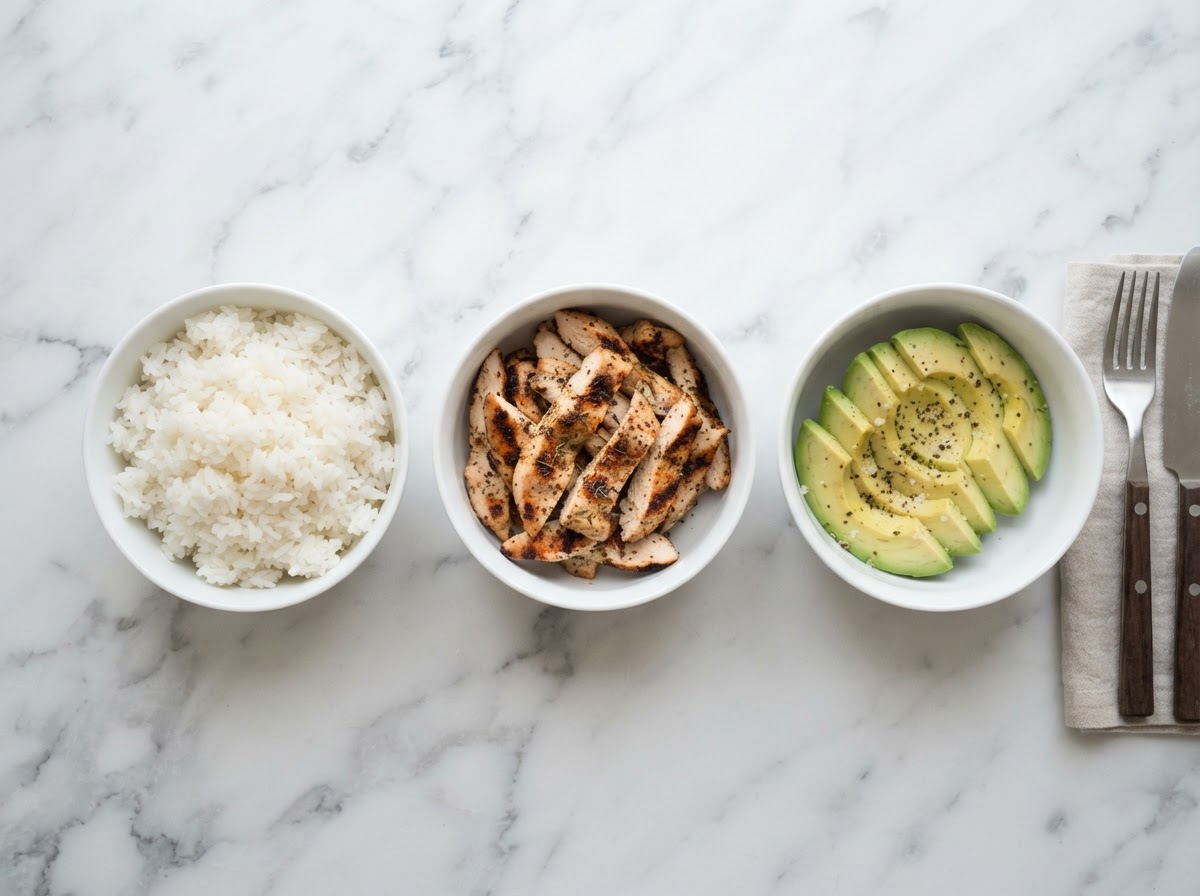
| 18 | Chicken and quinoa bowl | 3 oz leftover roast chicken (26 g) + 1 cup cooked quinoa (8 g), avocado, hot sauce | 35 g |
| 19 | Tuna and egg on toast | 3 oz light tuna (17 g) + 1 sliced hard-boiled egg (6 g) + 1 slice whole-wheat toast (4 g) | 27 g |
| 20 | Lentils with a fried egg | 1 cup cooked lentils, warmed with olive oil and cumin (18 g) + 1 fried egg (6 g) | 24 g |
Whey numbers are for a generic USDA entry; brands run 20–30 g a scoop, so read the label. Idea 18 is also the highest-protein breakfast on the list — a reminder that “high-protein breakfast” is a habit, not a food category.
No-cook options for a five-minute morning
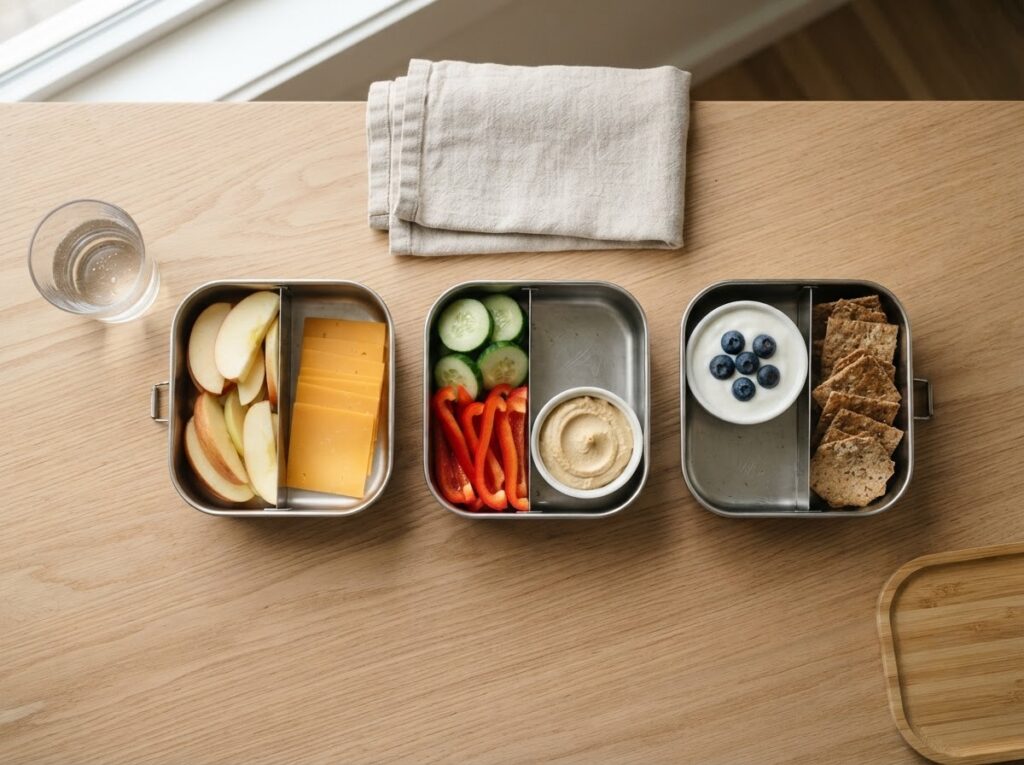
Of the twenty, eight need no stove and no more than five minutes: the Greek yogurt bowl (6), the cottage cheese bowl (7), overnight oats made the night before (8), skyr with almonds (10), the chia pudding (14), the smoothie (15), the whey shake (16) and smoked salmon toast (17). Two more are no-cook if the eggs are already boiled: three hard-boiled eggs with an ounce of cheddar is 25 g, and the tuna-and-egg toast (19). For a broader set of fast mornings, including lower-protein ones, see quick healthy breakfasts.
The pattern behind all of them: one dairy or fish protein that is ready to eat, plus something with texture. Keep plain Greek yogurt, cottage cheese, a dozen boiled eggs and a can of tuna in the fridge and a 20 g breakfast is always five minutes away.
Meal prep: how long breakfasts keep
Batch-cooking breakfasts is where protein goals actually get met on weekdays — and where food safety gets ignored. The USDA rules: leftovers “must be refrigerated” within two hours of cooking, “can be kept in the refrigerator for 3 to 4 days or frozen for 3 to 4 months,” and should be reheated to 165 °F. For eggs specifically, the USDA’s storage chart gives hard-cooked eggs one week and casseroles made with eggs (egg bites, frittatas) 3–4 days. Overnight oats and chia pudding are dairy, so the same 3–4 days applies.
What that means in practice: cook a Sunday batch for Monday to Thursday, and freeze anything meant for Friday — burritos and turkey patties freeze well, cottage cheese pancakes do too, yogurt-based jars do not. The meal-prep system article covers the containers and the rotation.
What to watch: sodium and added sugar
Two of the easiest protein sources here are also the saltiest. Deli turkey carries about 500 mg of sodium per 2 oz and smoked salmon about 570 mg per 3 oz — each roughly a fifth of the 2,300 mg daily limit, on top of an American average intake the FDA puts at 3,400 mg. The FDA’s own list of top sodium sources includes both “deli meat sandwiches” and “egg dishes and omelets.” Ideas 5 and 17 are fine as occasional breakfasts; eggs, dairy, tofu and fresh poultry are the low-sodium defaults. Our sodium guide has the numbers for a full day.
Sugar is the flavored-yogurt problem. The 2025–2030 Dietary Guidelines set a per-meal cap: “one meal should contain no more than 10 grams of added sugars,” and the FDA’s Daily Value is 50 g. A single fruit-on-the-bottom yogurt can use the whole meal allowance before the granola goes on. Buy plain, sweeten with fruit; hidden sugars in healthy foods shows where else it hides at breakfast.
The counterweight is fiber. The FDA’s Daily Value is 28 g, and the Dietary Guidelines ask you to “prioritize fiber-rich whole grains.” The beans, oats, chia, whole-wheat toast and fruit in the ideas above are there for that reason as much as for taste — a 30 g protein breakfast with no fiber is a shake, not a meal. See fiber content in foods.
What we are not claiming
- That a high-protein breakfast burns fat or causes weight loss. The Mayo Clinic’s position is that early findings on hunger are promising but “more research is needed before these claims are verified.”
- That breakfast is “the most important meal of the day.” The Cleveland Clinic points out that most of the advice behind that phrase comes from observational studies, not trials.
- That you must eat 30 g within 30 minutes of waking, or that the body “can only absorb 30 g” at a meal. The sources give targets (15–30 g, 20–30 g), not deadlines or ceilings.
- That egg whites are a better protein source than whole eggs. Per egg, whites have less protein; they are a way to cut cholesterol and calories, not to add protein.
- Exact whey and skyr numbers for every brand. Both are generic or single-brand USDA entries; labels differ.
FAQ
How much protein should I eat for breakfast?
About 20–30 g, per the Cleveland Clinic, and 15–30 g per meal per the Mayo Clinic. Larger or more active people sit at the top of that range; the daily total matters more than any single meal.
What breakfast has the most protein?
On this list, leftover chicken with quinoa (35 g), a breakfast burrito or tofu scramble with beans (34 g each), and a peanut butter banana smoothie built on Greek yogurt and milk (33 g). Among single foods, a cup of cottage cheese is 25 g.
How can I get 30 g of protein at breakfast without eggs?
A cup of cottage cheese with an ounce of almonds (31 g), a scoop of whey in a cup of milk (31 g), Greek yogurt overnight oats (29 g), or a tofu scramble with black beans (34 g).
Is oatmeal a high-protein breakfast?
Not on its own: ½ cup of oats with a cup of milk is about 13 g. Stir in 6 oz of Greek yogurt or a half-scoop of whey and it passes 25 g.
Are three eggs for breakfast too many?
Harvard and Mayo put the level for healthy people at about one egg a day averaged over the week, so a three-egg breakfast is fine now and then, not daily. People with diabetes should keep to the lower end and check with their doctor.
How long do meal-prepped egg bites last?
Three to four days in the refrigerator, per the USDA’s storage guidance for egg casseroles, or 3–4 months frozen. Hard-boiled eggs in the shell last one week.
This content is for educational purposes only and is not medical advice. Always consult a qualified healthcare professional for personalised guidance.