
Most people who buy electrolyte drinks do not need them, and most who do need them are getting 20–35 g of sugar with every bottle. The useful part of a sports drink is about 500 mg of sodium and a little potassium per liter — everything else is sweetener and color. That is why a sugar-free version is easy to buy and even easier to make: water, a quarter teaspoon of salt, a squeeze of citrus, and you have matched what military and sports-medicine guidelines actually ask for. Our sugar substitute calculator covers the swap amounts if you make your own drinks or bake with less sugar.
Below: when electrolytes matter and when water is enough, what to look for on a label, a homemade recipe with the sodium and potassium counted from USDA data, the reference numbers for each electrolyte, and who should be careful with salt and potassium.
Key takeaways. For exercise under an hour in normal weather, plain water is the right drink — Harvard, the Cleveland Clinic and the American Academy of Pediatrics all say so. Electrolytes matter after 1–2 hours of hard exercise, in heat, for heavy sweaters, and during vomiting or diarrhea. A good sugar-free drink delivers roughly 400–700 mg of sodium per liter with 0 g added sugar. Homemade version: 1 liter of water, ¼ tsp table salt (582 mg sodium), ¼ tsp potassium-based salt substitute, juice of half a lemon. Skip potassium salt substitutes if you have kidney disease or take an ACE inhibitor.
When you actually need electrolytes
The short version from the Harvard Nutrition Source: “When an exercise workout is less than one hour and of lower intensity performed in moderate temperatures, plain water is the best choice.” The Cleveland Clinic draws the same line — an hour or less at moderate intensity, “water is typically all you need” — and adds that an electrolyte drink “is not something to grab when you’re just thirsty.”
The situations where replacing sodium and potassium does matter, from the same two sources plus the Mayo Clinic:
- Exercise longer than 1–2 hours, or shorter but at high intensity — the marathon, the long ride, the two-hour match.
- Heat. Working or training in hot, humid weather raises sweat losses; the CDC’s heat-stress guidance for outdoor workers is a cup of water every 15–20 minutes and no more than 48 oz an hour.
- Heavy sweaters — the people whose shirts show salt lines after a workout.
- Vomiting or diarrhea. This is a different problem with a different drink (see the ORS note below).
- After heavy drinking. Alcohol makes the kidneys excrete fluid and minerals; MedlinePlus says electrolyte solutions and broth “are good for replacing the salt and potassium you lose,” while noting a hangover is “usually just a matter of time.”
For everyone else, Harvard’s line stands: “For the non-athlete, a sports beverage is just another sugary drink.” Our guide to hydration by exercise type covers how to tell which group you are in on a given day.
Why “without sugar” is the whole point
A standard sports drink carries about 21 g of sugar per 12 oz, per Harvard — roughly 35 g in a 20 oz bottle. The CDC puts it at about five teaspoons and 97 calories per 12 oz. Against the FDA’s 50 g Daily Value for added sugars and the 2025–2030 Dietary Guidelines rule that “one meal should contain no more than 10 grams of added sugars,” one bottle uses up most of a day. The Guidelines are blunt about the category: “Avoid sugar-sweetened beverages, such as sodas, fruit drinks, and energy drinks.”
The sugar is there for a reason in endurance sport — carbohydrate fuels the last hour of a long race — but that is a fueling decision, not a hydration one. For heat, sweating and everyday training, you want the salt without the sugar. If you do want carbohydrate for a long event, the homemade recipe below has an optional version with a measured amount.
What to look for on a sugar-free electrolyte drink
Whether it is a powder stick, a tablet or a bottle, five things on the label decide whether it does the job.
| Check | What you want | Why |
|---|---|---|
| Sodium per serving | 200–500 mg per 16–20 oz (roughly 400–700 mg per liter) | Sodium is the electrolyte you lose most in sweat; the Institute of Medicine’s fluid-replacement guidance is 20–30 mEq (460–690 mg) per liter |
| Potassium | 50–200 mg per serving | Second sweat electrolyte; the same guidance is 2–5 mEq (80–200 mg) per liter |
| Added sugars | 0 g (or ≤10 g if you want fuel) | DGA per-meal cap of 10 g |
| Sweetener | Stevia, monk fruit, sucralose or erythritol — all acceptable; know your own tolerance | All are FDA-approved or GRAS; sugar alcohols can cause gas in large doses |
| Serving size | Check what the numbers refer to | Many sticks are dosed per 16 oz, tablets per 500 ml; “per scoop” hides the dilution |
On the sweeteners: the FDA lists sucralose as an approved additive since 1999 and says it “has not questioned the notifiers’ GRAS conclusions” for high-purity stevia extracts and monk fruit. Erythritol is a sugar alcohol; the FDA reviewed the 2023 heart-risk study and found it “did not establish a causal link,” but the agency’s label guidance is clear that sugar alcohols “can also produce abdominal gas, bloating, and diarrhea in some individuals.” The Cleveland Clinic notes erythritol is the mildest of them. Our comparison of sugar alcohols and artificial sweeteners goes deeper. A practical tip: pick one product and test it on a training day, not race day.
One thing to ignore: magnesium and “trace mineral” claims. The NIH magnesium fact sheet makes no statement about sweat losses or exercise needs; magnesium in a drink is harmless but not why the drink works.
Homemade sugar-free electrolyte drink
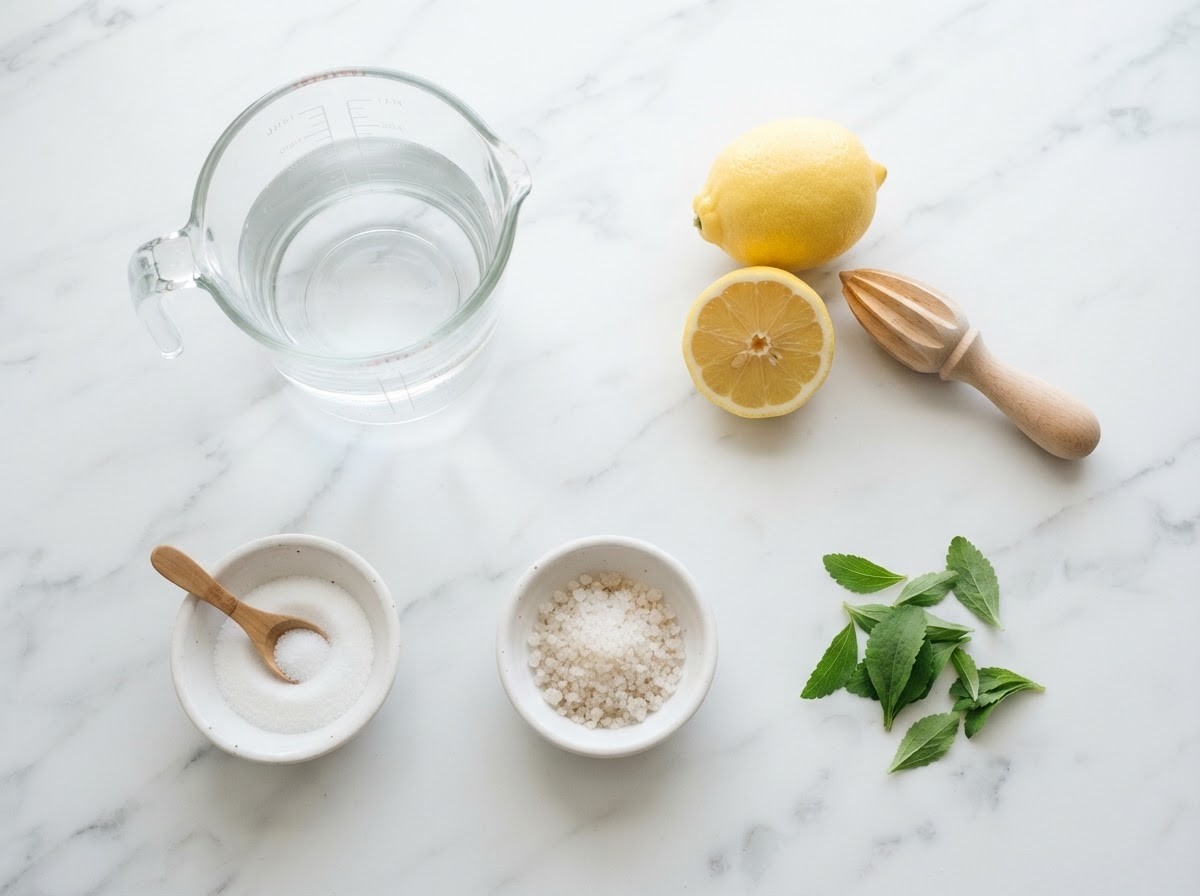
This makes one liter (about 34 oz) and costs a few cents. The numbers come from USDA FoodData Central for table salt and lemon juice, and from the NIH potassium fact sheet for salt substitutes. Harvard publishes a nearly identical “Basic Electrolyte Water Recipe” on its electrolyte page.
| Ingredient | Amount | Sodium | Potassium | Sugar |
|---|---|---|---|---|
| Water | 1 liter (4¼ cups) | 0 | 0 | 0 |
| Table salt | ¼ tsp (1.5 g) | 582 mg | 0 | 0 |
| Potassium-based salt substitute | ¼ tsp | 0 | 110–700 mg | 0 |
| Lemon or lime juice | 2 tbsp (juice of ½ lemon) | 0 | ~30 mg | 0.8 g (natural) |
| Stevia or monk fruit | to taste, optional | 0 | 0 | 0 |
| Per liter | ~580 mg | ~140–730 mg | 0 g added |
Salt substitutes vary widely. The Office of Dietary Supplements puts their potassium content at “about 440 mg to 2,800 mg potassium per teaspoon” — so read your brand’s label; ¼ teaspoon of a typical 50/50 “lite” salt lands near 350 mg. The same fact sheet adds a caution worth repeating: people with kidney disease, or taking certain medications, should consult their health care provider before using salt substitutes, because of the risk of hyperkalemia from the high potassium in these products. That per-liter sodium, about 25 mEq, sits inside the 20–30 mEq range the Institute of Medicine recommends for fluid replacement in heat. Stir until the salt dissolves, chill, drink over one to two hours of exercise.
Two variations
Coconut water version (natural potassium, some sugar): 1 cup coconut water + 3 cups water + ¼ tsp salt. Per liter: about 830 mg sodium, 600 mg potassium, 60 mg magnesium and 6 g of naturally occurring sugar. No salt substitute needed.
Fueling version for events over two hours: the base recipe plus 1 tablespoon of honey (17 g sugar) or 2 tablespoons of maple syrup (24 g). That is deliberately still under a commercial sports drink’s 35 g per 20 oz, and you can scale it to the day.
What none of these are: an oral rehydration solution for illness. The WHO formula used for diarrhea and vomiting, cited by the CDC, is 75 mmol/L sodium with matched glucose — three times the sodium of this recipe, with sugar there on purpose because it drives absorption. For a sick child, use a pharmacy ORS, not a homemade drink.
The reference numbers
To put drink labels in context, the daily figures for each electrolyte:
| Electrolyte | Daily reference | Notes |
|---|---|---|
| Sodium | Less than 2,300 mg | Average US intake is 3,400 mg; a 500 mg drink is a fifth of the limit — fine on a heavy-sweat day, unnecessary on a desk day |
| Potassium | AI 3,400 mg men / 2,600 mg women; DV 4,700 mg | Mostly from food — a cup of orange juice is 496 mg; drinks add 50–200 mg |
| Magnesium | RDA 400–420 mg men / 310–320 mg women | Not a sweat-replacement issue per NIH |
| Added sugar | DV 50 g; ≤10 g per meal (DGA) | A regular sports drink is 35 g per 20 oz |
If you eat a normal diet, food covers the day. The Institute of Medicine’s heat-stress review states it directly: “If fluid intake is maintained to prevent dehydration and consumption of military rations is at or near energy requirements, sufficient intake of electrolytes should occur.” The drink is for the hours when food is not happening. More on the daily side in daily sodium intake and, for athletes specifically, how much sodium athletes need.
Who should be careful
Kidney disease or ACE inhibitors: skip potassium salt substitutes. The NIH Office of Dietary Supplements warns that in people with impaired urinary potassium excretion due to chronic kidney disease or the use of medications such as “angiotensin converting enzyme (ACE) inhibitors or potassium-sparing diuretics, even dietary potassium intakes below the AI can cause hyperkalemia.” MedlinePlus lists salt substitutes first among the causes of high potassium. Make the base recipe with table salt only, or ask your doctor.
High blood pressure: mind the sodium. The DASH guidance notes 1,500 mg a day lowers blood pressure further than 2,300 mg. A 500 mg drink on a hot training day is reasonable; a daily “hydration” habit is not. See sodium, potassium and blood pressure.
Do not overdrink. The danger in long events is not too little sodium but too much fluid: the Mayo Clinic describes how drinking too much water during marathons and triathlons “can also dilute the sodium content of your blood.” The clinical guidance is that “the safest strategy for fluid repletion is a thirst-driven replacement to avoid overhydration” — and that salt tablets have not been shown to prevent it. An electrolyte drink is not a license to drink more.
Children. The American Academy of Pediatrics’ position is the same as for adults: “For activities less than an hour, water is sufficient,” sports drinks only for 1–2 hours or very hot conditions, and energy drinks never. The sugar-free homemade recipe works for a teenage athlete at a summer tournament; it is not something to put in a lunch box. Everyday drinks for kids are in healthy snacks for kids.
What we are not claiming
- That everyone needs daily electrolytes. Harvard, the Cleveland Clinic and the AAP put water first for anything under an hour in normal conditions.
- That a sugar-free drink improves endurance performance the way a carbohydrate drink can. It replaces salt; it does not fuel.
- That electrolyte drinks cure hangovers. MedlinePlus: recovery is a matter of time.
- A specific sweat-sodium figure. Sweat sodium varies widely between people and is, in the clinical literature’s words, “not well characterized.”
- That erythritol causes heart disease, or that stevia and monk fruit are “FDA approved.” The first was not established; the second two are GRAS, not approved additives.
- That the homemade recipe treats diarrhea or vomiting. It is not an ORS.
FAQ
What is the best electrolyte drink without sugar?
Any product delivering roughly 200–500 mg of sodium and some potassium per 16–20 oz with 0 g added sugar and a sweetener you tolerate. Brand matters less than those numbers; a homemade liter with ¼ tsp of salt meets the same spec.
How do I make an electrolyte drink without sugar?
One liter of water, ¼ teaspoon table salt, ¼ teaspoon potassium-based salt substitute, the juice of half a lemon, and stevia or monk fruit to taste. About 580 mg sodium per liter, no added sugar.
Is coconut water a good electrolyte drink?
It is high in potassium (600 mg a cup) but low in sodium (252 mg) and carries 6 g of sugar per cup. Diluted with water and a pinch of salt it becomes a balanced drink; on its own it is potassium-heavy and sodium-light.
Are sugar-free electrolyte drinks safe every day?
Safe, but usually pointless. Food supplies the electrolytes on a normal day, and the extra sodium counts against the 2,300 mg limit. Save them for long, hot or sweaty sessions and illness.
Do I need electrolytes when fasting or on keto?
The guidelines above do not address it directly. The general rule still applies: sodium and potassium come from food, and if you are eating less food, a pinch of salt in water is the simplest fix.
Can I use a salt substitute if I take blood pressure medication?
Not without asking. ACE inhibitors and potassium-sparing diuretics raise the risk of high potassium, and salt substitutes are potassium chloride. Use table salt only in the recipe.
This content is for educational purposes only and is not medical advice. Always consult a qualified healthcare professional for personalised guidance.