Sodium and potassium pull blood pressure in opposite directions, and that is the entire documented story. We originally framed this page around fat loss. We were wrong to, and the correction is worth stating plainly: no US federal source links the sodium-to-potassium ratio to fat loss or metabolic rate. What the evidence does support is worth your attention anyway, because most people are on the wrong side of both numbers.
The short version
- Sodium Daily Value: under 2,300 mg. Actual US average: about 3,400 mg.
- More than 70% of that sodium comes from packaged and prepared food, not the salt shaker.
- Potassium Adequate Intake: 3,400 mg for men, 2,600 mg for women.
- Low potassium plus high sodium raises high blood pressure risk. That is the relationship — not fat loss.
- If you have kidney disease or take certain medications, potassium advice inverts. See the caution below.
Sodium: the number and where it hides
FDA sets the label Daily Value at less than 2,300 milligrams per day and states that Americans eat on average about 3,400 mg of sodium per day — roughly 50% over.
The part that changes behavior is where it comes from. FDA: most dietary sodium (over 70%) comes from eating packaged and prepared foods — not from table salt added to food when cooking or eating. Putting the salt shaker away addresses under a third of the problem at best.
CDC’s analysis names the specific categories. The leading contributors to US sodium intake were deli meat sandwiches (6.3%), pizza (5.4%), burritos and tacos (5.3%), soups (4.1%) and savoury snacks, with about 40% of intake coming from the top ten categories combined.
Potassium: the number most people have never seen
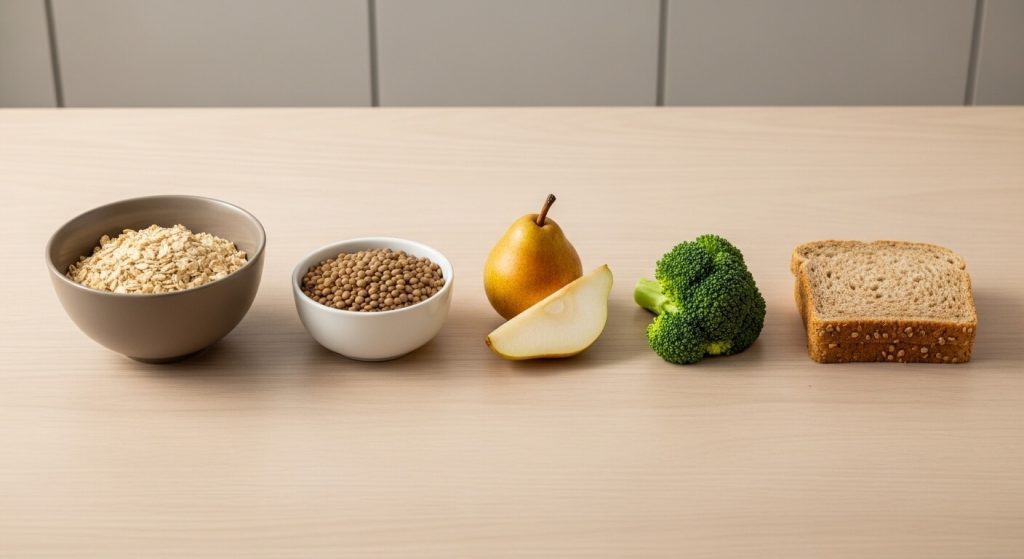
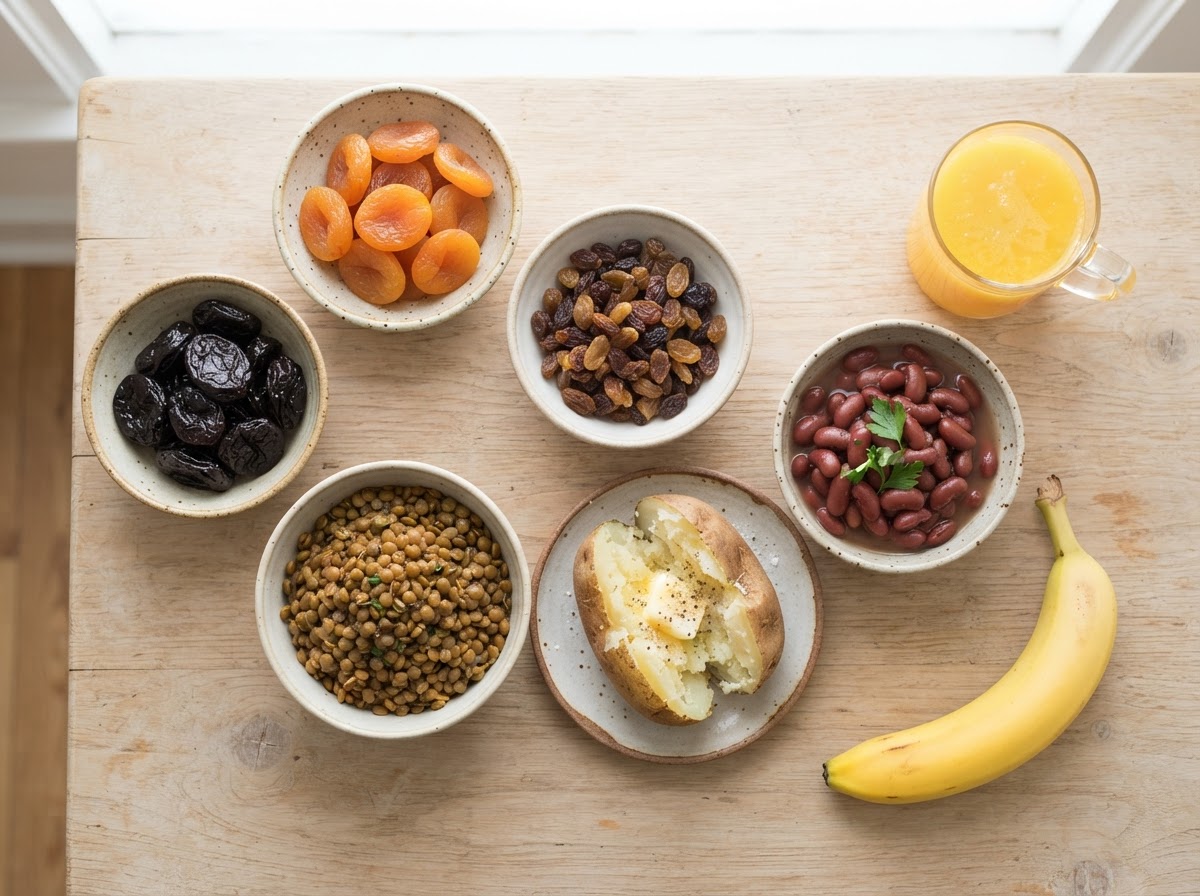
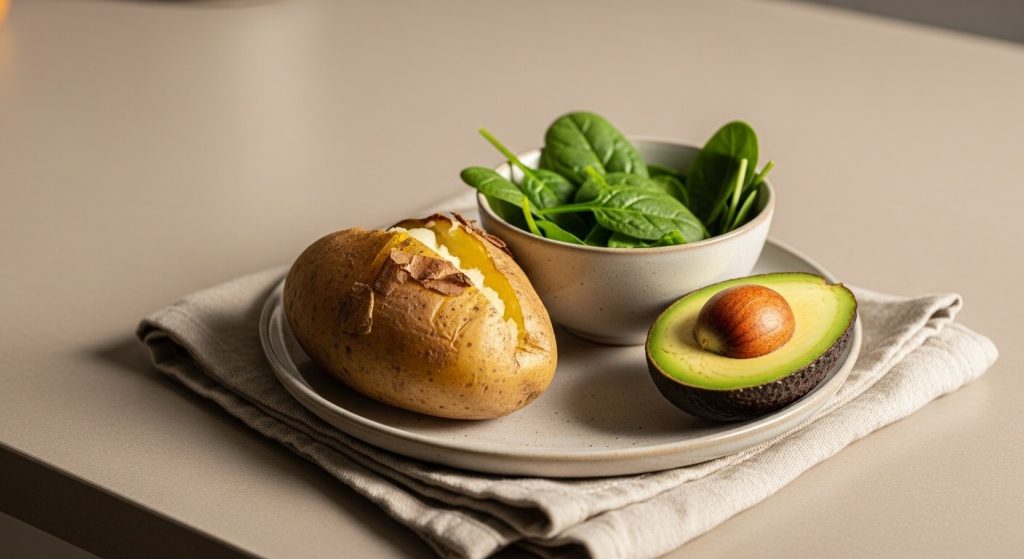
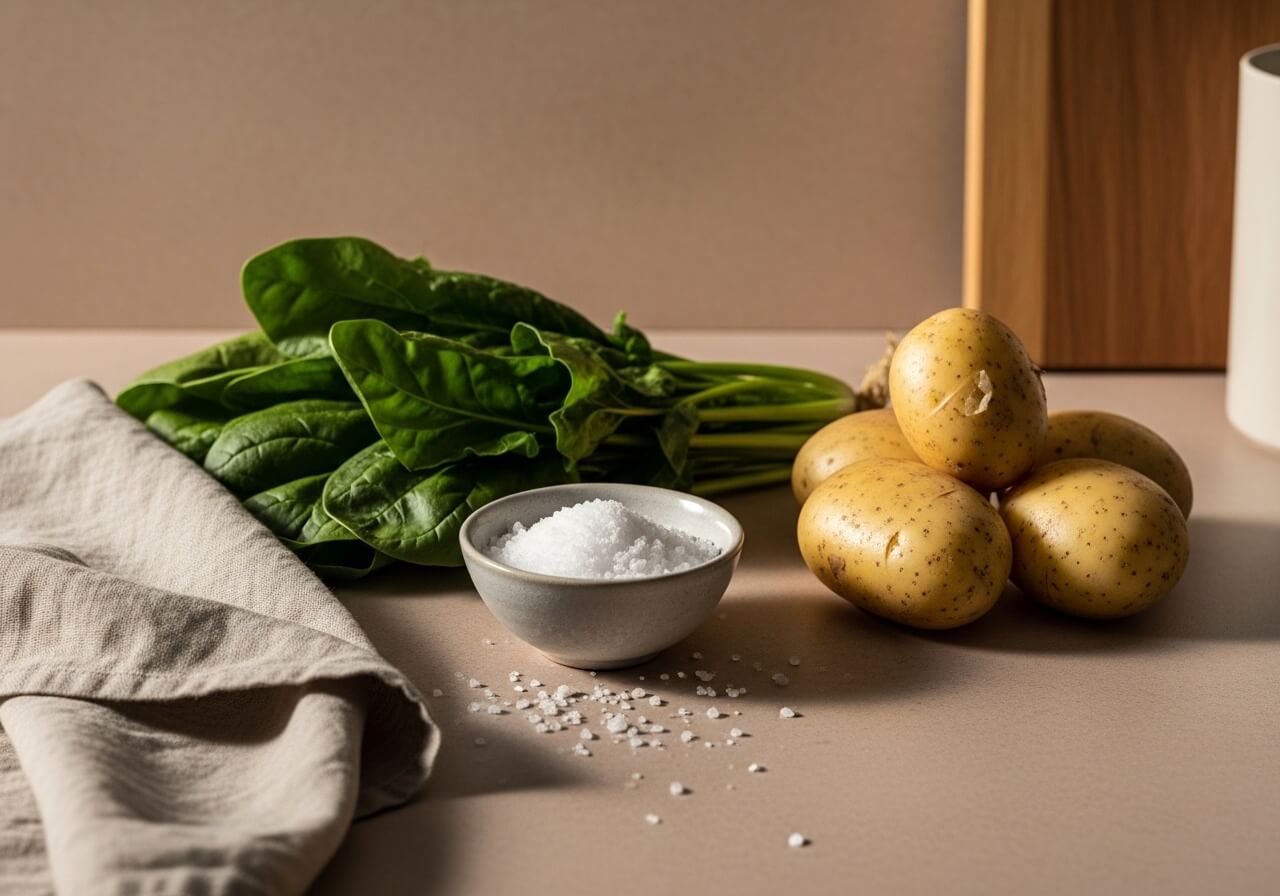
NIH’s Office of Dietary Supplements sets the Adequate Intake at 3,400 mg per day for adult men and 2,600 mg for adult women. Food sources it names include dried apricots, prunes, raisins, orange juice and bananas, plus vegetables such as acorn squash, potatoes, spinach, tomatoes and broccoli, alongside legumes, nuts, dairy and animal proteins.
On this site: prunes, acorn squash, spinach, tomatoes, broccoli, lentils, yogurt.
What each one does to blood pressure
CDC states both halves in the same place: consuming too much sodium can raise your blood pressure, and increasing potassium intake can help decrease your blood pressure if you have high blood pressure.
ODS ties the two together explicitly: people with low intakes of potassium have an increased risk of developing high blood pressure, especially if their diet is high in salt (sodium). That interaction is the legitimate core of everything written about the sodium-potassium ratio — and it is about blood pressure, start to finish.
The eating pattern built around this
DASH is the federal answer, and it has two sodium settings. NHLBI states that 1,500 milligrams sodium lowers blood pressure even further than 2,300 mg sodium daily. In the trials NHLBI describes, DASH participants had the greatest effect of lowering their high blood pressure among the diets compared.
We use DASH portions elsewhere on the site — see the seven-day plan built on DASH serving sizes.
Why we removed the fat-loss framing
This page previously argued that electrolyte balance affects fat burning. We went looking for the source and there is none. CDC’s dedicated page on the effects of sodium and potassium discusses blood pressure only — it does not mention a sodium-potassium ratio, fat loss, or metabolic rate anywhere. ODS’s potassium fact sheets link potassium to blood pressure and cardiovascular risk, never to metabolism or body fat.
Research on the sodium-potassium ratio does exist, and it studies hypertension outcomes. Extending it to fat loss is something writers do, not something the research says. If you came here looking for that mechanism, the honest answer is that it has not been established, and the pages worth reading instead are what fat loss actually has evidence for and what determines metabolic rate.
When this advice inverts
For most people, dietary potassium is not a risk: ODS states that in healthy people with normal kidney function, high dietary potassium intakes do not pose a health risk because the kidneys eliminate excess amounts in the urine.
For some people it is the opposite. ODS warns that in people with impaired urinary potassium excretion due to chronic kidney disease or the use of certain medications, even dietary potassium intakes below the AI can cause hyperkalemia. Its consumer page adds that potassium-containing salt substitutes could make your potassium levels too high for those people.
On supplements, ODS notes that potassium chloride doses providing more than 99 mg have been associated with small-bowel lesions, and that very high intakes could exceed the kidney’s capacity to excrete potassium. This is a nutrient to get from food.
What we are not claiming
- That the sodium-potassium ratio affects fat loss or metabolism. Searched specifically. No federal source supports it.
- That “electrolyte imbalance slows your metabolism.” Nothing ties sodium or potassium to metabolic rate in any source we could reach.
- A specific mmHg reduction from DASH. NHLBI’s pages describe DASH as producing the greatest reduction among the diets compared, without publishing a figure on the pages we retrieved. We are not inventing one.
- That cutting sodium makes the scale drop through water loss. Plausible and widely repeated, but we could not find a federal page stating it, so it stays out.
- An optimal ratio number. No agency publishes a target sodium-to-potassium ratio. The published targets are the two separate numbers above.
FAQ
How much sodium per day? Under 2,300 mg is the FDA Daily Value. DASH also offers a 1,500 mg version, which NHLBI says lowers blood pressure further.
How much potassium per day? The Adequate Intake is 3,400 mg for men and 2,600 mg for women.
Does the sodium-potassium ratio help you lose fat? No federal source says so. The documented relationship is with blood pressure.
Where is the sodium in my diet coming from? Over 70% from packaged and prepared foods. CDC’s top categories are deli sandwiches, pizza, burritos and tacos, and soups.
Should I use a potassium salt substitute? Not if you have kidney disease or take medications affecting potassium — ODS warns it could raise your potassium too high. Ask your clinician first.
What to do with this
Read labels on the four categories CDC names before you touch the salt shaker — that is where the 70% lives. Then raise potassium from food rather than pills: fruit, vegetables, legumes and dairy, using the cards linked above to see actual amounts per 100 g.
Educational content, not medical advice. If you have kidney disease, heart failure, or take blood pressure or diuretic medication, both of these numbers should come from your clinician rather than from a website.
This content is for educational purposes only and is not medical advice. Always consult a qualified healthcare professional for personalised guidance.