
Read federal sources on diet and mental health and the thing you notice is the hedging. “May help.” “There may be a link.” “It’s uncertain whether.” That caution is not evasion — it is an accurate description of where the evidence sits. This page collects what US health agencies actually say about food, mood and wellbeing, keeping their qualifiers intact, because the qualifiers are the point.
The short version
- MedlinePlus: good nutrition may help you feel better and may improve mood — stated as possibility, not effect.
- Low B12 and depression: described as a possible link, nothing stronger.
- St John’s wort is not consistently effective for depression and interacts dangerously with medicines.
- Omega-3 for depression: “uncertain”. SAMe and inositol: not supported.
- NCCIH’s clearest instruction is about what not to do: don’t use these to replace or delay conventional care.
What is actually said about food and mood
MedlinePlus, in its guidance on improving mental health: good nutrition may help you feel better physically, improve your mood and decrease anxiety and stress.
On nutrients specifically, the same page says not having enough of certain nutrients may contribute to some mental illnesses, and gives one example — there may be a link between low levels of vitamin B12 and depression.
Three “may”s in three sentences. Compare that with the same agency’s language on fiber and cholesterol, or iron and absorption, where the verbs are flat and the numbers are specific. The difference tells you how much confidence to carry into a decision.
Supplements marketed for mood: the results
NCCIH has reviewed these, and the findings are mostly negative or uncertain. Worth reading as a list, because the marketing rarely presents them together.
St John’s wort. St. John’s wort, however, isn’t consistently effective for depression — and there is a safety issue on top: it can interact in dangerous, sometimes life-threatening ways with a variety of medicines. This is the supplement most likely to actually hurt someone, precisely because it is the one most likely to be taken alongside prescriptions.
Omega-3. It’s uncertain whether omega-3 fatty acid supplements are helpful for symptoms of depression.
SAMe and inositol. Current scientific evidence does not support the use of other dietary supplements, including S-adenosyl-L-methionine (SAMe) or inositol, for depression.
And for anxiety
The same pattern, with one genuine safety warning.
Kava: kava supplements may have a small effect on reducing anxiety, but they have been linked to a risk of severe liver injury. A small benefit against liver damage is not a trade most people would knowingly take.
Valerian: there’s not enough evidence to allow any conclusions about whether valerian is helpful for anxiety.
Passionflower: a small amount of research suggests that passionflower might help to reduce anxiety, but conclusions are not definite.
NCCIH’s own summary instruction is the one to keep: don’t use a complementary health approach to replace conventional care or to postpone seeing a health care provider about depression.
What is solid in this area
The food-level evidence is where the confident language lives. NCCIH states that there is extensive evidence that people who eat more vegetables and fruits — foods that are rich sources of antioxidants — have lower risks of chronic diseases. “Extensive evidence”, with no hedge attached.
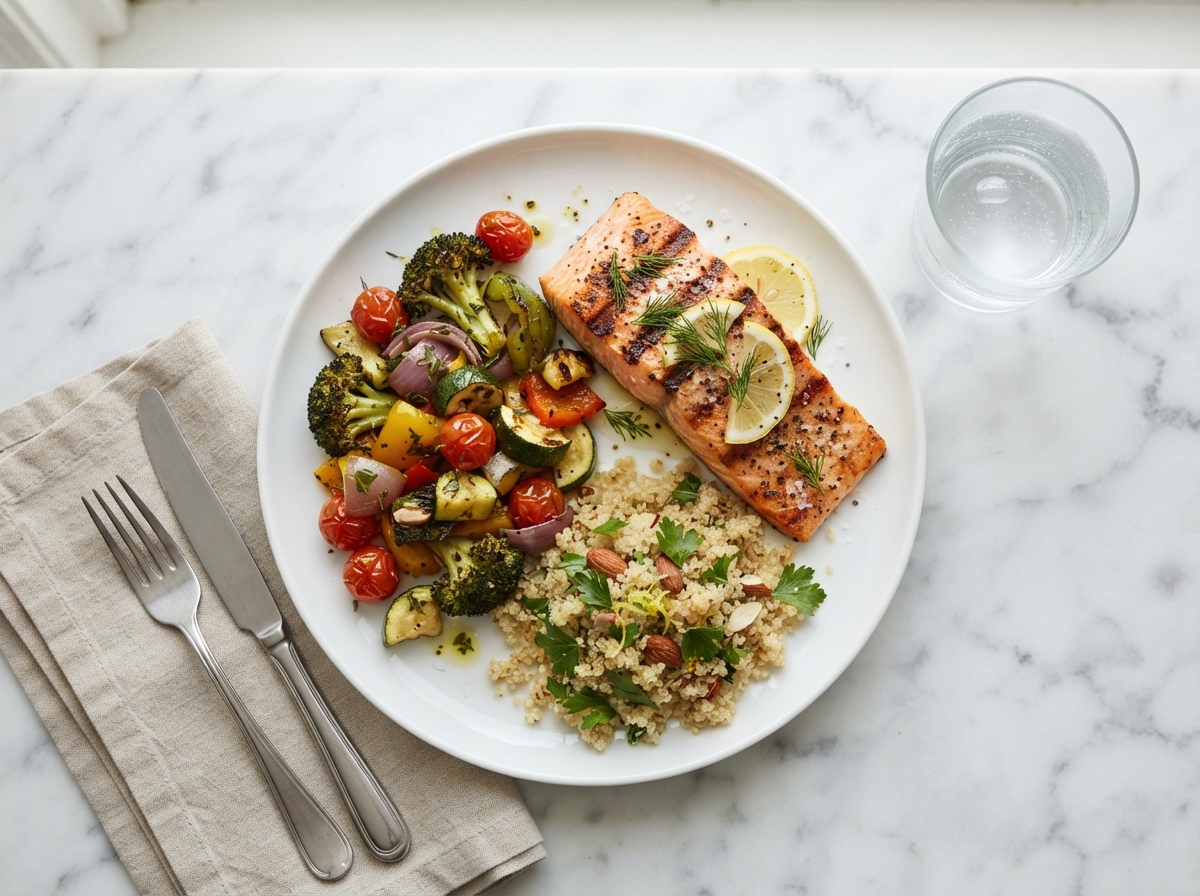
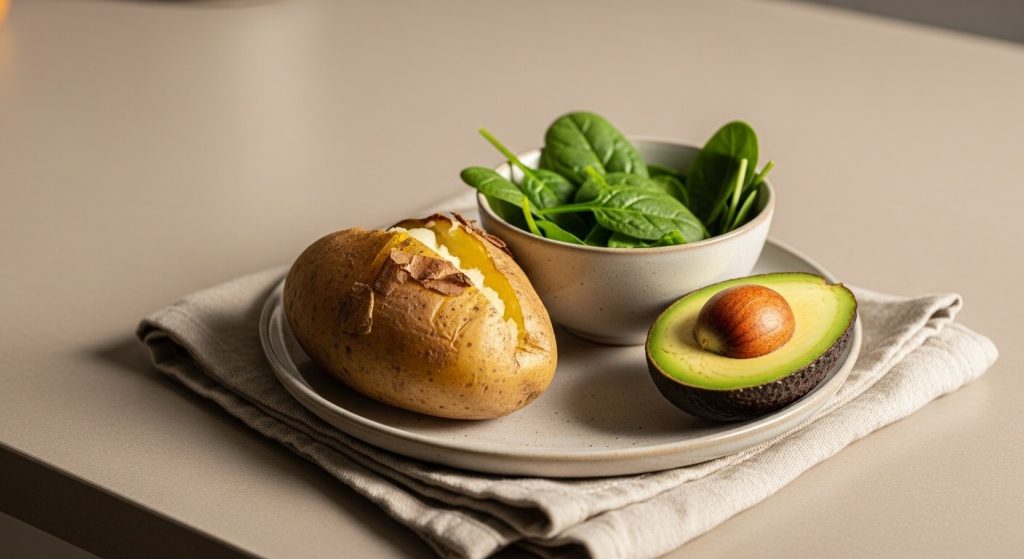
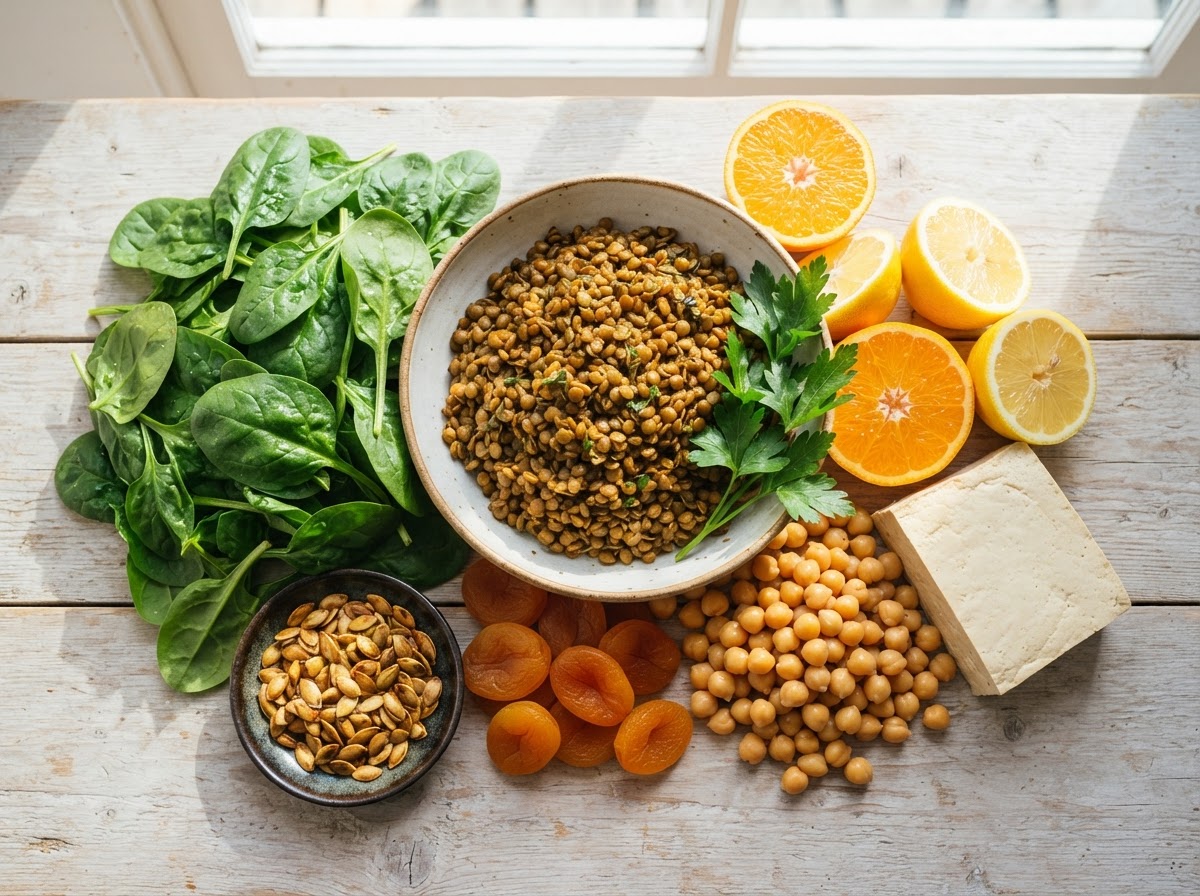
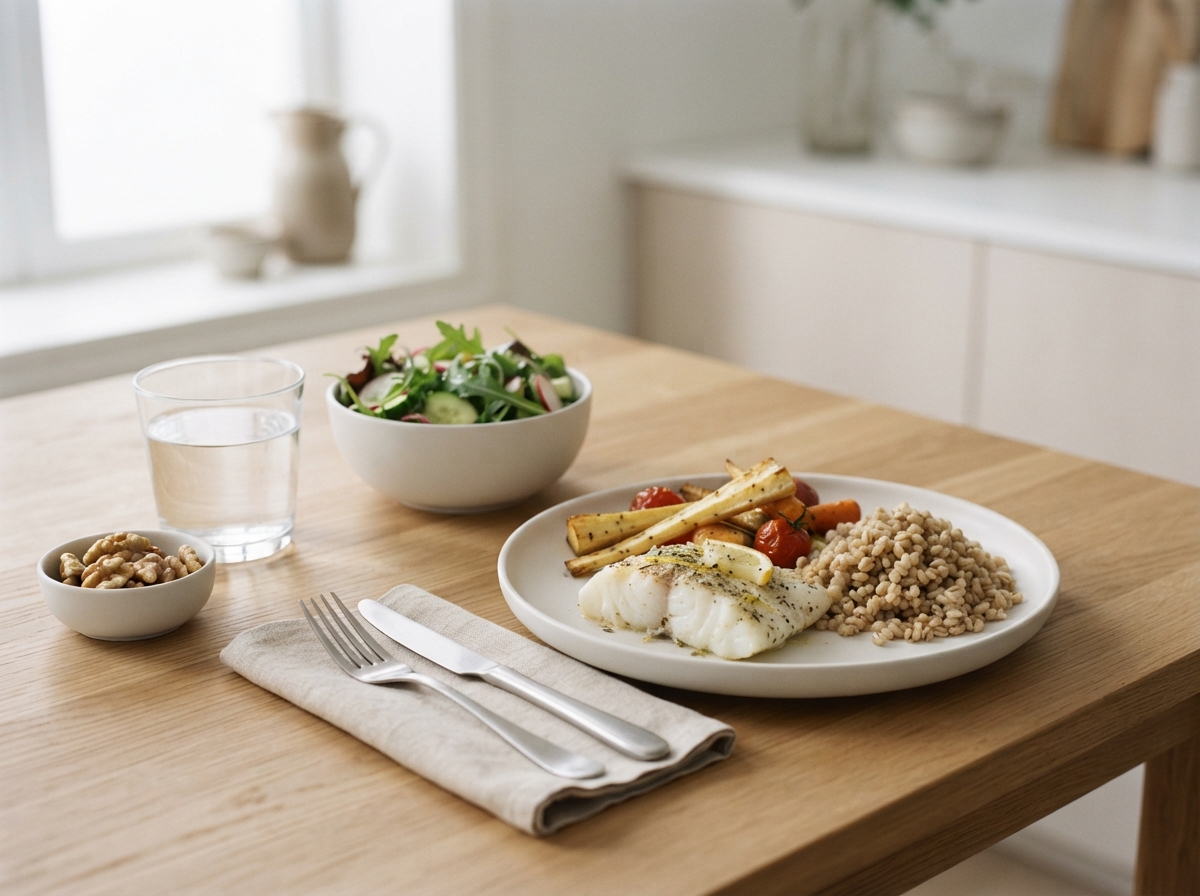
The foods that keep appearing in this literature, with full nutrition breakdowns: salmon, walnuts, spinach, lentils, blueberries and extra-virgin olive oil.
And the nutrients worth attention are named rather than guessed: FDA identifies dietary fiber, vitamin D, calcium, iron and potassium as the ones Americans generally do not get enough of. If a nutrient shortfall is affecting how you feel, those are the documented candidates — and vitamin D and iron in particular are testable rather than speculative. See vitamin D and iron.
What we are not claiming
- That diet treats depression or anxiety. No federal source states it, and NCCIH explicitly warns against substituting for conventional care.
- That any specific food improves mood. The only mood language we found is general and hedged; no food is named.
- Anything about the gut-brain axis. Widely written about; not something we could source from a federal page.
- That “food is medicine” in a clinical sense. Not a claim any of these sources makes in the way it is usually meant.
- That B12 supplements improve mood. MedlinePlus describes a possible link with low levels — that is not a claim about supplementing.
FAQ
Can diet improve my mental health? Federal sources say good nutrition may help you feel better and may improve mood. The hedging is theirs and we are keeping it.
Do omega-3 supplements help depression? NCCIH describes it as uncertain.
Is St John’s wort safe? It is not consistently effective for depression and can interact dangerously, sometimes life-threateningly, with a range of medicines.
What about supplements for anxiety? Chamomile is preliminary, valerian inconclusive, passionflower not definite, and kava carries a risk of severe liver injury.
Which nutrients are worth checking? Fiber, vitamin D, calcium, iron and potassium are the ones FDA names as generally under-consumed. Vitamin D and iron are testable.
What to do with this
Eat well because the physical-health evidence for it is strong, not because a supplement was sold to you as a mood fix. If you take prescription medication, treat St John’s wort as a genuine hazard rather than a herbal alternative. And if your mood is the problem you are trying to solve, food is a support to treatment, not a substitute for it — that is NCCIH’s position, not ours.
If you want your own calorie and macronutrient numbers rather than a pattern description, the calorie calculator and macro calculator will produce them.
Educational content, not medical advice. If you are struggling with your mental health, a clinician is the right place to start, and it is worth telling them about any supplement you take.
This content is for educational purposes only and is not medical advice. Always consult a qualified healthcare professional for personalised guidance.