Before the menu, one thing you deserve to know: there is no official definition of an anti-inflammatory diet. A US Department of Veterans Affairs evidence review states that “which dietary patterns and nutrients have the greatest impact—and by what mechanisms—remains unclear.”
So what is this plan built on? Two eating patterns that are defined, studied and published by federal bodies — the Mediterranean pattern and DASH — plus the one review finding that comes closest to the claim: “the Mediterranean and vegetarian dietary patterns may ameliorate low-grade inflammation in adult populations with at least one chronic condition.”
Note the hedges in that sentence. “May.” “Low-grade.” “With at least one chronic condition.” That is the honest strength of the evidence, and this plan is built to match it rather than oversell it. What you get below is a week of food built entirely on sourced amounts — no invented portions, no ranked superfoods, no promise about how you will feel on day seven.
The evidence question itself is covered in depth in anti-inflammatory foods: what the evidence actually supports and inflammation and diet: what the science actually measures. Two of the foods that show up in every version of the list, compared on our own data: olive oil and canola oil and walnuts and macadamia nuts.
The pattern this week follows
Two published patterns overlap heavily, and where they differ we say so rather than blending them into a fake consensus.
| Food group | DASH, 2,000 kcal (NHLBI) | Dietary Guidelines 2025–2030 |
|---|---|---|
| Grains | 6–8 daily | Whole grains: 2–4 daily |
| Vegetables | 4–5 daily | 3 daily |
| Fruit | 4–5 daily | 2 daily |
| Dairy | 2–3 daily, “low-fat or fat-free” | 3 daily, “full-fat dairy with no added sugars” |
| Meat, poultry, fish | 6 oz or less daily | 1.2–1.6 g protein per kg bodyweight daily |
| Nuts, seeds, legumes | 4–5 per week | Named as protein sources, no figure |
| Fats and oils | 2–3 daily | “Prioritize oils with essential fatty acids, such as olive oil” |
| Sweets | 5 or less per week | Added sugars: “one meal should contain no more than 10 grams” |
| Sodium | 2,300 mg daily | “Less than 2,300 mg per day” for ages 14+ |
The dairy line is a genuine disagreement. NHLBI’s DASH plan specifies fat-free or low-fat dairy; the current Dietary Guidelines say full-fat dairy with no added sugars. Both are federal. We have not smoothed this over — pick whichever fits your saturated fat total, which the Guidelines cap at “10% of total daily calories.”
What one serving means
These definitions come from NHLBI’s DASH guide, so the numbers above are actually usable:
| Grains | 1 slice bread; 1 oz dry cereal; ½ cup cooked rice or pasta |
| Vegetables | 1 cup raw leafy; ½ cup cooked; ½ cup juice |
| Fruit | 1 medium fruit; ¼ cup dried; ½ cup fresh, frozen or canned |
| Dairy | 1 cup milk or yogurt; 1.5 oz cheese |
| Lean meat, poultry, fish | 1 oz cooked; 1 egg |
| Nuts, seeds, legumes | ⅓ cup nuts; 2 Tbsp nut butter; ½ cup cooked legumes |
| Fats and oils | 1 tsp oil; 1 Tbsp mayonnaise; 2 Tbsp salad dressing |
The three anchors of the week
Seafood: 8 ounces a week
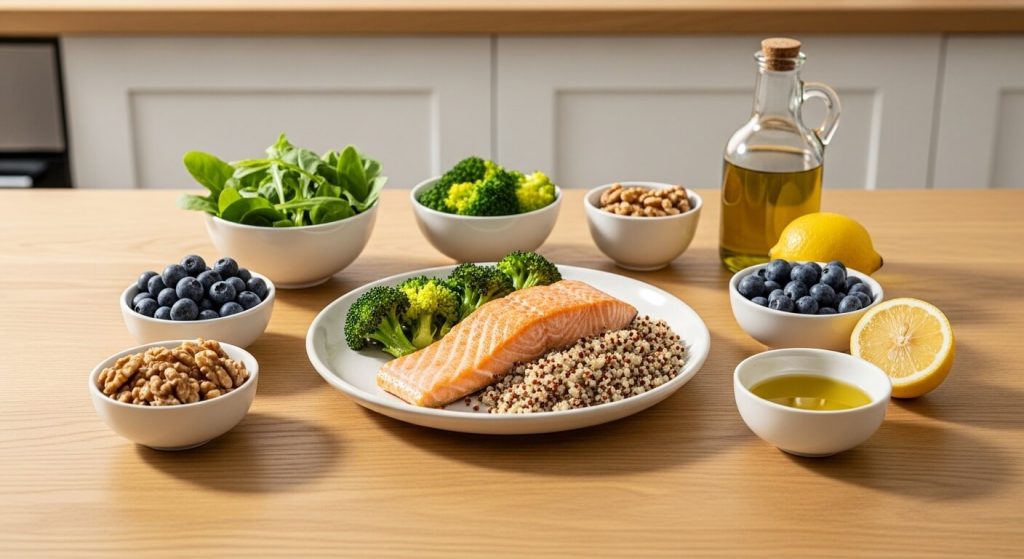
This is the firmest number in the plan. EPA and FDA advise “at least 8 ounces of seafood (less for children) per week,” and USDA MyPlate states that “eating 8 ounces per week of seafood may help reduce the risk for heart disease.” A serving is 4 ounces, so two fish meals a week covers it.
Choose from FDA’s Best Choices list, which is lowest in mercury: salmon, sardines, trout, herring, anchovy, cod, tilapia, pollock, shrimp, scallops, canned light tuna, Atlantic mackerel. Avoid king mackerel, marlin, orange roughy, shark, swordfish, Gulf tilefish and bigeye tuna.
The Dietary Guidelines specifically name “low-mercury omega-3–rich seafood (e.g., salmon, sardines, trout).” For scale, NIH lists 3 oz of farmed Atlantic salmon at 1.24 g DHA and 0.59 g EPA; 3 oz of canned sardines at 0.74 g and 0.45 g.
Olive oil: the claim, stated precisely
FDA permits one qualified health claim here, and the wording matters: “supportive but not conclusive scientific evidence suggests that daily consumption of about 1½ tablespoons (20 grams) of oils containing high levels of oleic acid, when replaced for fats and oils higher in saturated fat, may reduce the risk of coronary heart disease.”
Three things that claim does not say: it is not about inflammation, it is not conclusive, and it only applies when the oil replaces saturated fat rather than being added on top. MedlinePlus describes olive oil simply as “a healthy, monounsaturated fat.” That is the accurate framing.
ALA from plants
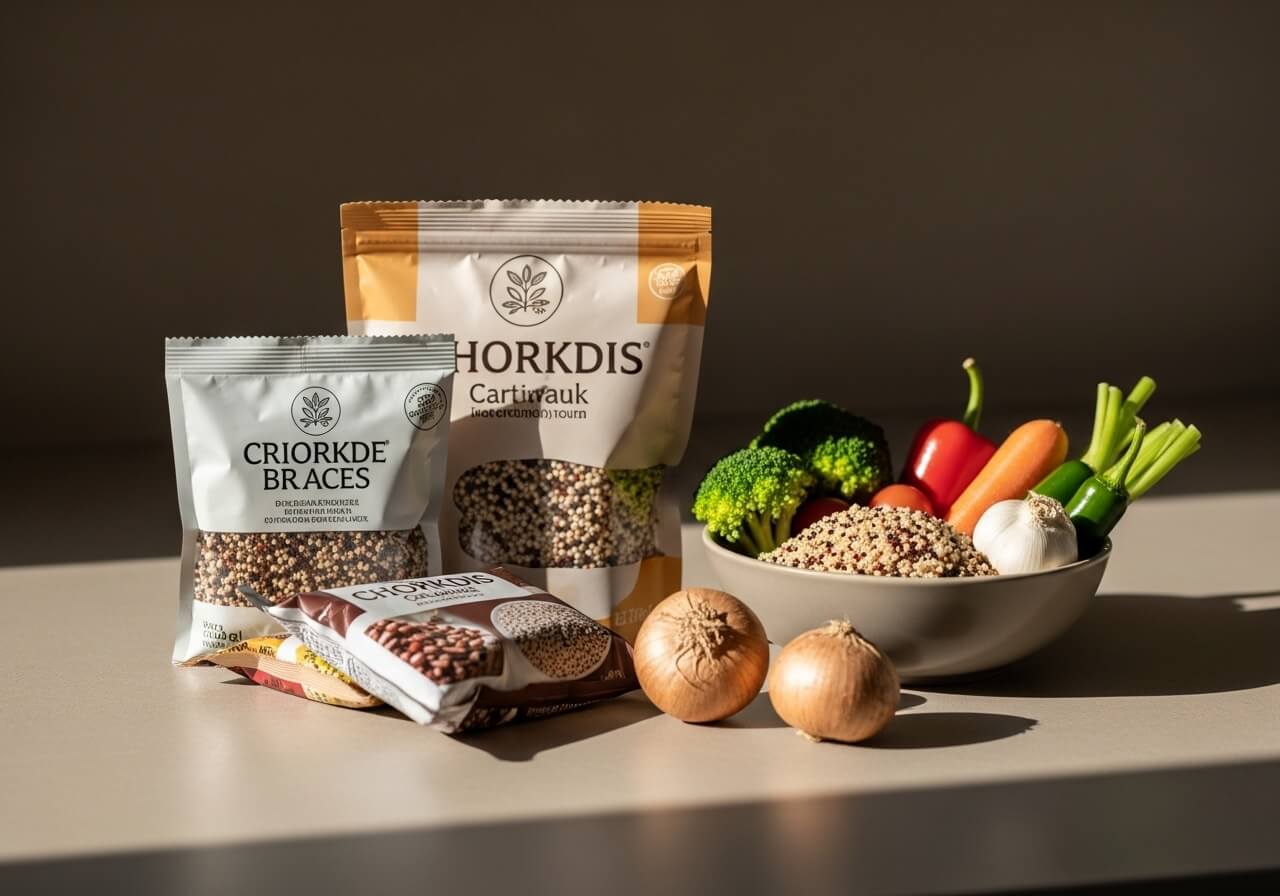
The Adequate Intake for alpha-linolenic acid is 1.6 g a day for men and 1.1 g for women — and NIH notes that “the IOM did not establish specific intake recommendations for EPA, DHA, or other LC omega-3s.” One tablespoon of flaxseed oil supplies 7.26 g of ALA; an ounce of chia seeds 5.06 g; an ounce of walnuts 2.57 g. A spoon of seeds on your breakfast covers the day.
The seven days
Portions follow the DASH serving definitions above. Adjust quantities to your own energy needs — this is a pattern, not a prescription.
| Day | Breakfast | Lunch | Dinner |
|---|---|---|---|
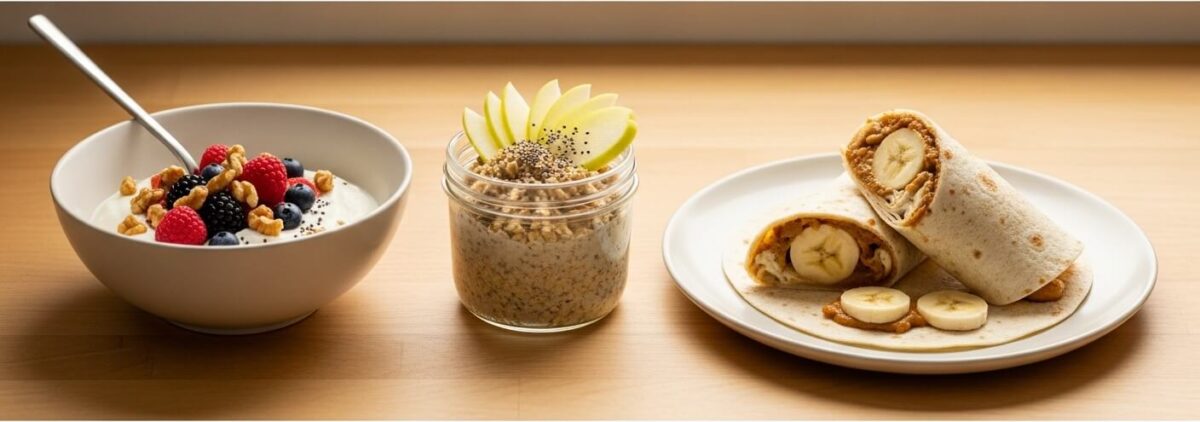
| Mon | Oats (½ cup cooked) with 1 oz walnuts, ½ cup berries, plain yogurt | Lentil salad — ½ cup cooked lentils, leafy greens, tomato, 1 tsp olive oil and lemon; wholegrain roll | 4 oz baked salmon, ½ cup cooked barley, roasted broccoli and peppers |
| Tue | Two eggs, wholegrain toast, half an avocado, spinach | Leftover salmon flaked over greens, chickpeas, cucumber, olive-oil dressing | Chicken (3 oz) with ½ cup brown rice, zucchini and eggplant roasted in olive oil |
| Wed | Yogurt with 1 oz chia seeds, pear, cinnamon | White bean and vegetable soup, wholegrain bread | Sardines (4 oz) on wholegrain toast, big green salad, tomato |
| Thu | Oats with almond butter (2 Tbsp) and apple | Wholegrain pasta with tomato, olives, tuna (canned light), arugula | Turkey and vegetable stew, ½ cup cooked farro or bulgur |
| Fri | Wholegrain toast, ricotta, figs or berries, pumpkin seeds | Leftover stew with a green salad | Chickpea and spinach curry, ½ cup brown rice, yogurt on the side |
| Sat | Vegetable omelette (2 eggs), tomato, wholegrain toast | Grain bowl — ½ cup quinoa, roasted vegetables, feta, olive oil, herbs | Trout (4 oz) with potatoes, green beans, lemon |
| Sun | Yogurt, walnuts, orange, ground flaxseed | Big mixed salad with white beans, egg, wholegrain bread | Slow-cooked lentil and vegetable casserole, wholegrain side |
Snacks, if you want them: a piece of fruit, a small handful of nuts (⅓ cup is one serving), plain yogurt, raw vegetables with hummus (6 tablespoons is one ounce-equivalent of protein), or wholegrain crackers.
The week contains two fish meals plus one canned-fish lunch — roughly 12 ounces of seafood, comfortably above the 8-ounce federal figure and within the 8–12 oz range advised for people who are pregnant or breastfeeding. Legumes appear five times, against DASH’s 4–5 servings a week. Sweets appear zero times, against DASH’s ceiling of five a week, so there is room if you want it.
Batch cooking it safely
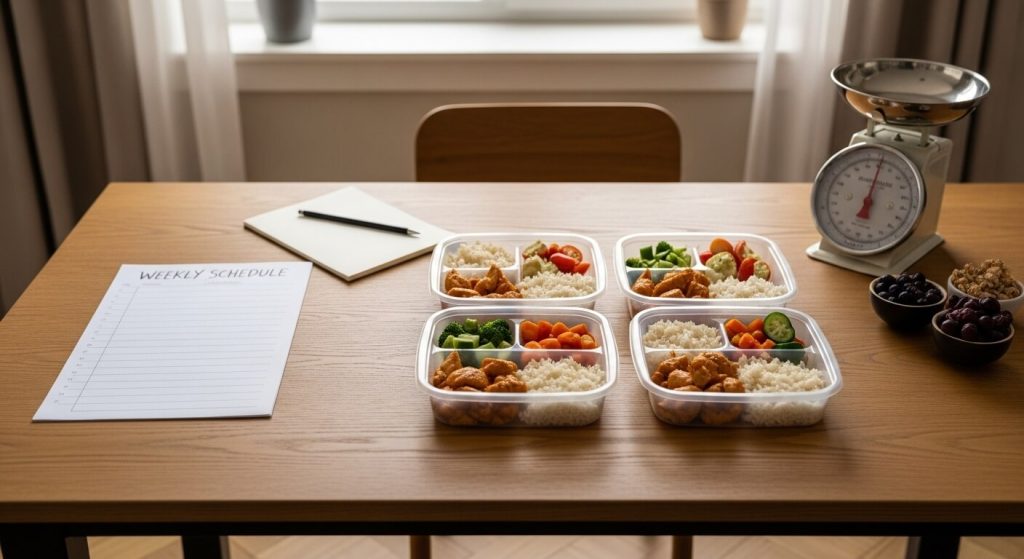
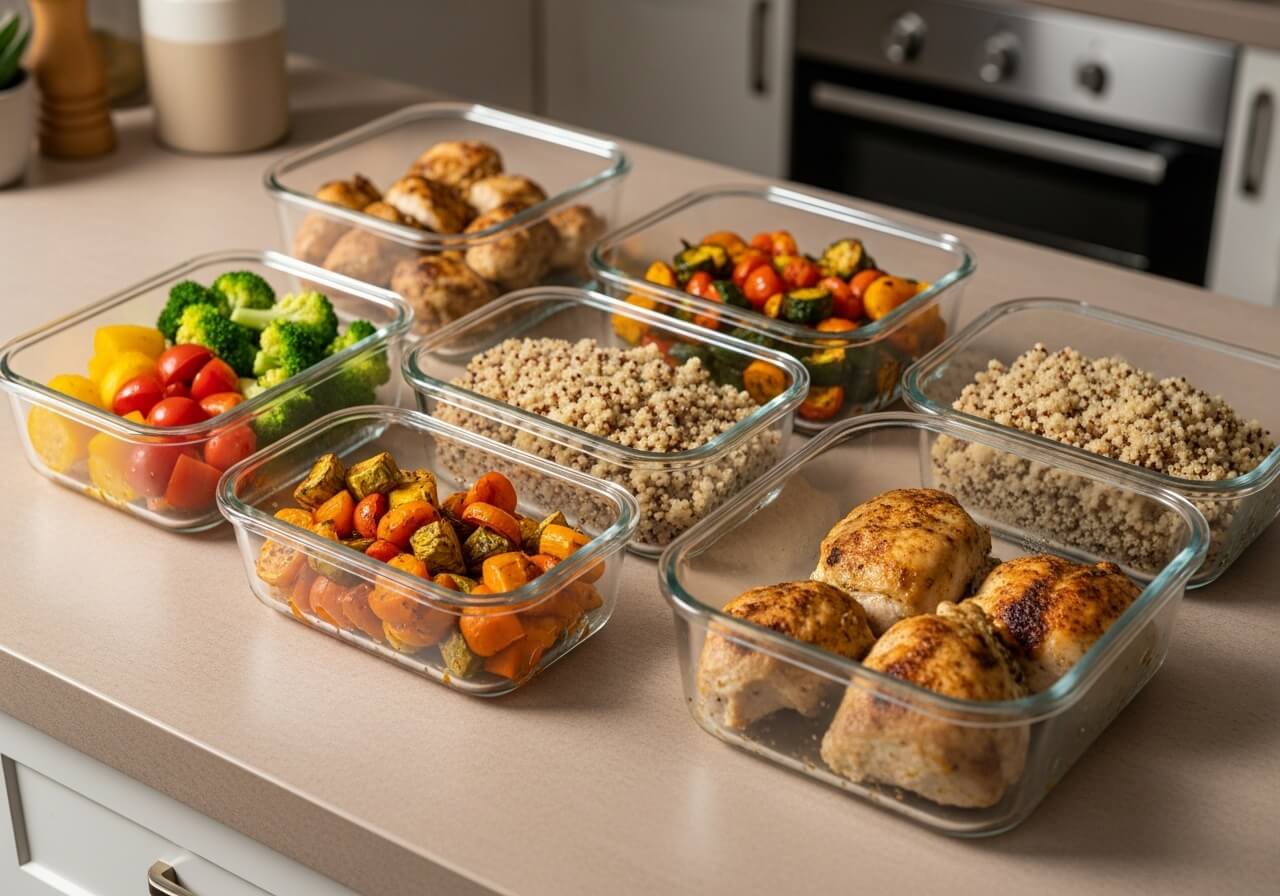
Most of this plan works cooked ahead. The federal storage rules are specific and worth following exactly.
USDA’s Food Safety and Inspection Service: “leftovers can be kept in the refrigerator for 3 to 4 days or frozen for 3 to 4 months.” Cooling matters as much as the storage time — “within 2 hours of cooking food or after it is removed from an appliance keeping it warm, leftovers must be refrigerated,” and to speed that up, “divide large amounts of food into shallow containers.” Reheating: “be sure they reach 165°F as measured with a food thermometer.” The reason for all of it: “bacteria grow rapidly between the temperatures of 40°F and 140°F.”
| Item | Refrigerator |
|---|---|
| Cooked meat and poultry leftovers | 3–4 days (2–6 months frozen) |
| Soups and stews with vegetables or meat | 3–4 days |
| Egg, chicken, tuna or macaroni salads | 3–4 days; “does not freeze well” |
| Casseroles with eggs, after baking | 3–4 days |
| Raw fatty fish | 1–3 days |
| Shrimp, crayfish | 3–5 days |
Fridge at “40°F (4°C) or below“; freezer at “0°F (-18°C) or below.” Note that no federal source publishes a separate figure for cooked grains — treat them under the general 3–4 day leftovers rule. A repeatable system for this is covered in building a sustainable meal prep system.
What this plan will and will not do
Being straight about this is the point of the article.
What is supported. DASH has direct trial evidence for blood pressure — NHLBI reports that in the original trial of 459 adults, participants on DASH “had the greatest effect of lowering their high blood pressure,” and in DASH-Sodium the plan at 1,500 mg sodium “lowered blood pressure more than the typical American diet at all three daily sodium levels.” NHLBI also notes the reductions “came fast—within 2 weeks of starting the plan.” Seafood has federal backing for heart health. Replacing saturated fat with high-oleic oils has a qualified FDA claim.
What is not. There is no evidence base for a seven-day inflammation outcome. The fast-onset finding above is about blood pressure, over two weeks, not about inflammation. No source we could find supports a claim that you will “feel less inflamed” on any timeline.
| Claim you will see elsewhere | What the sources say |
|---|---|
| “Olive oil is anti-inflammatory” | FDA’s only olive oil claim concerns coronary heart disease via oleic acid, is “supportive but not conclusive,” and requires replacing saturated fat. Inflammation is not mentioned |
| “Omega-3 supplements reduce inflammation” | the Office of Dietary Supplements describes a mechanism and writes that researchers “have hypothesized” an effect. Its affirmative statement is about eating seafood, not supplements |
| “Turmeric fights inflammation” | NCCIH: “We don’t know enough to definitively conclude if turmeric or curcumin is beneficial for any health purposes” — with a warning that highly bioavailable curcumin formulas “may harm your liver” |
| “Eat the rainbow to reduce inflammation” | The Dietary Guidelines advise a variety of colourful vegetables and fruit. No color-to-inflammation mechanism is given by any source |
| “You’ll feel less inflamed in a week” | Nothing supports an inflammation timeline. The only fast-onset federal finding is blood pressure on DASH, over two weeks |
FAQ
Is there an official anti-inflammatory diet?
No. A federal evidence review states that which dietary patterns and nutrients matter most, and by what mechanisms, “remains unclear.” This plan uses the Mediterranean and DASH patterns because those are defined and studied, not because either is officially labeled anti-inflammatory.
How much fish should the week contain?
At least 8 ounces, per EPA and FDA, chosen from the lower-mercury Best Choices list. A serving is 4 ounces, so two fish meals covers it. This plan includes about 12 ounces.
How much olive oil?
FDA’s qualified claim names about 1½ tablespoons (20 grams) a day of high-oleic oils — and only when they replace fats higher in saturated fat, without adding calories.
Should dairy be full-fat or low-fat?
Federal sources currently disagree. NHLBI’s DASH plan says fat-free or low-fat; the 2025–2030 Dietary Guidelines say full-fat with no added sugars. Whichever you choose, saturated fat should stay under 10% of daily calories.
How long do the prepped meals keep?
Three to four days refrigerated for cooked leftovers, soups, stews and baked casseroles; three to four months frozen. Get food into the fridge within two hours of cooking, in shallow containers, and reheat to 165°F.
Do I need supplements on this plan?
Nothing here requires them. NIH’s affirmative omega-3 statement is about eating seafood as part of a balanced diet, and its supplement language is limited to people with heart disease or high triglycerides.
Will I notice a difference in seven days?
Possibly in habits and blood pressure — NHLBI notes DASH’s blood-pressure effect appeared within two weeks. Not in any measurable inflammation marker, because no source supports that timeline.
This content is for educational purposes only and is not medical advice. Always consult a qualified healthcare professional for personalised guidance.