
Two sentences that sound identical mean completely different things:
- “92% of American men take in less vitamin D from food than the estimated requirement.”
- “92% of American men are vitamin D deficient.”
The first is true. The second is not — and the gap between them is where most articles about micronutrient deficiency go wrong.
NIH‘s own figures make the point. From food and beverages, “92% of men, more than 97% of women, and 94% of people age 1 year and older ingested less than the EAR of 10 mcg (400 IU) of vitamin D.” But when the same agency looks at blood levels: “18% were at risk of inadequacy…and 5% were at risk of deficiency.”
Below-recommendation intake is common. Clinical deficiency is not. This guide is about telling them apart — and about why the symptom checklists circulating online cannot do it for you.

Why symptom lists do not work
Three reasons, each with a source.
1. Early deficiency is usually silent. On iron: “you may have no symptoms if the anemia is mild,” and “most of the time, symptoms are mild at first and develop slowly.” On B12, the Office of Dietary Supplements notes that “low or marginal vitamin B12 status (200–300 pg/mL) without these symptoms is much more common” than the symptomatic kind. On vitamin D, MedlinePlus describes insufficiency as “low vitamin D levels that may weaken your bones and affect your health, even if you don’t have symptoms.”
2. The symptoms that do appear are non-specific. A clinical reference puts it bluntly: “symptoms of clinical magnesium deficiency are unspecific, eg, muscle spasms and arrhythmias, and can be easily confounded with other nutrient deficiencies.” Fatigue, weak nails and hair changes belong to dozens of causes.
3. Even blood tests are not straightforward. NIH says of the standard iron screen that hemoglobin and hematocrit “are neither sensitive nor specific.” A clinical reference goes further: “no single test is the best for evaluating nutritional status,” and “none of these tests alone are specific for detecting malnutrition.”
If a laboratory test is not conclusive on its own, a list of symptoms certainly is not. That is the honest position, and it is why this article does not contain a “signs you’re deficient in X” checklist. What follows instead is who is actually at risk, what the real tests are, and what to eat.
What is actually common in the US
Sorted by how much the data support concern, not by how much attention the nutrient gets.
| Nutrient | What NIH data show |
|---|---|
| Iron | “People in the United States usually obtain adequate amounts of iron from their diets, but infants, young children, teenage girls, pregnant women, and premenopausal women are at risk.” Among pregnant women, 18% had iron deficiency |
| Calcium | “49% of children age 4 to 18 years and 39% of all individuals age 4 and older consume less than the EAR” |
| Vitamin D | 92–97% below the EAR from food — but only 5% at risk of deficiency by blood test |
| Magnesium | “48% of Americans of all ages ingest less magnesium from food and beverages than their respective EARs” — yet “symptomatic magnesium deficiency due to low dietary intake in otherwise healthy people is uncommon” |
| Potassium | Adults average 3,016 mg (men) and 2,320 mg (women) against Adequate Intakes of 3,400 and 2,600 mg |
| Vitamin B12 | “Most people in the United States consume adequate amounts.” Only 5% of men and 11% of women fall below the EAR. About 3.6% of adults are deficient |
| Folate | “Frank folate deficiency is rare in the United States, but some individuals might have marginal folate status” |
| Zinc | “Most people in the United States consume adequate amounts of zinc” |
| Iodine | “The general U.S. population is iodine sufficient” — though “a substantial portion of pregnant women in the United States are iodine insufficient” |
| Vitamin A | “Less than 1% of the U.S. population has a serum retinol level of less than 20 mcg/dL, which indicates that vitamin A deficiency is uncommon” |
| Selenium | “Selenium deficiency is very rare in the United States and Canada” |
Read the bottom half of that table again. Zinc, iodine, vitamin A, selenium and B12 — nutrients heavily marketed as things Americans lack — are ones the Office of Dietary Supplements describes as adequately consumed. The genuine concerns cluster at the top, and they cluster around specific groups rather than the population at large.
Who is actually at risk
the Office of Dietary Supplements publishes explicit at-risk lists for each nutrient. The recurring names:
| If this describes you | Nutrients worth discussing with a clinician |
|---|---|
| Pregnant, or menstruating with heavy bleeding | Iron, iodine, folate |
| Vegetarian or vegan | B12, iron, zinc, iodine |
| Over 65 | B12, vitamin D, magnesium, calcium |
| Gastrointestinal disease, or bariatric/GI surgery | B12, iron, zinc, vitamin D, fat-soluble vitamins generally |
| Little sun exposure, or darker skin | Vitamin D |
| Avoiding dairy | Calcium, iodine, vitamin D |
| Taking metformin, a proton pump inhibitor or an H2 blocker | B12 — these “can interfere with vitamin B12 absorption” |
| Post-menopause | Calcium, vitamin D |
| Frequent blood donor | Iron |
Notice that these are circumstances, not sensations. That is the correct way in to this subject: you assess your risk from your situation and your diet, then get tested if the risk is real.

How deficiency is actually established
Each nutrient has its own marker, and several have important caveats worth knowing before you interpret a result.
| Nutrient | Marker | The catch |
|---|---|---|
| Iron | Serum ferritin — “currently the most efficient and cost-effective test for diagnosing iron deficiency” | “Inflammation…can elevate serum ferritin concentrations” — so a normal result during illness may mislead |
| Vitamin D | Serum 25(OH)D — “the main indicator of vitamin D status” | “Routine vitamin D testing is not recommended for everyone” |
| Vitamin B12 | Serum B12, with methylmalonic acid as confirmation — MMA levels are “the most sensitive markers” | For a result between 150 and 399 pg/mL, the Office of Dietary Supplements says MMA “should be checked to help confirm a diagnosis” |
| Folate | Serum folate, or erythrocyte folate | Serum folate “is sensitive to recent dietary intake, so it might not reflect long-term status” — a good breakfast can normalize it |
| Calcium | Not measurable this way | “Serum levels do not reflect nutritional status because of their tight homeostatic control” |
| Magnesium | Difficult | “Serum levels do not accurately reflect total body magnesium levels or concentrations in specific tissues” |
| Zinc | Serum zinc, with limits | Values vary by “the time of the blood draw (morning vs. evening) and do not always correlate with dietary or supplemental zinc intakes” |
| Iodine | Urinary iodine — population level only | Spot samples “cannot be used to diagnose individual cases of iodine deficiency” |
| Vitamin A | Serum retinol | Levels “do not decline until vitamin A levels in the liver and other storage sites are almost depleted” |
Three of these — calcium, magnesium and iodine — essentially cannot be assessed in an individual by a routine blood test at all. If you have been told your calcium is “normal” and taken that as proof your intake is adequate, that inference does not hold.
Food first, and what that means in amounts
NIH‘s position is direct: “in general, a person’s nutritional needs should be met primarily through the diet, including fortified foods.” And: “MVMs cannot take the place of the variety of foods that are important to a healthy diet, because foods provide other nutrients and components that have benefits for health.”
Here is what covering the higher-risk nutrients actually looks like, in the Office of Dietary Supplements’ own per-serving figures.
| Nutrient | Adult RDA | Foods, per serving |
|---|---|---|
| Iron | 8 mg men; 18 mg women 19–50; 8 mg from 51 | Fortified cereal 18 mg · oysters 8 mg · white beans 8 mg · beef liver 5 mg · lentils 3 mg |
| Calcium | 1,000 mg; 1,200 mg for women 51+ and everyone 71+ | Low-fat yogurt (8 oz) 415 mg · fortified orange juice (1 cup) 349 mg · sardines with bones (3 oz) 325 mg · nonfat milk 299 mg · firm tofu (½ cup) 253 mg |
| Vitamin D | 600 IU to age 70; 800 IU after | Cod liver oil (1 tbsp) 1,360 IU · farmed trout (3 oz) 645 IU · sockeye salmon (3 oz) 570 IU · fortified 2% milk 120 IU · scrambled egg 44 IU |
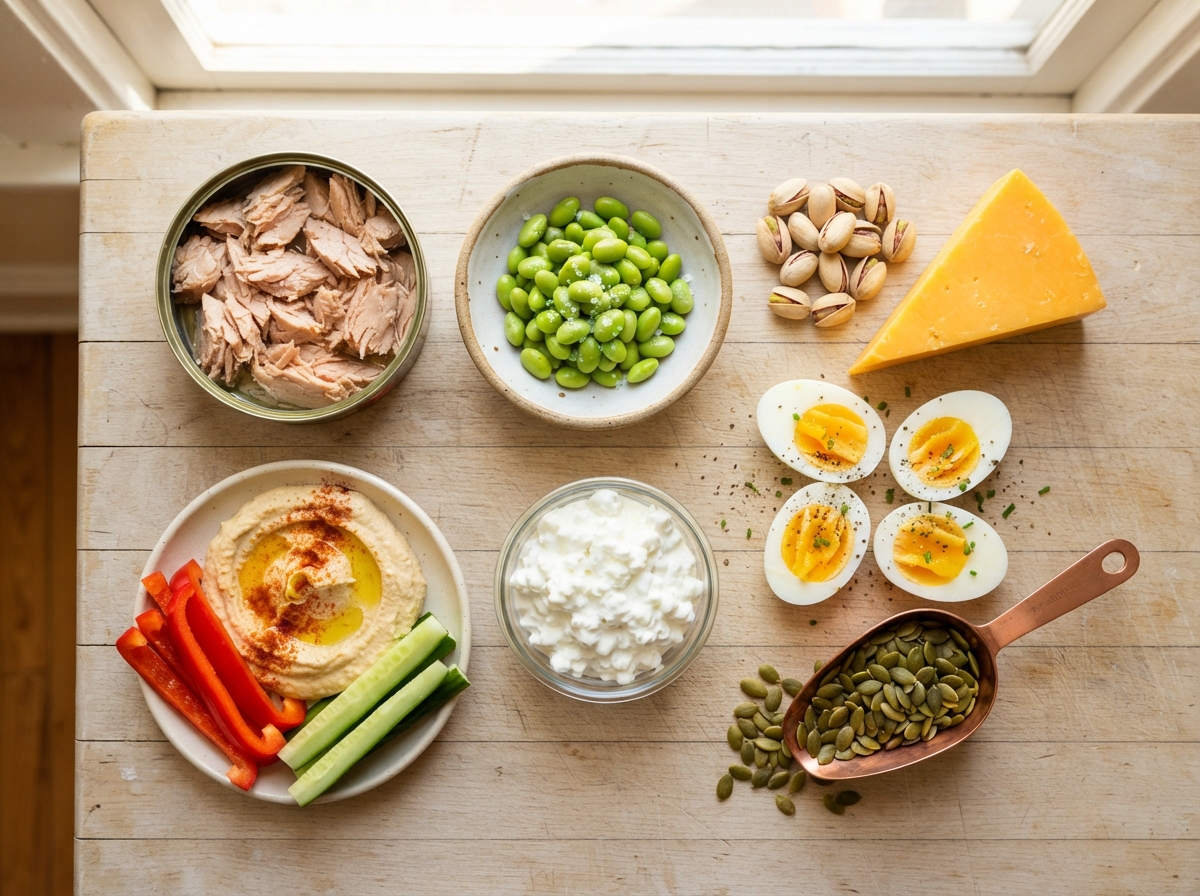
| Magnesium | 400–420 mg men; 310–320 mg women | Pumpkin seeds (1 oz) 156 mg · almonds (1 oz) 80 mg · boiled spinach (½ cup) 78 mg · black beans (½ cup) 60 mg |
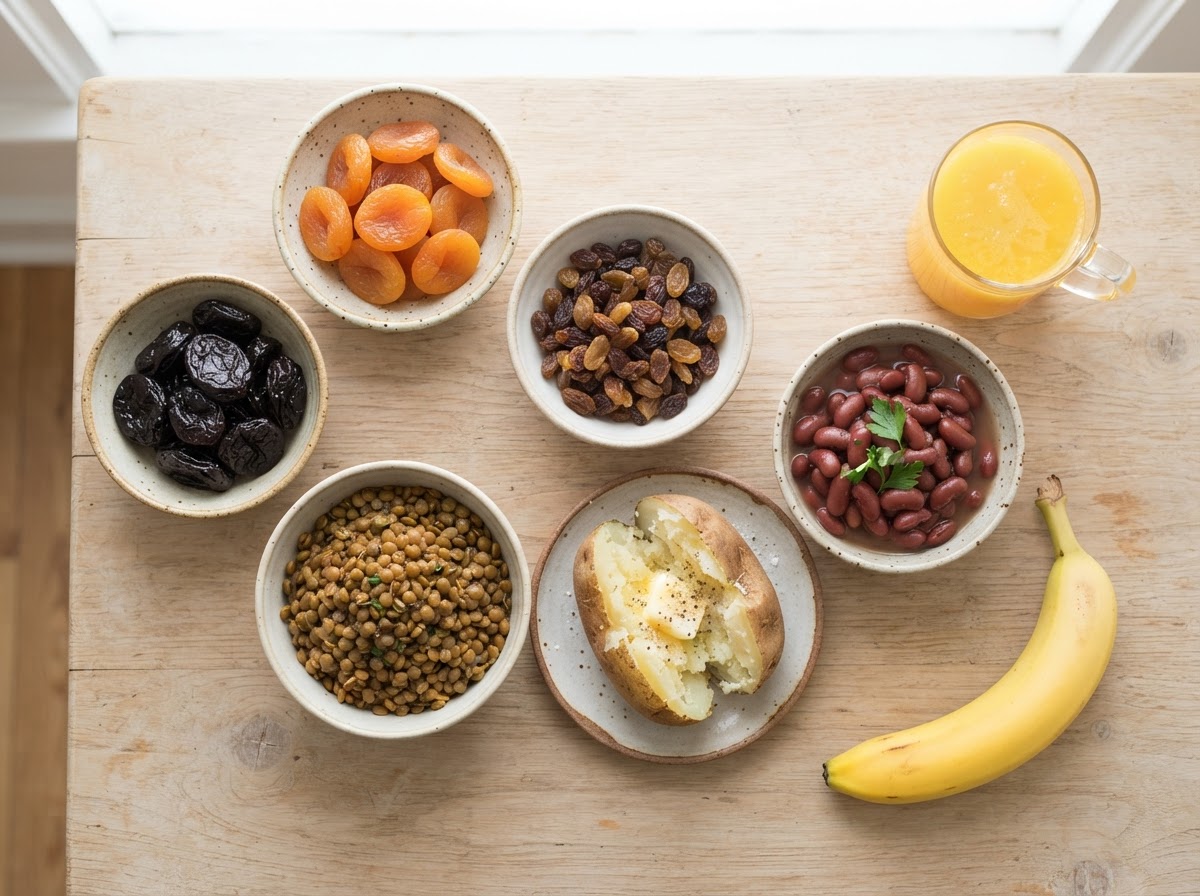
| Potassium | 3,400 mg men; 2,600 mg women (AI) | Dried apricots (½ cup) 755 mg · cooked lentils (1 cup) 731 mg · baked potato 610 mg · orange juice 496 mg · banana 422 mg |
| Vitamin B12 | 2.4 mcg | Beef liver (3 oz) 70.7 mcg · clams (3 oz) 17 mcg · oysters (3 oz) 14.9 mcg · salmon (3 oz) 2.6 mcg · ground beef (3 oz) 2.4 mcg |
Two things stand out. First, a single serving often covers most of a day’s need — one salmon fillet, one cup of yogurt, one ounce of pumpkin seeds. Second, the same foods keep recurring: oily fish, legumes, dairy, seeds, leafy greens. There is no scenario where you need eleven separate products.
Food comparisons for specific nutrients are covered in iron-rich foods compared and top vitamin D foods.
Absorption: what is documented, and what is exaggerated
Four interactions have real evidence behind them, and NIH’s hedging is worth preserving:
- Vitamin C “improves the absorption of nonheme iron, the form of iron that is present in plant-based foods”
- Calcium “might interfere with the absorption of iron”
- Phytates “bind some minerals such as zinc in the intestine and form an insoluble complex that inhibits zinc absorption”
- Fat helps with fat-soluble vitamins — but note the second half: “the concurrent presence of fat in the gut enhances vitamin D absorption, but some vitamin D is absorbed even without dietary fat”
That last clause quietly kills a popular claim. Fat-soluble vitamins are not useless without fat; absorption is better with it. More on this in what actually improves nutrient absorption and supplement forms and absorption.

The risk on the other side
Self-directed supplementation is not a neutral bet. Every nutrient here has a Tolerable Upper Intake Level, and the harms are documented.
| Nutrient | Adult UL | What happens above it |
|---|---|---|
| Iron | 45 mg | “Gastric upset, constipation, nausea, abdominal pain, vomiting, and diarrhea” |
| Vitamin D | 100 mcg (4,000 IU) | “Marked hypercalcemia…hypercalciuria, and high serum 25(OH)D levels” |
| Calcium | 2,500 mg (2,000 from 71) | “Might increase the risk of kidney stones” |
| Zinc | 40 mg | 50 mg or more “can interfere with copper absorption…reduce immune function, and lower HDL cholesterol levels” |
| Preformed vitamin A | 3,000 mcg | “Dry skin, painful muscles and joints, fatigue, depression, and abnormal liver test results”; birth defects in pregnancy |
| Selenium | 400 mcg | “Hair loss and nail brittleness or loss…skin rash, nausea, diarrhea, fatigue, irritability” |
| Magnesium (supplemental) | 350 mg | “Often result in diarrhea” |
| Folic acid | 1,000 mcg | “Might mask vitamin B12 deficiency until its neurological consequences become irreversible” |
Two entries there deserve a second look.
Selenium. Hair loss and brittle nails are signs of excess. They are also the two symptoms most often marketed as evidence of deficiency. A reader who reads “brittle nails” as a deficiency signal and starts supplementing may be doing the opposite of what is needed. For scale: one ounce of Brazil nuts supplies 544 mcg — above the adult upper limit on its own. The food where that distinction matters most in practice is the Brazil nut, which we cover in one nut, a day of selenium, and the upper limit.
Folic acid. This is the strongest single argument against guessing. High folate intake can hide a B12 deficiency while its neurological damage becomes permanent.
Water-soluble does not mean harmless. Vitamin B6 has a UL of 100 mg; sustained high doses “can cause severe and progressive sensory neuropathy characterized by ataxia.” Niacin’s UL is 35 mg, and high doses over months or years “can also be hepatotoxic; effects can include…hepatitis; and acute liver failure.” Vitamin C’s UL is 2,000 mg, with a potential to “increase urinary oxalate and uric acid excretion, which could contribute to the formation of kidney stones.” None of these harms come from food — the Office of Dietary Supplements notes explicitly that “no adverse effects have been reported from the consumption of naturally occurring niacin in foods.”
Stacking is how people end up over the limit
the Office of Dietary Supplements warns that multivitamins “can also increase the likelihood that users will have intakes of some nutrients that are higher than the ULs,” and that people taking a multivitamin plus separate supplements plus fortified foods “might obtain some nutrients in amounts exceeding the UL, increasing the possibility of adverse effects.”
On whether the multivitamin is doing anything: “overall, MVMs do not appear to reliably reduce the risk of chronic diseases when people choose to take these products for up to a decade (or more),” and “no U.S. government health agency, private health group, or health professional organization promotes regular use of MVMs.” We look at where they do make sense in when to consider a multivitamin.
Interactions with medications
Documented ones worth knowing: iron with levothyroxine (“can result in clinically significant reductions in levothyroxine efficacy”); calcium carbonate with levothyroxine, where the FDA-approved label instructs a four-hour separation; zinc with quinolone and tetracycline antibiotics; metformin and acid-reducing drugs with B12; potassium supplements with ACE inhibitors and potassium-sparing diuretics.
This is exactly why FDA “advises consumers to talk to their doctor, pharmacist, or other health care professional before deciding to purchase or use a dietary supplement” — and why the Office of Dietary Supplements says to “consult your health care provider before taking dietary supplements to treat a health condition.”
About athletes specifically
The joint position stand on nutrition and athletic performance names the same short list: shortfalls occur “most frequently in the case of calcium, vitamin D, iron, and some antioxidants,” and mainly among athletes who “frequently restrict energy intake, rely on extreme weight-loss practices, eliminate one or more food groups from their diet, or consume poorly chosen diets.”
One athlete-specific figure is worth knowing: “iron requirements for all female athletes may be increased by up to 70% of the estimated average requirement.”
And one sentence that settles the supplement question for training purposes: “the intake of vitamin and mineral supplements does not improve performance unless reversing a pre-existing deficiency.” The stand also advises against self-diagnosis, recommending athletes “seek clinical assessment of their micronutrient status within a larger assessment of their overall dietary practices.” Food-side detail is in best foods for fitness.
Five claims we are not going to make
| Common claim | Why not |
|---|---|
| “White spots on your nails mean zinc deficiency” | MedlinePlus’s nail abnormality page attributes white streaks and spots to medicines or disease and does not mention zinc at all. The nail change it does link to a deficiency is a different one — spoon-shaped nails, associated with iron deficiency anemia |
| “Hair loss means you’re deficient in something” | Clinical references list a long mixed trigger list and conclude that “in most cases, no specific cause is identified.” Hair loss is also a documented sign of selenium and vitamin A excess |
| “Cracks at the corners of your mouth mean B vitamins” | The most common cause is fungal or mechanical. Only “up to 25% of cases…are associated with iron or vitamin B deficiencies” — a possible contributor in a minority, not an indicator |
| “Most Americans are magnesium deficient” | 48% fall below the EAR — under half, and not the same thing. NIH: “symptomatic magnesium deficiency due to low dietary intake in otherwise healthy people is uncommon” |
| “Cravings tell you what you’re low on” | No authoritative source supports it. Even for pica — craving non-food substances — MedlinePlus hedges to “may trigger” and requires blood testing to establish anything |
A word on hair mineral analysis, which is sold for exactly this purpose: a federal review of hair analysis found “reference ranges with an approximate 100-fold difference have been used by different commercial laboratories.” Separately, no the Office of Dietary Supplements fact sheet lists hair as a status marker for any nutrient here — the markers used are serum, erythrocyte and urinary.
What to actually do
- Check the risk table, not a symptom list. Pregnancy, GI conditions, restrictive diets, age over 65, certain medications — these are what predict deficiency.
- If you fit a risk group, ask for the right test. Ferritin for iron, 25(OH)D for vitamin D, serum B12 with MMA follow-up if borderline.
- Do not read a normal calcium or magnesium result as reassurance. Those blood values are homeostatically controlled and do not reflect intake.
- Cover the gaps with food first. One serving usually does most of the work.
- Do not stack supplements speculatively. ULs are reachable, and the harms are real.
- Tell your clinician what you take — the interaction list above is not exhaustive.
FAQ
How do I know if I have a nutrient deficiency?
Through a clinician and the appropriate blood test, chosen for your risk factors. Early deficiency is commonly asymptomatic, symptoms overlap heavily between nutrients, and the Office of Dietary Supplements notes that even standard screening tests are “neither sensitive nor specific” on their own.
Which deficiencies are actually common in the US?
Iron in specific groups — infants, young children, teenage girls, pregnant and premenopausal women — and low calcium intake across the population. Vitamin D intake from food is low almost universally, but only about 5% of people are at risk of deficiency by blood test.
Does low intake mean I am deficient?
No. NIH‘s magnesium page states both facts side by side: 48% of Americans take in less than the estimated requirement, and symptomatic deficiency from low intake in otherwise healthy people is uncommon.
Should I take a multivitamin just in case?
the Office of Dietary Supplements reports that multivitamins do not appear to reliably reduce chronic disease risk, that no health agency or professional organization promotes their regular use, and that combining them with other supplements and fortified foods can push intakes above upper limits.
Can I get too much of a water-soluble vitamin?
Yes. Vitamin B6, niacin, vitamin C and folic acid all have upper limits, and exceeding them has documented harms including nerve damage, liver injury and masked B12 deficiency. The harms come from supplements and fortification, not from food.
Is hair mineral analysis useful?
A federal review found reference ranges differing about a hundredfold between commercial laboratories. No the Office of Dietary Supplements fact sheet uses hair as a status marker for any nutrient discussed here.
Do athletes need more micronutrients?
The relevant position stand names calcium, vitamin D, iron and some antioxidants, and identifies the risk as restricted energy intake or eliminated food groups rather than training itself. Female athletes’ iron requirement may be up to 70% above the estimated average requirement. Supplements do not improve performance unless they correct an existing deficiency.
This content is for educational purposes only and is not medical advice. Always consult a qualified healthcare professional for personalised guidance.