How much of a nutrient you actually absorb varies more than the label suggests — zinc absorption alone ranges from 5% to more than 50% depending on what else is in the diet. But most of what is written about “food combining for absorption” is invented. This page covers the mechanisms that federal sources document, with their numbers, and names the ones they do not.
The short version
- Zinc absorption from food ranges 5% to more than 50%, driven by phytate content.
- Calcium absorption falls as the dose rises: about 36% of a 300 mg dose, 28% of a 1,000 mg dose.
- Vitamin C raises non-heme iron absorption; calcium, phytate and some polyphenols lower it.
- Fat matters for fat-soluble vitamins — documented explicitly for vitamin E, and via fat-blocking drugs for vitamin A and beta-carotene.
- Cooking increases beta-carotene bioavailability. Raw is not automatically better.
Zinc: the widest range in the data
ODS states that the amount of zinc absorbed from food ranges from 5% to more than 50%, depending on the amount of plant-based foods (and thus of phytate) in the diet. A tenfold range, decided by diet composition rather than by the zinc itself.
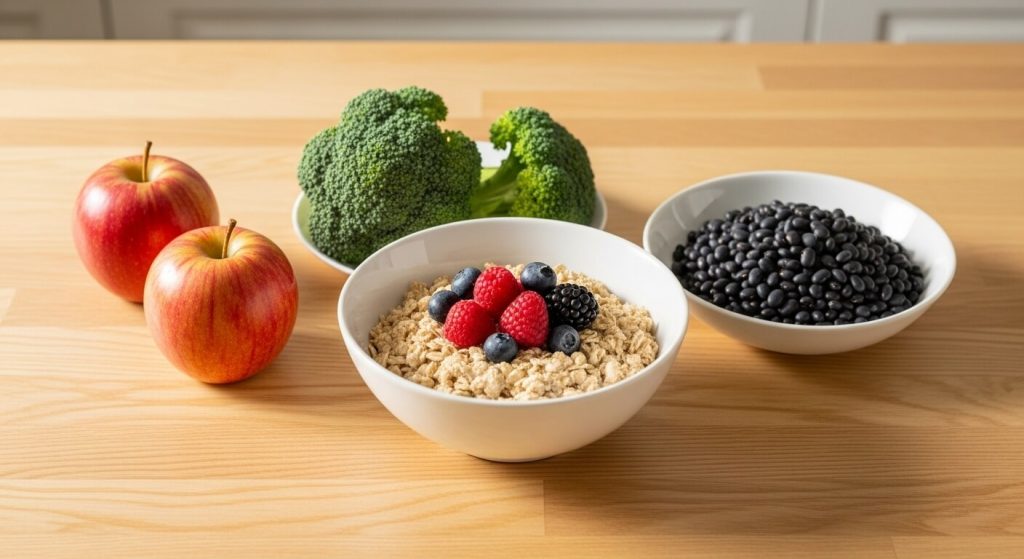
The mechanism is specific: phytates, the storage form of phosphorus in plants, bind some minerals such as zinc in the intestine and form an insoluble complex that inhibits zinc absorption. So the bioavailability of zinc from these foods is lower than that from animal foods, and the absorption of zinc from mixed meals or diets containing a combination of animal-based and plant-based foods is lower than from diets or meals containing animal-based foods only.
That last sentence is the one worth pausing on, because it is the closest any federal source comes to a “food combining” effect — and it points the opposite way from the popular advice. Mixing plant and animal foods lowers zinc absorption relative to animal foods alone. Nobody recommends eating only animal foods because of it, which tells you how much weight to put on absorption effects when choosing meals.
Iron: the enhancers and inhibitors that are real
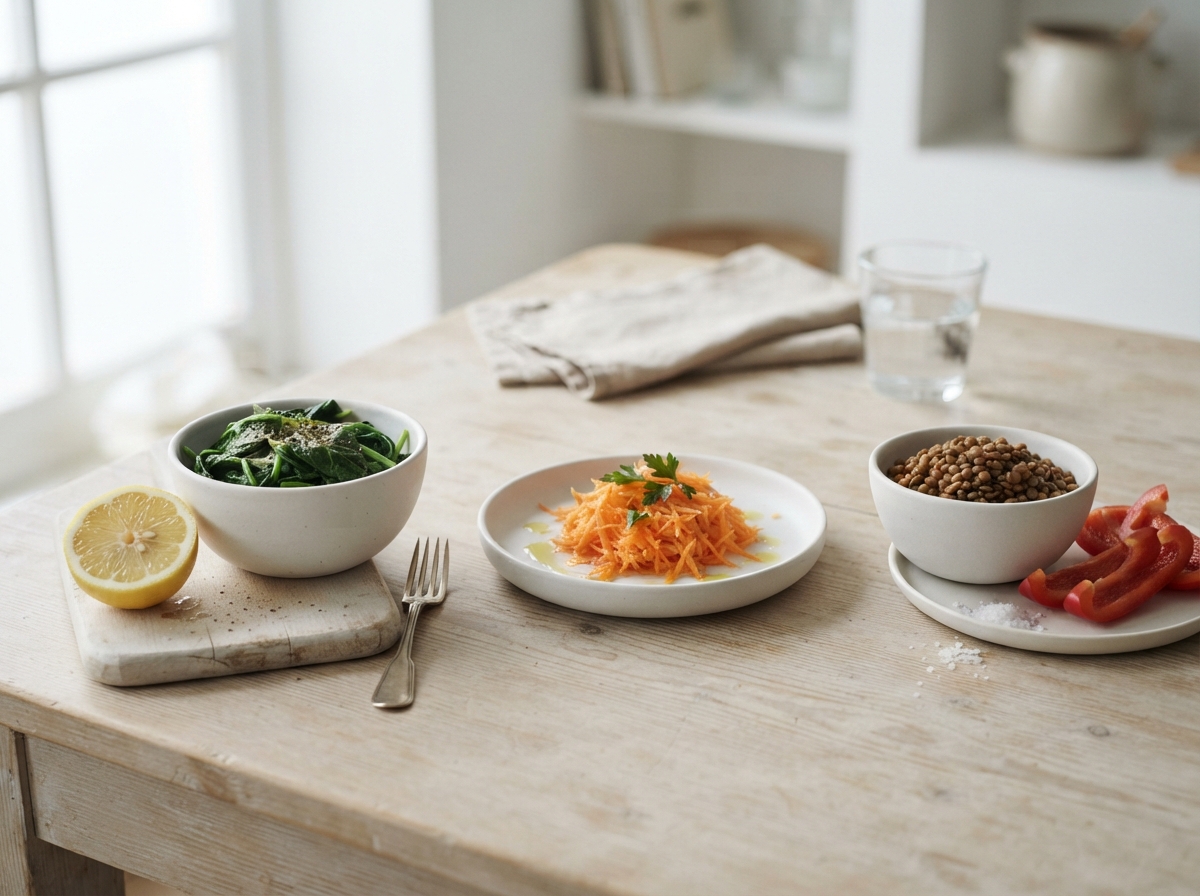
On the enhancing side, ODS states ascorbic acid enhances the bioavailability of nonheme iron, and that meat, poultry, and seafood increase the absorption of nonheme iron.
On the inhibiting side, certain polyphenols in some nonanimal foods (e.g., cereals, legumes) have the opposite effect, and calcium might reduce the bioavailability of both nonheme and heme iron.
The net effect at diet level is quantified: approximately 14% to 18% from mixed diets that include substantial amounts of meat, seafood, and vitamin C versus 5% to 12% from vegetarian diets. Full detail in iron sources and absorption.
Calcium: dose beats timing
Here the variable is not what you eat it with but how much you take at once. ODS: as the amount increases, the percentage absorbed decreases. Absorption from supplements is highest with doses of 500 mg or less, and specifically the body absorbs about 36% of a 300 mg calcium dose and 28% of a 1,000 mg dose.
Run those numbers: 36% of 300 mg is 108 mg absorbed; 28% of 1,000 mg is 280 mg. The bigger dose still delivers more in absolute terms — it is just less efficient. That is a different claim from “you can only absorb 500 mg at a time”, which is what the internet usually says.
Fat and the fat-soluble vitamins
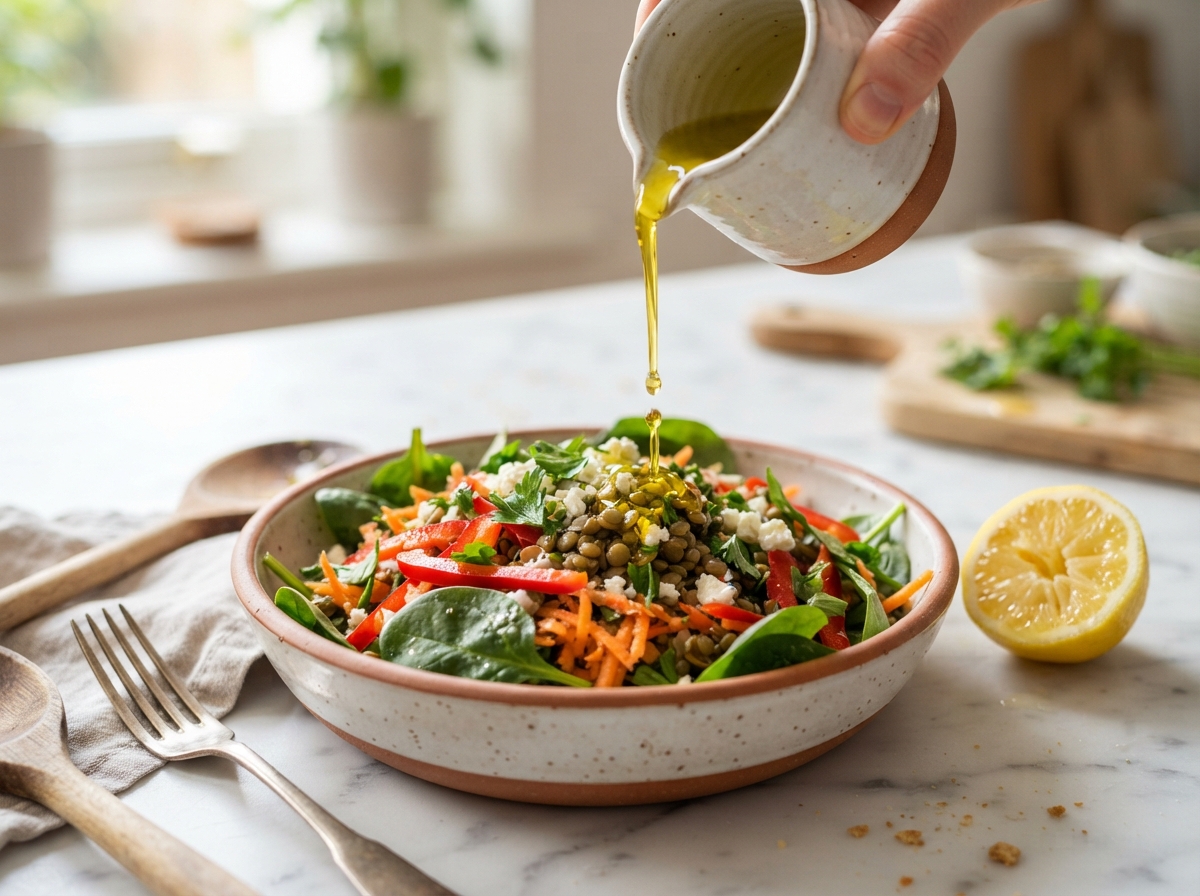
For vitamin E the statement is explicit: because the digestive tract requires fat to absorb vitamin E, people with fat-malabsorption disorders are more likely to become deficient.
For the others, the evidence we could verify comes at it sideways, through drugs: ODS notes that orlistat, which blocks fat absorption, can decrease the absorption of vitamin A, other fat-soluble vitamins, and beta-carotene.
Practically that supports keeping some fat in meals built around vegetables — but see the “not claiming” section, because the specific claim that vitamin D requires dietary fat is not something we could source.
Cooking can increase availability
Against the raw-food intuition, ODS states: cooking and heat treatment can increase the bioavailability of beta-carotene from foods.
Set that beside the vitamin C side, where cooking costs you — MedlinePlus notes that cooking or long storage reduces vitamin C content. Different nutrients, opposite directions. Which is the strongest argument for variety in preparation methods rather than allegiance to one, as covered in the vegetables guide.
Oxalates: the one number worth knowing
The compound most often blamed for blocking minerals is oxalic acid, and here the federal position is unusually specific. ODS states that certain compounds in plants, such as oxalic acid and phytic acid, decrease calcium absorption by forming indigestible salts with it — and then puts a figure on it: absorption of calcium is only 5% for spinach, against 27% for milk.
That is a fivefold gap, and it is the sharpest single number in this whole subject. Read it correctly, though: it is a fractional absorption figure, not a claim that spinach contains no calcium. Spinach carries plenty; little of it gets across. Besides spinach, ODS names collard greens, sweet potatoes, rhubarb and beans as high in oxalic acid.
The counterweight is in the same paragraph of the same fact sheet, and it is the part that rarely travels: calcium from plants that do not contain these compounds — broccoli, kale, cabbage — is about as bioavailable as calcium from milk, although there is much less of it per serving. So the problem is not “plants”, it is these particular plants.
And then ODS defuses the whole thing in one sentence: when people eat many different types of foods, these interactions with oxalic or phytic acid “probably have little or no nutritional consequences.” The word doing the work there is probably, and we are keeping it. The measurable effect is real in a single food and largely washes out across a varied diet.
One group does need to take oxalate seriously, and it is a clinical one: people who have had calcium oxalate kidney stones. NIDDK’s guidance for them names five foods to limit — nuts and nut products, peanuts, rhubarb, spinach and wheat bran — and that five-item list is shorter than almost any high-oxalate list circulating online. Worth noting what NIDDK does not say: calcium is not the culprit in calcium stones. In the right amounts, it states, calcium can block other substances in the digestive tract that may cause stones. That is guidance for people with a diagnosis, not a template for everyone else.
Preparation: what soaking and leavening actually buy you
Soaking, sprouting and fermenting are the standard advice for getting more out of beans and grains, and the direction of the effect is properly sourced. The magnitude is not, and that distinction matters more than it sounds.
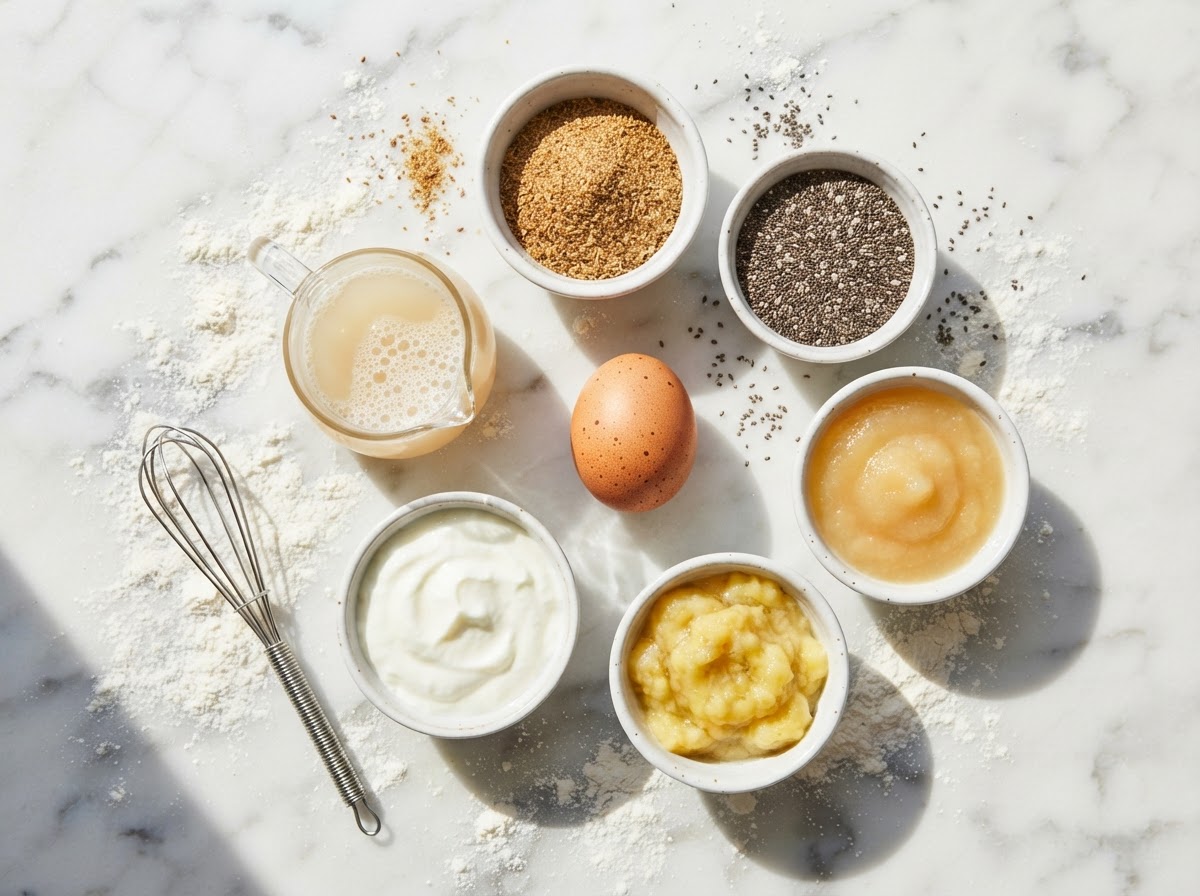
ODS puts it this way on the zinc fact sheet: people following vegetarian or vegan diets might benefit from preparation techniques that reduce phytate binding of zinc, such as soaking beans, grains and seeds in water for several hours before cooking. “Several hours” is the only quantity any approved source attaches to this — a duration, not a percentage. The same page adds that organic acids in fermented foods might increase zinc absorption, which is a different mechanism from phytate reduction and shouldn’t be merged with it.
Sprouting appears in exactly one citable place: a StatPearls chapter on zinc deficiency, which groups soaking, sprouting and fermenting legumes and grains together as techniques that reduce phytate levels and enhance zinc absorption. Again with no number attached.
The most persuasive evidence is not a lab figure at all. The 2001 Institute of Medicine reference-intake report on zinc states that the enzymatic action of yeast during the leavening of bread, and other fermentations, reduces phytate levels — while extrusion processes used for some breakfast cereals may not. And it backs that with an observation in people: phytate binding of zinc has been demonstrated as a contributing factor in the zinc deficiency seen with unleavened bread consumption in certain population groups in the Middle East. A measured human deficiency tied to how bread is made is a stronger argument than any percentage would be.
There is a related paradox in flour that is worth sitting with. A World Health Organization guideline on wheat flour fortification explains that higher-extraction flour retains more bran and germ, which is where most of the vitamins and minerals live — and that the same high-extraction flour also contains higher levels of phytates, which interfere with intestinal absorption of iron, zinc and copper. whole wheat flour therefore holds more minerals and more of what impedes them. Neither half of that cancels the other cleanly, and no approved source publishes a ratio between the two.
What we are not claiming
- Numeric multipliers for food pairings. “Vitamin C triples iron absorption” and its relatives — direction is documented, the multiplier is not.
- That vitamin D needs dietary fat. True for vitamin E on the record; not stated for vitamin D on its own fact sheet, so we do not extend it.
- That cooked tomatoes give more lycopene. Commonly cited, but we could not source it from an approved federal page. The beta-carotene statement above is what we can support.
- That splitting calcium doses is officially recommended. ODS gives absorption percentages by dose; it does not issue that as a prescription.
- That you should avoid tea, coffee or dairy near meals. Inhibition is documented; a prohibition is not.
- A percentage for how much soaking or fermenting cuts phytate. The effect is documented; no approved federal source publishes a figure, so the familiar “30 to 50 percent” does not appear here. That whole-grain flour holds a specific multiple of white flour’s phytate. The direction is sourced to WHO; the multiple is sourced to nobody. Oxalate content in milligrams per serving. No approved source publishes an oxalate composition table, and USDA FoodData Central does not carry the value. That eating calcium alongside oxalate-rich food cancels the effect. Ubiquitous advice online; absent from NIDDK, ODS and MedlinePlus alike. Food combining. See the separate page — no federal source describes or supports it.
FAQ
Do food combinations really affect absorption? Some do, measurably — vitamin C with plant iron, phytate with zinc. Others are invented. The documented ones are listed above.
How much zinc do I absorb? Anywhere from 5% to over 50%, depending on how much phytate the diet carries.
Is it worth splitting calcium supplements? Absorption efficiency is highest at 500 mg or less per dose, but a larger dose still delivers more calcium in total.
Should I eat vegetables raw for maximum nutrients? Not universally. Cooking increases beta-carotene availability while reducing vitamin C.
Do I need fat with my vegetables? For vitamin E, fat is required for absorption. For the others, the evidence we could verify is indirect.
What to do with this
Use the two effects that are large enough to act on: vitamin C at meals where your iron is plant-based, and an awareness that a high-phytate diet needs more zinc and iron rather than the same amount. Everything else on this topic is small relative to simply eating the food. Vary how you cook, and stop rearranging your plate.
Educational content, not medical advice.
This content is for educational purposes only and is not medical advice. Always consult a qualified healthcare professional for personalised guidance.