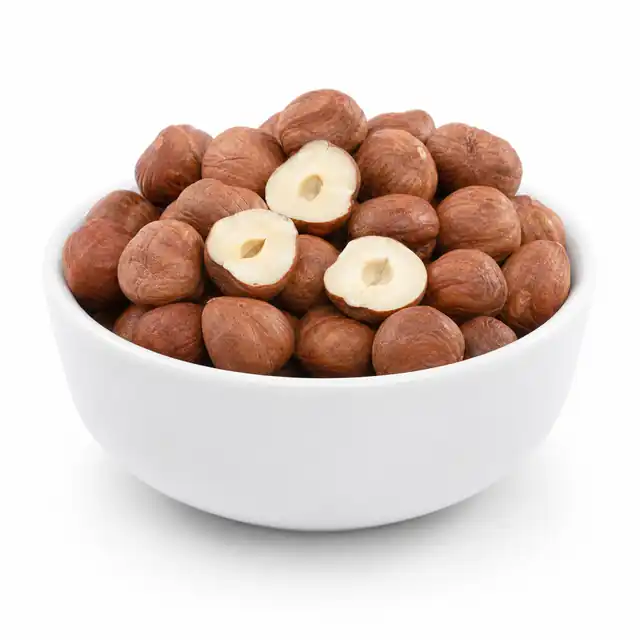
Nuts and Seeds

Nutrition Facts Almonds (Raw, Unsalted)

Tree nuts
Almonds (Raw, Unsalted) nutrition facts

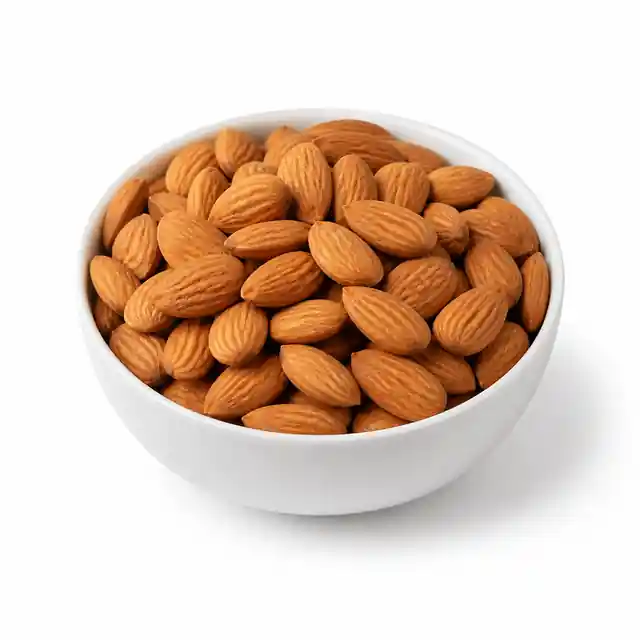
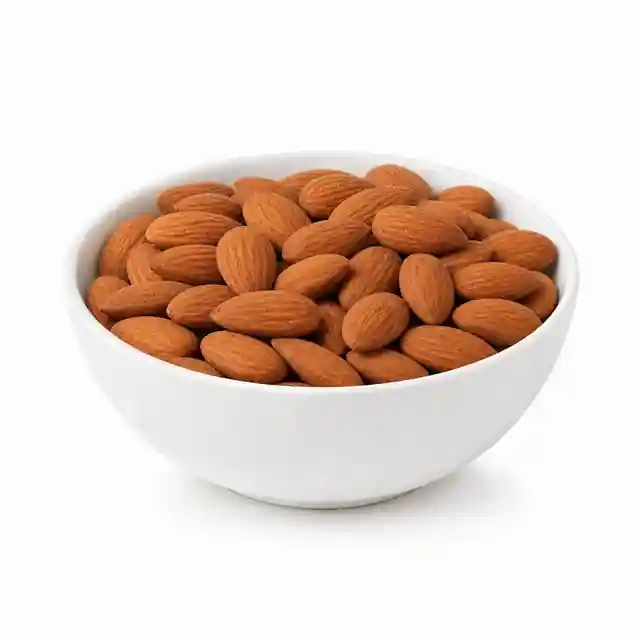
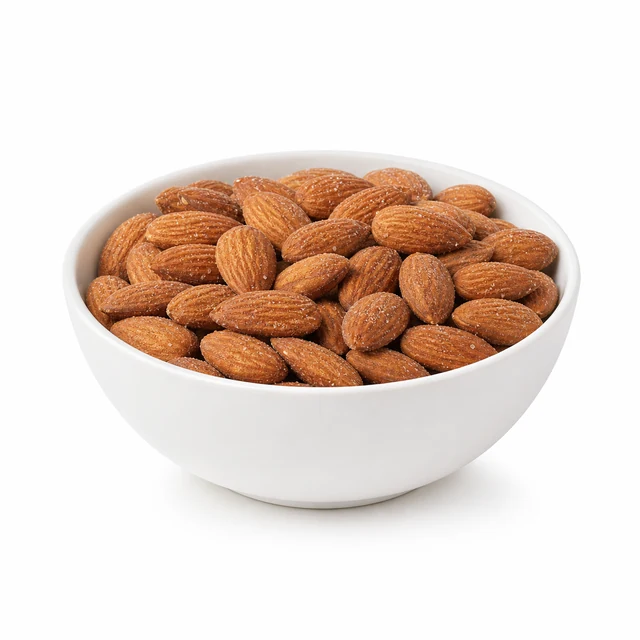
Whole raw almonds provide unsaturated fat, protein, fiber, magnesium, calcium, and vitamin E. Their fat, protein, and firm structure can make a carbohydrate-based snack more substantial, but this does not guarantee a specific blood-glucose effect for every meal. Choose intact kernels without mold, insect damage, or a paint-like rancid odor, and store them airtight away from heat and light; refrigeration extends quality.

Calories626
Protein21.5g
Carbs20g
Fat51.1g
Protein Carbs Fat

Nutrition for 100 g

Calories 626 kcal
Protein 21.45 g
Total Fat 51.09 g
Carbohydrates 20.03 g
Fiber 10.78 g
Total Sugars 4.35 g
Sodium 0 mg

Nutrients

Full nutrient profile

Proximates
Water 4.26 g
Energy (Atwater General Factors) 625.75 kcal
Energy (Atwater Specific Factors) 583.6 kcal
Nitrogen 4.14 g
Protein 21.45 g
Total lipid (fat) 51.09 g
Ash 3.16 g
Energy 2423 kj
Energy 579 kcal
Carbohydrates
Carbohydrate, by difference 20.03 g
Fiber, total dietary 10.78 g
Starch 0.72 g
Fructose 0.11 g
Galactose 0.07 g
Sucrose 3.95 g
Glucose 0.17 g
Maltose 0.04 g
Lactose 0 g
Sugars, Total 4.35 g
Lipids
Fatty acids, total saturated 3.79 g
Fatty acids, total monounsaturated 31.31 g
Fatty acids, total polyunsaturated 11.18 g
PUFA 20:4 0 g
SFA 13:0 0 g
MUFA 22:1 0 g
SFA 8:0 0 g
PUFA 22:6 n-3 (DHA) 0 g
PUFA 20:5 n-3 (EPA) 0 g
PUFA 22:5 n-3 (DPA) 0 g
MUFA 24:1 c 0 g
SFA 24:0 0 g
SFA 4:0 0 g
SFA 6:0 0 g
PUFA 18:3 n-3 c,c,c (ALA) 0.003 g
MUFA 18:1 c 31.29 g
PUFA 18:2 n-6 c,c 12.32 g
MUFA 17:1 0.01 g
MUFA 16:1 0.24 g
SFA 17:0 0.004 g
SFA 22:0 0.001 g
SFA 14:0 0.003 g
Cholesterol 0 mg
Fatty acids, total trans 0.02 g
MUFA 20:1 0.005 g
Fatty acids, total trans-polyenoic 0.003 g
SFA 16:0 3.08 g
SFA 18:0 0.7 g
SFA 20:0 0.007 g
MUFA 18:1 31.29 g
PUFA 18:2 12.32 g
PUFA 18:3 0.003 g
Beta-sitosterol 130 mg
TFA 18:2 t not further defined 0.003 g
PUFA 18:2 CLAs 0.002 g
PUFA 20:2 n-6 c,c 0.002 g
MUFA 16:1 c 0.23 g
PUFA 18:3 n-6 c,c,c 0 g
PUFA 20:3 0 g
SFA 15:0 0 g
TFA 18:1 t 0 g
SFA 10:0 0 g
PUFA 18:4 0 g
Stigmasterol 4 mg
TFA 16:1 t 0.01 g
MUFA 14:1 0 g
SFA 12:0 0 g
Campesterol 5 mg
Fatty acids, total trans-monoenoic 0.01 g
MUFA 15:1 0 g
Amino acids
Tryptophan 0.21 g
Threonine 0.61 g
Isoleucine 0.77 g
Leucine 1.49 g
Lysine 0.62 g
Methionine 0.15 g
Phenylalanine 1.2 g
Tyrosine 0.63 g
Valine 0.92 g
Arginine 2.46 g
Histidine 0.55 g
Alanine 0.98 g
Aspartic acid 2.4 g
Glutamic acid 4.25 g
Glycine 1.43 g
Proline 1.31 g
Serine 0.99 g
Hydroxyproline 0 g
Cysteine 0.5 g
Cystine 0.22 g
Minerals
Calcium, Ca 253.6 mg
Iron, Fe 3.74 mg
Magnesium, Mg 257.6 mg
Phosphorus, P 502.9 mg
Potassium, K 732.8 mg
Sodium, Na 0 mg
Zinc, Zn 2.87 mg
Copper, Cu 0.91 mg
Manganese, Mn 2.15 mg
Molybdenum, Mo 45.28 ug
Selenium, Se 4.1 ug
Vitamins and other components
Thiamin 0.16 mg
Niacin 3.77 mg
Vitamin B-6 0.1 mg
Biotin 57.01 ug
Vitamin K (phylloquinone) 0 ug
Vitamin K (Dihydrophylloquinone) 0 ug
Vitamin K (Menaquinone-4) 0 ug
Choline, total 52.1 mg
Betaine 0.5 mg
Vitamin D (D2 + D3) 0 ug
Vitamin D (D2 + D3), International Units 0 iu
Vitamin A, IU 2 iu
Folate, food 44 ug
Riboflavin 1.14 mg
Folate, total 44 ug
Tocopherol, delta 0.07 mg
Tocopherol, beta 0.23 mg
Tocopherol, gamma 0.64 mg
Pantothenic acid 0.47 mg
Vitamin E (alpha-tocopherol) 25.63 mg
Folate, DFE 44 ug
Folic acid 0 ug
Vitamin C, total ascorbic acid 0 mg
Vitamin A, RAE 0 ug
Carotene, beta 1 ug
Carotene, alpha 0 ug
Retinol 0 ug
Vitamin B-12 0 ug
Lutein + zeaxanthin 1 ug
Cryptoxanthin, beta 0 ug
Lycopene 0 ug
Vitamin E, added 0 mg
Vitamin B-12, added 0 ug
Other nutrients
Alcohol, ethyl 0 g
Caffeine 0 mg
Theobromine 0 mg
More about allergens

This food contains a tree nut, one of the nine major food allergen groups recognized in the United States. Allergy to one tree nut does not automatically define tolerance to another; follow individual medical advice and verify packaged-food labels.

This general information does not replace the ingredient and allergen label on a packaged product or individual medical advice.

Interesting fact

Smaller particles generally release almond fat faster

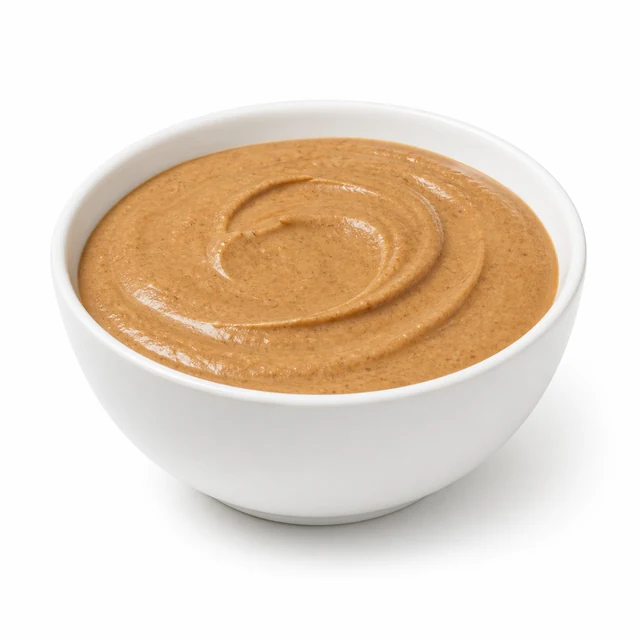
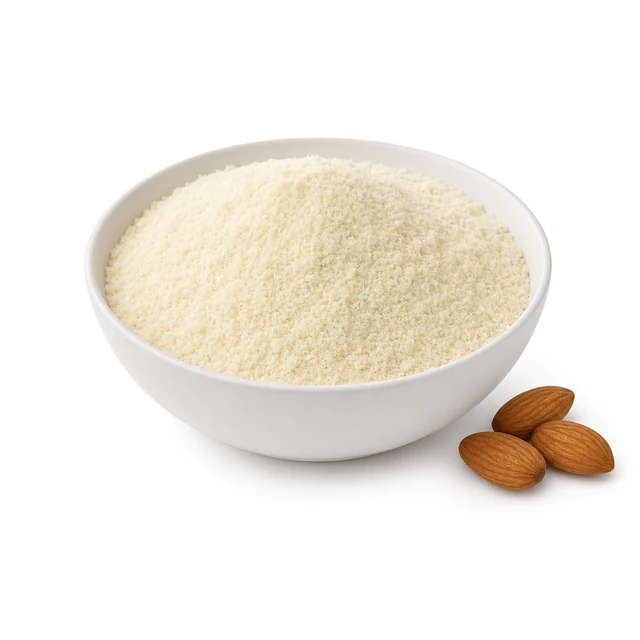
In whole almonds, many oil-rich cells remain intact after chewing, so lipid is released slowly and incompletely during early digestion. Chopping and roasting disrupt more cells; fine grinding and almond butter expose much more oil. Laboratory models have estimated roughly 9% early lipid bioaccessibility from whole almonds versus about 94% from almond butter, although real human digestion and chewing vary.

Recipes with this food

Use almonds (raw, unsalted) in simple recipes

Recipes featuring this food will appear here when the recipe library is connected.

These nutrition values are provided for educational purposes only and are not medical advice. Values may vary depending on brand, preparation method, and serving size.