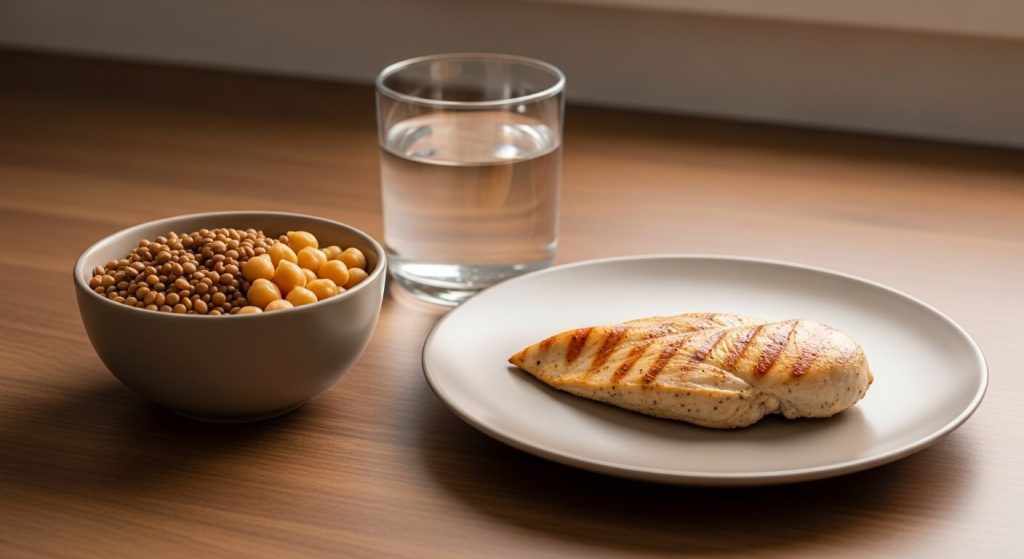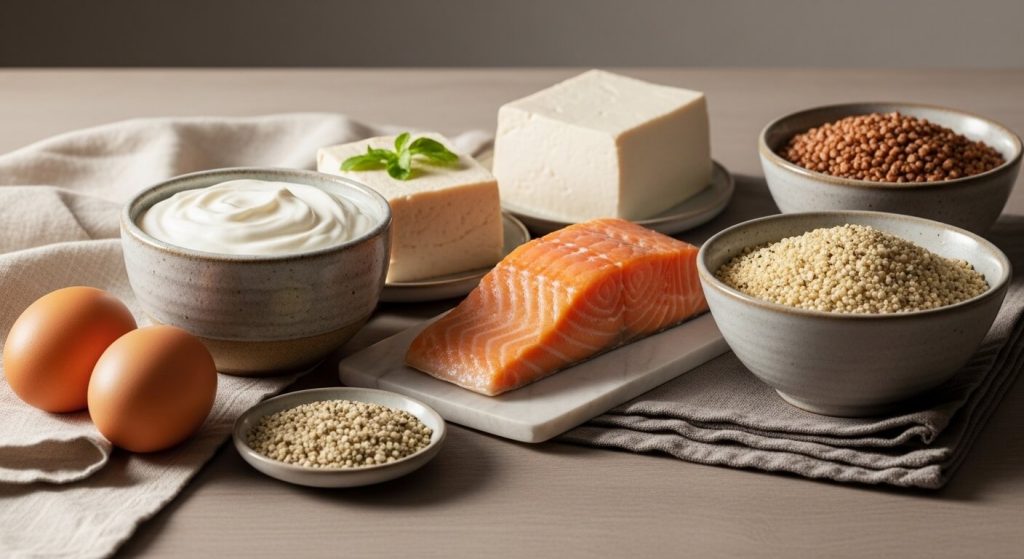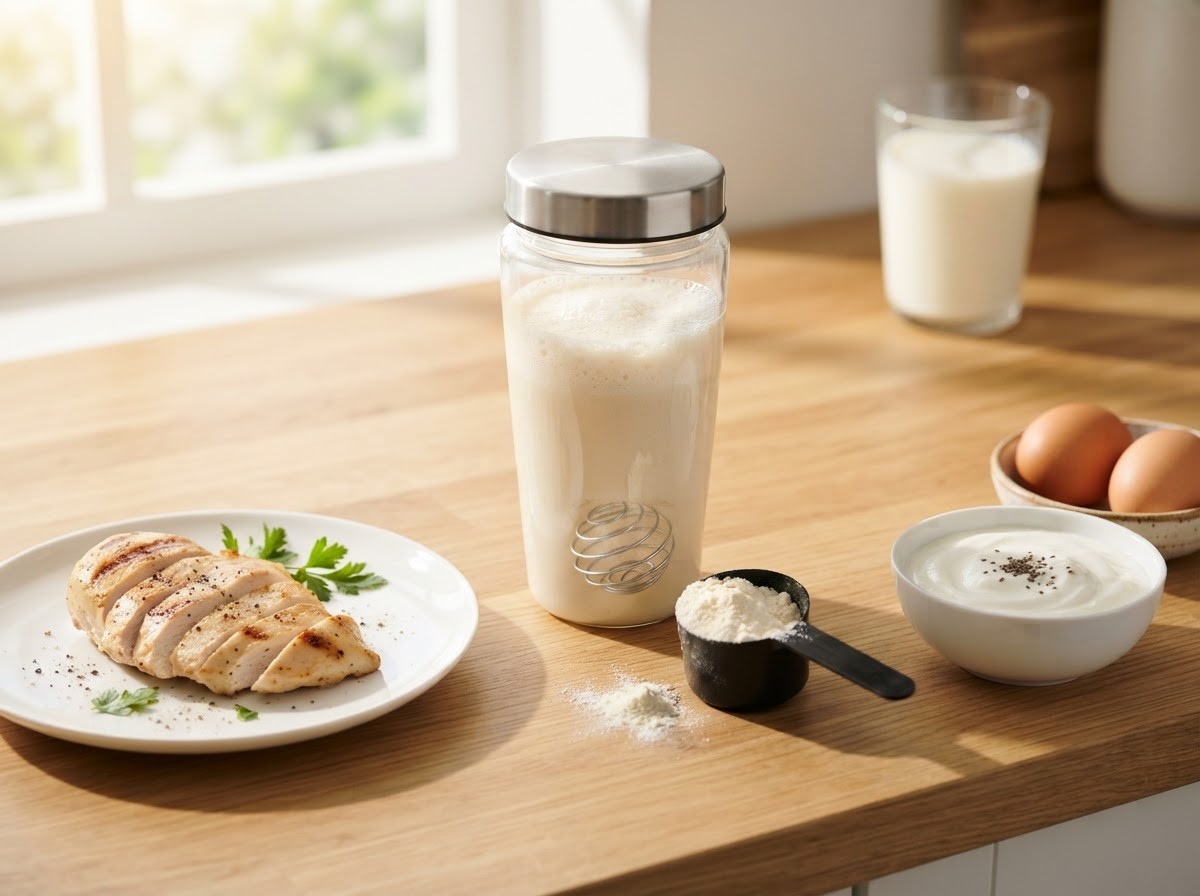
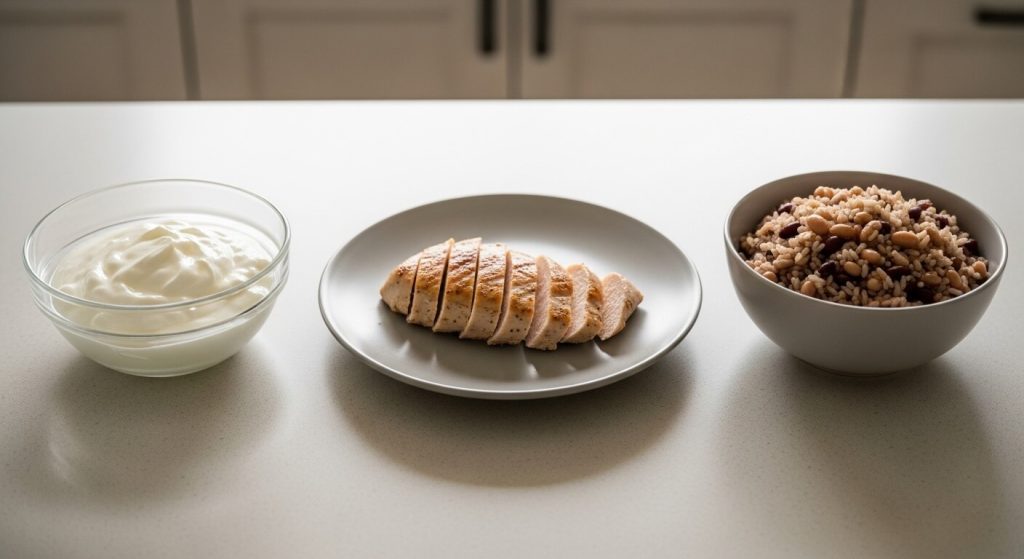
“Complete protein” is the phrase everyone uses and the one nutrition scientists have been trying to retire. Two actual measurement systems sit behind protein quality, they disagree with each other, and the one printed on your food label is the older of the two. Here is what each actually measures, what the numbers are for real foods, and which popular rule about combining proteins survives contact with the evidence.
The short version
- The FDA still uses the older score, PDCAAS, and caps it at 1.00 — so several proteins that differ in reality look identical on a label.
- FAO recommended replacing it in 2013 with DIAAS, which measures absorption at the small intestine rather than in stool and is not capped.
- Soy protein isolate outscores beef on PDCAAS — 1.00 against 0.92 — which is not what “complete protein” talk implies.
- You do not need to combine proteins at every meal. MedlinePlus states it plainly: “the balance over the whole day is more important.”
- Cooking changes the score: raw wheat scores 54, whole cooked wheat scores 20, in the same table.
- The current Dietary Guidelines ask for 1.2–1.6 g of protein per kg per day — well above the familiar 0.8.
PDCAAS: the score on your label
PDCAAS stands for Protein Digestibility-Corrected Amino Acid Score. It takes the food’s most limiting essential amino acid, compares it against a reference requirement, and multiplies by how digestible the protein is — “the ratio of the first-limiting amino acid in a gram of target food protein to that in a reference protein or requirement value … multiplied by protein digestibility.”
This is not an academic curiosity. It is US law. Under 21 CFR 101.9, the protein percentage Daily Value is calculated from “the actual amount of protein (gram) per serving multiplied by the amino acid score corrected for protein digestibility” — and then: “If the corrected score is above 1.00, then it shall be set at 1.00.”
Why that cap matters. Milk protein, egg and whey all land at or above 1.00 and are recorded as 1.00. So do soy protein isolate and concentrate. The regulation deliberately refuses to distinguish between them. It also means a protein %DV on a package tells you the protein passed a bar, not how far past it the food went. That percentage is not even required on most labels — only when a protein claim is made, or on products for infants and children aged one to three.
FAO’s own expert consultation lists what PDCAAS gets wrong: it “does not credit extra nutritional value to high quality proteins”, “overestimates protein quality of products containing antinutritional factors”, and “does not adequately take into account the bioavailability of amino acids.”
There is a structural problem too. PDCAAS measures digestibility from stool, which counts what gut bacteria in the large intestine did to the protein after your body finished absorbing amino acids in the small intestine. Faecal figures can exceed the true absorbed amount by more than 10%.
DIAAS: the score that replaced it, on paper
In 2013 the FAO was explicit: “A new protein quality measure (digestible indispensable amino acid score; DIAAS) is recommended to replace PDCAAS.”
| PDCAAS | DIAAS | |
|---|---|---|
| Digestibility measured | In stool, for the protein as a whole | At the end of the small intestine, per amino acid |
| Capped? | Yes, at 1.00 | No, except for mixed diets and sole-source foods |
| Used on US labels? | Yes | No |
The reasoning FAO gave for the switch: ileal digestibility “is considered to better reflect the amounts of amino acids absorbed.” On the cap, the rule is “values above 100% should not be truncated except where calculating DIAAS for protein or amino acid intakes for mixed diets or sole source foods.”
Following FAO’s method, the published categories are: above 100 is an “excellent” or high-quality protein source, and 75 to 99 is “good.”
The numbers, with the caveat that makes them usable
Scores below use the older child, adolescent and adult reference pattern. Always read a DIAAS number with its reference pattern attached — the same food scores differently against infant, child and adult requirements.
| Food | DIAAS | Limiting amino acid |
|---|---|---|
| Milk protein concentrate | 141 | — |
| Whey protein concentrate | 133 | Histidine |
| Skimmed milk powder | 123 | — |
| Beef, boiled | 99 | Valine |
| Soy protein isolate | 98 | Methionine + cysteine |
| Peas, cooked | 58 | Methionine + cysteine |
| Wheat, raw | 54 | Lysine |
| Oats, rolled, cooked | 54 | Lysine |
| Corn, yellow dent, raw | 48 | Lysine |
| Rice, polished, cooked | 37 | Lysine |
| Wheat, whole, cooked | 20 | Lysine |
The last two rows are the ones to sit with. Raw wheat scores 54 and whole cooked wheat scores 20 in the same published table. Processing and cooking move these numbers as much as the food does, which is a good reason not to treat any single figure as a property of the ingredient.
A separate analysis puts the pattern simply: “All animal-based foods have a DIAAS value > 90%, and most even >100%, whereas of the plant-based food groups, only soy-based products and mung beans have a DIAAS value > 90%.” That is a real gap. It is also not the same claim as “plant protein is incomplete.”
“Complete” and “incomplete” — the terms the field is dropping
Start with the numbers that make the point. On PDCAAS, soy protein isolate and concentrate score around 1.00 against beef’s 0.92. On DIAAS, tofu scores 97 and a soy-based burger 107, against 110 for 80%-lean ground beef. Meanwhile rice scores 0.53 on PDCAAS and wheat gluten 0.25 — so “plant protein” as a category spans almost the entire scale.
A 2019 review states the problem directly: “The terms ‘complete’ and ‘incomplete’ are misleading” as applied to mixed diets.
Do you have to combine proteins at the same meal?
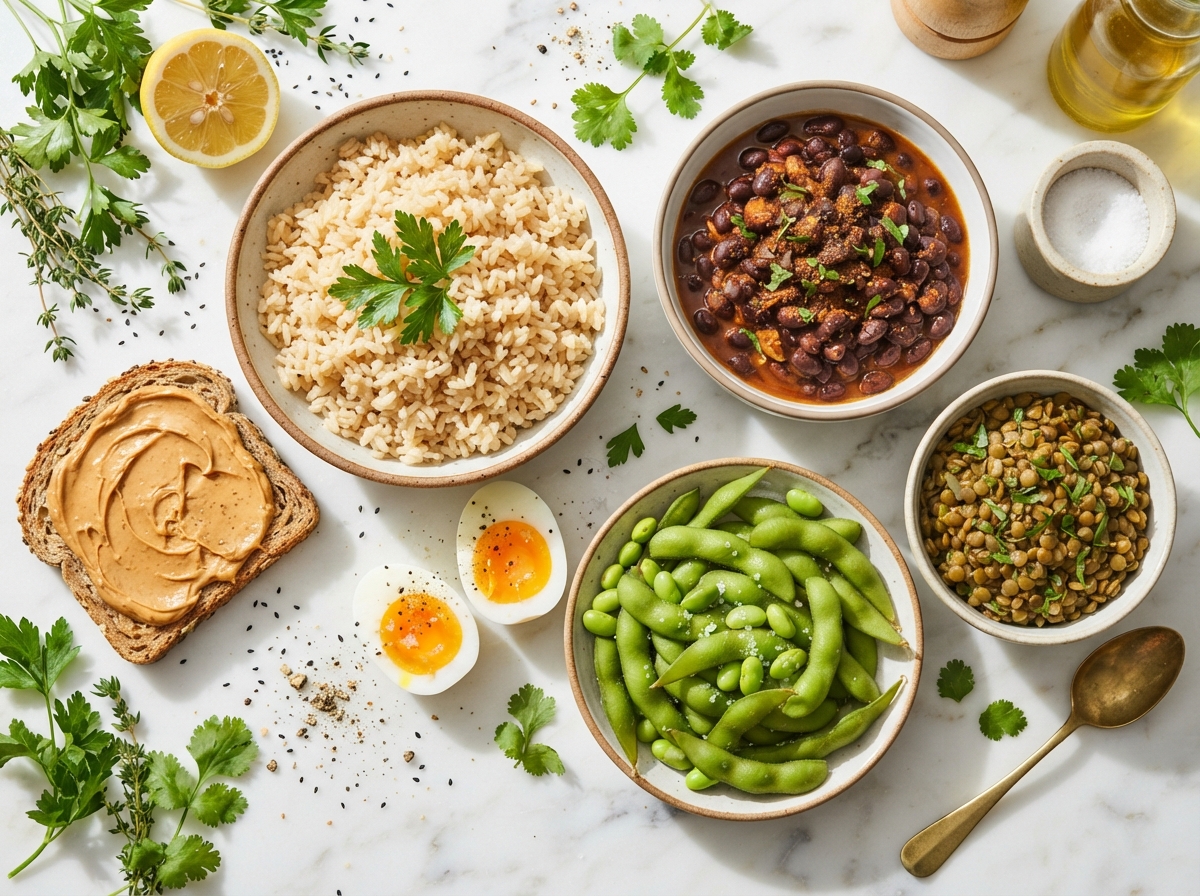
No. The clearest statement comes from MedlinePlus: on essential amino acids, “They do not need to be eaten at every meal. The balance over the whole day is more important.”
The research position matches: “There is ultimately no evidence yet that isolated single plant proteins … need to be supplemented with other proteins in the same meal, and a reasonable variety of sources over the course of the day appears to be appropriate.”
The honest limit on that. The same authors note there is no true reservoir of individual amino acids to draw on between meals — buffering “operates in a limited manner.” And a separate review puts a rough figure on it: combining is unnecessary “if the gap between meals is relatively short, around 3 h.” So the rule is not “timing is irrelevant.” It is “variety across the day, not arithmetic at each plate” — and it matters most when total protein intake is low.
| Food group | Usually short of | Pairs naturally with |
|---|---|---|
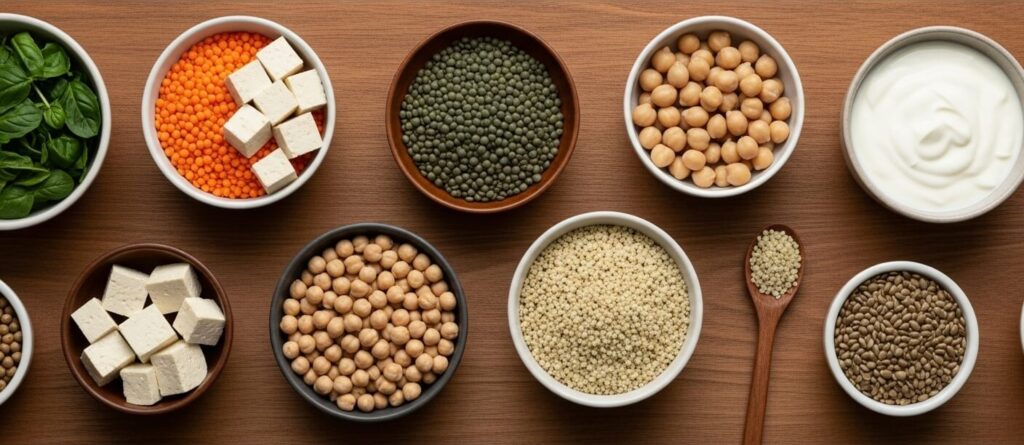
| Grains — wheat, rice, oats, corn | Lysine | Legumes |
| Legumes — beans, peas, lentils | Methionine and cysteine | Grains, seeds |
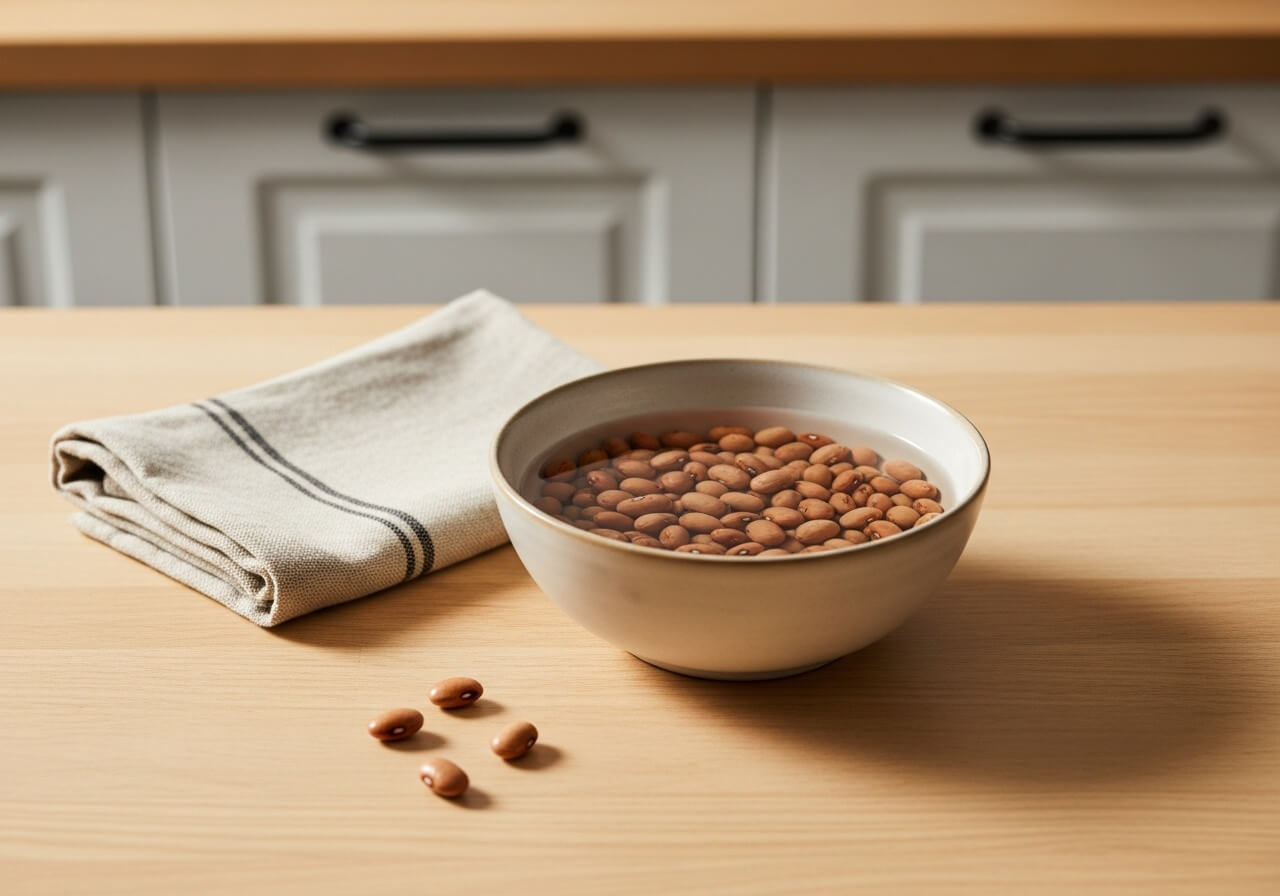
Blending works arithmetically, which is why it appears in products: “Protein blends of pea and rice ranging 40–90% pea protein can achieve a PDCAAS of 1.00.” Rice and beans is not folklore. It just does not have to happen within the same hour.
Leucine, and what the systematic review actually found
The leucine trigger hypothesis says the rise in blood leucine after a meal drives the muscle protein synthesis response. A 2021 systematic review tested it and found the answer depends on age: support was substantial in older adults — 13 of 16 study arms — but in young adults only 3 arms supported it against 7 showing a disconnect between leucine availability and muscle protein synthesis.
So leucine content is a reasonable tiebreaker between protein sources for an older adult, and a weak basis for buying supplements if you are 25. The NIH is consistent with that, reporting “inconsistent evidence of the ability of BCAAs to stimulate muscle protein synthesis beyond the capacity of sufficient dietary amounts of any high-quality protein.”
How much protein the current guidelines ask for
This changed, and most articles have not caught up. The Dietary Guidelines for Americans 2025–2030, published in January 2026, set a target of “1.2–1.6 grams of protein per kilogram of body weight per day” — roughly double the 0.8 g/kg figure that has anchored this conversation for years, and overlapping the athlete range the Office of Dietary Supplements gives of 1.2 to 2.0 g/kg.
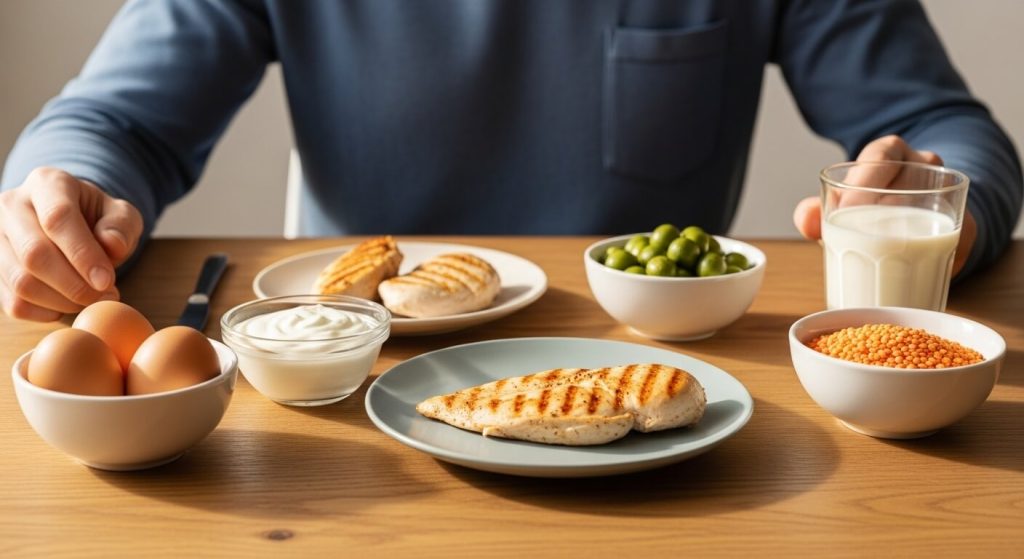
Their advice on sources is variety rather than ranking: “Consume a variety of protein foods from animal sources, including eggs, poultry, seafood, and red meat, as well as a variety of plant-sourced protein foods, including beans, peas, lentils, legumes, nuts, seeds, and soy.” The edition contains no complete-versus-incomplete language at all.
FAQ
Which protein has the highest quality score?
Dairy proteins. Milk protein concentrate scores 141 on DIAAS and whey concentrate 133, against 99 for boiled beef and 98 for soy protein isolate — all on the adult reference pattern.
Is plant protein worse than animal protein?
As a category, most plant foods score lower — but soy and mung beans clear 90, and soy outscores beef on PDCAAS. Rice and wheat gluten sit far below. The category is too wide to generalise.
Do I need to eat rice and beans together?
No. MedlinePlus says amino acids do not need to be eaten at every meal and that the balance across the day matters more. Combining is useful mainly when total protein intake is low.
Why does the protein %DV look the same on very different products?
Because the FDA caps the corrected score at 1.00. Anything scoring above it is recorded as 1.00, so several proteins of genuinely different quality print identically.
How much protein should I eat?
The current Dietary Guidelines say 1.2–1.6 g per kg of body weight per day, adjusted for calorie needs. The Office of Dietary Supplements gives 1.2–2.0 g/kg for athletes and reports no safety concerns up to about 2.0 g/kg.
Where this fits
The mechanics of how protein is broken down and absorbed are in how your gut absorbs nutrients. Claims about timing, per-meal ceilings and supplements are checked in sports nutrition myths. And whether the form of a supplement changes what you absorb is covered in supplement forms.
Every figure here is linked to its source in the text: the FAO expert consultation on protein quality, the Code of Federal Regulations Title 21 Section 101.9, MedlinePlus, the NIH Office of Dietary Supplements, the Dietary Guidelines for Americans 2025–2030, and peer-reviewed papers in Animal Frontiers, Nutrients, Frontiers in Nutrition and Foods. Checked against those sources on 2 September 2026. Educational information, not medical advice — see our medical disclaimer.
This content is for educational purposes only and is not medical advice. Always consult a qualified healthcare professional for personalised guidance.