Your body cannot produce nine essential amino acids on its own, which means your essential amino acids profile—the balance and timing of these compounds in your diet—directly determines how well you can build muscle, recover from training, and maintain energy levels. This guide breaks down the practical difference between essential and non-essential amino acids, shows you how to recognize a complete protein source, and helps you avoid the common mistakes that leave people plateauing despite hard training.
Decoding Essential vs. Non-Essential Amino Acids
Essential amino acids are the nine compounds your body cannot manufacture: histidine, isoleucine, leucine, lysine, methionine, phenylalanine, threonine, tryptophan, and valine. Your liver and muscles cannot synthesize these from other compounds, so they must come from food. Non-essential amino acids—like alanine, aspartate, and serine—your body makes on its own, so dietary sources are optional.
The distinction matters because a protein source low in even one essential amino acid becomes limiting for muscle protein synthesis. Eating 30 grams of protein from a source that’s deficient in lysine provides less usable amino acid currency for repair than 30 grams from a lysine-rich source.
Why Your Body Can’t Make Essential Amino Acids
Your cells lack the enzymes needed to construct these nine amino acids from simpler nitrogen-containing compounds. This evolutionary reality reflects resource efficiency—your body relies on plants to make all amino acids from scratch rather than maintaining nine separate synthetic pathways. This dependency means your muscle repair, immune function, and neurotransmitter production all hinge on eating foods containing these compounds regularly.
Conditional Amino Acids: When “Non-Essential” Becomes Crucial
Conditionally essential amino acids—arginine, glutamine, and cysteine among others—become crucial during intense training, illness, wound healing, or extreme stress. During these periods, your need for these compounds exceeds your synthetic capacity. An athlete doing heavy strength training multiple days per week may benefit from glutamine or arginine support because normal production falls short. Similarly, someone recovering from surgery or infection may see faster healing when these compounds are supplemented. In stable health and moderate activity, you produce enough without dietary focus.
The Core Mechanisms of Amino Acid Utilization
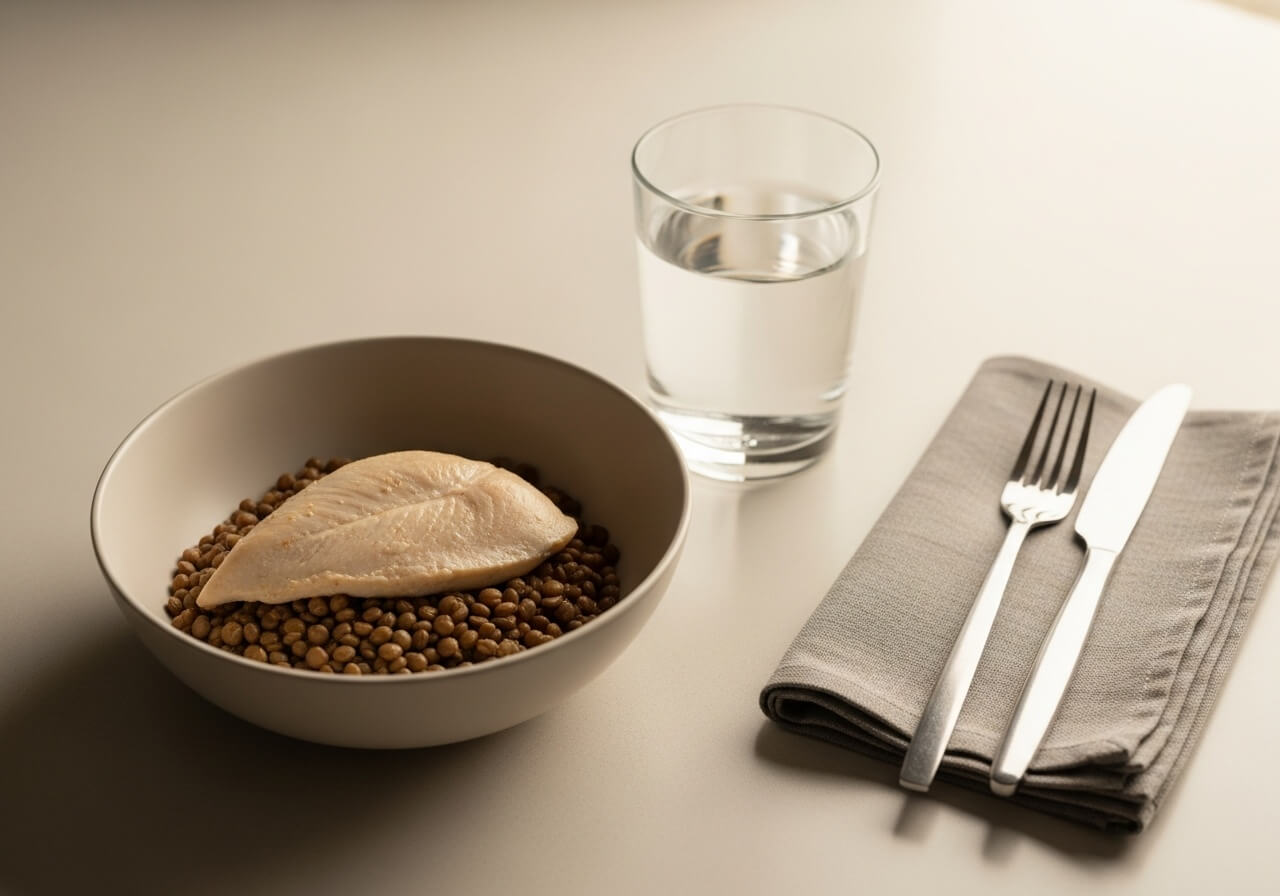
When you eat protein, your digestive system breaks it into individual amino acids that enter your bloodstream and travel to muscle cells, liver, and other tissues. Here, they’re either incorporated directly into new protein structures or used for energy.
Protein Synthesis Pathways and Amino Acid Roles
Muscle protein synthesis requires a full set of essential amino acids present simultaneously. Your ribosomes need all nine to construct new muscle proteins. If leucine arrives but lysine lags behind, synthesis stalls. This is why incomplete proteins alone don’t efficiently support muscle building.
The mTOR signaling pathway, primarily activated by leucine, acts as your body’s “growth signal” for muscle. Leucine concentration at the ribosome essentially tells your cells whether conditions support building new tissue. High leucine availability with complete essential amino acid profiles creates an optimal environment; low leucine suppresses the signal regardless of total protein intake.
Your practical decision rule: ensure each meal contains all nine essential amino acids, with emphasis on 2-3 grams of leucine per meal to reliably trigger muscle protein synthesis signaling.
Amino Acids as Energy Substrates During Exercise
During intense training, your muscles draw on amino acids directly for fuel. Branched-chain amino acids (BCAAs)—leucine, isoleucine, and valine—are oxidized in muscle tissue for energy, whereas most other amino acids pass through the liver first. Post-exercise, your muscle fibers shift from catabolism to anabolism. This window requires amino acid availability to capture. Athletes consuming amino acids within 30-60 minutes after training may experience more efficient repair than those who wait several hours, particularly if that post-exercise meal is small or incomplete in essential amino acids.
Branched-Chain Amino Acids (BCAAs) and Muscle Performance
The three BCAAs—leucine, isoleucine, and valine—occupy special importance in fitness because they’re preferentially burned for energy during exercise and uniquely trigger muscle growth signaling.
Leucine’s Central Role in Muscle Protein Synthesis Signaling
Leucine stands apart because it activates the mTOR complex, the metabolic switch that permits muscle protein synthesis. Research shows leucine requirements of approximately 39 milligrams per kilogram of body weight daily. For a 70-kilogram person, that’s roughly 2.7 grams daily spread across meals.
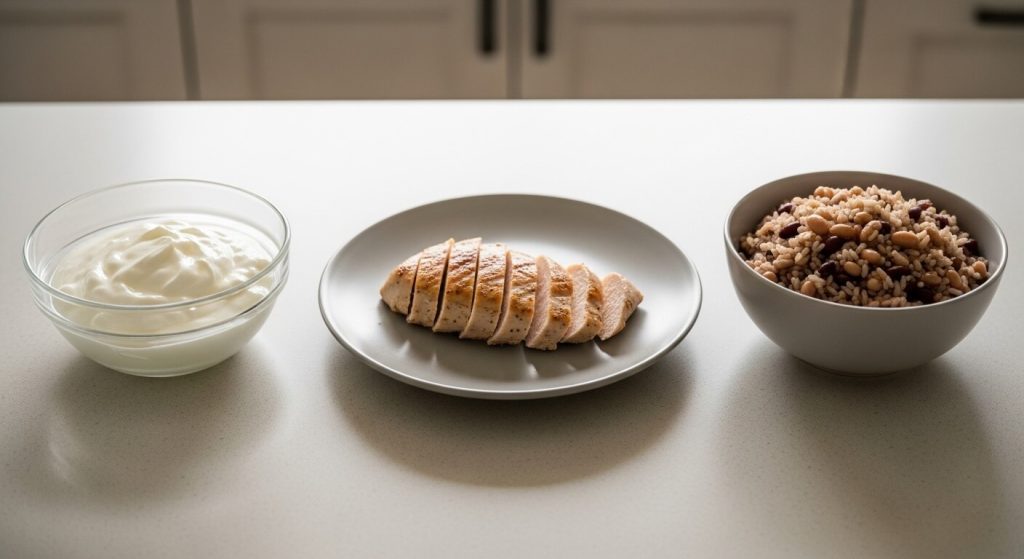
Three meals with 1.5 grams of leucine each triggers synthesis three times per day. The same total protein consumed as two large meals with 4 grams of leucine and one small meal with 0.7 grams creates suboptimal signaling in that third eating occasion. Chicken breast, Greek yogurt (3.5 grams per 7-ounce serving), and cottage cheese deliver leucine efficiently. Many plant proteins fall short unless combined strategically.
BCAA Benefits Muscle Recovery and Reduced Soreness
Isoleucine and valine primarily support energy provision during exercise and prevent excessive muscle catabolism. They don’t directly trigger growth signaling like leucine, but they may help preserve muscle tissue when fuel is limited and reduce exercise-induced muscle damage.
Athletes training in a caloric deficit (cutting for fat loss or sport-specific weight categories) may experience meaningful benefit from maintaining BCAA levels because these compounds spare muscle tissue during catabolic states. Someone eating abundant protein in a surplus sees minimal additional gain from BCAA supplementation beyond whole-food sources. Someone cutting calories while training hard may genuinely preserve more lean mass with dedicated BCAA support or frequent small protein meals rich in all three BCAAs.
Optimizing Your Essential Amino Acids Profile Through Diet
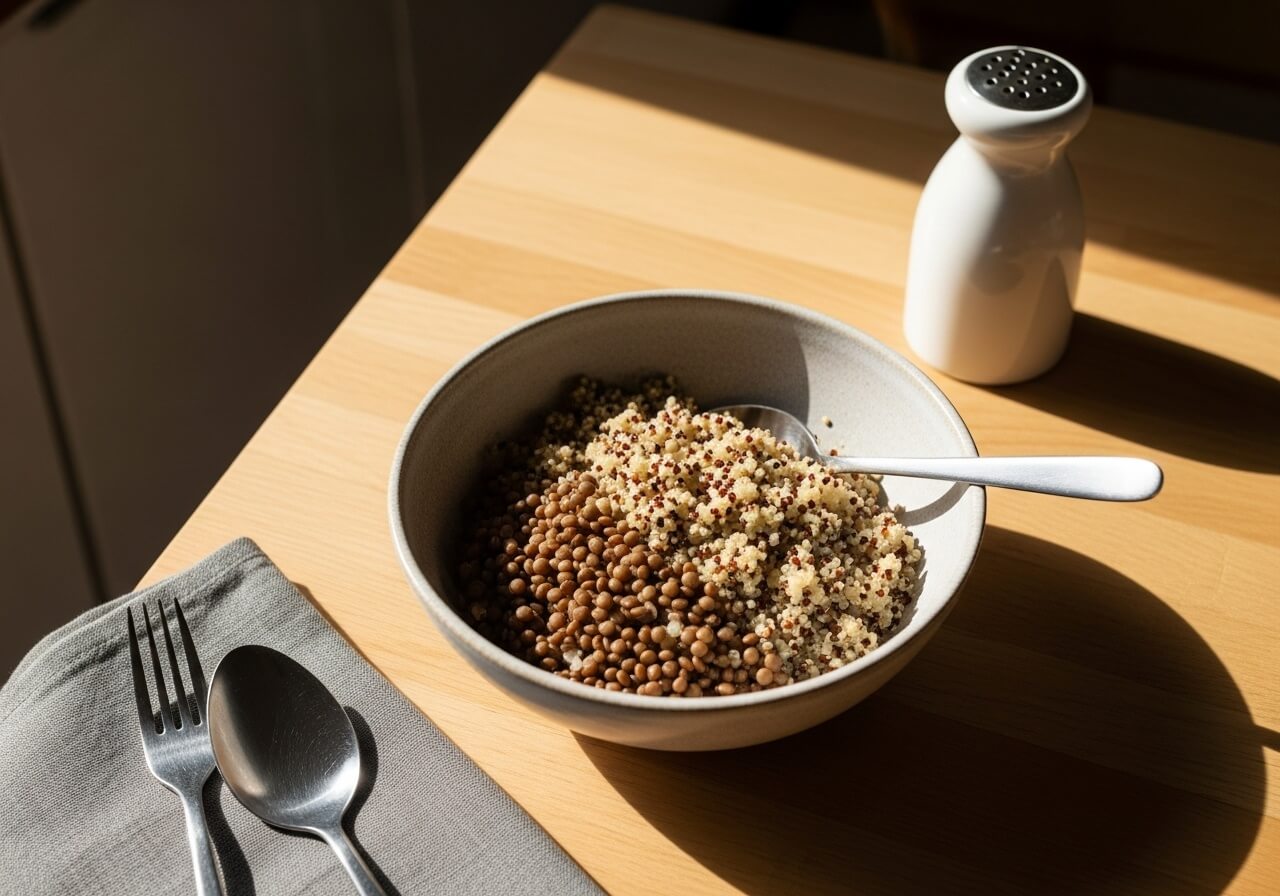
Most fitness progress stalls not from amino acid ignorance but from inconsistent intake or reliance on incomplete protein sources without pairing. Understanding real food combinations solves this faster than supplements alone.
Amino Acid Food Sources: Achieving Complete Proteins
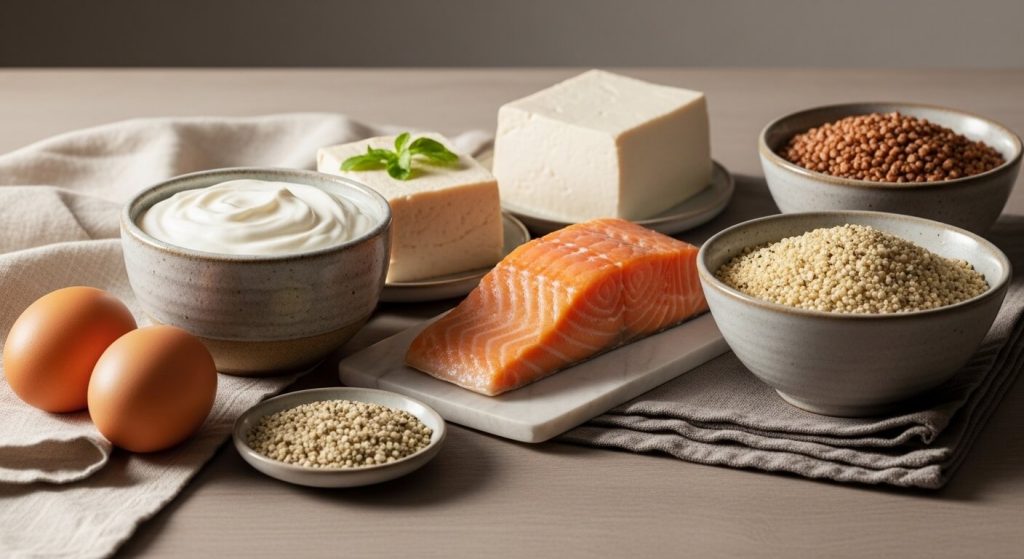
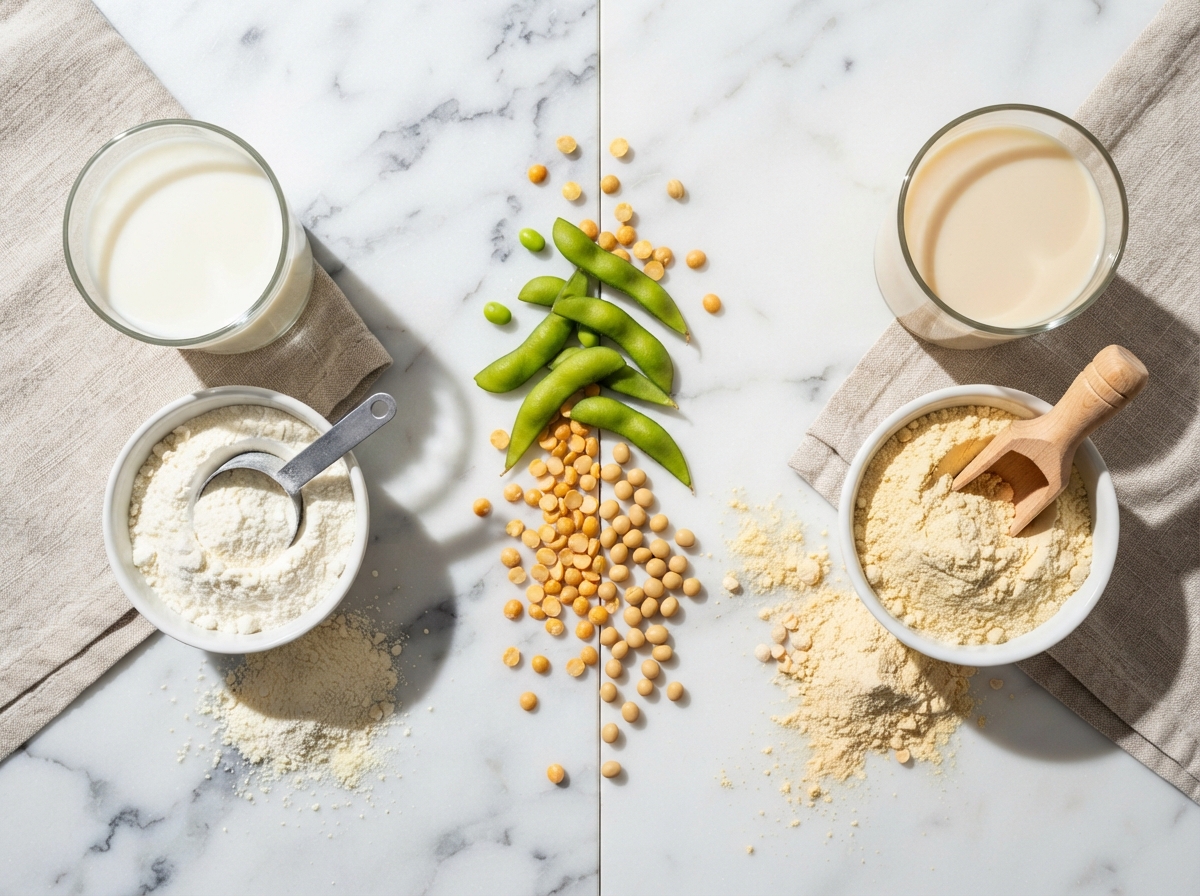
Complete proteins contain all nine essential amino acids in quantities sufficient to support muscle protein synthesis. Animal products—beef, chicken, fish, eggs, dairy—naturally qualify. Soybeans and soy products (tofu, edamame) also provide complete profiles. Most plant sources don’t: brown rice is low in lysine; beans are low in methionine; nuts are low in lysine.
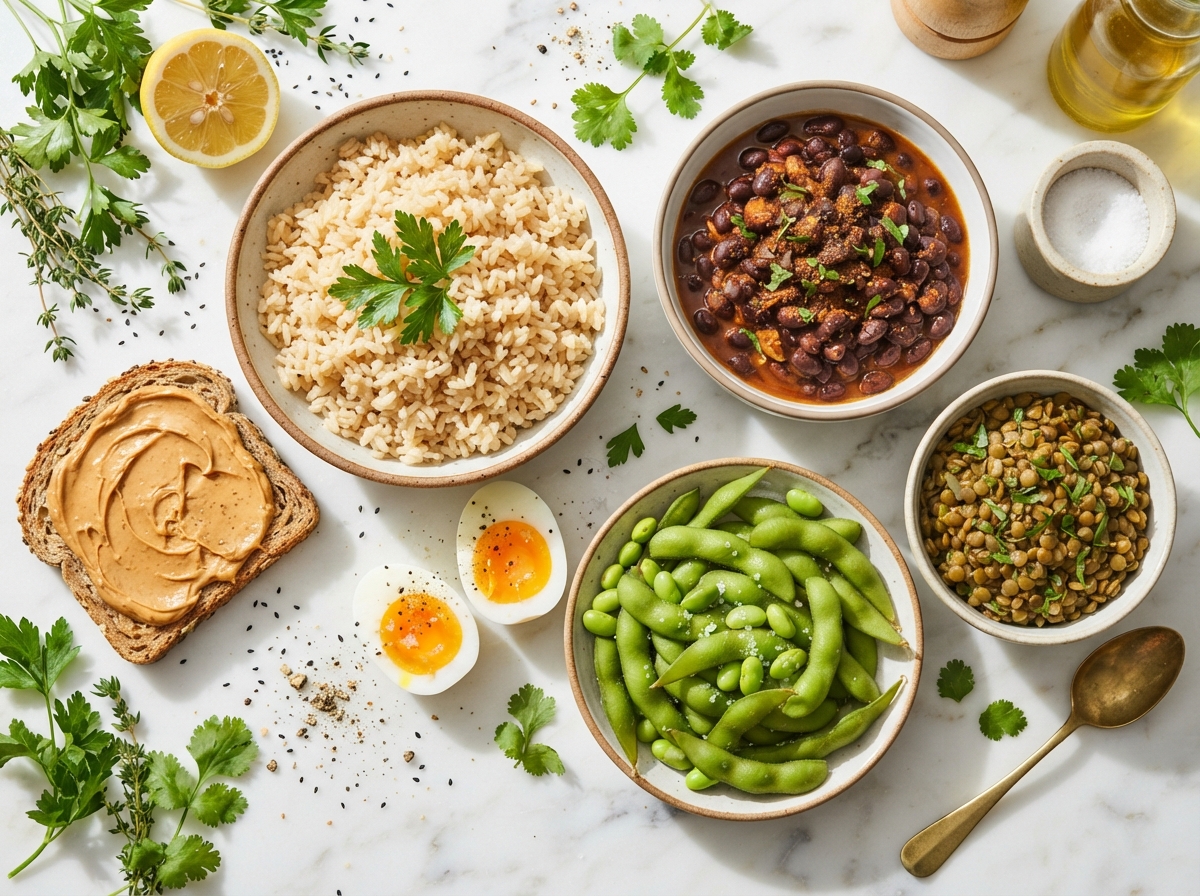
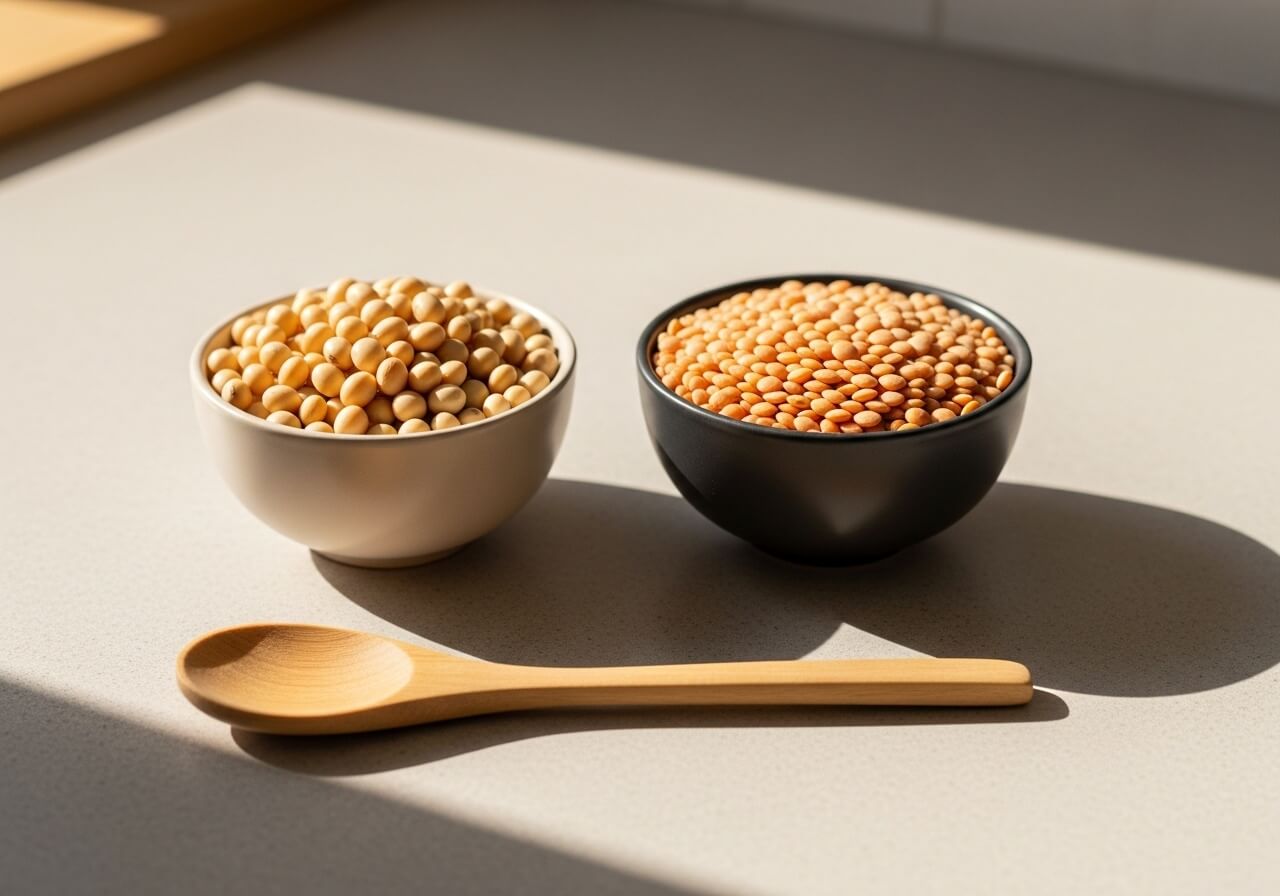
The practical implication: a vegan athlete cannot eat brown rice alone three times per day and expect optimal muscle building, even if total protein reaches 1.6-2.0 grams per kilogram of body weight. That same athlete pairing rice with beans, or quinoa with lentils, constructs complete essential amino acid profiles in each meal.
Strategic Pairing of Incomplete Protein Sources
The “complete protein in every meal” standard is practical, not scientific law. Your body pools amino acids across meals over several hours, so eating an incomplete protein at lunch and a different incomplete protein at dinner still builds a complete essential amino acid pool if variety exists across the day.
Real scenario: You eat oatmeal with milk for breakfast (oats low in lysine and methionine, but milk adds both). Lunch is a turkey sandwich on whole grain bread (bread low in lysine, turkey provides it abundantly). Dinner is a chickpea curry. Across three meals, you’ve consumed complete essential amino acid profiles without demanding every single meal be independently complete.
This flexibility prevents the all-or-nothing thinking that drives people back to chicken and rice boredom. You can eat diverse foods and still optimize your essential amino acids profile—the key is ensuring variety across the day, not perfection in isolation.
Advanced Considerations for Targeted Amino Acid Intake
Individual amino acid requirements vary by age, sex, training intensity, and metabolic status. Generic guidelines establish a starting point, not an endpoint for optimization.
Meeting Increased Amino Acid Needs for Athletes and Older Adults
Strength athletes typically benefit from higher protein intake—1.6 to 2.2 grams per kilogram of body weight—because training stimulus creates persistent muscle breakdown that requires constant amino acid replenishment. Older adults face accelerated muscle loss (sarcopenia) even at rest, often requiring slightly higher total amino acid intake relative to body weight. A sedentary person needs 0.8 grams per kilogram; an older adult doing resistance training may benefit from 1.0-1.2 grams per kilogram.
If you’re over 65 and strength training twice per week, eating the same protein as a 30-year-old sedentary person may leave you losing muscle despite effort. You need more total protein and consistent leucine exposure (2-3 grams per meal) because your muscles become less sensitive to the mTOR signal—requiring a stronger stimulus to trigger synthesis.
The Role of Amino Acid Supplementation: When it Helps
Whole foods provide superior satiety, micronutrients, and cost-efficiency compared to isolated amino acid products. A scoop of whey protein costs more per gram than chicken breast and provides no minerals, vitamins, or fiber. This should be your starting point: maximize whole-food protein first.
Supplementation becomes practical in specific situations. An athlete who trains early morning and struggles to digest solid food before training may benefit from a liquid BCAA or amino acid drink to provide muscle-sparing fuel without stomach distress. A vegan athlete traveling internationally and unable to source soy products may strategically use a complete plant-based amino acid supplement to hit targets temporarily. A person recovering from surgery with poor appetite might use a protein shake to reach targets when solid food feels impossible.
The decision boundary: use supplements to fill genuine gaps created by logistics, tolerance, or exceptional circumstances—not as a primary protein source when whole foods work fine.
Common Pitfalls in Amino Acid Consumption
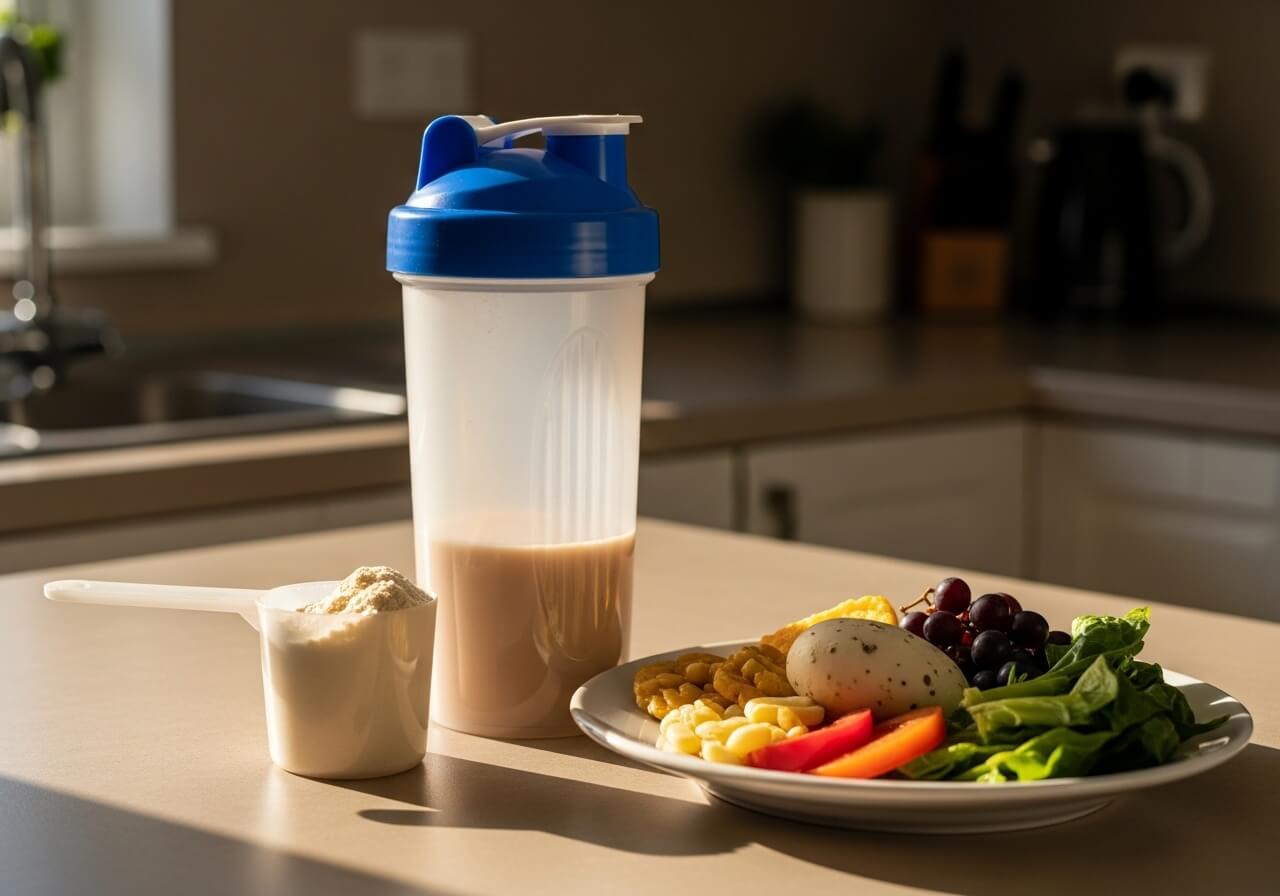
Over-reliance on Supplements vs. Whole Food Sources
Many fitness enthusiasts believe whey protein powder is superior to food because it’s “fast-absorbing” and “optimized.” In real life, whole foods consistently support muscle building more effectively because the supporting nutrients matter more than single-factor absorption speed.
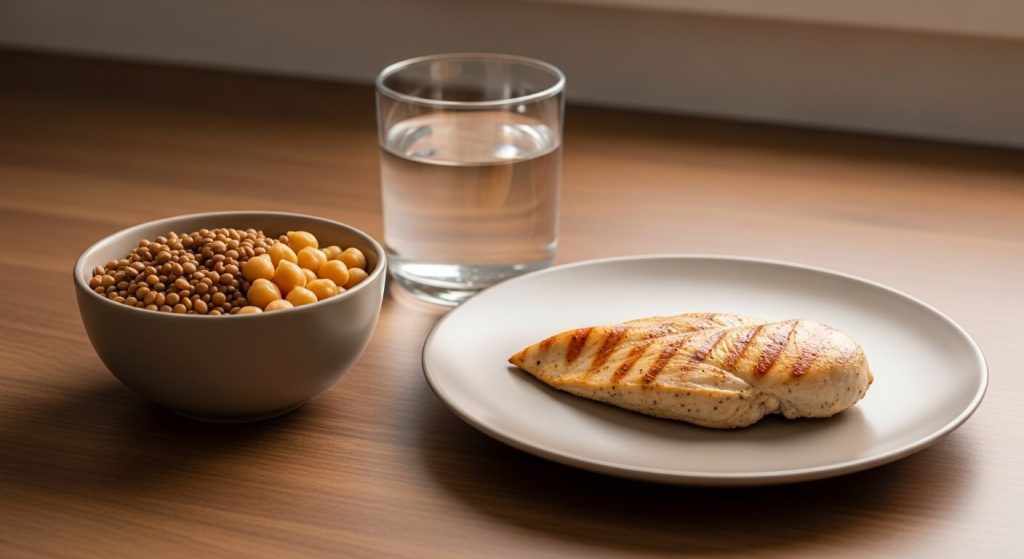
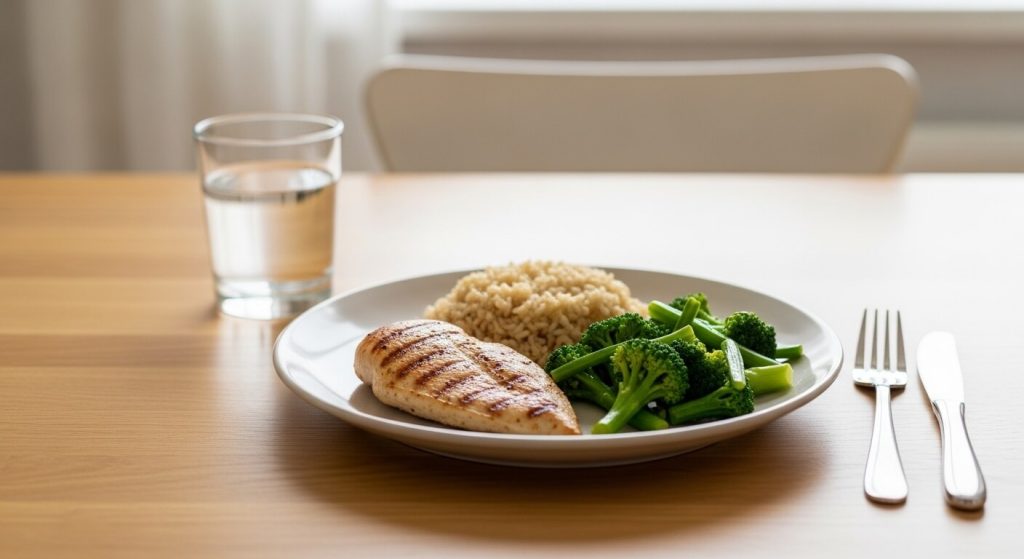
A chicken breast with rice provides leucine, iron, B vitamins, and satiety signals that coordinate metabolism. Whey protein alone provides leucine and some amino acids, then you’re still hungry and lacking micronutrients. Someone eating 60 percent of protein from supplements and 40 percent from whole foods often reports persistent hunger, lower training quality, and slower progress compared to the inverse split—same total protein, different results.
Your checkpoint: if protein powder is more than 50 percent of your daily protein intake, restructure your diet toward whole foods first.
Inadequate Protein Distribution Throughout the Day
Eating 180 grams of protein split as 20 grams at breakfast, 40 at lunch, and 120 at dinner creates three different muscle protein synthesis signals: weak, moderate, and strong. You’ve wasted two eating occasions. The same 180 grams split as 45-45-45-45 across four meals generates four strong signals, driving more total muscle protein synthesis daily.
The practical rule: aim for 25-40 grams of complete protein at each eating occasion, spaced 4-6 hours apart. This reliably includes 2-3 grams of leucine per meal—the threshold for mTOR activation.
Common mistake: eating a large breakfast (60 grams protein), small lunch (25 grams), then massive dinner (95 grams). You’re essentially building muscle efficiently once per day. Flattening the distribution to 60-55-65 increases your daily muscle protein synthesis opportunity.
Interpreting Your Body’s Amino Acid Signals
Recognizing Symptoms of Amino Acid Imbalance
Chronic amino acid insufficiency may show up as slow recovery between workouts (feeling sore for 5+ days after normal training), persistent fatigue despite adequate sleep, and plateaued strength or muscle despite consistent training. These aren’t always amino acid problems, but they’re common signs.
Imbalanced amino acid intake—adequate total protein but skewed toward incomplete sources or poor distribution—produces a different pattern: hunger shortly after meals despite eating enough calories, mood instability, and resistance to muscle gain despite hard training and high calorie intake.
Practical test: increase protein at breakfast from 20 grams to 45 grams (using a complete source), keep all other meals the same for two weeks, and track morning hunger, energy mid-morning, and training performance. If you notice improvements, you’ve identified inadequate protein distribution as a limiting factor.
Monitoring Progress: How Amino Acid Intake Affects Results
Progress markers tied to amino acid adequacy include strength gains (weight lifted in key lifts), muscle mass (circumference measurements or body composition tracking), and training consistency (ability to complete planned sessions without excessive fatigue). These may respond within 3-4 weeks if amino acid intake is a limiting factor.
Someone eating 0.8 grams protein per kilogram of body weight while strength training sees minimal strength gains despite effort. After increasing to 1.6 grams with better distribution, they often gain 5-10 pounds of strength on key lifts within a month and report faster recovery. Progress stalling despite adequate protein often signals a different bottleneck—insufficient sleep, overtraining volume, or poor exercise execution. Differentiate by trying the dietary intervention for 3 weeks, then re-evaluating.
FAQ
What are the nine essential amino acids?
The nine essential amino acids are histidine, isoleucine, leucine, lysine, methionine, phenylalanine, threonine, tryptophan, and valine. Your body cannot produce any of these, so dietary sources are necessary.
Why is a varied diet important for getting enough amino acids?
Different foods provide essential amino acids in different ratios and quantities. A varied diet also provides cofactors (B vitamins, iron, zinc) that support amino acid metabolism and utilization. Someone eating only chicken sees adequate protein but misses benefits that fish (omega-3s, selenium) and legumes (fiber, polyphenols) provide. Variety ensures you’re optimizing the entire system, not just raw amino acid counts.
Do vegans and vegetarians need to worry more about amino acid intake?
Not if they plan thoughtfully. A vegan eating quinoa, soy products, legumes, nuts, and seeds can construct complete essential amino acid profiles as easily as an omnivore. The difference is automaticity: animal products are naturally complete, so combining them requires no strategy. Plant-based eating requires intentional pairing (rice + beans, bread + peanut butter) or selecting complete plant proteins (soy, quinoa). For vegans eating adequate total protein with food variety across the day, amino acid adequacy isn’t a concern.
Can too many amino acids be harmful?
Very high protein intakes (3+ grams per kilogram of body weight) place stress on kidneys because they must filter and excrete excess nitrogen as urea. For people with existing kidney disease, this becomes problematic. For healthy individuals, even quite high protein intakes (2-2.5 grams per kilogram) don’t appear to cause damage in research. However, eating far more amino acids than needed doesn’t enhance muscle building—it simply increases metabolic waste. The practical boundary: stay between 1.6-2.2 grams protein per kilogram for strength athletes.
How much protein with a good essential amino acids profile do I need daily?
The amount depends on your activity level. Sedentary adults need 0.8 grams per kilogram of body weight. Strength athletes typically benefit from 1.6-2.2 grams per kilogram. Endurance athletes typically need 1.2-1.6 grams per kilogram. Older adults doing resistance training may benefit from 1.0-1.2 grams per kilogram to offset age-related muscle loss. Specific daily requirements from WHO guidelines include approximately 39 milligrams of leucine per kilogram of body weight, 30 milligrams of lysine, and 4 milligrams of tryptophan. For a practical starting point: if you strength train 3+ days per week, aim for 1.8 grams per kilogram. If sedentary, 0.8-1.0 grams per kilogram suffices.
Conclusion
Your essential amino acids profile comes down to eating complete proteins regularly and distributing them across your day. Rather than fixating on supplements or complex timing protocols, focus first on whole foods, ensure each meal contains 25-40 grams of protein from a complete source, and maintain this consistency for 4 weeks before assessing results. Your body will tell you whether you’ve solved the bottleneck through faster recovery, strength gains, and visible muscle progress.
This content is for educational purposes only and is not medical advice. Always consult a qualified healthcare professional for personalised guidance.