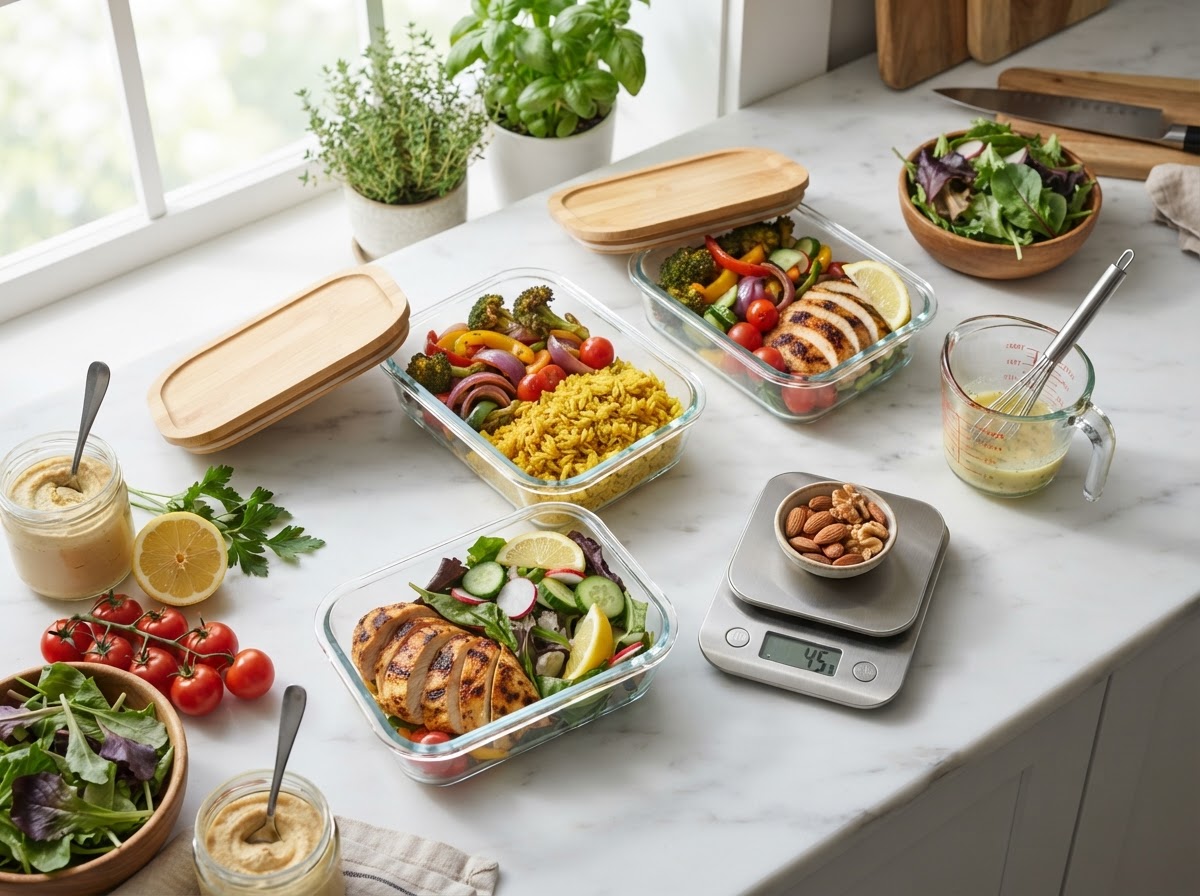
Before you count calories, it is worth knowing what the numbers you are counting legally mean. Under FDA’s compliance policy, a food’s actual calories may exceed the declared value by up to 20% before the label is out of compliance. The serving size is not a recommendation. And the 2,000-calorie figure everything is scaled to is an arbitrary reference, stated as such. None of this makes tracking useless — it does mean treating the output as an estimate. What that looks like over months of logging: lessons from using MyFitnessPal.
The short version
- Serving size on a label reflects what people typically eat, not what you should eat. FDA says so explicitly.
- Declared calories, sugars, fat and sodium must not be exceeded by more than 20% in the actual product.
- Declared vitamins, protein, carbohydrate and fiber must be at least 80% of the stated value.
- Calories are rounded — to the nearest 5 up to 50, then to the nearest 10.
- The 2,000-calorie basis is a reference for labeling, and FDA states calorie needs vary.
The serving size trap
This is the most consequential misreading on any package. FDA: by law, serving sizes must be based on the amount of food people typically consume, rather than how much they should consume. And, in case that is not clear enough, the serving size is not a recommendation of how much to eat or drink.
Our Nutrition Facts cards sidestep this by holding every value per 100 g as well as per household portion — see oats, peanut butter or almonds for how differently a “serving” and 100 g can read.
So a portion that looks officially sanctioned is a description of average behavior. If the bag says two servings and you eat the bag, you have not broken a rule — you have eaten what the label predicted people eat, twice.
How much the numbers can legally be off
This is the part almost nobody knows, and it changes how much precision is worth chasing. FDA’s compliance policy treats a label as out of compliance if the nutrient content of the composite of calories, total sugars, added sugars, total fat, saturated fat, trans fat, cholesterol, or sodium is greater than 20 percent in excess of the value declared.
The rule runs the other way for the nutrients you want more of: a label fails if the nutrient content of the composite of a vitamin, mineral, protein, total carbohydrate, polyunsaturated or monounsaturated fat, or dietary fiber is below 80 percent of the value declared.
The logic is sensible — the policy is tightest where overstating would flatter the product. But the practical consequence is real: a 400-calorie meal declared on a package could contain up to 480 and still comply. Across a day of packaged food, that is not a rounding error.
On top of that, calories are rounded before they are printed: to the nearest 5-calorie increment up to and including 50 calories, and 10-calorie increments above that, with anything under 5 calories expressed as zero. “Zero calorie” means under five, not none.
Where 2,000 calories comes from
It is a labeling reference, not your requirement. FDA describes Daily Values as the recommended amounts of nutrients to consume or not to exceed each day, calculated against that 2,000-calorie basis.
The menu-labeling rules make the caveat explicit. Chains with 20 or more locations must post calories, and must also display a statement indicating that 2,000 calories a day is used for general nutrition advice, but calorie needs vary. That sentence is on the menu board because the regulator wanted it there.
So is counting worth doing
Two honest halves to this.
Against precision: the label tolerance, the rounding, the fact that restaurant portions vary, and the reality that the food you weigh is not the food in the database. Anyone reporting a daily total to the calorie is reporting false precision.
For tracking anyway: it changes what you notice. The federal weight-loss numbers are modest and slow — CDC describes people who lose weight at a gradual, steady pace — about 1 to 2 pounds a week — are more likely to keep the weight off, and NIDDK sets a first goal of 5% to 10% of your starting weight within 6 months. Those are trends across months, which is exactly the resolution a rough tracking habit can support.
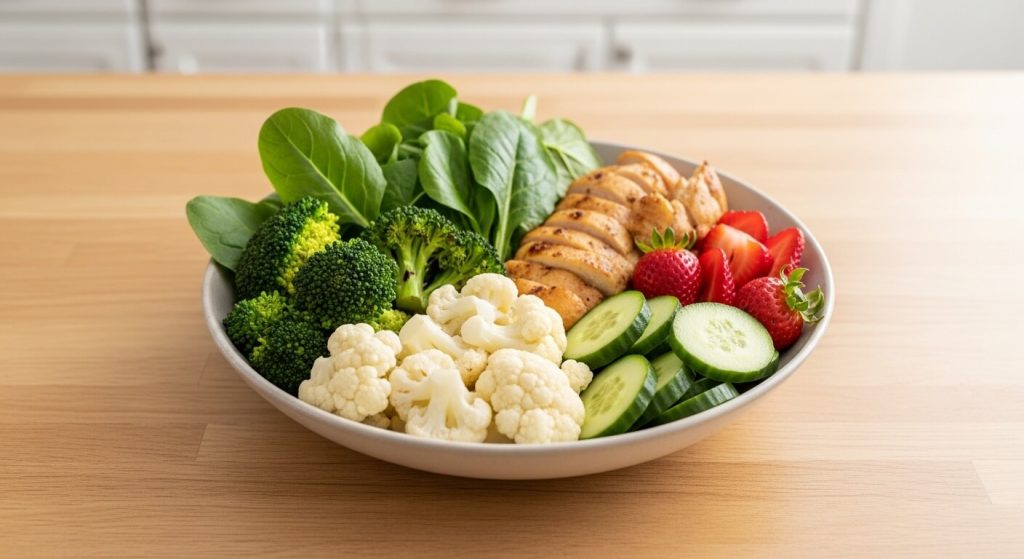
A more robust lever than accuracy is composition — the Dietary Guidelines advisory report concludes that reducing food energy density may promote weight management by allowing individuals to eat satiating quantities of food while consuming less energy. See high-volume, low-calorie foods.
Reading a label properly, in four steps
- Check the serving size first, and how many servings the package holds. Every other number on the panel is scaled to it.
- Multiply for what you actually ate, not for what the panel assumed.
- Treat the calorie figure as approximate — up to 20% over is compliant, and the number is rounded.
- Look at the nutrients you are short of: fiber, calcium, vitamin D, potassium and iron are the ones FDA names as generally under-consumed.
What we are not claiming
- That labels are typically wrong. The 20% and 80% figures are compliance limits, not typical error — we found no federal data on average deviation.
- That calorie counting does not work. No federal source we could reach evaluates it as a method; we found nothing on either side.
- Restaurant calorie accuracy figures. Menu labeling is required at chains of 20+; we found no accuracy audit to cite.
- That apps or databases are accurate. No federal source addresses them.
- A calorie target for you. 2,000 is a labeling reference and FDA says needs vary.
FAQ
How accurate are calorie labels? A product may exceed its declared calories by up to 20% and still comply. Values are also rounded to 5 or 10 calories.
Is the serving size how much I should eat? No. FDA states it is based on what people typically consume and is not a recommendation.
Why is everything based on 2,000 calories? It is the reference used to calculate Daily Values. Menus carrying calorie counts must state that needs vary.
Does “0 calories” mean zero? It means under 5 calories per serving, which is permitted to be declared as zero.
Should I count calories at all? As a rough trend tool it is defensible. As a precise instrument it is not, given the tolerances above.
What to do with this
Use tracking to see patterns over weeks, not to balance a daily equation. Read the serving size before the calorie number. And spend at least as much attention on what the food is made of as on what the panel says it costs — that is the part of the label with less slack in it.
For a personal number instead of the 2,000-calorie reference, use the calorie calculator or the TDEE calculator.
Related: the fundamentals of the federal pattern, what fat loss actually has evidence for.
Educational content, not medical advice.
This content is for educational purposes only and is not medical advice. Always consult a qualified healthcare professional for personalised guidance.