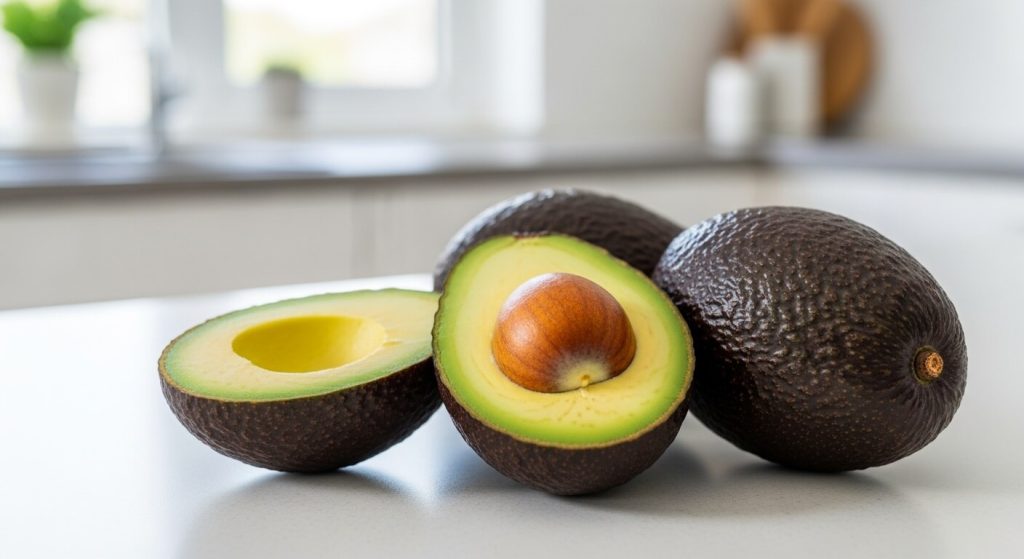
Almost every avocado in an American supermarket is the same variety. That is not an exaggeration: imports are about 90% of US supply, and “nearly all these imports (99%) are of Hass or Hass-like varieties.”
So the useful question is not “which avocado is best” — most weeks there is only one on the shelf. It is: what are the others, when do they appear, and does the difference actually matter. The answer to the last one is yes, in one specific way that is almost always reported backwards.
Three races, and why it matters
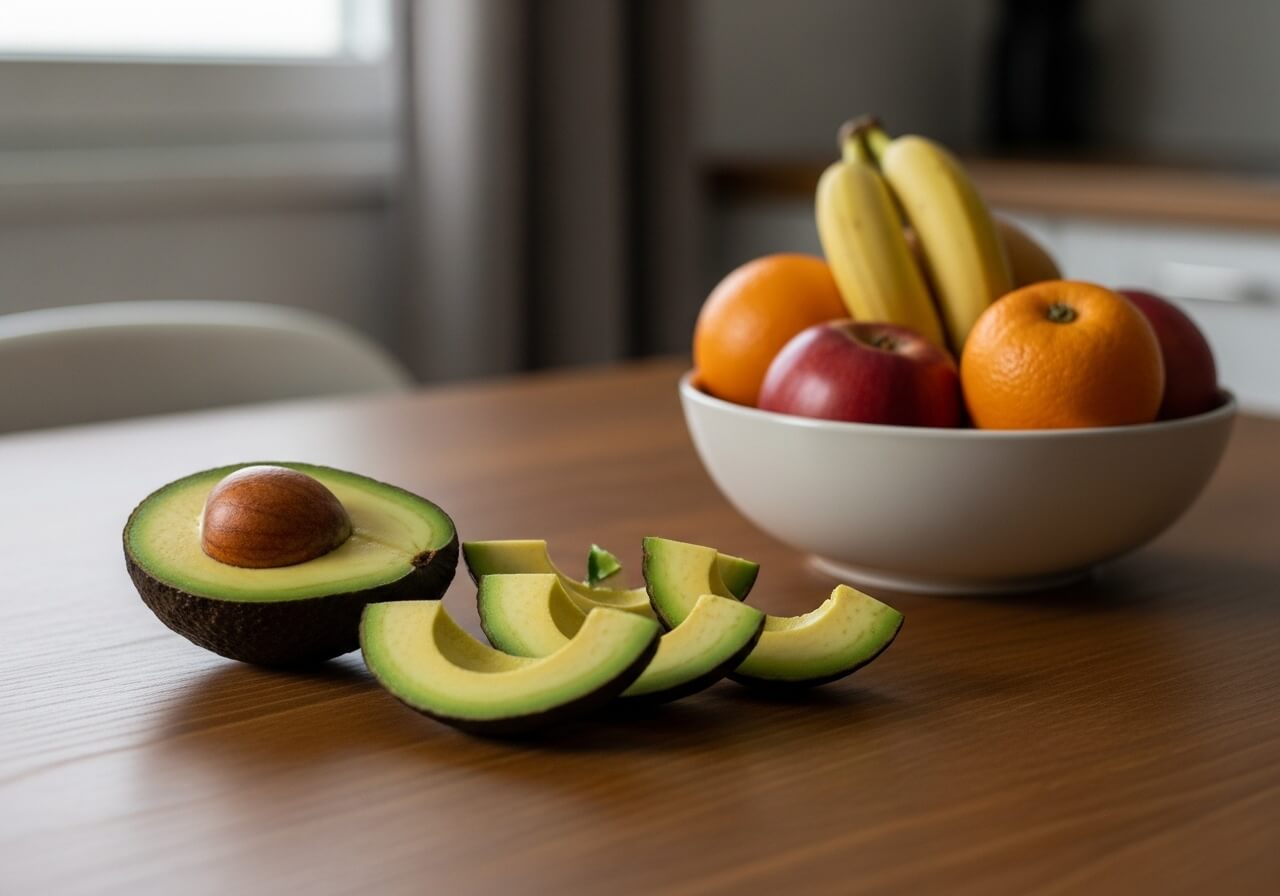
Every avocado belongs to one of three horticultural races, and the race — not the skin color, not the brand — determines how fatty the fruit is.
| Race | Origin | Oil content |
|---|---|---|
| West Indian | “tropical lowland areas of southern Mexico and Central America” | Low |
| Guatemalan | “mid-altitude highlands in Guatemala and Mexico” | Medium to high |
| Mexican | Same highlands | Medium to high |
Florida’s crop is West Indian and Guatemalan-West Indian hybrids; California’s is Hass and its relatives. That single fact explains the whole “Florida avocados are lighter” story — and its limits.
University of Florida puts a number on it: “Florida avocado varieties contain 3 to 15% oil.”
What actually reaches the shelf
| Fact | Figure |
|---|---|
| US supply that is imported | “a dependence share of 90% during the last decade” |
| Imports that are Hass or Hass-like | “99%” |
| Imports from Mexico | “around 80% of total US avocado shipments” |
| US production, by state (2023) | California “88%”, Florida “12%”, Hawaii under 1% |
| Per-capita consumption | From “1.52 pounds per capita in 1998” to “an expected 9.22 pounds per capita in 2023” |
Put those together and the shelf makes sense: nine avocados in ten are imported, and virtually all of those are Hass. USDA’s own production figures for 2024 confirm the domestic side — California 182,420 tons against Florida’s 13,100.
Worth knowing about the numbers. USDA does not publish a Hass market share. The figure everyone quotes — 95% — comes from the California Avocado Commission, an industry body, and refers to the California crop, which is itself about a tenth of US supply. The 90%-imports-and-99%-Hass chain above is the honest way to reach the same conclusion.
The one difference that is real — and usually reported backwards
USDA maintains separate nutrient records for California and Florida avocados, which settles the question directly.
| Per 100 g | California | Florida |
|---|---|---|
| Calories | 167 | 120 |
| Total fat | 15.4 g | 10.1 g |
| Monounsaturated fat | 9.80 g | 5.51 g |
| Fiber | 6.8 g | 5.6 g |
| Vitamin C | 8.8 mg | 17.4 mg |
| Vitamin E | 1.97 mg | 2.66 mg |
| Potassium | 507 mg | 351 mg |
So the Florida avocado has 34% less fat and 28% fewer calories by weight. Real, and worth knowing — but not the “half the fat” you will read elsewhere.
Now the part that reverses it
USDA also defines what “one avocado” weighs, and the two are not remotely the same fruit:
| One whole fruit, without skin and seed | Weight | Calories | Fat |
|---|---|---|---|
| California | 136 g | ~227 | ~20.9 g |
| Florida | 304 g | ~365 | ~30.7 g |
A Florida avocado is more than twice the edible weight. Eat a whole one and you take in more fat and more calories than from a whole Hass — despite being the “light” variety.
Both statements are true at once. Lighter per gram, heavier per fruit. Which one applies depends entirely on whether you eat half an avocado or a whole one, and the marketing never tells you which basis it is using.
Per-nutrient detail for the variety you are most likely holding is on our Hass avocado nutrition page.
The named varieties, and when they show up
If you shop at a farmers’ market in California or a Latin or Caribbean grocery in Florida, you will meet more than Hass.
| Variety | Season (California) | Oil content |
|---|---|---|
| Hass | “may be picked any time between January and October” | Higher |
| Fuerte | “November to June” — winter fruit | Higher |
| Bacon | “November to March” | Lower |
| Zutano | “November through February” | Lower |
| Reed | Summer | Higher |
| Pinkerton | Winter | Higher |
| Lamb Hass | Summer/autumn | Higher |
| Rincon | “April to June” | — |
UC extension names the split directly: “‘Zutano’, ‘Bacon’ and ‘Stewart’ have a lower oil content than ‘Hass’, ‘Pinkerton’ and ‘Reed’.”
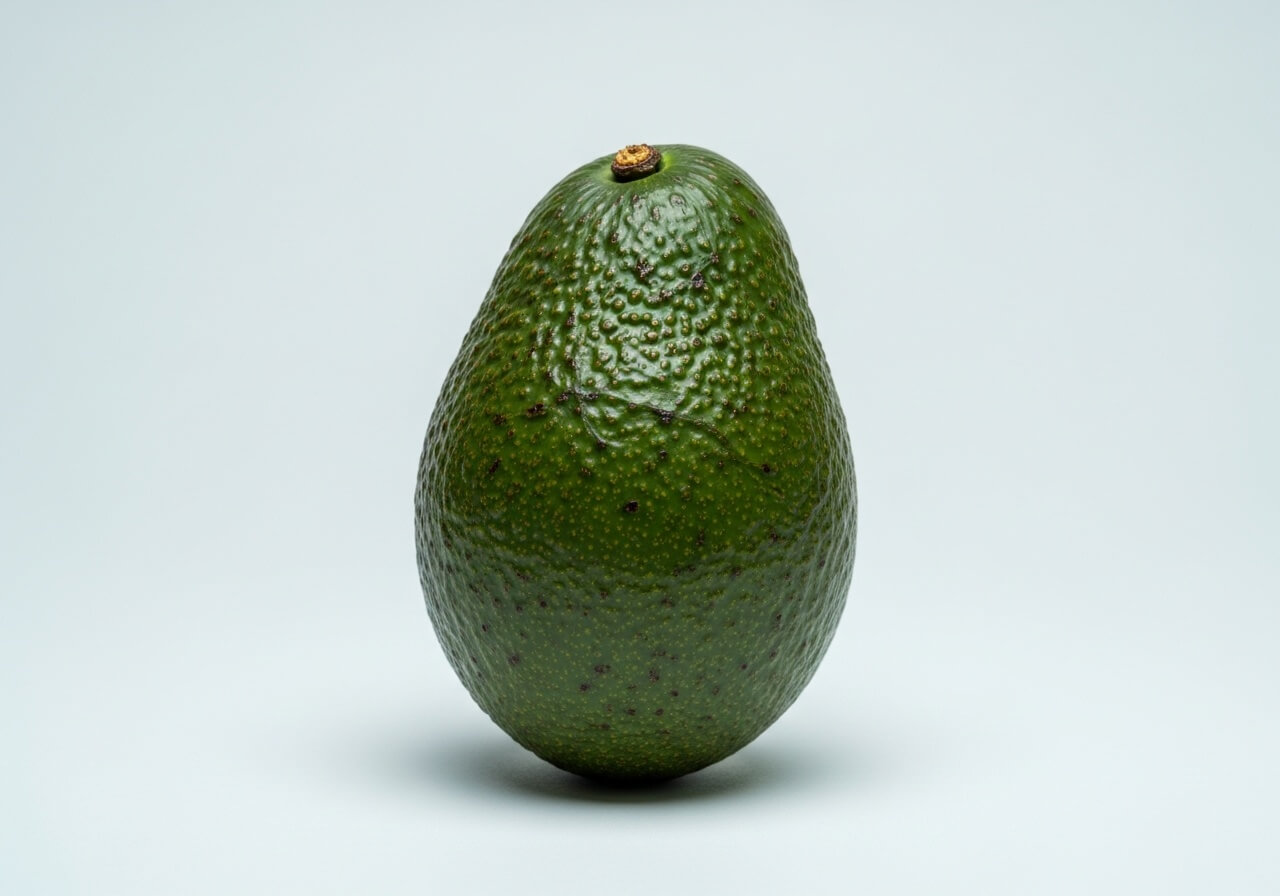
Note what that ruins: green skin is not a reliable sign of a low-fat avocado. Zutano and Bacon are green and lower-oil; Reed and Pinkerton are green and comparable to Hass. Race, not color.
Florida’s own cultivars — “Russell, Monroe, Simmonds, Donnie, Choquette, Miguel, and more” — run “from June through February,” with roughly “25 major cultivars and close to 500 total cultivars found in Florida.”
“SlimCado” is not a variety. It is a retail brand applied to Florida green-skinned avocados. University of Florida describes it as marketing: “because of their lower fat content you may have seen Florida avocados marketed in the store as a ‘slimcado.'” The fruit is real; the name is a label, not a cultivar.
Choosing and ripening
The fact that changes how you shop
Avocados do not ripen on the tree. UC extension: “it grows on a tree and comes to maturity… but does not ripen on the tree. It needs to be removed from the tree before it will soften.” And the failure case: “if the fruit is removed before it has reached maturity it will not soften, and will remain rubbery and inedible.”
So every avocado you buy is a ripening project, and a rock-hard one that never softens was picked too early — nothing you do will save it.
Judge by feel, not color
USDA‘s guidance: “choose avocados that yield slightly to gentle pressure for immediate use. Allow firm ones to ripen at room temperature.” They should “become uniformly soft… from stem to blossom end within a few days.”
Color only works for Hass, which goes “green to black.” Most green-skinned varieties never signal ripeness by color at all.
Temperature: warmer is slower
This one is counter-intuitive and well documented. UC extension: “68F is the ideal temperature. Lower and higher temperatures both actually slow the process,” and at that temperature “the fruit will typically be ripe in 7 to 10 days.”
Heat actively harms it: “even a 24-hour exposure to temperatures of 25°C and above inhibits ripening and increases postharvest disorders.” A sunny windowsill is the worst place you could pick.
To speed things up properly: “place them in a loosely closed paper bag with 2–3 Red or Golden Delicious apples or ripe kiwifruit,” because “apples and kiwifruit are known to produce lots of ethylene.”
Florida types are quicker — “a mature fruit ripens in 3 to 8 days after it is picked” and prefers “60° to 75°F.”
Wash it before you cut it
This is the most useful thing on the page, and almost nobody does it.
FDA sampled 1,615 whole fresh avocados. The result:
| Where | Listeria monocytogenes prevalence |
|---|---|
| Avocado skin | 17.73% |
| Avocado pulp | 0.24% |
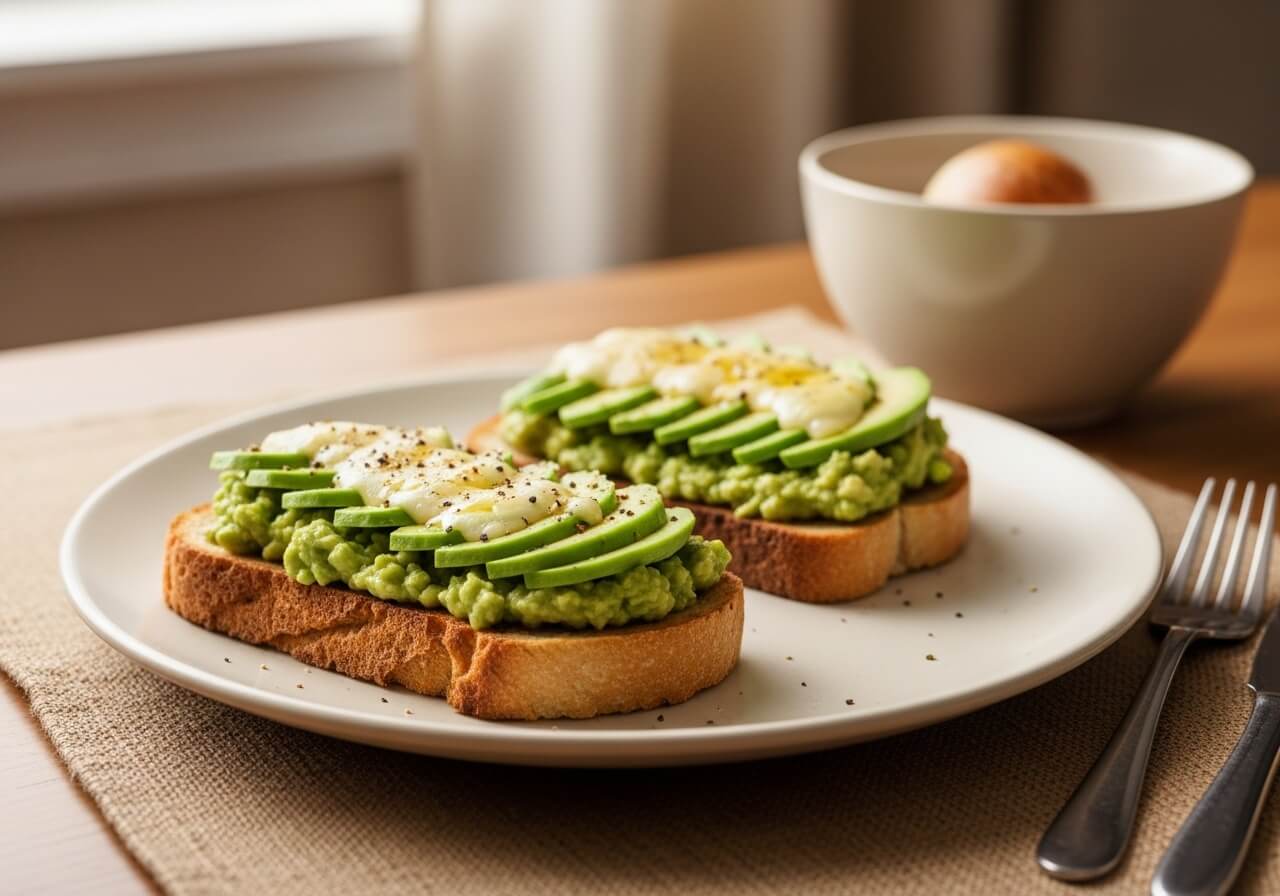
Roughly one skin in six. The flesh is nearly always clean — but the knife goes through the skin on its way in. FDA‘s advice for exactly this reason: “wash all produce thoroughly under running water before eating, cutting or cooking” and “scrub firm produce (which includes avocados) with a clean produce brush.”
Not soap, though: “washing fruits and vegetables with soap, detergent, or commercial produce wash is not recommended.” Running water and a brush, then dry it.
So which should you buy?
- Whatever is ripe. Firmness beats variety, and nine times in ten the choice is Hass anyway.
- If you eat half an avocado and are counting calories, a Florida green-skin is genuinely lighter per gram — 120 kcal against 167 per 100 g.
- If you eat the whole thing, the Florida fruit is the bigger load: about 365 calories against 227.
- For guacamole, higher-oil varieties — Hass, Reed, Pinkerton, Fuerte — give the texture people expect.
- Buy firm, ripen at 68°F, and never on a hot windowsill.
- Wash and scrub before cutting. One in six skins.
What we are not going to tell you
| Common claim | Why not |
|---|---|
| “Florida avocados have half the fat” | USDA: 10.1 g vs 15.4 g per 100 g — 34% less, not half |
| “Hass is the most nutritious variety” | USDA holds nutrient data for only three avocado entries. Florida types beat California on vitamin C and E; California wins on potassium. Neither is “most nutritious” |
| “Variety X is healthier” | No federal or university source ranks avocado varieties by health outcome |
| “Avocados are a complete protein” | About 2 g protein per 100 g. It is a fat source, not a protein source |
| “Avocado is FDA-approved for heart health” | FDA’s oleic acid claim covers oils with at least 70% oleic acid at 20 g a day. Avocado fat is about 59% oleic, and a serving supplies roughly a quarter of that amount |
| “Green skin means low fat” | Zutano and Bacon are green and lower-oil; Reed and Pinkerton are green and higher-oil |
FAQ
How many avocado varieties are sold in the US?
Over 500 varieties exist worldwide, and Florida alone has around 25 major cultivars. But about 90% of US supply is imported and 99% of imports are Hass or Hass-like, so the shelf is far less varied than the orchards.
Are Florida avocados really lower in fat?
Per weight, yes: USDA gives 10.1 g of fat per 100 g against 15.4 g for California. Per whole fruit, no — the Florida avocado is more than twice the edible weight, so a whole one carries more fat and more calories.
Is one variety healthier than another?
No source supports ranking them. Florida types have more vitamin C and E per 100 g; California types have more potassium and more monounsaturated fat. The differences run in both directions.
What is a SlimCado?
A retail brand for Florida green-skinned avocados, not a cultivar. University of Florida describes it as a marketing name tied to the lower fat content.
How do I ripen an avocado fastest?
At about 68°F, in a loosely closed paper bag with two or three apples or ripe kiwifruit, which give off ethylene. Warmer is slower — above 25°C for 24 hours actually inhibits ripening.
Can I tell ripeness from color?
Only with Hass, which turns green to black. Green-skinned varieties often give no color signal. Judge by uniform gentle give from stem to tip.
Do I need to wash an avocado I am going to peel?
Yes. FDA found Listeria monocytogenes on 17.73% of avocado skins against 0.24% of pulp — the knife carries it inward. Scrub under running water, no soap.
This content is for educational purposes only and is not medical advice. Always consult a qualified healthcare professional for personalised guidance.