MedlinePlus’ own consumer health encyclopedia answers this question in one sentence, and it is not the answer the internet gives:
“Consuming foods like green tea, caffeine, or hot chili peppers will not help you shed excess pounds (kilograms). Some may provide a small boost in your metabolism, but not enough to make a difference in your weight.”
That is the honest headline. But there is a real mechanism behind the idea, it has real numbers attached, and one of the four levers genuinely works. This article is about telling those apart.
The mechanism that actually exists
Digesting food costs energy. That cost is called the thermic effect of food, and it is a genuine component of daily energy expenditure — just a small one.
| Component | Share of daily energy expenditure |
|---|---|
| Resting metabolic rate | “60 to 70 percent” |
| Physical activity | “a low of 15 percent for sedentary individuals up to 50 percent of TEE for physically active individuals” |
| Thermic effect of food | “8-10% of TEE” |
So the entire budget any “thermogenic food” is competing for is under a tenth of what you burn in a day. Even a large relative change to that slice is a small absolute change.
Protein: the one that is real
Within that tenth, the macronutrients differ enormously — and this is the best-evidenced number in the whole subject. Two independent authoritative sources give identical ranges:
| Macronutrient | Energy cost of processing it |
|---|---|
| Protein | 20–30% |
| Alcohol | 10–30% |
| Carbohydrate | 5–10% |
| Fat | 0–3% |
Eat 100 calories of protein and roughly 20 to 30 of them are spent processing it. Eat 100 calories of fat and almost nothing is.
That is a real, sourced, sizeable difference — and it is why protein is the only “metabolism food” worth organising your eating around. Note the denominator, though: the percentages apply to the calories from that macronutrient, not to your whole day. Shifting some calories from fat to protein moves a fraction of a slice that is itself under 10% of the total. Useful, not transformative.
How much protein and how to spread it is covered in how much protein per meal.
The four foods everyone names
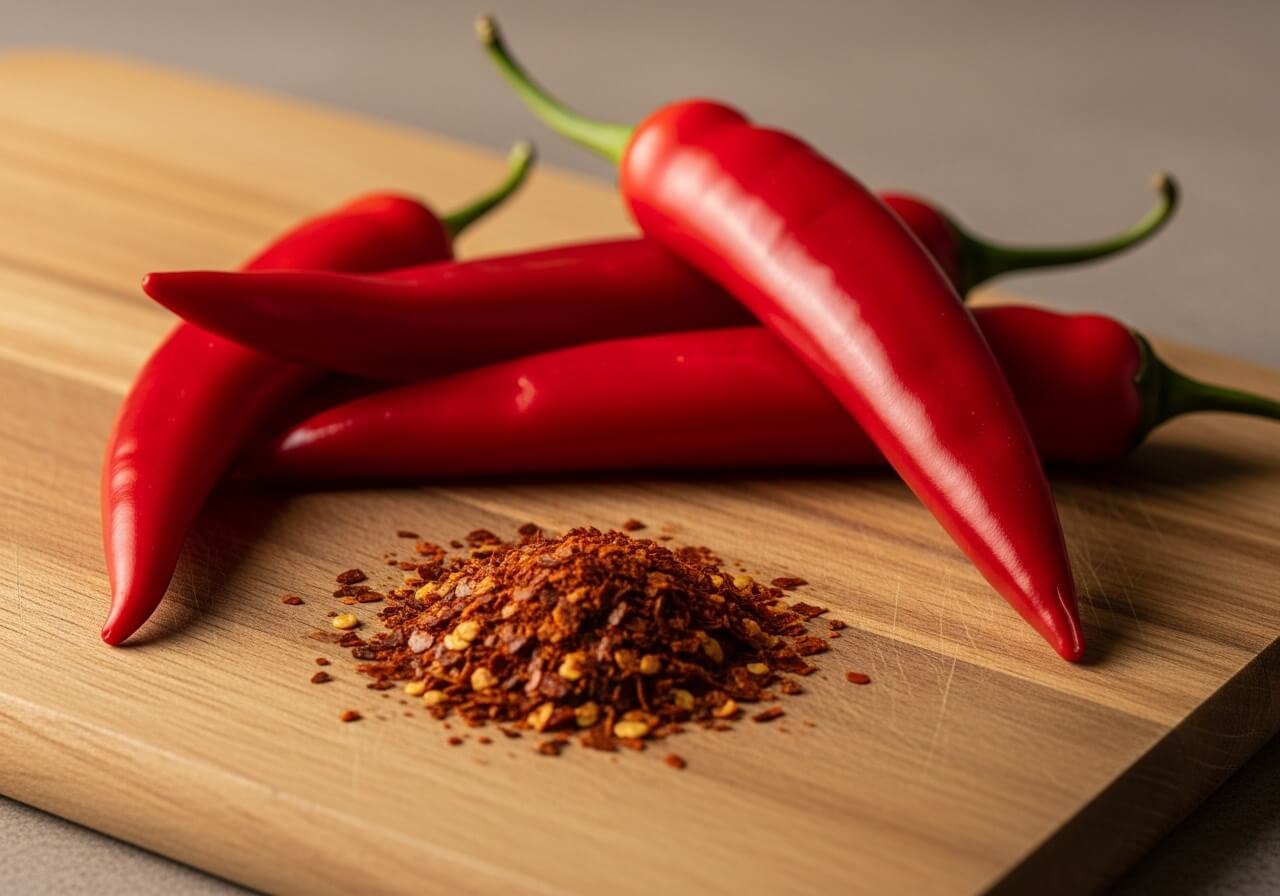
Chilli and capsaicin
NIH’s Office of Dietary Supplements is blunt: “capsaicin hasn’t been studied enough to know if it will help you lose weight.” Its professional fact sheet adds a detail worth knowing — in trials where capsaicin did cut how much people ate, “the calorie reductions did not significantly affect body weight at either 6 weeks or 12 weeks.”
So even the studies that found an effect on appetite found none on the scale.
Green tea
The most-marketed of the four, and the verdict is narrow. ODS: “if green tea is an effective weight-loss aid, any effect it has is small and not likely to be clinically relevant.” NCCIH goes as far as “the catechins and caffeine in green tea and its extracts may have a modest effect on body weight” — and no further.
One safety note that matters more than the effect size. NCCIH: “although uncommon, liver injury has been reported in some people who used green tea products, primarily green tea extracts in tablet or capsule form.” Drinking green tea is fine. Concentrated extracts in capsules are where the harm reports cluster, and they are being sold precisely for the effect that the same agency says is modest at best.
Caffeine
This one has a genuine acute effect, and a genuine catch. ODS: “caffeine increases energy expenditure and fat oxidation. However, the extent to which these effects affect weight loss is less clear, partly because clinical trials examining the effects of caffeine on weight loss have all been short and have used combination products.”
And then the part that undoes it for regular coffee drinkers: “habitual use of caffeine however, leads to caffeine tolerance and a diminishment of these effects.”
Worth separating two claims here. Caffeine raising energy expenditure acutely — that stands. Caffeine working by burning fat to spare glycogen — that specific mechanism was tested and abandoned by the field; the sports nutrition position stand describes the hypothesis as “challenged and eventually dismissed.” More on what caffeine does and does not do in caffeine and athletic performance.
Ginger, cinnamon, MCT oil, cold water
We checked NIH’s weight-loss fact sheet directly: it contains no section on any of them. That is not proof they do nothing — it means no authoritative body has assessed them well enough to say. Under our sourcing rule, they get no claim at all.
What the supplement aisle version is worth
NCCIH’s summary of the weight-loss supplements studied so far: “None have been shown to be effective for weight loss, and each of these has side effects.” And more broadly: “most dietary supplements marketed for rapid weight loss, such as acai and hoodia, don’t work for keeping weight off in the long term, and some are dangerous.”
ODS quotes the US Government Accountability Office’s conclusion: “little is known about whether weight loss supplements are effective, but some supplements have been associated with the potential for physical harm.”

How to spot the lie before you read the label
The Federal Trade Commission publishes a list of seven weight-loss claims it treats as always false — it tells media outlets to refuse ads containing them. If you see any of these, the product is not merely unproven, it is making a claim the regulator considers facially untrue.
| A product that… |
|---|
| “causes weight loss of two pounds or more a week for a month or more without dieting or exercise” |
| “causes substantial weight loss no matter what or how much the consumer eats” |
| “causes permanent weight loss even after the consumer stops using product” |
| “blocks the absorption of fat or calories to enable consumers to lose substantial weight” |
| “safely enables consumers to lose more than three pounds per week for more than four weeks” |
| “causes substantial weight loss for all users” |
| “causes substantial weight loss by wearing a product on the body or rubbing it into the skin” |
Read that list against the last thermogenic supplement ad you saw. Most of them contain at least one.
What actually moves the number
Nothing on this page is going to change your weight much. What does, in order of size:
- Resting metabolic rate, which is 60–70% of the total and driven mostly by how much lean tissue you carry — not by what you season your food with.
- Physical activity, the one component that ranges from 15% to 50% depending entirely on what you do.
- Protein share of your intake, through the 20–30% processing cost above.
- Everything else on this page, rounding error.
The full picture of where your energy goes is in how to increase your metabolism, and why it changes as you lose weight in why your diet stops working.
FAQ
Do thermogenic foods work?
Not meaningfully. the Office of Dietary Supplements states directly that green tea, caffeine and hot chili peppers “will not help you shed excess pounds,” and that any metabolic boost is “not enough to make a difference in your weight.”
Does protein really boost metabolism?
Yes, and this is the exception. Processing protein costs 20–30% of its calories, against 5–10% for carbohydrate and 0–3% for fat. The effect is real but bounded — the whole thermic effect of food is only 8–10% of daily energy expenditure.
Does green tea burn fat?
the Office of Dietary Supplements’ position is that any effect is “small and not likely to be clinically relevant.” Green tea extracts in capsule form also carry reported cases of liver injury.
Does coffee speed up metabolism?
Acutely, yes — caffeine raises energy expenditure and fat oxidation. But habitual use produces tolerance and a diminishment of those effects, and the translation into weight loss is unclear.
What about ginger, cinnamon or MCT oil?
NIH’s weight-loss fact sheet does not cover them. We make no claim either way.
Are fat burners worth trying?
NCCIH’s assessment of the supplements studied so far: “None have been shown to be effective for weight loss, and each of these has side effects.”
How do I spot a scam product?
Check it against the FTC’s seven claims above. Any one of them — particularly “without dieting or exercise” or more than three pounds a week for over four weeks — is treated by the regulator as false on its face.
This content is for educational purposes only and is not medical advice. Always consult a qualified healthcare professional for personalised guidance.