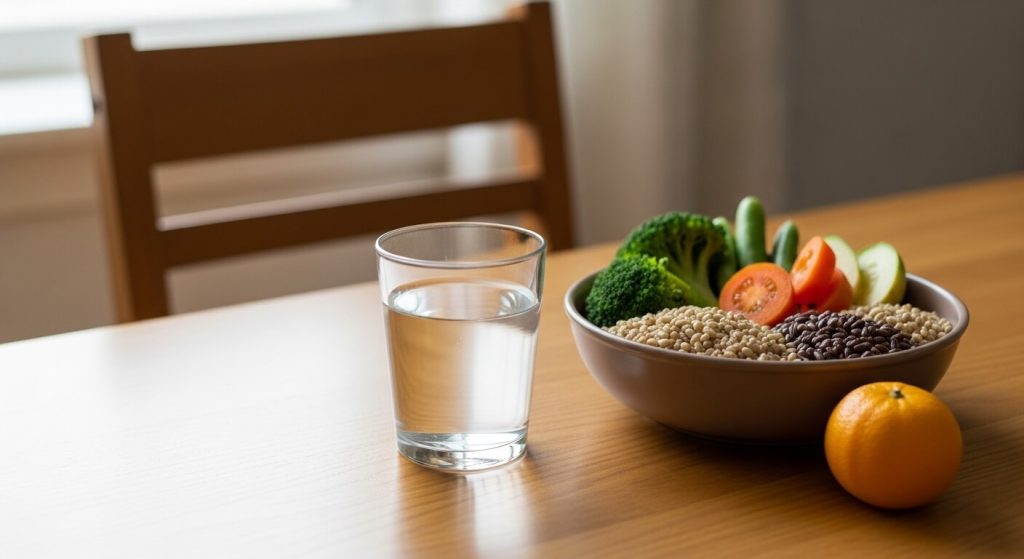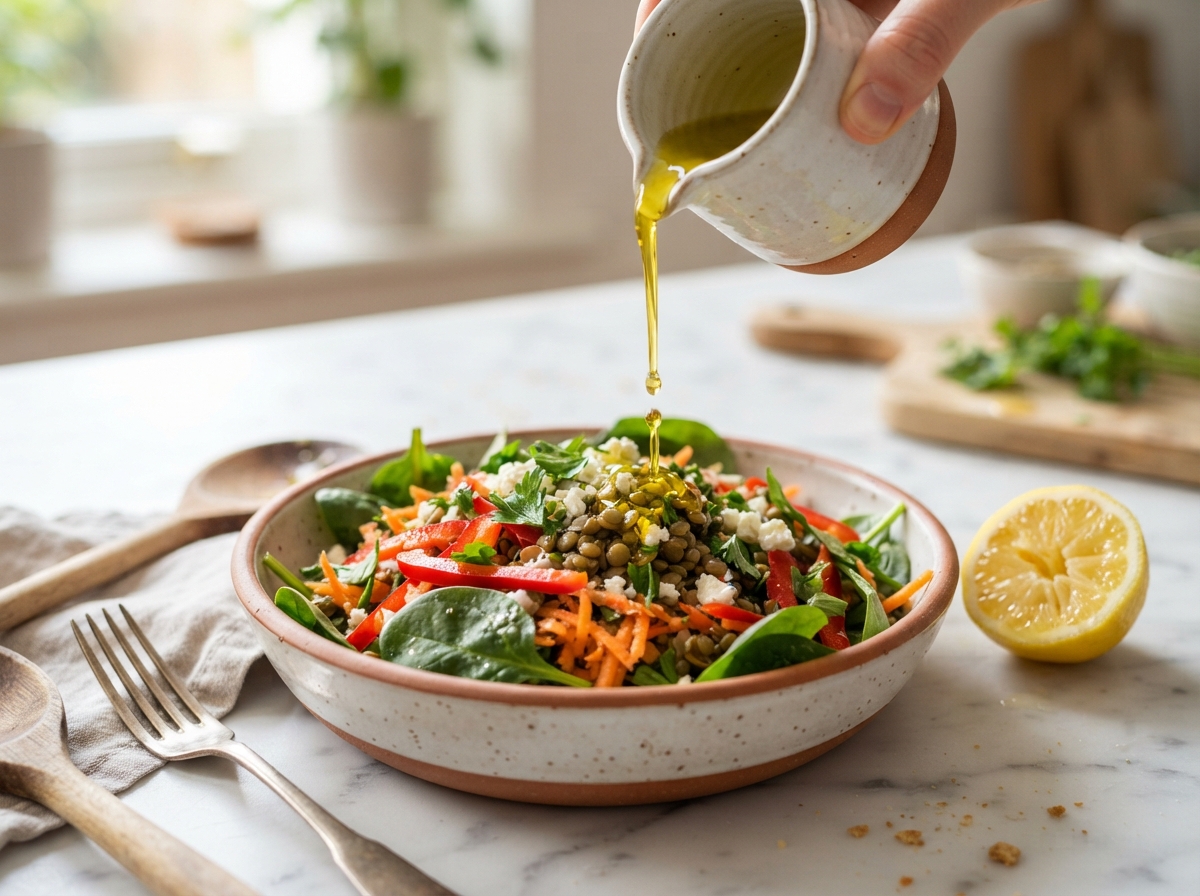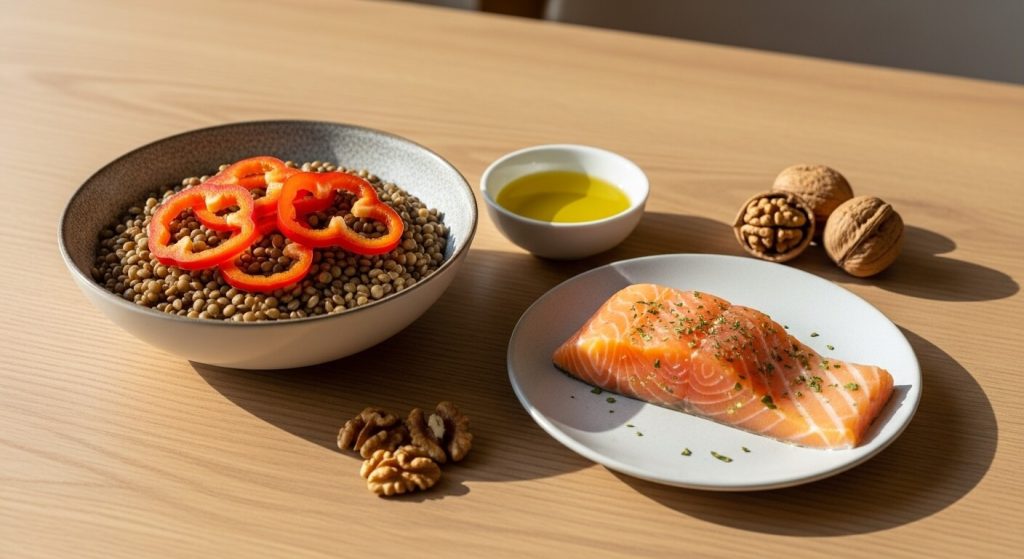
The federal recommendation is not a list of superfoods. At 2,000 calories a day it is 2½ cup-equivalents of vegetables daily, split across five subgroups with separate weekly targets — and roughly one adult in ten actually hits it. This page gives you the five groups, the exact weekly amount for each, what to put in them, and how to handle vegetables so they stay safe to eat.
The short version
- Daily target at 2,000 calories: 2½ cup-equivalents of vegetables.
- Five subgroups, each with its own weekly quota — you can hit the daily number and still miss four groups.
- Raw, cooked, fresh, frozen, canned, dried — all of it counts.
- Only 10.0% of US adults met the vegetable recommendation in the most recent national survey to report it.
- Cooking costs you some vitamin C. It does not make a vegetable not worth eating.
The five vegetable groups and how much of each per week
USDA sorts vegetables into five subgroups based on their nutrient content, and the Dietary Guidelines for Americans 2025–2030 assigns each one a weekly amount rather than a daily one. That is deliberate: nobody eats beans every day, and the guidance does not ask you to.
| Subgroup | Cup-equivalents per week (2,000 kcal) |
|---|---|
| Red and orange | 5½ |
| Starchy | 5 |
| Other | 4 |
| Dark green | 1½ |
| Beans, peas and lentils | 1½ |
Two things jump out. Red and orange vegetables carry the largest quota — larger than dark green, which gets most of the press. And beans sit in the vegetable groups at all, which is why a lentil stew counts toward vegetables in a way most people never realise.
What goes in each group
Every vegetable below links to its Nutrition Facts card on this site, where the calories, protein, carbohydrate, fat and fiber come from a named USDA FoodData Central record.
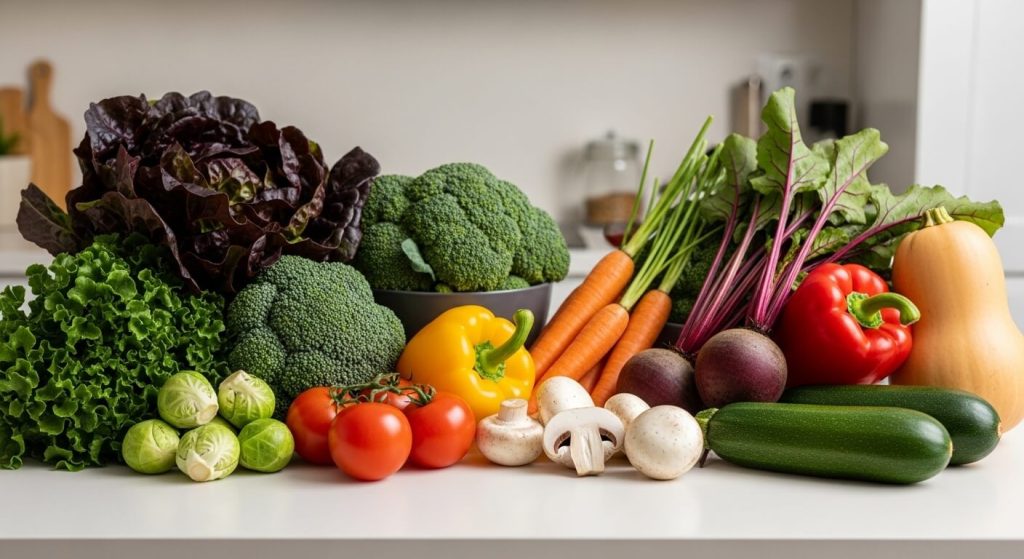
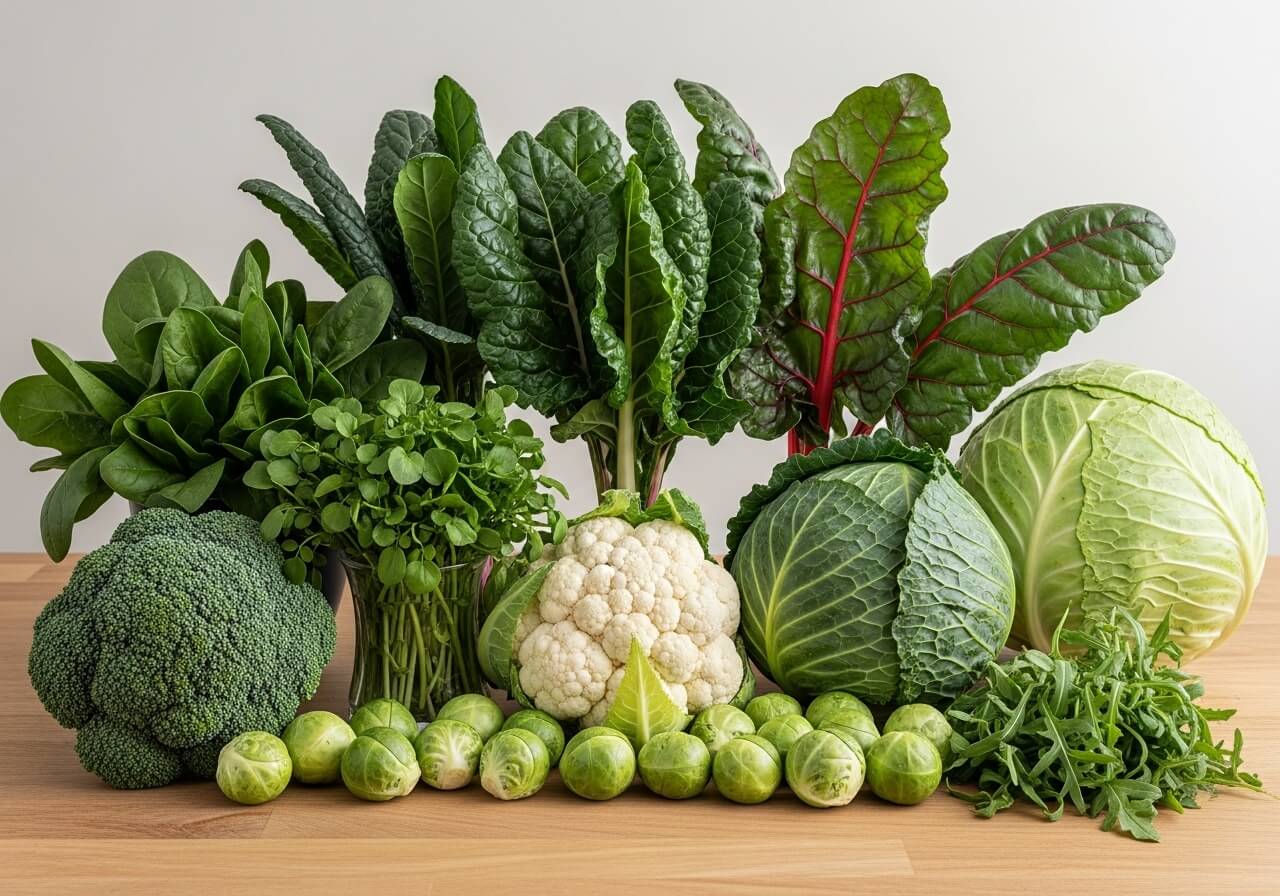
Dark green (1½ cups/week). Spinach, kale, broccoli, romaine, collards, bok choy. NIH’s Office of Dietary Supplements names green leafy vegetables such as spinach, kale, broccoli and lettuce as food sources of vitamin K, and lists asparagus, brussels sprouts and dark green leafy vegetables among folate sources.
Red and orange (5½ cups/week). Carrots, sweet potatoes, tomatoes, red bell peppers, acorn squash, pumpkin. ODS lists spinach, sweet potatoes, carrots, broccoli and winter squash among vegetable sources of vitamin A and provitamin-A carotenoids.
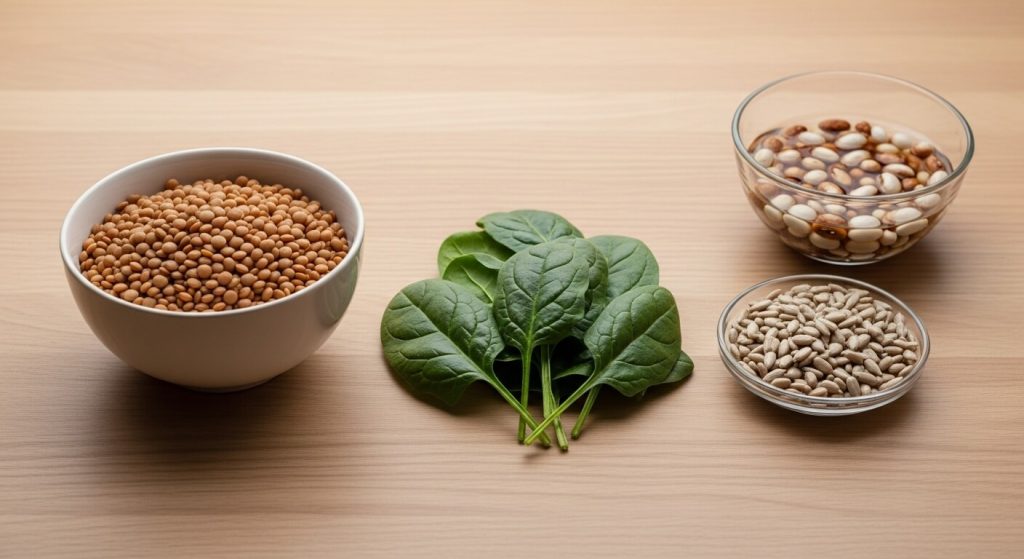
Beans, peas and lentils (1½ cups/week). Lentils, chickpeas, black beans, pinto beans, navy beans, green peas.
Starchy (5 cups/week). Russet potatoes, gold potatoes, corn. The quota here is the second largest of the five — starchy vegetables are inside the recommendation, not an exception to it.
Other (4 cups/week). Cauliflower, brussels sprouts, cucumber, celery, eggplant, onions, beets, asparagus, cabbage, mushrooms, summer squash, green beans.
How far most people actually are from this
CDC’s analysis of national survey data found that 10.0% of surveyed adults met vegetable intake recommendations in 2019. An earlier round of the same survey put the figure at 8.9%, ranging from 5.5% in Mississippi to 13.0% in California — a more than twofold gap between states. USDA’s Economic Research Service measured the shortfall a different way and found average intake of 1.72 cup-equivalents per day in 2015, 69 percent of the daily recommendation.
The practical read: most people are not one exotic vegetable short of the target. They are about a cup a day short, and they are missing whole subgroups.
Fresh, frozen, canned or dried — what counts
All of it. MyPlate is explicit that vegetables may be raw or cooked; fresh, frozen, canned, or dried/dehydrated; and may be whole, cut-up, or mashed. USDA’s SNAP-Ed materials go further on the practical side, noting that frozen and low-sodium canned vegetables often cost less than fresh and can save time in the kitchen.
What no federal source says is that one form is nutritionally better than another. We looked for that statement and did not find it — see the section below on what we are not claiming.
What cooking actually does
Heat and time cost you vitamin C. MedlinePlus states plainly that cooking vitamin C-rich foods or storing them for a long period of time can reduce the vitamin C content, and that microwaving and steaming vitamin C-rich foods may reduce the content of vitamin C — note that steaming is on that list too, not exempt from it.
If you want the actual numbers rather than a rule of thumb, USDA publishes them: the Table of Nutrient Retention Factors contains factors for calculating retention of 26 vitamins and minerals across preparation methods including baking, boiling, broiling, paring and draining. It is a dataset, not a headline — which is precisely why the popular “steaming saves 90% of nutrients” claims rarely cite anything.
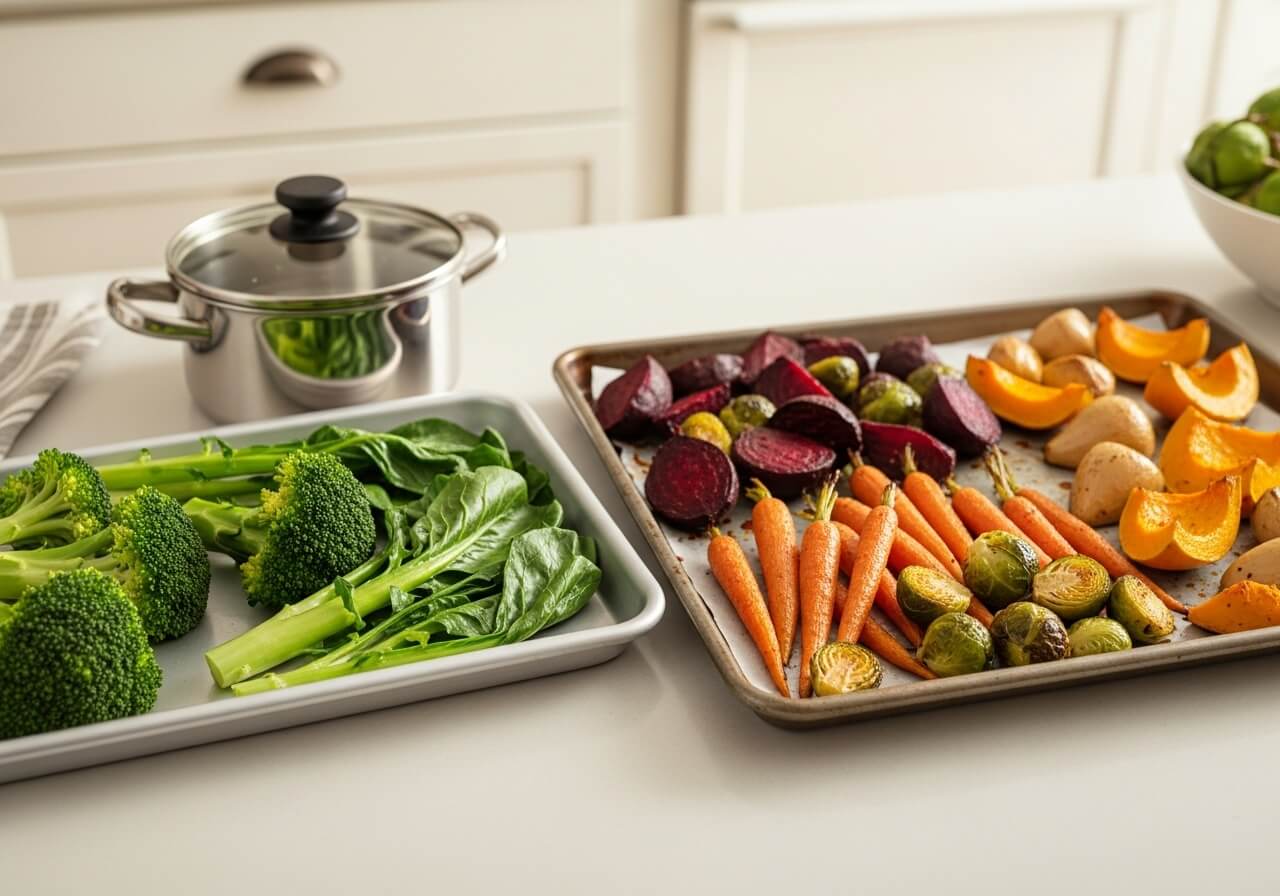
Practical version: vary your methods, keep cooking times short where the vegetable allows it, and do not skip a vegetable because you can only roast it.
Washing and storing vegetables safely
FDA’s guidance is short and specific. Wash all produce thoroughly under running water before preparing or eating it, including produce grown at home. Do not use soap: FDA states that washing fruits and vegetables with soap, detergent, or commercial produce wash is not recommended. For firm items, scrub with a clean produce brush. And if a bag says pre-washed, believe it — FDA notes that such items are ready-to-eat and can be used without further washing.
Once a vegetable is cut, the clock starts. FDA’s melon guidance instructs handlers to refrigerate all cut, peeled or cooked fresh fruits and vegetables within two hours and to discard produce that was not, and specifies refrigeration at 0–5°C (32–41°F) to prevent rapid pathogen growth. Buying pre-cut? FDA says choose only those items that are refrigerated or surrounded by ice.
The two genuine cautions
Raw sprouts. This is the one vegetable category where a federal agency tells specific people to abstain. FDA advises those at higher risk of foodborne illness to avoid eating raw or lightly cooked sprouts of any kind. Growing your own does not solve it: FDA explains that a few harmful bacteria on the seed can grow to high levels during sprouting, even under sanitary conditions at home. The scale is documented — FDA counted 52 reported outbreaks of foodborne illness associated with contaminated sprouts between 1996 and 2020, estimated at more than 2,700 cases of illness, with contaminated seed the most common source.
Oxalate, if you form kidney stones. A clinical reference chapter on nephrolithiasis on the NIH’s NCBI Bookshelf classifies spinach, okra, beans and beets as high-oxalate vegetables, and lettuce, asparagus, carrots and corn as low-oxalate. This matters for people with a stone history, not for the general population.
And one caution that mostly is not one: cruciferous vegetables and the thyroid. ODS confirms that goitrogens interfere with the uptake of iodine in the thyroid and can exacerbate iodine deficiency — and in the same document states that for most people, who have adequate iodine intakes and eat a variety of foods, the consumption of reasonable amounts of foods containing goitrogens is not a concern.
What we are not claiming
Publishing the gaps is part of the point. None of the following could be verified in federal sources while researching this page:
- “Steaming preserves more nutrients than boiling.” No federal source we found ranks the methods. MedlinePlus puts steaming and microwaving in the same sentence as vitamin C loss.
- Any percentage figure for nutrient loss — “boiling destroys 50% of vitamin C” and its relatives. USDA publishes retention factors as a dataset; it does not publish a headline percentage per method.
- “Frozen beats fresh” (or the reverse). Federal sources say both count; none says one is superior.
- “Canned vegetables are too salty to bother with.” Not supported. USDA materials recommend low-sodium canned vegetables as a budget option, and we found no federal guidance to rinse canned vegetables to reduce sodium.
- “Beet or leafy-green nitrates lower blood pressure or boost performance.” We could not verify this from any source on our approved list.
- “People with thyroid problems must avoid raw cruciferous vegetables.” Contradicted by ODS, as quoted above.
FAQ
How many vegetables should I eat per day? At a 2,000-calorie level, 2½ cup-equivalents daily per the Dietary Guidelines 2025–2030. Your number moves with your calorie level.
Do potatoes count as vegetables? Yes. Starchy vegetables are their own subgroup with a 5 cup-equivalent weekly target — the second-largest of the five.
Do beans count as vegetables or protein? Beans, peas and lentils are their own vegetable subgroup at 1½ cup-equivalents a week. USDA also counts them toward protein foods, which is why they appear in both places.
Does vegetable juice count? MyPlate counts 100% vegetable juice toward the vegetable group. It does not carry the fiber of the whole vegetable — check any of our Nutrition Facts cards for juices to see the difference.
Should I wash pre-washed bagged salad again? No. FDA states pre-washed, ready-to-eat packaged produce can be used without further washing when the packaging says so.
What to do with this
Pick the group you are missing rather than adding more of the one you already eat. For most people that is either red and orange — the largest quota — or beans, which almost nobody counts as a vegetable. One cup of lentils a week and a roasted tray of carrots and squash closes two of the five gaps in a single shop.
Then check the numbers rather than guessing them: every vegetable named on this page has a Nutrition Facts card with values traced to a named USDA record.
Educational content, not medical advice. If you have kidney stones, thyroid disease, or are at higher risk of foodborne illness, the cautions above are worth discussing with your clinician.
This content is for educational purposes only and is not medical advice. Always consult a qualified healthcare professional for personalised guidance.