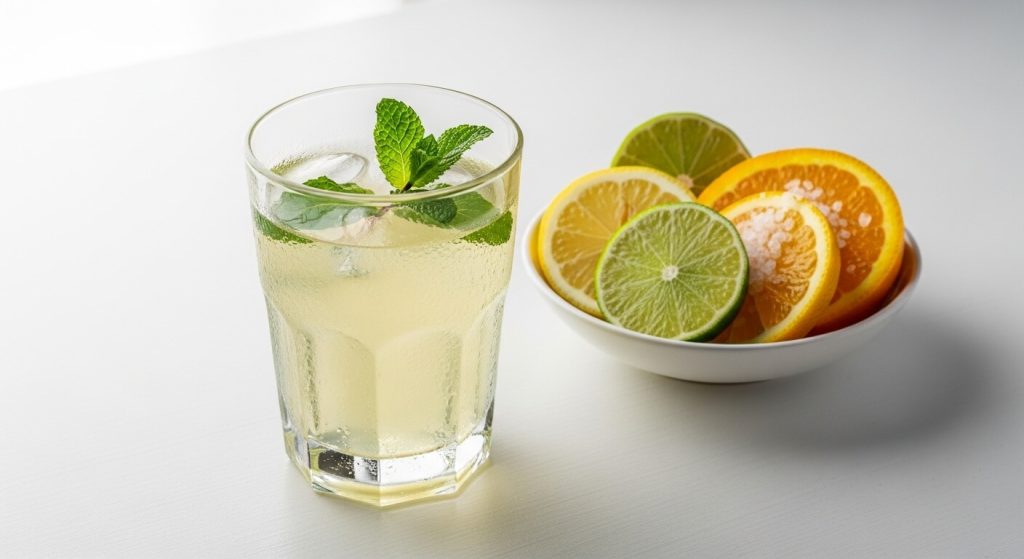
A homemade electrolyte drink is water, a measured amount of salt, and something to make it drinkable. A quarter teaspoon of table salt in a liter of water supplies about 582 mg of sodium, based on the USDA FoodData Central record for table salt (38,800 mg sodium per 100 g, 6 g per teaspoon). That is the whole trick. The harder question is when you need one at all, and for most people on most days the answer is that you do not.
The short version
Harvard’s Nutrition Source is direct about the threshold: “When an exercise workout is less than one hour and of lower intensity performed in moderate temperatures, plain water is the best choice.” Cleveland Clinic draws the same line — “If you’re working out for an hour or less with moderate intensity under normal weather conditions, water is typically all you need” — and adds that an electrolyte drink “is not something to grab when you’re just thirsty.” On commercial sports drinks, Harvard is blunter still: “For the non-athlete, a sports beverage is just another sugary drink.”
If you want a personal fluid target rather than a rule of thumb, our water intake calculator gives one.
When an electrolyte drink is actually the right call
Harvard lists the situations where electrolyte depletion is plausible: strenuous activity “usually longer than 1-2 hours such as with trained athletes”; “excessive diarrhea, vomiting, or sweating that can occur from viral infections, food-borne illnesses, gastrointestinal disorders”; and heavy alcohol intake, which “can also cause the kidneys to excrete too much fluid from the body, carrying minerals with it.” Cleveland Clinic adds two more: very hot weather, and being a naturally heavy sweater.
Outside those cases, the sodium is already in your food. The FDA reports that “Americans eat on average about 3,400 mg of sodium per day” against a Daily Value of “less than 2,300 milligrams (mg) per day.” A sweat-replacement drink on a rest day adds to a number that is already high.
The recipe, and what it delivers
For one liter of water:
- 1/4 teaspoon table salt (1.5 g) — about 582 mg sodium, computed from the USDA record for salt.
- 1 cup (240 g) coconut water — about 600 mg potassium, 252 mg sodium, 60 mg magnesium and 6.3 g sugar, from the USDA record for coconut water (250 mg potassium per 100 g).
- Or 1 cup (248 g) orange juice — about 496 mg potassium but 20.8 g sugar and 112 calories, from the USDA record for raw orange juice. See our orange juice card for the full breakdown.
- Optional: 1 tablespoon lemon juice — about 15 mg potassium, negligible sugar, mostly for taste.
- Optional: 1 teaspoon honey — 5.7 g sugar and 21 calories, from the USDA honey record.
The coconut-water version lands near 834 mg sodium and 600 mg potassium per liter for roughly 46 calories. For context, NIH’s Office of Dietary Supplements puts the adult potassium Adequate Intake at 3,400 mg for men and 2,600 mg for women — so this drink is a top-up, not a source.
How it compares with a commercial sports drink
CDC’s MMWR table of rehydration solution compositions lists a Gatorade-type sports drink at 20 mmol/L sodium and 3 mmol/L potassium — roughly 460 mg of sodium per liter, below the quarter-teaspoon recipe above, with far less potassium. The difference is sugar: CDC’s Rethink Your Drink figures put a 12-ounce sports drink at about 5 teaspoons of sugar and 97 calories, and Harvard puts it at “21 grams of sugar in a popular sports drinks” per 12 ounces.
That sugar is not pointless — during long endurance work, carbohydrate in the bottle is part of the point. For an hour in an air-conditioned gym it is simply calories.
This is not an oral rehydration solution
This matters, and it is where homemade recipes get dangerous. The WHO reduced-osmolarity oral rehydration solution is “glucose 75, sodium 75, potassium 20, chloride 65 and citrate 10, all in mmol/l” with “a reduced osmolar load (245 mOsm/l).” The quarter-teaspoon drink above is around 25 mmol/L sodium — roughly a third of that. It is not a substitute for ORS in illness, and CDC’s guidance for diarrhea specifically warns that “substantial amounts of carbonated soft drinks, juice, gelatin desserts, and other highly sugared liquids should be avoided.” For a child with gastroenteritis, use a commercial ORS and a clinician, not a kitchen recipe.
Two ways to get this wrong
Drinking too much. Mayo Clinic Sports Medicine states the current consensus plainly: “So the general rule of thumb at this point among physicians is to drink to thirst.” Overdoing it has a name — StatPearls defines exercise-associated hyponatremia as “a serum sodium level below 135 mmol/L that develops during or up to 24 hours after physical activity” and concludes that “the safest strategy for fluid repletion is a thirst-driven replacement to avoid overhydration.”
Reaching for a potassium salt substitute. NIH ODS notes that many salt substitutes use potassium chloride, and warns that “in people with impaired urinary potassium excretion due to chronic kidney disease or the use of certain medications, such as angiotensin converting enzyme (ACE) inhibitors or potassium-sparing diuretics, even dietary potassium intakes below the AI can cause hyperkalemia.” MedlinePlus gives the same advice from the other direction: “Limit or avoid taking salt substitutes if you are asked to follow a low-salt diet.”
Children
The American Academy of Pediatrics keeps it simple: “For activities less than an hour, water is sufficient.” Beyond one to two hours, or in very hot conditions, sports drinks “can help replenish carbohydrates and electrolytes” — but AAP separates them firmly from energy drinks, which “have caffeine and excess sugar” and “are not recommended.”
Where the potassium really comes from
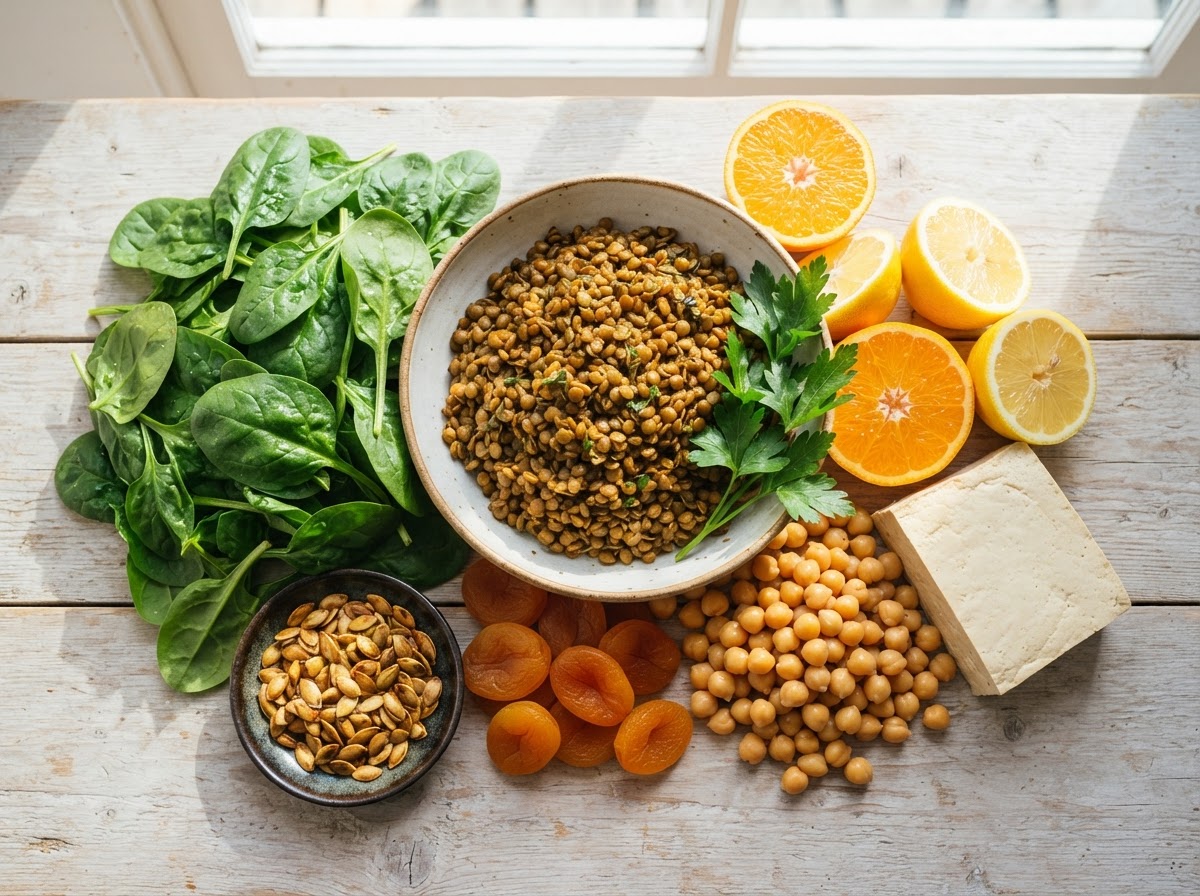
Food does the heavy lifting, and the numbers are on our cards: potatoes, spinach, bananas, orange juice, nonfat milk and lentils all carry more potassium per serving than any drink you mix at home.
What we are not claiming
- That everyone needs daily electrolytes. Harvard, Cleveland Clinic and AAP all say water covers under an hour of moderate exercise in normal conditions.
- That an electrolyte drink cures a hangover. MedlinePlus says recovery “is usually just a matter of time” and that for remedies generally “there is very little scientific evidence to show that such measures help” — though it does note electrolyte solutions replace salt and potassium lost to alcohol.
- A specific sweat-sodium figure for you. StatPearls notes sodium loss in sweat is “not well characterized, as sweat loss varies greatly between individual athletes.”
- That a sugar-free electrolyte drink improves endurance performance the way a carbohydrate drink does. Those are different products doing different jobs.
- That magnesium must be added to replace sweat losses. NIH’s magnesium fact sheet makes no such statement.
FAQ
How much salt per liter? A quarter teaspoon (1.5 g) gives about 582 mg of sodium per the USDA record. Going much above that starts pushing against the FDA’s 2,300 mg daily limit, which the average American already exceeds.
Is coconut water an electrolyte drink on its own? Close. USDA puts a cup at about 600 mg potassium and 252 mg sodium — good potassium, low sodium. Adding a pinch of salt is what turns it into a sweat-replacement drink.
Can I drink it every day? You can, but on a day without heavy sweating you are adding sodium you did not lose. Plain water and potassium-rich food is the better default.
Do I need one after a sauna? No federal source in our reading addresses sauna specifically. Drink to thirst and eat normally.
What about during illness? For diarrhea or vomiting, use a commercial oral rehydration solution. MedlinePlus advises “at least 1 cup (240 milliliters) of liquid every time you have a loose bowel movement” — homemade mixes are far weaker than ORS.
What to do with this
Mix the drink when the session is long, hot or genuinely sweaty, and skip it otherwise. Quarter teaspoon of salt, a liter of water, a cup of coconut water or juice if you want potassium and flavor. If you have kidney disease or take an ACE inhibitor or a potassium-sparing diuretic, talk to your clinician before adding potassium of any kind — including salt substitutes.
Related: how water affects nutrient absorption, sodium, potassium and blood pressure, fuelling for endurance events.
Educational content, not medical advice. Talk to a clinician about your own situation.
This content is for educational purposes only and is not medical advice. Always consult a qualified healthcare professional for personalised guidance.