
“Phytonutrient” is a word with no federal definition. We searched for one — an agency page that defines the term and states what these compounds do — and did not find it. What does exist is more interesting than the marketing: strong evidence that people who eat plants have lower disease risk, and repeated failures when the same compounds are extracted into capsules. The gap between those two findings is the whole story.
The short version
- No federal source we could reach defines “phytonutrient” or attaches disease claims to it.
- NCCIH: extensive evidence that people eating more vegetables and fruit have lower chronic disease risk.
- NCCIH: current evidence does not support antioxidant supplements preventing cancer or cardiovascular disease.
- The stated explanation is that purified compounds may act differently from the same compounds in food.
- Vitamin E is the worked example of a supplement that repeatedly failed to reproduce the food effect.
What the word actually is
NCCIH uses “phytochemicals” in a narrow, technical way — noting that phytochemicals that act as antioxidants may also play a role in helping regulate oxidative stress pathways. That is a description of a mechanism under study, not a health claim.
ODS maintains a Plants and Phytochemicals page, and it is worth knowing what it is: an inventory of botanicals studied by NIH-funded research centres, with citations. It catalogues what is being investigated. It does not tell you any of it works.
So when a label or an article says a food is “rich in phytonutrients”, the sentence carries no regulated meaning. It is not false — plants do contain thousands of compounds — it simply asserts nothing checkable.
The finding that is solid
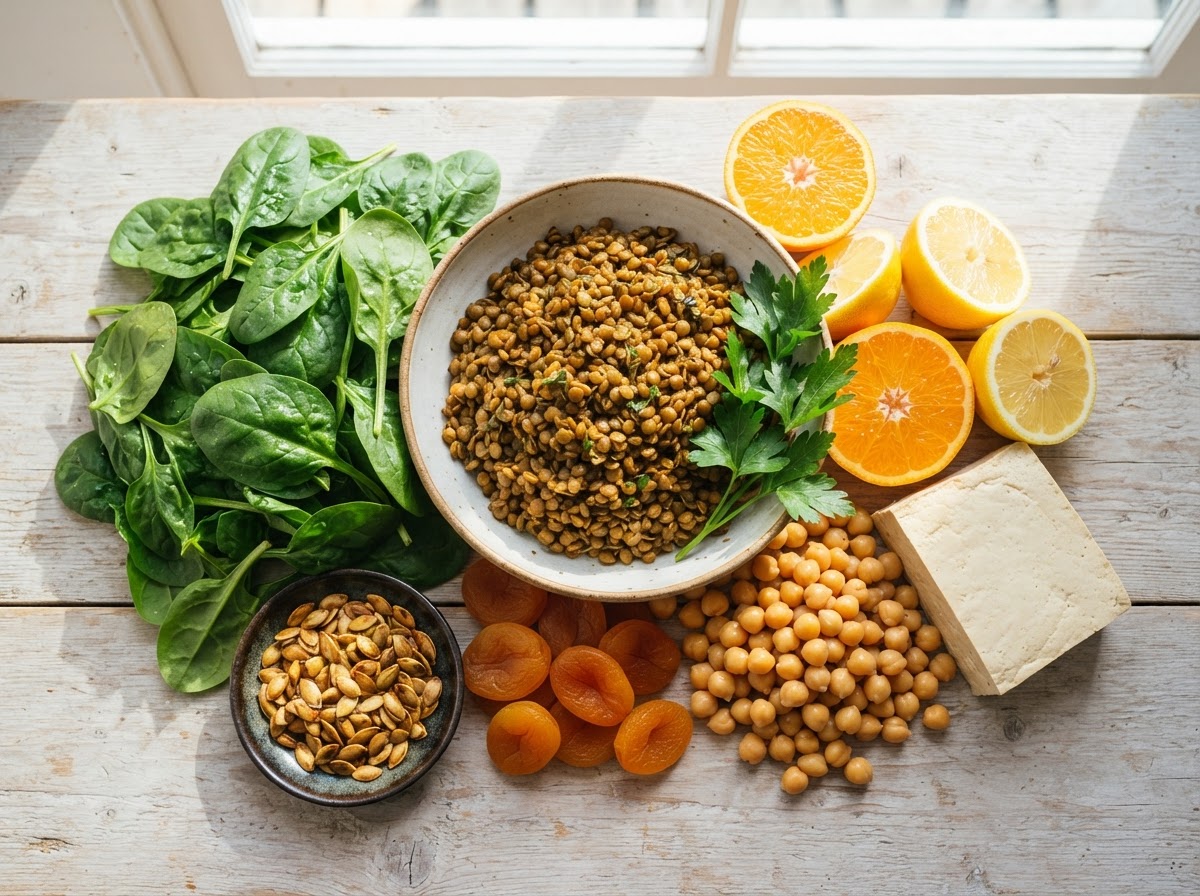
NCCIH states it without hedging: there is extensive evidence that people who eat more vegetables and fruits — foods that are rich sources of antioxidants — have lower risks of chronic diseases.
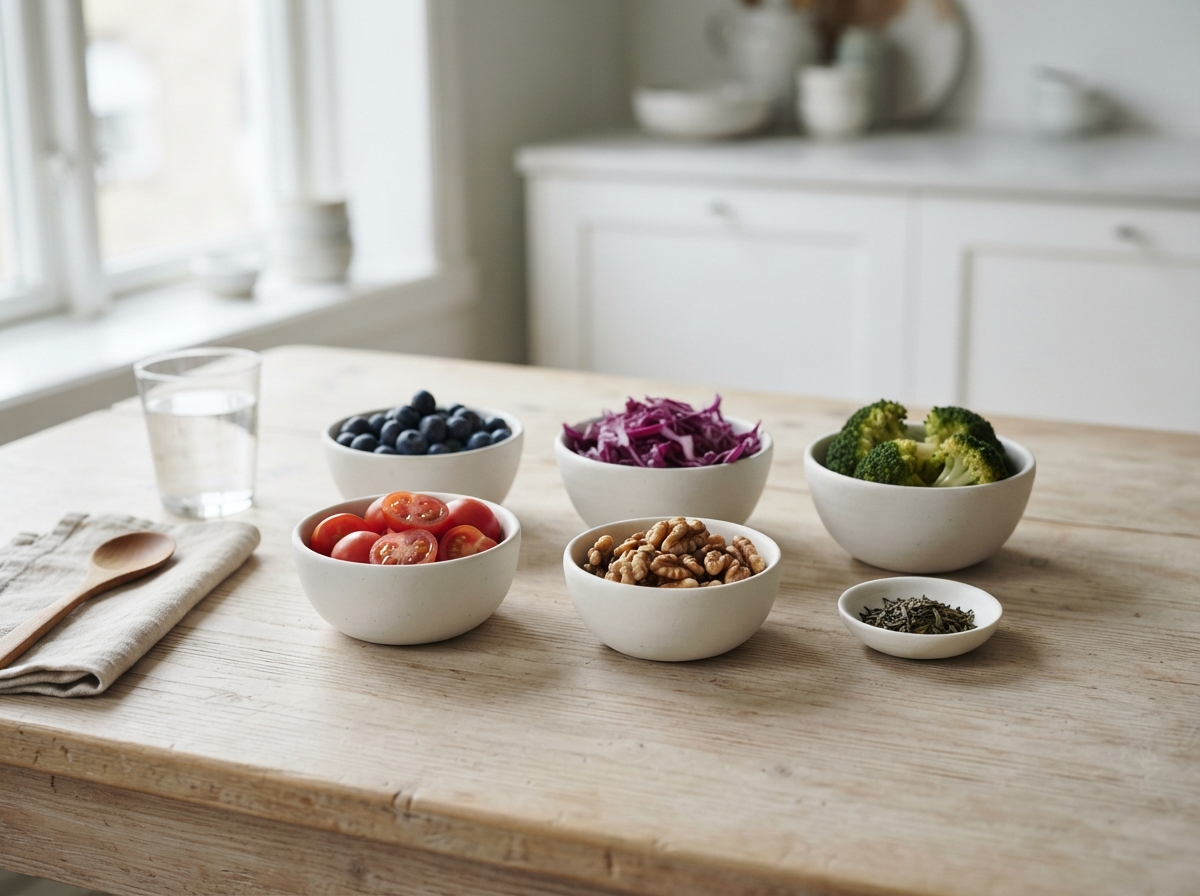
The plant foods this pattern is built on, with full nutrition breakdowns: blueberries, kale, broccoli, tomatoes, oranges and walnuts.
That is the sentence worth building behavior on, and it is about food, not compounds. How much to eat is specified elsewhere and specifically: 2½ cup-equivalents of vegetables a day, split across five subgroups with weekly targets — see the five vegetable groups. Only about one adult in ten meets it.
The finding that keeps failing
Take the same antioxidants out of the plant and into a capsule, and the effect does not follow. NCCIH: the current evidence does not support the idea that antioxidant supplements can prevent cancer, and separately, the current evidence does not support the idea that antioxidant supplements can prevent cardiovascular disease. With the exception of age-related macular degeneration, there is currently no evidence that antioxidant supplements have a positive impact on these diseases.
Vitamin E shows the pattern in one nutrient. ODS reports that clinical trials have not provided evidence that routine use of vitamin E supplements prevents cardiovascular disease or reduces its morbidity and mortality, that evidence to date is insufficient to support taking vitamin E to prevent cancer, and that most research results do not support the use of vitamin E supplements by healthy or mildly impaired individuals to maintain cognitive performance or slow its decline.
Three separate outcomes, three negative results, for a compound that is abundant in sunflower seeds and almonds, where nobody suggests it is a problem.
The explanation NCCIH offers
Not that the food evidence is wrong, but that isolation changes things: antioxidants consumed as purified chemicals might act differently than those consumed in foods, which contain complex mixtures of substances.
“Might” is doing honest work in that sentence — it is a hypothesis about why the trials disagree with the epidemiology, not a proven mechanism. But it lines up with everything else in nutrition where isolating a component has disappointed: fiber supplements versus fiber-rich food, protein powder versus protein food, calcium pills versus dairy.
What we are not claiming
- That phytonutrients prevent or cure disease. No federal source we could reach defines the term, let alone attaches outcomes to it.
- That specific compounds — resveratrol, curcumin, sulforaphane, quercetin — do anything documented. ODS’s list is a research inventory, not a results table.
- That antioxidant supplements are useless in every case. NCCIH names age-related macular degeneration as the exception.
- “Eat the rainbow” as an evidence-based instruction. The color framing is a memory aid. The evidenced instruction is the vegetable subgroup targets.
- ORAC values or antioxidant rankings for foods. No federal source we could reach publishes or endorses them.
FAQ
What are phytonutrients? Plant compounds other than vitamins and minerals. The term has no federal definition, and no agency page attaches health outcomes to it as a category.
Should I take antioxidant supplements? Current evidence does not support them for preventing cancer or cardiovascular disease, per NCCIH.
Are antioxidants in food useful? The food-level evidence is described as extensive: people eating more vegetables and fruit have lower chronic disease risk.
Why does the supplement fail if the food works? NCCIH’s suggested explanation is that purified compounds may act differently from the mixtures found in food. It is a hypothesis, stated as one.
Does color indicate nutrient content? It is a reasonable rule of thumb for variety, but not a claim we can source. The subgroup targets are.
What to do with this
Treat “rich in phytonutrients” as a phrase that tells you nothing, and judge foods by things that are specified: the vegetable subgroups you are missing, the fiber you are short of, the seafood you are not eating. That is where the sourced numbers live — and it happens to produce exactly the diet the phytonutrient marketing is gesturing at, without the capsules.
Related: what “healthy” legally means, how supplements are regulated.
Educational content, not medical advice.
This content is for educational purposes only and is not medical advice. Always consult a qualified healthcare professional for personalised guidance.