
Most pre-workout advice answers a question that does not apply to most workouts. The thresholds in the research are set by duration: below roughly an hour of hard work, being fed and hydrated is the whole job. Above it, carbohydrate and timing start to matter, and there are actual numbers. Here they are, with the one genuinely useful pre-session supplement dose.
The short version
- Under ~60 minutes: no special pre-workout eating is evidenced. Be fed, be hydrated.
- Fluid: about 480 ml (2 cups) two hours before.
- Carbohydrate matters for sessions past 60–90 minutes, and should start before you feel tired, not after.
- Caffeine has a real dose: 2–6 mg/kg, 15–60 minutes before.
- Protein before training is not urgent — timing showed no effect on hypertrophy once daily total was controlled for.
Start with duration, not with food
Two federal-hosted reviews set the same boundary from different angles. An Institute of Medicine committee summary describes the value of carbohydrate solutions in providing energy for muscular activity in endurance events that last at least 60 minutes and involve vigorous exercise. A companion chapter puts the clearer benefit higher: glucose feedings may be of benefit during prolonged exercise lasting longer than 90 min.
So the honest first question is not “what should I eat before the gym” but “how long and how hard is this session”. A 45-minute strength session sits below both thresholds. Your muscle glycogen is already there if you have been eating normally.
Fluid: the one number that applies to everyone
MedlinePlus gives a specific pre-session amount: drink about 16 ounces (2 cups) or 480 millilitres of water 2 hours before a workout.
Why bother when the deficit sounds small: an Institute of Medicine review found that a water deficit of only 1% of body weight significantly elevates core temperature during exercise, and that small (2%) to moderate (4%) water deficits reduce maximal aerobic power (10%-27%) and physical work capacity (22%-48%). Starting a session already down 2% is a bigger performance decision than which snack you chose.
CDC’s heat guidance adds a habit worth copying: drink before feeling thirsty — by the time you feel thirsty, you are already behind in fluid replacement.
Carbohydrate, when the session is long enough to need it
The timing principle is the useful part, and it is counter-intuitive. From a chapter on carbohydrate timing during prolonged exercise: carbohydrate feeding should begin, at the latest, 30 min prior to the anticipated fatigue, and people should not wait until they are fatigued before they ingest carbohydrate.
The size of the effect, in a cycling trial described in the same chapter: approximately 200 g of carbohydrate (i.e., 3 g/kg of body weight) in a 50% solution delayed fatigue by 21% versus placebo. That is a laboratory protocol, not a recipe — but the direction is clear and the mechanism is simple: get carbohydrate in before you need it.
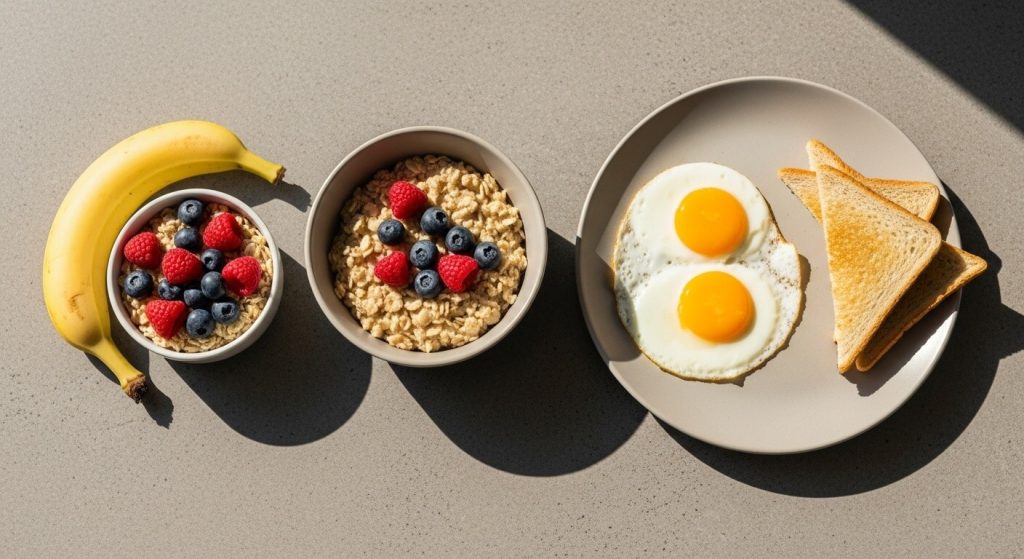
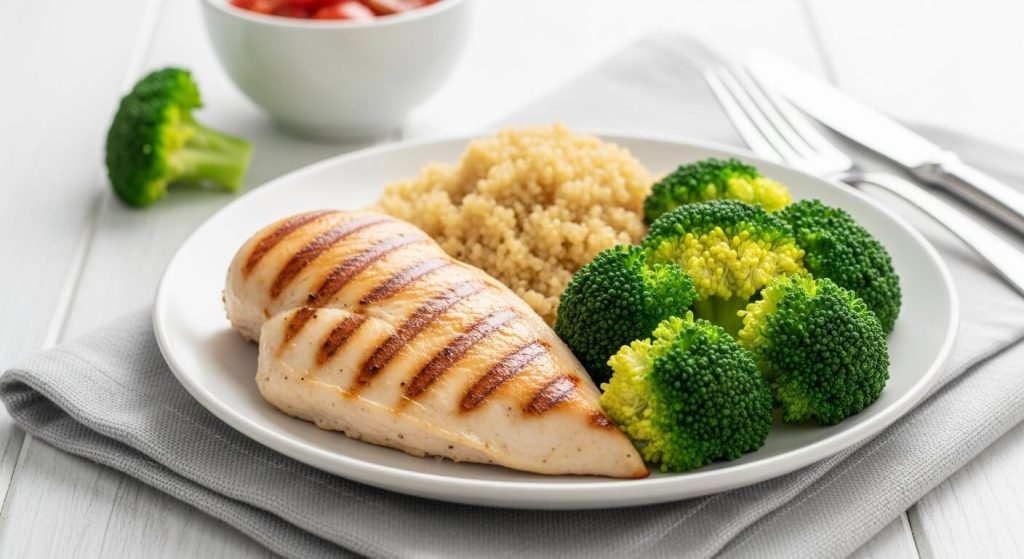
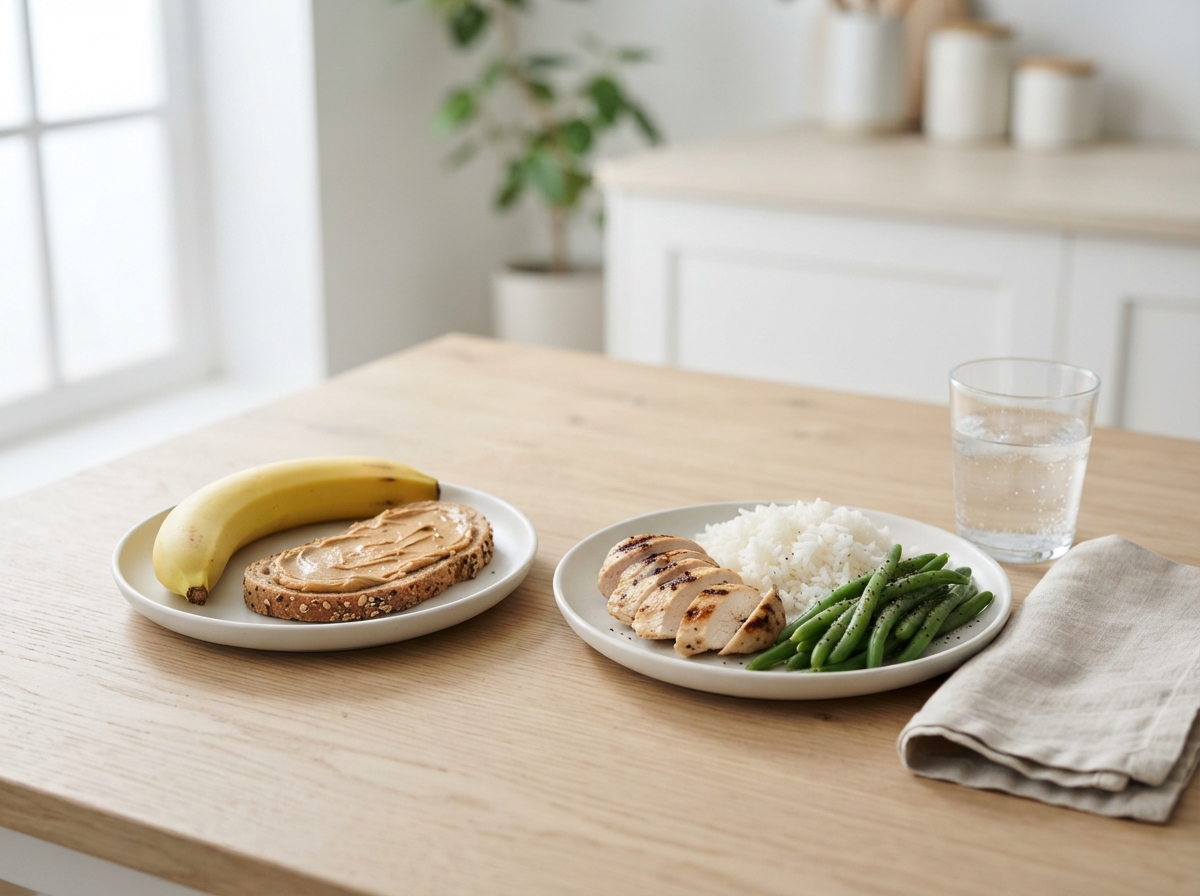
Practical pre-session carbohydrate from our cards: rolled oats, a banana, whole wheat toast, white rice for something that sits lighter. Full fuelling detail is in endurance nutrition.
Caffeine: the pre-workout ingredient with a dose
If you take one thing before training, this is the one with numbers behind it. ODS gives 2–6 mg/kg body weight before exercise, and advises that users should consume caffeine 15 to 60 minutes before exercise. For 70 kg that is 140–420 mg.
The upper end of that range collides with the general safety benchmark ODS cites from FDA: for healthy adults, the U.S. Food and Drug Administration states that 400 mg/day caffeine does not usually have dangerous adverse effects — and that is your whole day, coffee included. More on this in caffeine and performance.
Protein before training: not the priority it is sold as
A review of physique-athlete nutrition found no significant effect on hypertrophy when controlling for total daily protein intake in longitudinal studies, regardless of timing. That cuts against pre-workout protein just as it cuts against the post-workout window.
What does have support is dose size when you do eat it: a 20 g dose of egg protein stimulated MPS to a greater degree than smaller doses of 5 g or 10 g, plateauing around 40 g. So if a pre-training meal is where a 20–40 g serving naturally fits in your day, good. If it is not, nothing is lost.
What we are not claiming
- An optimal pre-workout meal timing window. No source we could reach specifies one for general training. The timing evidence we found concerns carbohydrate during long exercise.
- That you must eat before training. Nothing federal requires it for ordinary sessions.
- That pre-workout supplements beyond caffeine improve performance. ODS evidences creatine, caffeine, beta-alanine and nitrate individually — proprietary blends are not on that list.
- Specific gram targets for a pre-workout meal by body weight. The 3 g/kg figure comes from a cycling laboratory protocol, not from general pre-training guidance.
- That fasted training burns more fat. No source on our approved list supports it.
FAQ
What should I eat before a workout? For sessions under an hour, nothing special — be fed and hydrated. For longer sessions, carbohydrate, taken before fatigue rather than after.
How long before a workout should I eat? No federal source sets a meal window. The one specific pre-session number is fluid: 480 ml two hours before.
Should I train fasted? Nothing we could verify supports fasted training as superior. If you feel better fasted for short sessions, that is a preference, not a mechanism.
How much caffeine before training? 2–6 mg per kg, 15–60 minutes before. Count it against a 400 mg daily ceiling.
Do I need protein before lifting? Not urgently. Daily total is what predicted hypertrophy; timing did not.
What to do with this
Sort your sessions into two boxes. Under an hour: drink 480 ml two hours out, eat whenever suits you, and consider caffeine if you want the one evidenced boost. Over an hour: plan carbohydrate to start early in the session rather than when you fade — that single habit is worth more than any pre-workout product.
Related: the four numbers that matter, protein per meal.
Educational content, not medical advice.
This content is for educational purposes only and is not medical advice. Always consult a qualified healthcare professional for personalised guidance.