

Deload weeks give your body time to recover while maintaining training adaptations. Nutrition deload weeks aren’t about aggressive restriction—they’re about adjusting your fuel to match reduced activity while protecting recovery. During this period, you’ll reduce carbohydrates modestly, keep protein steady, and maintain enough total energy to support tissue repair and adaptation. This guide shows you how to adjust your eating for optimal recovery results.
What nutrition deload weeks actually mean for your body
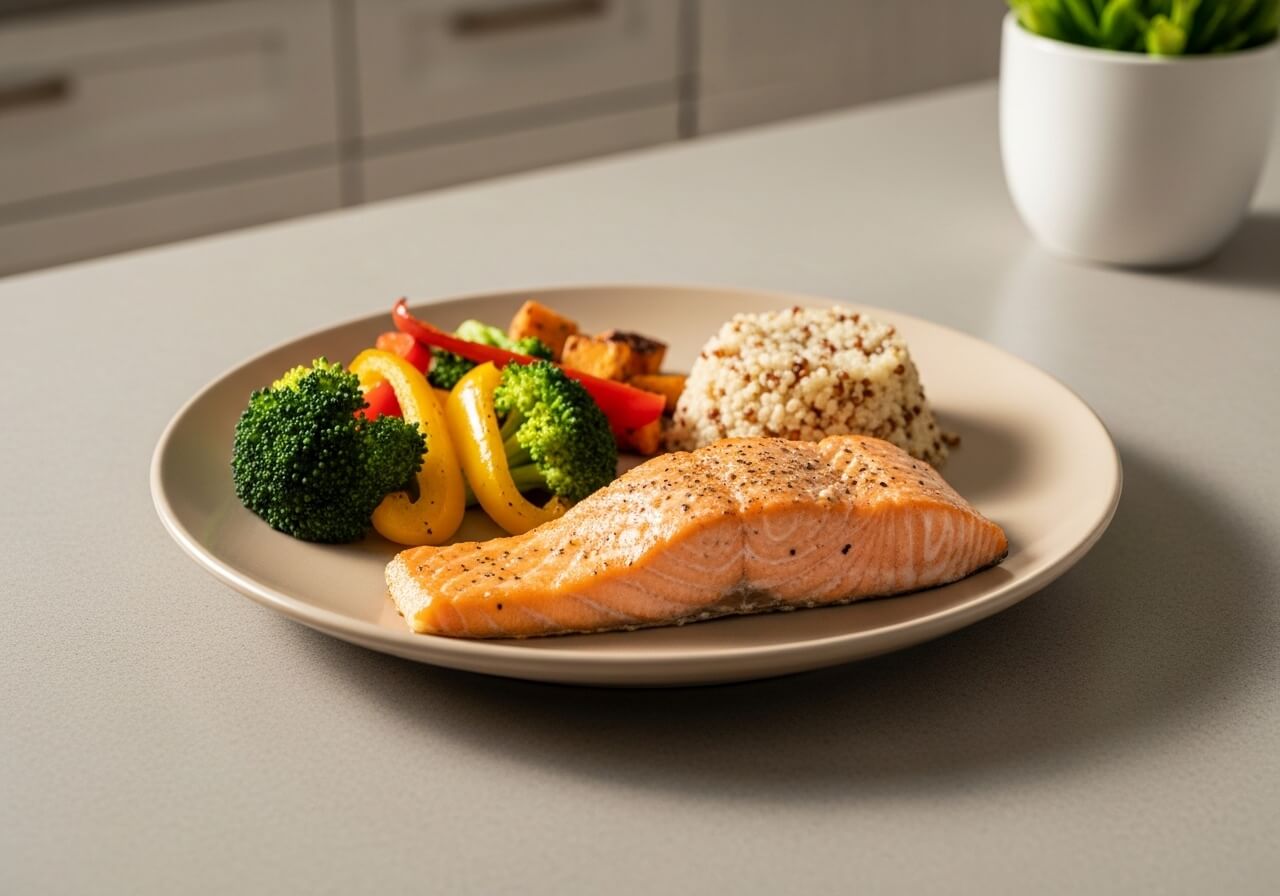
When you reduce training volume, your metabolic demands change. You’re burning fewer calories through structured workouts, which means your overall energy expenditure drops. The key insight: this isn’t a diet opportunity—it’s a recovery period where your body shifts from powering high-intensity performance to prioritizing tissue repair and nervous system recovery.
Your body also begins to downregulate stress hormones like cortisol as training pressure eases. This metabolic shift matters because your recovery nutrition protocol needs to support repair and adaptation, not just replace depleted fuel stores. You’re no longer preparing for the next demanding workout—you’re consolidating the gains from your previous training block.
How stress hormones drop and why that matters for meal timing
Lower training stress means you’re not depleting glycogen stores as aggressively, and your blood sugar doesn’t fluctuate as dramatically throughout the day. This changes your meal timing needs. On heavy training days, eating carbs and protein around workouts matters because your muscles are primed to use them immediately. During a deload, that urgency disappears.
You can eat more freely according to hunger and schedule rather than forcing fuel around training windows. This flexibility is a genuine recovery advantage—your eating becomes less rigid while still supporting what your body needs.
The shift from performance fuel to repair and renewal focus
During heavy training phases, a large portion of your calories powers workouts and refills energy stores. During deload weeks, your priority changes to supporting tissue repair, immune function, and adaptation consolidation. You still need adequate energy and protein, but you’re not trying to maximize power output.
The practical application: reduce carbohydrates because you’re depleting them less rapidly, while keeping protein intake steady. Amino acid needs for muscle preservation don’t disappear when training volume drops—this is where most people make their biggest mistake.
How to create a recovery nutrition protocol for active rest

Start by honestly assessing your deload activity. Light walking, mobility work, and easy movement require different fuel than complete rest. For most people practicing active rest, a 10–15% calorie reduction from your training week baseline is reasonable. If you’re taking complete rest with minimal structured activity, you might reduce by 15–20%. These are starting points—adjust based on hunger and energy after a few days.
Reducing carbs by 20–30% while keeping protein consistent
Carbohydrate needs drop during lower-training weeks because you’re not depleting muscle glycogen as extensively. A 20–30% reduction is a reasonable range to start with, though this depends on your body size, activity level, and baseline intake. Someone eating 300 grams daily might drop to 210–240 grams. Someone eating 150 grams might go to 105–120 grams.
Protein should stay consistent with your training week intake—roughly 0.7–1 gram per pound of body weight, distributed across meals. Dropping protein during deload weeks offers no advantage and can impair recovery and muscle maintenance. This consistency protects your progress during the reduced-training period.
Fats can stay roughly the same as your training phase since they support hormone production and nutrient absorption. What shrinks is primarily carbohydrates, allowing total calories to drop without abandoning recovery support.
Building a 3-day deload week meal plan with real food examples
Here’s a practical structure for someone doing active rest, assuming moderate body size (150–180 pounds):
Day 1:
Breakfast: 3 eggs, 2 slices whole grain toast, half an avocado
Lunch: grilled chicken breast (6 ounces), white rice (3/4 cup cooked), roasted broccoli with olive oil
Dinner: salmon fillet (5 ounces), medium roasted sweet potato, mixed green salad with olive oil dressing
Day 2:
Breakfast: oatmeal (1/2 cup dry), berries, Greek yogurt (3/4 cup), honey drizzle
Lunch: ground turkey (6 ounces), brown rice (2/3 cup cooked), steamed zucchini
Dinner: beef (5 ounces), quinoa (1/2 cup cooked), roasted carrots and asparagus
Day 3:
Breakfast: cottage cheese (1 cup), banana, handful of almonds
Lunch: turkey sandwich on whole wheat (2 slices), side of fruit, optional small bag of chips
Dinner: pork chops (5 ounces), white rice (2/3 cup cooked), green beans
Notice the pattern: protein at each meal (25–35 grams), carbs reduced but not eliminated, vegetables and whole foods making up the bulk. Portions are reasonable but not obsessively measured. This is adjusted eating—deliberate shifts in macro ratios to match your activity level.
When fueling rest days goes wrong and what to do instead
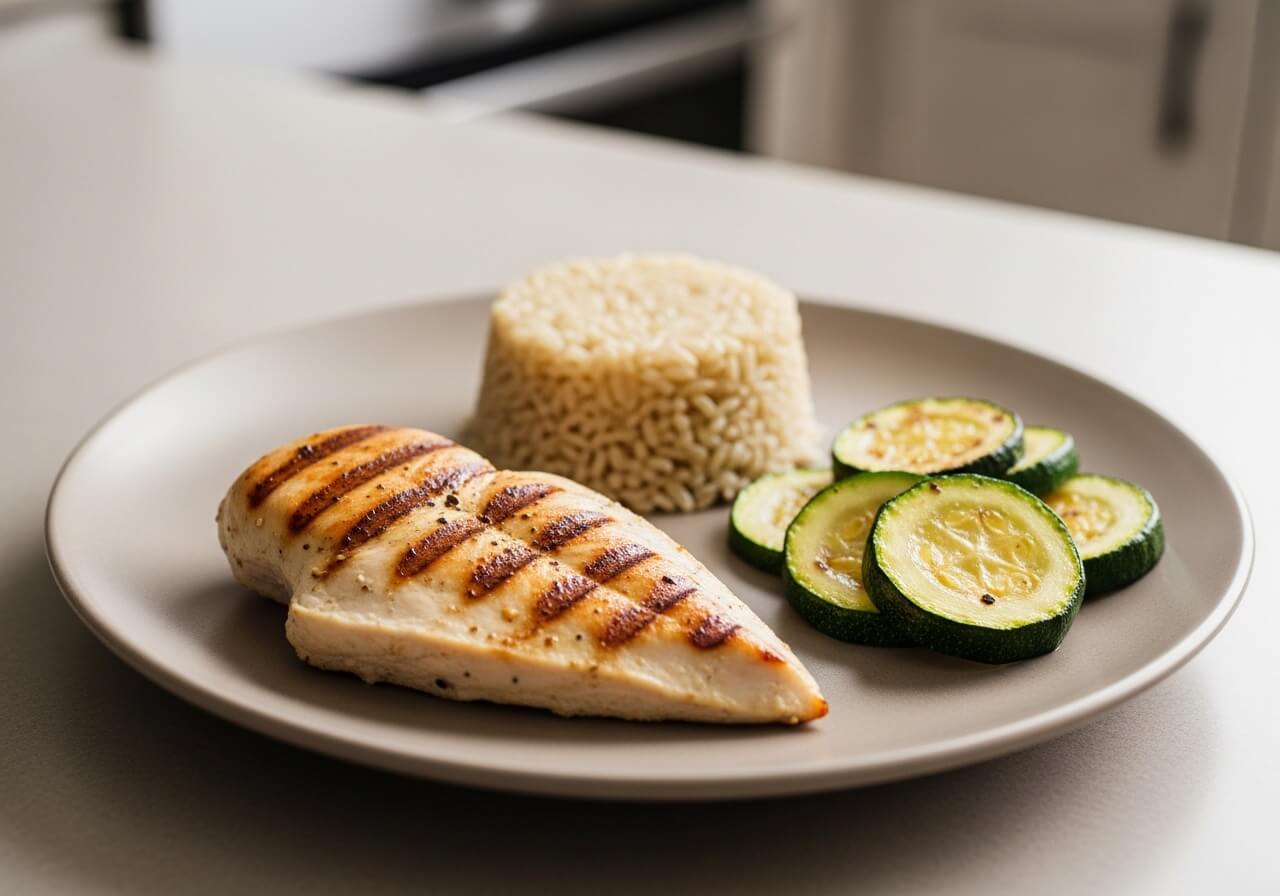
The most common mistakes come from misunderstanding what recovery actually requires. Some people see reduced training volume as a chance to cut aggressively—dropping calories by 30–40% or eliminating entire food groups. This backfires because your body still needs energy to recover and adapt. Very low energy intake can impair recovery and adaptation, especially when training stress is still present.
Mistake of dropping protein too low and how to fix it
The logic feels intuitive: less training means less muscle work, so less protein needed. This is incorrect. Muscle protein synthesis and retention continue during reduced training. Your body still needs adequate amino acids to maintain muscle and repair accumulated micro-damage from previous training blocks.
People who cut protein during deload weeks often notice they feel weaker or more fatigued when training resumes. Some lose strength they didn’t expect to lose. The fix is simple: keep protein intake consistent. If you’re eating 130 grams daily on training weeks, eat 130 grams during deload weeks too.
Over-relying on convenience foods and better alternatives
Many people assume reduced training intensity means less attention to meal quality. They reach for more ultra-processed options or takeout because “deload means I can relax.” This misses the point—deload weeks are a recovery tool, not a break from nutrition standards.
Ultra-processed foods provide energy but not the micronutrients, fiber, and digestive support your body needs during recovery. Instead, commit to the same whole-food-focused eating you’d use on training weeks, just with adjusted portion sizes.
If convenience is genuinely the barrier, batch-cook protein (chicken, ground turkey, hard-boiled eggs) on day one of your deload week. Keep it refrigerated. Pair it with simple carbs you don’t need to cook (rice, oats, bananas) and vegetables. This takes 90 minutes of prep and removes the time excuse entirely.
FAQ
How much should I really cut my calories during a deload week?
For active rest with walking and light mobility work, a 10–15% calorie reduction from your training week intake is a reasonable target. For complete rest with no structured activity, you might reduce by 15–20%. Monitor how you feel after 2–3 days. If you’re hungry or fatigued, you’ve cut too much. If you’re not feeling any difference, your reduction is probably appropriate. The goal is adjusting intake to match reduced expenditure while still supporting recovery—not maximum calorie loss.
What’s the difference between recovery nutrition for active rest versus complete rest days?
Active rest days require more total fuel than complete rest because you’re still expending energy through movement. Your overall calorie intake doesn’t need to drop as aggressively, though you’ll still reduce carbs modestly. On complete rest days, you can reduce calories slightly further while maintaining the same protein target. The protein goal stays consistent regardless—only the carb reduction might be slightly larger on complete rest days because you have virtually zero glycogen depletion to replace.
Can eating too little during deload weeks actually hurt my progress?
Yes. Very low energy intake during deload weeks can impair recovery, especially if you’re still carrying training stress from the previous block. Your body needs adequate energy to repair tissue, support immune function, and consolidate adaptations. Underfueling during recovery wastes the opportunity the deload provides. You won’t gain muscle or strength during a deload, but you can lose both if you restrict too aggressively. If you’re uncertain about your calorie target, eat slightly more rather than slightly less.
Conclusion
Nutrition deload weeks mean reducing fuel intelligently without compromising recovery—cut carbs modestly, keep protein steady, and maintain enough total calories to support adaptation. Start with a 10–15% calorie reduction from your training week and adjust based on hunger and energy. Your next training block will benefit from a deload done right, because recovery is where progress gets cemented.
This content is for educational purposes only and is not medical advice. Always consult a qualified healthcare professional for personalised guidance.