The current Dietary Guidelines devote one short section to older adults, and its first sentence corrects the most common assumption about eating after 65:
“Some older adults need fewer calories but still require equal or greater amounts of key nutrients such as protein, vitamin B12, vitamin D, and calcium.”
Fewer calories, the same or more of what matters. That single sentence sets the whole problem: less room on the plate, no less to fit on it.
The four nutrients the guidelines name
Not a general list — these four are named specifically because aging changes how the body handles them.
Protein
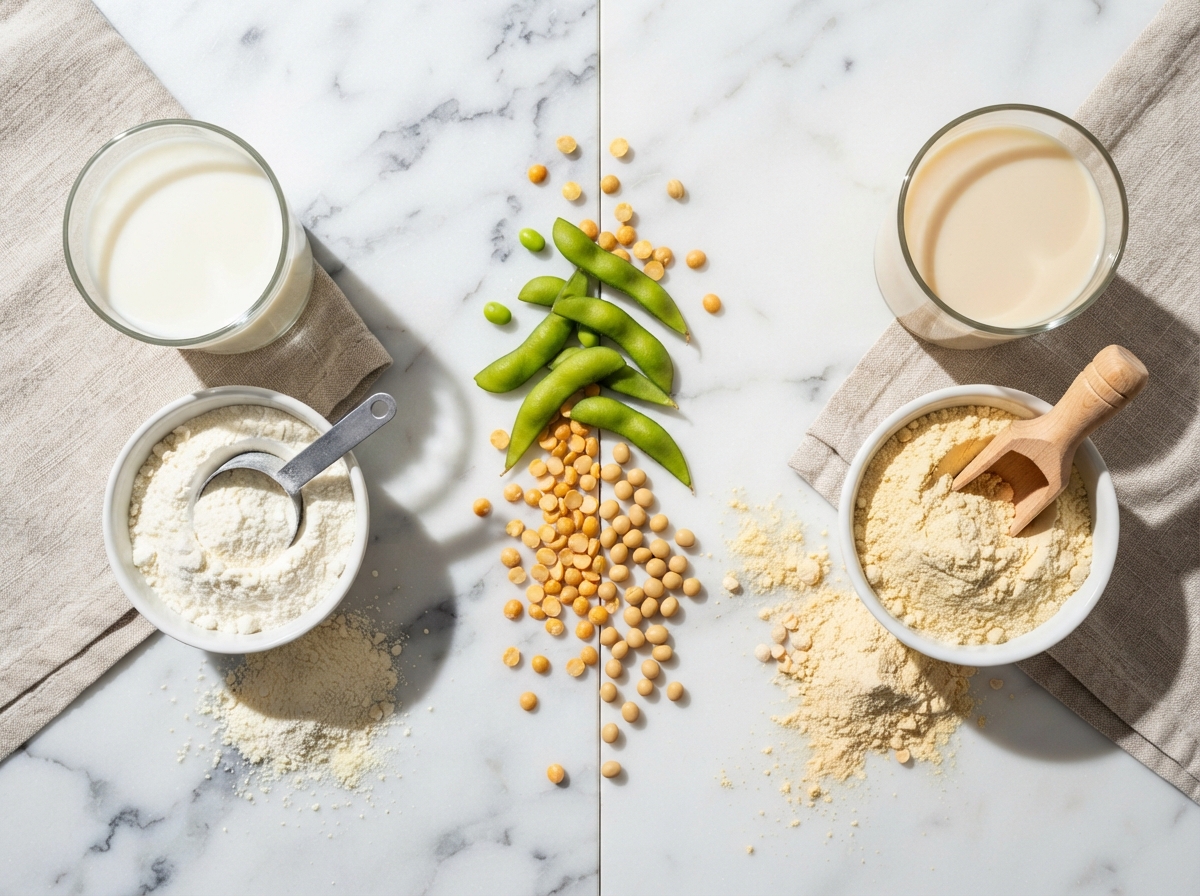
MedlinePlus states it directly: “you may need fewer calories, but you still need to get enough nutrients. Some older adults need more protein.” The Dietary Guidelines’ target for adults generally is 1.2–1.6 g per kilogram of bodyweight daily — for a 70 kg person, 84 to 112 g.
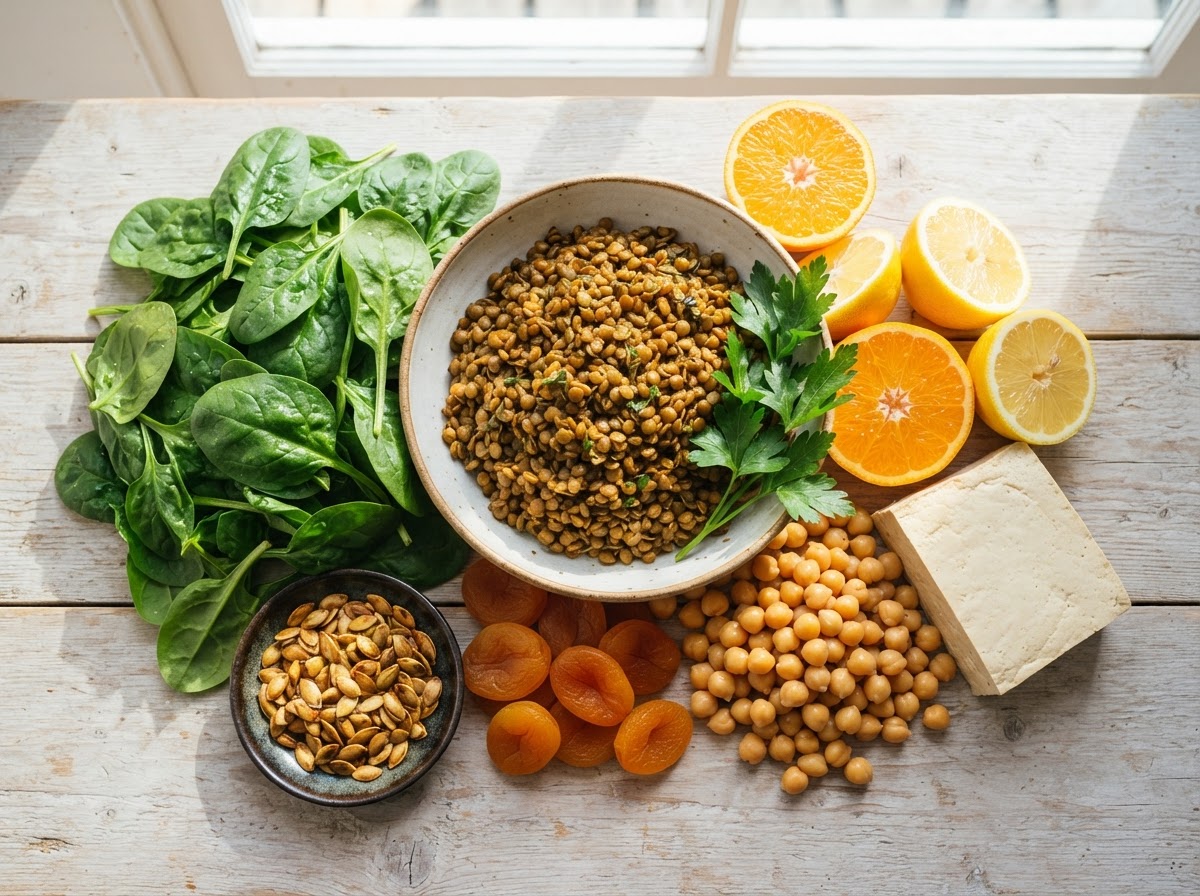
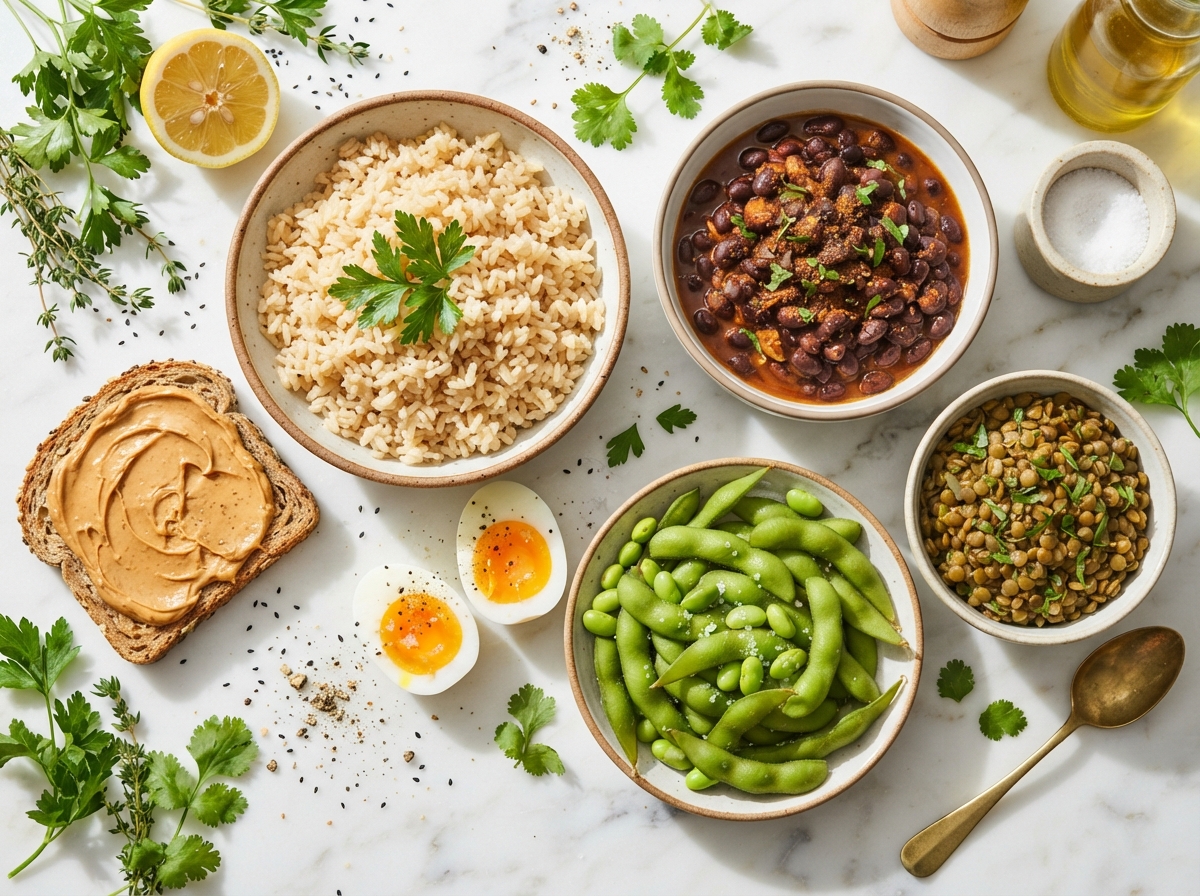
Where to get it, per the Guidelines’ older-adult section: “dairy, meats, seafood, eggs, legumes, and whole plant foods (vegetables and fruits, whole grains, nuts, and seeds).” Spreading it across meals rather than loading dinner is covered in how much protein per meal.
Vitamin B12 — the one with a specific instruction
This is the most actionable item on the page, because NIH gives an explicit directive for people over 50: “people over 50 should get most of their vitamin B12 from fortified foods or dietary supplements.”
The reason is mechanical, not dietary. Many older adults “don’t have enough hydrochloric acid in their stomach to absorb” B12 bound to food protein, and those with atrophic gastritis “might not absorb enough vitamin B12 because they make too little hydrochloric acid and intrinsic factor in their stomach.” The B12 in a fortified cereal or a supplement is not protein-bound, so it does not need that step.
The scale of the problem: “vitamin B12 deficiency affects between 3% and 43% of older adults.” The RDA is 2.4 mcg a day.
Medications matter here too. Metformin and acid-reducing drugs — proton pump inhibitors and H2 blockers — interfere with B12 absorption from food. If you take any of them long term, this is worth raising at your next appointment rather than solving in a shop.
Vitamin D
The RDA rises with age: 15 mcg (600 IU) to age 70, then 20 mcg (800 IU) from 71. And the body gets worse at making it — “as you age, your skin’s ability to make vitamin D when exposed to sunlight declines.” the National Institute of Diabetes and Digestive and Kidney Diseases lists older adults among those “more likely than others to have trouble getting enough vitamin D.”
Food sources are limited: oily fish leads by a distance, with fortified milk contributing modestly. NIDDK’s practical version is to “drink vitamin D-fortified low-fat or fat-free milk; milk products; or nondairy soy, almond, rice, or other drinks with added vitamin D and calcium.”
Calcium
The requirement rises for women at 51 and for everyone at 71: 1,000 mg for adults 19–50 and for men to 70; 1,200 mg for women 51–70 and for everyone 71 and over.
NIH gives the reason plainly: “after about age 30, bones slowly lose calcium. In middle age, bone loss speeds up and can lead to weak, fragile bones (osteoporosis) and broken bones.”
| Food | Calcium |
|---|---|
| Plain low-fat yogurt, 8 oz | 415 mg |
| Calcium-fortified orange juice, 1 cup | 349 mg |
| Sardines canned with bones, 3 oz | 325 mg |
| Nonfat milk, 1 cup | 299 mg |
| Firm tofu made with calcium sulfate, ½ cup | 253 mg |
Two servings of dairy plus a portion of sardines covers most of a 1,200 mg day.
Drink on a schedule, not on thirst
This is the change that costs nothing and is easiest to skip. NIDDK: “drink fluids throughout the day. You may feel less thirsty as you get older, but your body needs fluids to stay healthy and keep you regular.”
MedlinePlus says the same and adds a complication: “some people lose their sense of thirst as they age,” and “certain medicines might make it even more important to have plenty of fluids.”
Everything else about hydration — including why the eight-glasses rule has no source — is in how much water you should actually drink.

Food safety is a bigger deal than most people realise
This section exists because the number is startling. CDC: “nearly half of people aged 65 and older who have a lab-confirmed foodborne illness from Salmonella, Campylobacter, Listeria or E. coli are hospitalized.”
And more broadly: “older adults have a higher risk of getting sick from food poisoning and having a more serious illness.”
The foods CDC names as riskier for this group:
| Raw or undercooked poultry, meat, eggs and seafood |
| Unheated deli meats, cold cuts and hot dogs |
| Premade deli salads |
| Raw sprouts |
| Unwashed produce |
| Unpasteurised juice, cider and milk |
| Soft cheeses made from unpasteurised milk |
| Refrigerated smoked seafood |
| Raw dough or batter |
Deli meats are the one that surprises people: the fix is heating them until steaming rather than avoiding them. Leftovers follow the standard federal rule — three to four days refrigerated, into the fridge within two hours of cooking, reheated to 165°F.
When appetite goes
NIDDK notes that changes in taste and smell can reduce interest in food. MedlinePlus offers one intervention with a source behind it: “if you have started losing your appetite, exercising may help you to feel hungrier.”
When intake is genuinely low, the Guidelines’ own instruction is not to improvise: “when dietary intake or absorption is insufficient, fortified foods or supplements may be needed under medical supervision.” Note “under medical supervision” — that phrasing is deliberate, and the reasons are set out in micronutrient deficiencies: what the US data actually show.
Fiber and regularity
NIDDK’s food list for older adults: “select high-fiber foods like whole-grain breads and cereals, beans, unsalted nuts and seeds, deeply colored vegetables (like green beans), and fruits.”
Beans do double duty here — USDA counts them in both the vegetable and protein groups, and they are “excellent sources of fiber, folate, and potassium” as well as “excellent sources of plant protein, also providing iron and zinc.” For anyone eating less meat, that combination is hard to beat. More in high-fiber foods.
One federal disagreement to be aware of
The current Dietary Guidelines say “include full-fat dairy with no added sugars.” NIDDK’s older-adult page and MyPlate still say low-fat or fat-free. MyPlate has not been updated to the 2026 edition.
Where they conflict, the Dietary Guidelines govern — but the saturated fat ceiling of 10% of daily calories applies either way, and this is a reasonable thing to settle with your own clinician rather than from a web page.
Three claims we are not making
| Common claim | What the sources say |
|---|---|
| “Older adults need fewer calories, so less protein” | Contradicted twice. The Guidelines: fewer calories but “equal or greater amounts” of protein. MedlinePlus: “some older adults need more protein” |
| “A daily multivitamin is essential after 65” | the Office of Dietary Supplements reports multivitamins “do not appear to reliably reduce the risk of chronic diseases” and that no health agency promotes routine use. B12 from fortified food or a supplement is the specific, sourced exception |
| “Eating less is natural at this age” | Reduced appetite is common but is treated as a problem to address, not a stage to accept — the Guidelines route persistent shortfalls to medical supervision |
The checklist
- Protein at every meal — 1.2–1.6 g/kg a day, from dairy, meat, seafood, eggs and legumes
- B12 from fortified foods or a supplement if you are over 50 — this is NIH’s explicit instruction, not a general suggestion
- Vitamin D — 600 IU to 70, 800 IU after, mostly from oily fish and fortified drinks
- Calcium — 1,200 mg for women from 51 and everyone from 71
- Fluids on a schedule, because thirst is a weaker signal now
- Fiber from whole grains, beans, nuts, seeds and vegetables
- Take food safety seriously — heat deli meats, skip unpasteurised dairy, keep to the three-to-four-day leftovers rule
- Raise persistent appetite loss with a clinician rather than solving it with supplements
FAQ
Do older adults need more protein?
The Dietary Guidelines say older adults may need fewer calories but require “equal or greater amounts” of protein, and MedlinePlus states some older adults need more. The general adult target is 1.2–1.6 g per kilogram of bodyweight daily.
Why is B12 singled out?
Because absorption changes with age. the Office of Dietary Supplements advises that people over 50 get most of their B12 from fortified foods or supplements, since food-bound B12 needs stomach acid that many older adults no longer produce in sufficient quantity.
How much calcium after 70?
1,200 mg a day for everyone aged 71 and over, and for women from 51. Eight ounces of low-fat yogurt supplies 415 mg; three ounces of canned sardines with bones, 325 mg.
Why drink if I am not thirsty?
Because thirst weakens with age. NIDDK advises drinking fluids throughout the day for exactly this reason, and some medications increase fluid needs further.
Are older adults really at higher risk from food poisoning?
Yes, substantially. CDC reports that nearly half of people 65 and older with a lab-confirmed Salmonella, Campylobacter, Listeria or E. coli infection are hospitalised.
Should I take a multivitamin?
Not routinely. NIH reports multivitamins do not reliably reduce chronic disease risk and that no health agency promotes regular use. B12 is the specific exception with an explicit recommendation behind it.
Full-fat or low-fat dairy?
Federal sources currently disagree — the 2026 Dietary Guidelines say full-fat with no added sugars; MyPlate and NIDDK still say low-fat. The Guidelines are the newer authority; saturated fat should stay under 10% of daily calories either way.
This content is for educational purposes only and is not medical advice. Always consult a qualified healthcare professional for personalised guidance.