
Beef (Flank, Raw) Nutrition Facts
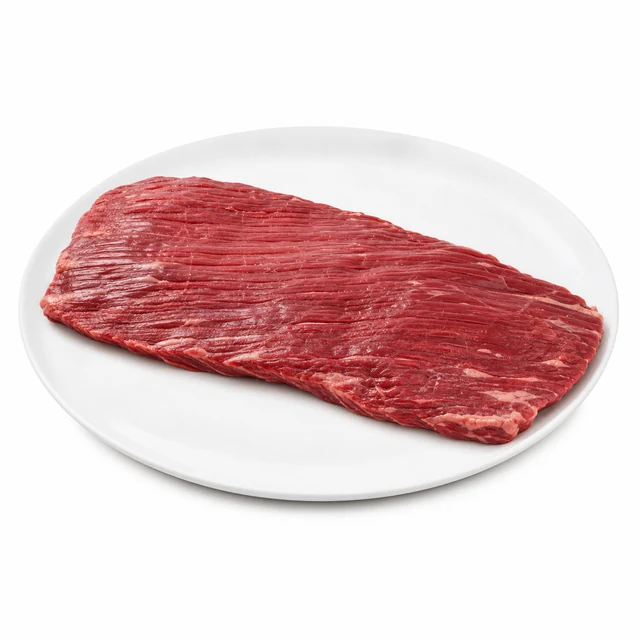
Beef (Flank) is a meat food whose cut, visible fat, and raw or cooked state strongly affect its composition. It provides protein, monounsaturated fat, potassium, and iron.
Calories164
Protein20.1 g
Carbs0 g
Fat9.4 g
ProteinCarbsFat
Nutrition for 100 g
Calories164 kcal
Protein20.1 g
Total Fat9.4 g
Carbohydrates0 g
Fiber0 g
Sodium51 mg
Total SugarsNot reported
Full nutrient profile
Proximates
Water69.78 g
Nitrogen3.221 g
Protein20.13125 g
Total lipid (fat)9.399 g
Ash0.9938 g
Carbohydrates
Carbohydrate, by difference0 g
Minerals
Calcium, Ca3.836 mg
Iron, Fe1.834 mg
Magnesium, Mg18.86 mg
Phosphorus, P167.3 mg
Potassium, K331.8 mg
Sodium, Na51.3 mg
Zinc, Zn5.563 mg
Copper, Cu0.04471 mg
Manganese, Mn0.001688 mg
Lipids
Fatty acids, total saturated3.551 g
Fatty acids, total monounsaturated3.589 g
Fatty acids, total polyunsaturated0.3143 g
Fatty acids, total trans0.3886 g
Cholesterol57.7 mg
The Iron Your Body Takes Up
The iron in beef is heme iron, and NIH notes that heme iron has higher bioavailability than nonheme iron and is less affected by the rest of the meal. Overall iron absorption runs about 14 to 18 percent from mixed diets containing meat, against 5 to 12 percent from vegetarian ones.
How to choose and store Beef (Flank, Raw)
How to choose
Buy cold, well-sealed packages with no tears; pick them up last and keep them apart from ready-to-eat foods.
Storage
Refrigerate at 40°F (4°C) or below and use within 3–5 days, or freeze.
Related foods
View all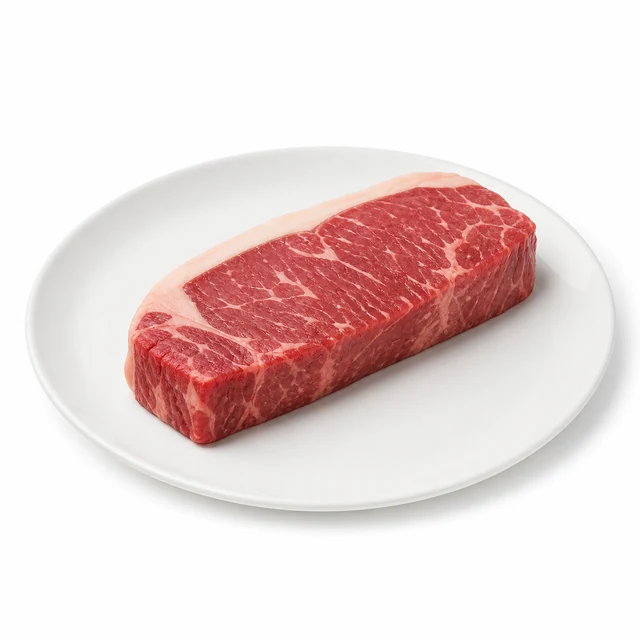
Meat
190 kcalBeef (Short Loin (NY Strip Steak), Raw)
100 g
P 21.3gC 0.2gF 11.5g
Meat
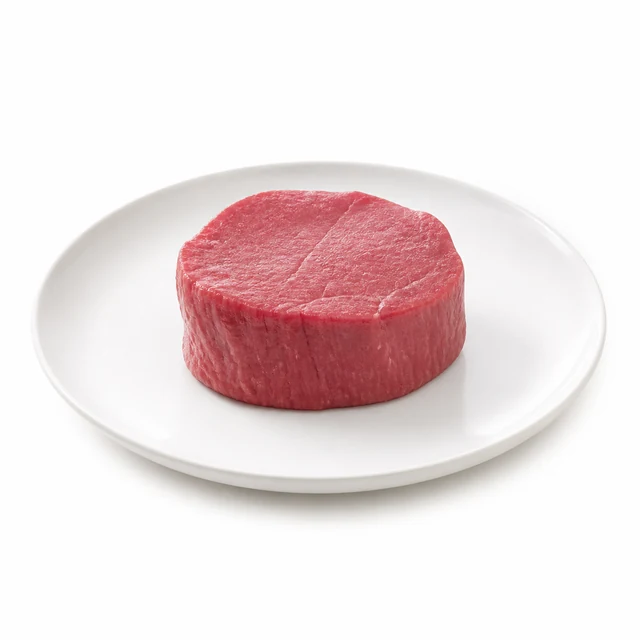
143 kcalBeef (Tenderloin Steak, Raw)
100 g
P 21.1gC 0.2gF 6.5g
Meat
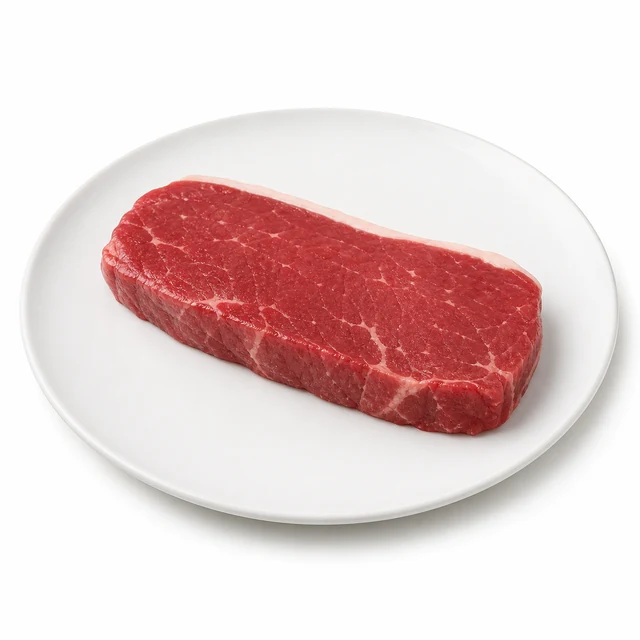
155 kcalBeef (Loin, Top Loin Steak)
100 g
P 22.8gC 0gF 6.4g
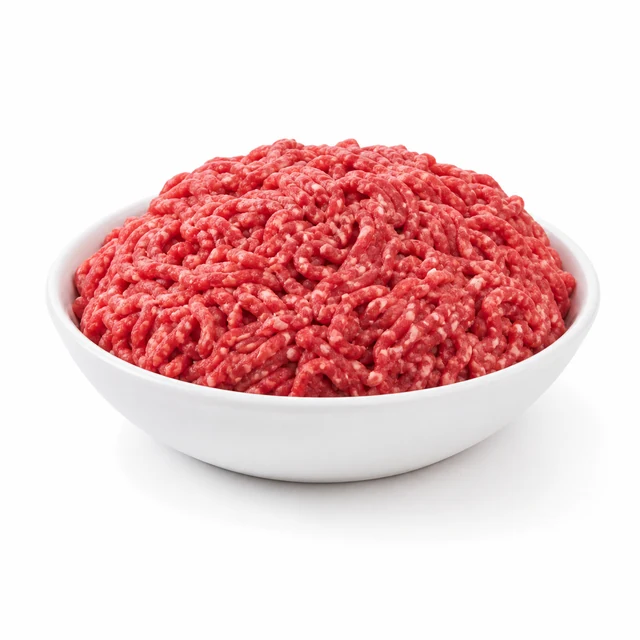
Meat
185 kcalBeef (Ground, Raw)
100 g
P 18.2gC 0gF 12.9g
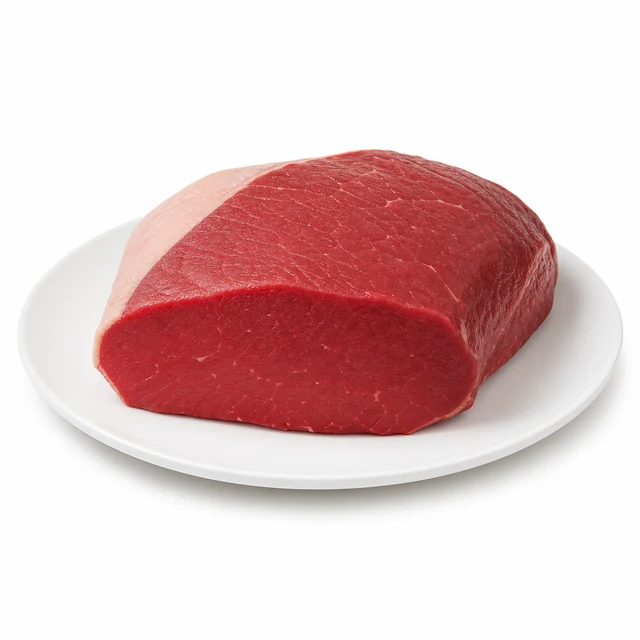
Meat
141 kcalBeef (Round, Top Round, Raw)
100 g
P 21.5gC 0.9gF 5.7g
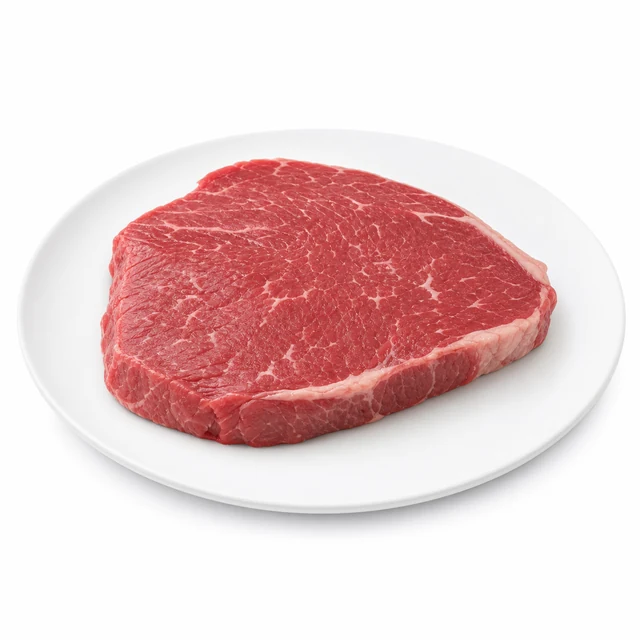
Meat
140 kcalBeef (Top Sirloin Steak, Raw)
100 g
P 22gC 0.2gF 5.7g
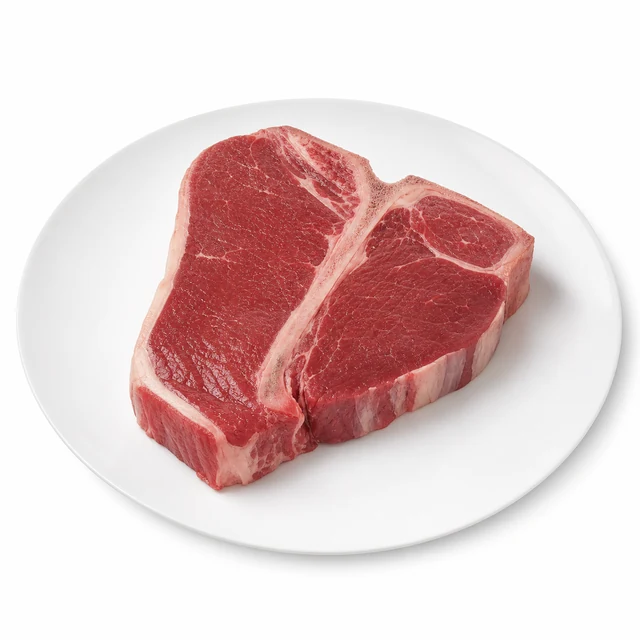
Meat
145 kcalBeef (Short Loin, Raw)
100 g
P 22.7gC 0gF 5.3g
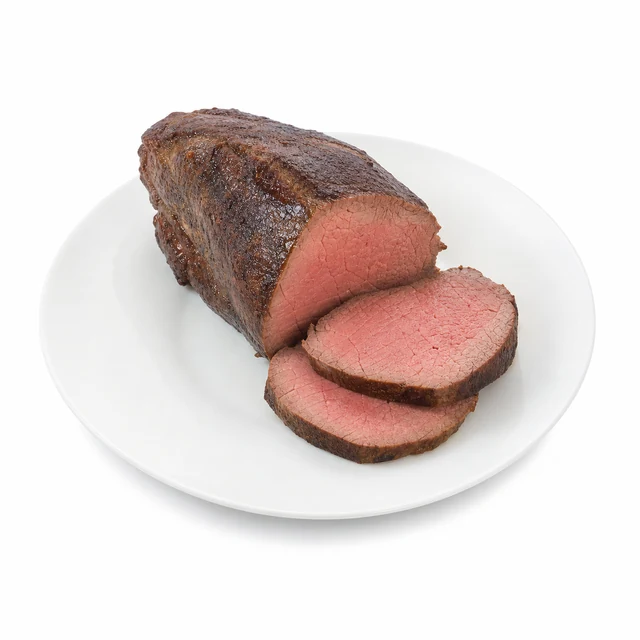
Meat
176 kcalBeef (Loin, Cooked)
100 g
P 27.7gC 0gF 6.4g
Put the numbers to work
View all