
Peppers (Serrano) Nutrition Facts
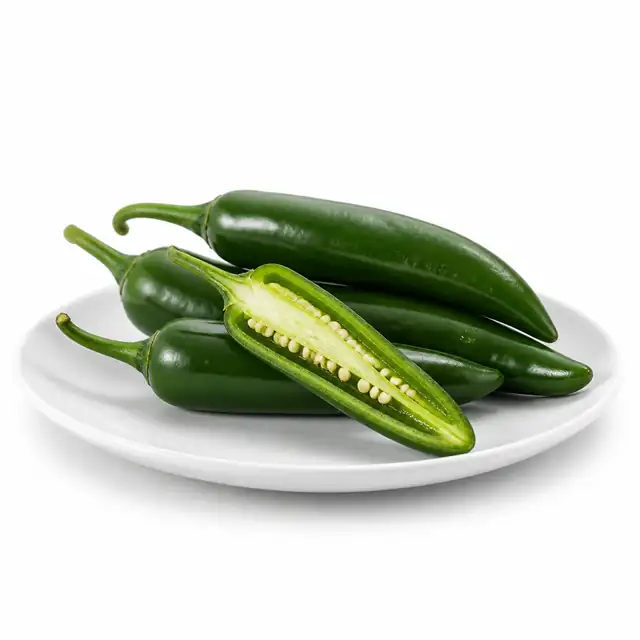
Peppers (Serrano) are a vegetable whose variety, edible portion, and raw or cooked state affect its composition. They provide dietary fiber, potassium, and vitamin C.
Calories29
Protein0.9 g
Carbs6.1 g
Fat0.1 g
ProteinCarbsFat
Nutrition for 100 g
Calories29 kcal
Protein0.9 g
Total Fat0.1 g
Carbohydrates6.1 g
Fiber2.5 g
Sodium0 mg
Total Sugars2.524 g
Full nutrient profile
Proximates
Water92.38 g
Nitrogen0.1369 g
Protein0.855625 g
Total lipid (fat)0.1406 g
Ash0.4875 g
Carbohydrates
Carbohydrate, by difference6.136275 g
Fiber, total dietary2.521 g
Sugars, Total2.524 g
Sucrose0 g
Glucose1.331 g
Fructose1.194 g
Lactose0 g
Maltose0 g
Minerals
Calcium, Ca12.86 mg
Iron, Fe0.05725 mg
Magnesium, Mg12.68 mg
Phosphorus, P24.25 mg
Potassium, K224.5 mg
Sodium, Na0 mg
Zinc, Zn0.138 mg
Copper, Cu0.06077 mg
Manganese, Mn0.1288 mg
Vitamins and other components
Vitamin C, total ascorbic acid94.61 mg
Vitamin B-60.3904 mg
Biotin2.063 ug
Folate, total28.23 ug
Small Pepper, Real Ascorbic Acid
Serranos are eaten by the spoonful rather than the cupful, but the flesh is not just heat: a cup of raw chopped serrano carries about 47 mg of vitamin C, roughly half the 90 mg Daily Value.
How to choose and store Peppers (Serrano)
How to choose
Choose firm, unbruised produce with no soft spots or damage. If buying pre-cut or bagged, pick only packs kept refrigerated or on ice.
Storage
Refrigerate perishable produce at 40°F (4°C) or below, and refrigerate anything pre-cut or packaged. Wash under running water just before eating.
Related foods
View all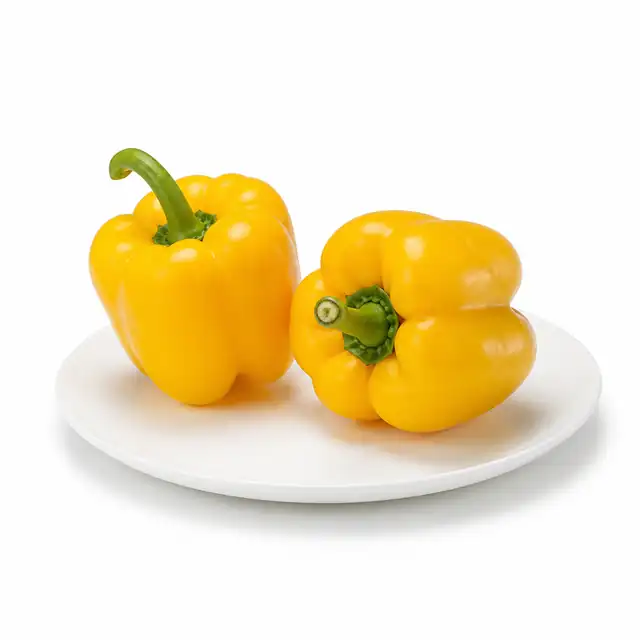
Vegetables
31 kcalPeppers (Bell, Yellow)
100 g
P 0.8gC 6.6gF 0.1g
Vegetables
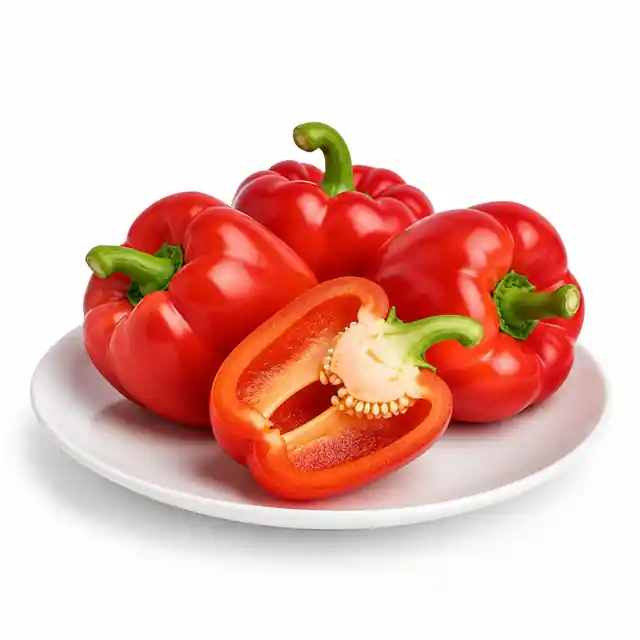
31 kcalPeppers (Bell, Red)
100 g
P 0.9gC 6.7gF 0.1g
Vegetables
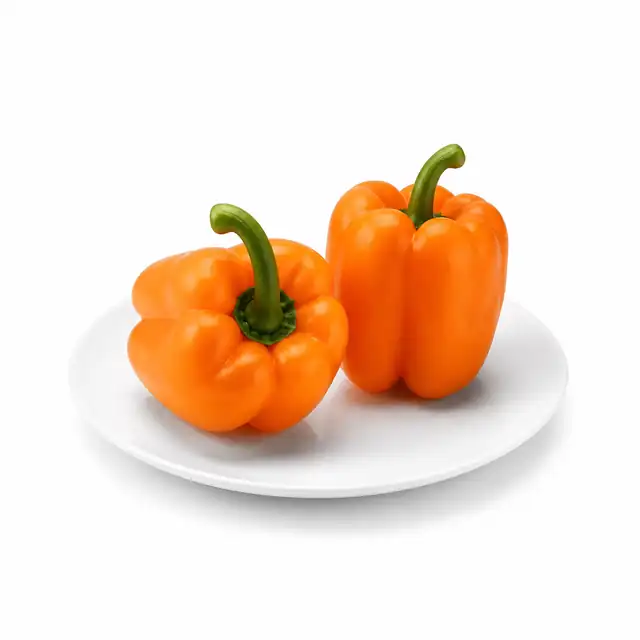
32 kcalPeppers (Bell, Orange)
100 g
P 0.9gC 6.7gF 0.2g
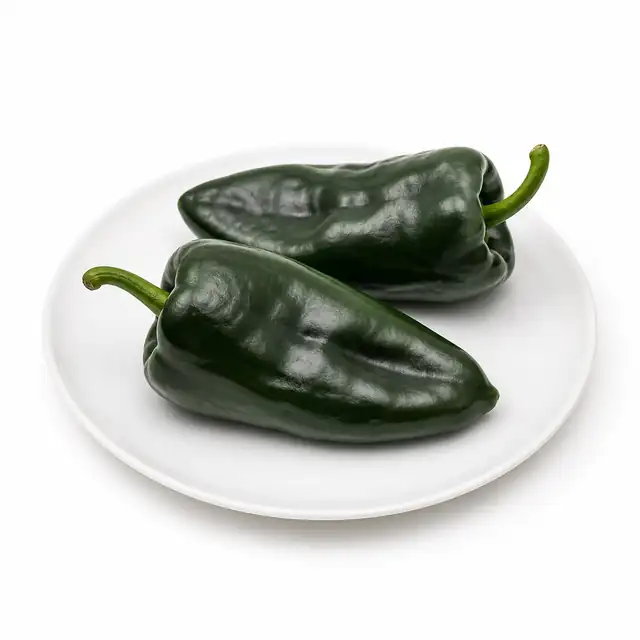
Vegetables
28 kcalPeppers (Poblano)
100 g
P 1.4gC 5.1gF 0.2g
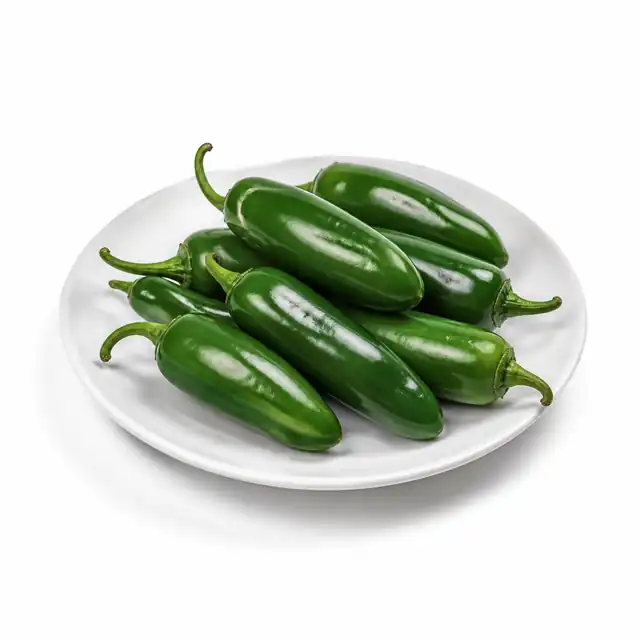
Vegetables
24 kcalPeppers (Jalapeno)
100 g
P 0.6gC 5.1gF 0.1g
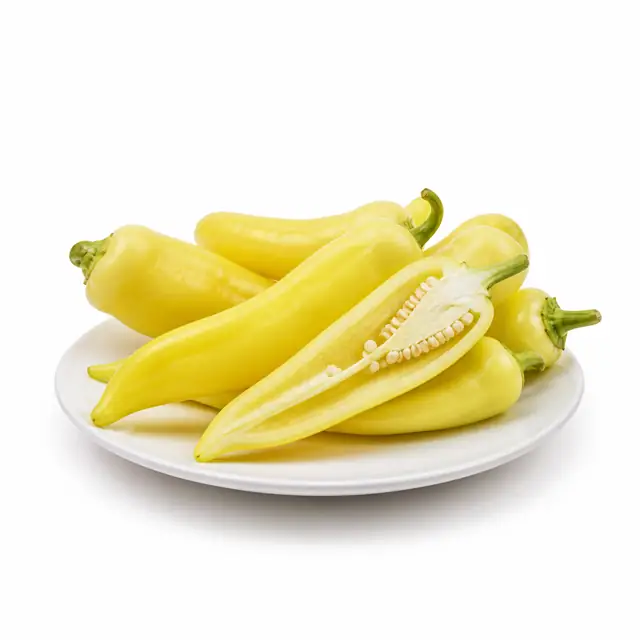
Vegetables
24 kcalPeppers (Banana Or Hungarian Wax)
100 g
P 0.7gC 5gF 0.1g
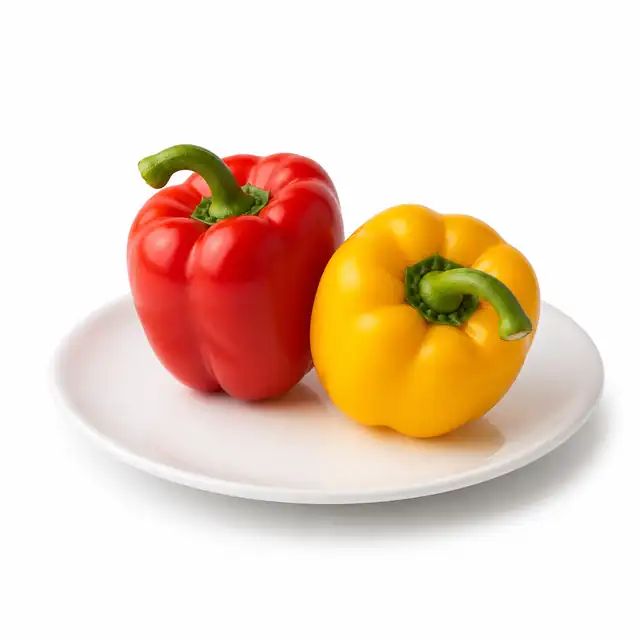
Vegetables
23 kcalPeppers (Bell)
100 g
P 0.7gC 4.8gF 0.1g
Vegetables
31 kcalCabbage (Green)
100 g
P 1gC 6.4gF 0.2g
Put the numbers to work
View all