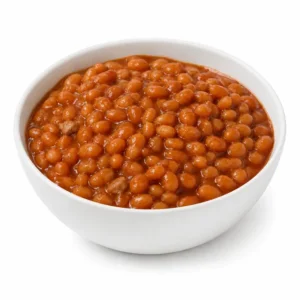
Peanut Butter (Creamy) is a pulse or legume food that combines carbohydrate, plant protein, and a food matrix affected by soaking, cooking, or processing. It provides protein, dietary fiber, monounsaturated fat, and polyunsaturated fat. Keep the package intact and follow its labeled storage instructions.
Calories632
Protein24g
Carbs22.7g
Fat49.4g
ProteinCarbsFat
Nutrition for 100 g
Calories
632 kcal
Protein
23.99 g
Total Fat
49.43 g
Carbohydrates
22.7 g
Fiber
6.32 g
Total Sugars
10.49 g
Sodium
221 mg
Nutrients
Full nutrient profile
Proximates
Water1.1 g
Energy (Atwater General Factors)631.65 kcal
Energy (Atwater Specific Factors)589.38 kcal
Nitrogen4.39 g
Protein23.99 g
Total lipid (fat)49.43 g
Ash2.77 g
Energy2501 kj
Energy598 kcal
Carbohydrates
Carbohydrate, by difference22.7 g
Fiber, total dietary6.32 g
Galactose0 g
Sugars, Total10.49 g
Sucrose10.25 g
Glucose0.13 g
Maltose0 g
Starch3.56 g
Fructose0.12 g
Lactose0 g
Lipids
Fatty acids, total saturated8.42 g
SFA 16:04.11 g
SFA 18:01.29 g
SFA 20:00.68 g
SFA 22:01.42 g
SFA 24:00.82 g
Fatty acids, total monounsaturated30.71 g
MUFA 18:1 c29.76 g
MUFA 20:1 c0.8 g
MUFA 22:1 n-90.13 g
Fatty acids, total polyunsaturated9.78 g
PUFA 18:2 n-6 c,c9.73 g
PUFA 20:4 n-60 g
PUFA 18:2 CLAs0.01 g
PUFA 18:3 n-6 c,c,c0.001 g
Cholesterol0 mg
PUFA 20:3 n-30.01 g
PUFA 18:3i0 g
PUFA 22:40 g
MUFA 14:10 g
TFA 16:1 t0 g
MUFA 24:1 c0 g
MUFA 15:10 g
TFA 18:2 t not further defined0.03 g
Fatty acids, total trans-polyenoic0.03 g
SFA 8:00 g
SFA 12:00 g
SFA 14:00.02 g
PUFA 18:3 n-3 c,c,c (ALA)0.03 g
MUFA 22:1 c0.04 g
MUFA 17:10.03 g
MUFA 16:10.03 g
PUFA 20:5 n-3 (EPA)0 g
SFA 17:00.05 g
PUFA 20:30.01 g
PUFA 20:2 n-6 c,c0.008 g
MUFA 16:1 c0.03 g
SFA 15:00.006 g
TFA 18:1 t0.04 g
TFA 22:1 t0.001 g
MUFA 20:10.58 g
MUFA 22:10.05 g
MUFA 18:124.81 g
PUFA 18:212.26 g
PUFA 18:30.03 g
PUFA 20:40.02 g
Fatty acids, total trans0.08 g
Fatty acids, total trans-monoenoic0.05 g
PUFA 22:5 n-3 (DPA)0 g
PUFA 22:6 n-3 (DHA)0 g
PUFA 18:40 g
SFA 4:00 g
SFA 6:00 g
SFA 10:00 g
Amino acids
Tryptophan0.23 g
Threonine0.81 g
Isoleucine0.92 g
Leucine1.88 g
Lysine0.95 g
Methionine0.29 g
Phenylalanine1.5 g
Tyrosine1.06 g
Valine1.12 g
Arginine3.32 g
Histidine0.68 g
Alanine1.16 g
Aspartic acid3.42 g
Glutamic acid5.82 g
Glycine1.69 g
Proline1.24 g
Serine1.42 g
Hydroxyproline0.16 g
Cysteine0.51 g
Cystine0.23 g
Minerals
Calcium, Ca49.85 mg
Iron, Fe1.85 mg
Magnesium, Mg192.6 mg
Phosphorus, P393.2 mg
Potassium, K654 mg
Sodium, Na220.7 mg
Zinc, Zn3.06 mg
Copper, Cu0.54 mg
Manganese, Mn1.68 mg
Selenium, Se20.16 ug
Vitamins and other components
Thiamin0.12 mg
Niacin17.2 mg
Vitamin B-60.38 mg
Biotin87.81 ug
Folate, total97.29 ug
Vitamin E (alpha-tocopherol)5.41 mg
Vitamin K (phylloquinone)0 ug
Folic acid0 ug
Lutein + zeaxanthin0 ug
Cryptoxanthin, beta0 ug
Lycopene0 ug
Carotene, beta0 ug
Carotene, alpha0 ug
Vitamin D (D2 + D3), International Units0 iu
Vitamin B-120 ug
Retinol0 ug
Folate, food87 ug
Tocopherol, delta0.74 mg
Tocotrienol, gamma0 mg
Tocotrienol, delta0 mg
Vitamin C, total ascorbic acid0 mg
Riboflavin0.19 mg
Tocopherol, beta0.52 mg
Tocopherol, gamma7.62 mg
Tocotrienol, alpha0 mg
Tocotrienol, beta0 mg
Pantothenic acid1.14 mg
Folate, DFE87 ug
Betaine0.8 mg
Vitamin E, added0 mg
Vitamin B-12, added0 ug
Vitamin A, IU0 iu
Vitamin A, RAE0 ug
Choline, total63 mg
Vitamin D (D2 + D3)0 ug
Other nutrients
Daidzein11.46 mg
Genistein0 mg
Daidzin0.65 mg
Genistin1.93 mg
Glycitin0.41 mg
Caffeine0 mg
Theobromine0 mg
Alcohol, ethyl0 g
More about allergens
This food contains peanut, one of the nine major food allergens recognized in the United States. Check the current ingredient and allergen label on packaged versions and follow individual medical advice.
This general information does not replace the ingredient and allergen label on a packaged product or individual medical advice.
Interesting fact
Soaking changes cooking time; thorough cooking changes safety and digestibility
Soaking hydrates dry pulses and can shorten cooking, but it does not replace cooking. Heat softens the seed structure and reduces heat-sensitive antinutritional proteins; canned beans are already cooked, and rinsing is useful when sodium has been added.
Recipes featuring this food will appear here when the recipe library is connected.
These nutrition values are provided for educational purposes only and are not medical advice. Values may vary depending on brand, preparation method, and serving size.