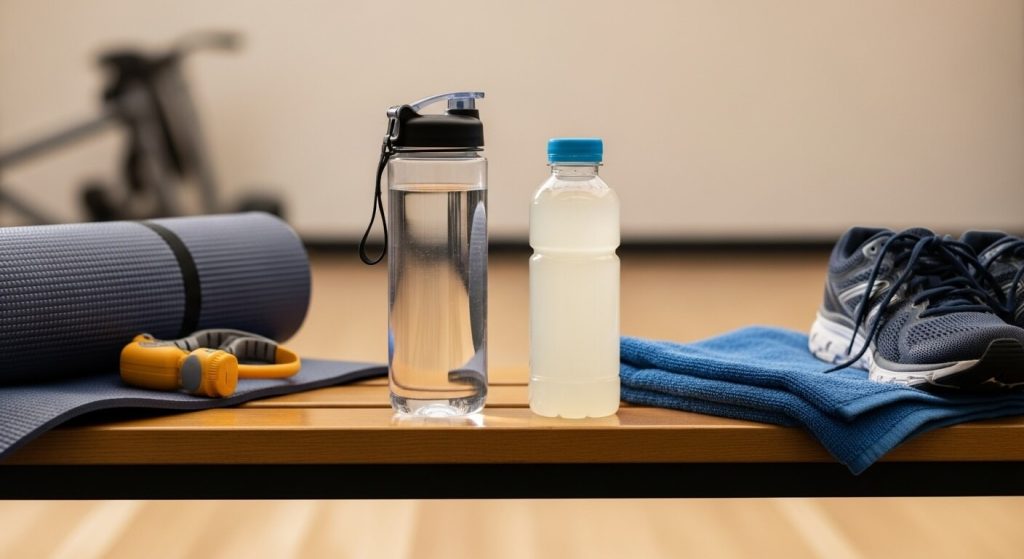
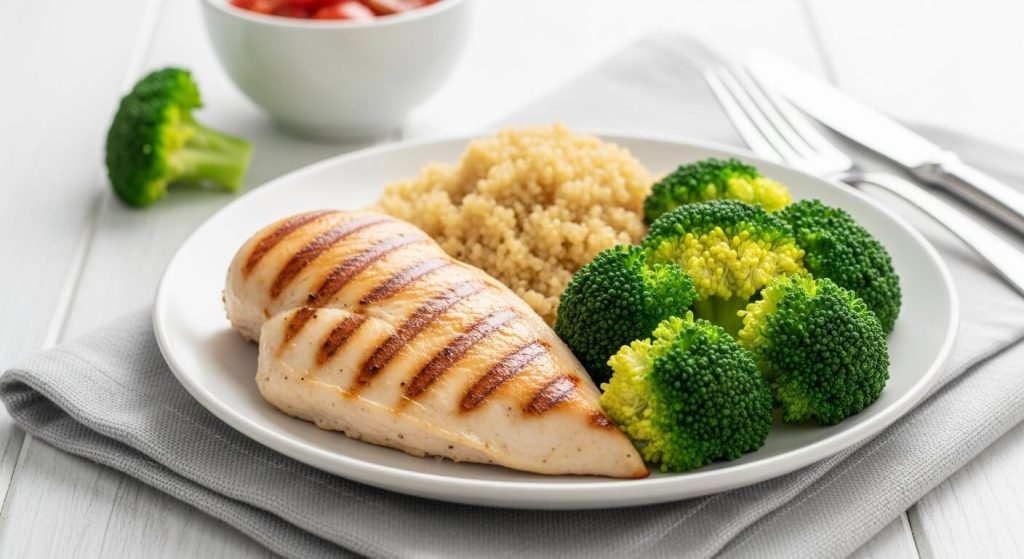
Recovery nutrition has one question at its centre, and it is not what to drink. It is when is your next hard session. Answer that and everything else follows — including, most of the time, the answer “just eat normally.”
The short version
- Under 8 hours to the next session: carbohydrate as soon as practical, 1.0–1.2 g per kg per hour for four hours.
- 24 hours or more: hit the daily total and eat when you like. Glycogen fully restores within a day at 8 g/kg/day or more.
- Adding protein to your recovery carbs does not speed glycogen refilling — the largest meta-analysis found no effect at all.
- Protein after training: 0.25–0.3 g/kg, or 15–25 g. The window is hours, not minutes.
- Rehydrate with 125–150% of what you lost — 1.25 to 1.5 litres for every kilogram of body mass.
- Tart cherry did not reduce muscle soreness in the pooled trials, though it did help strength recovery.
Refuelling: the three scenarios
Glycogen refills at a rate you cannot rush past. Without carbohydrate the rate is about 2 mmol per kg of dry muscle per hour; with adequate carbohydrate it reaches 40–45. That ceiling is why the clock matters when the next session is close, and why it stops mattering when it is not.
| Next session in… | What to do | Source |
|---|---|---|
| Under 4 hours | Aggressive refeeding at about 1.2 g of carbohydrate per kg per hour | ISSN position stand |
| Under 8 hours | “Carbohydrate as soon as practical after the first workout” — 1.0–1.2 g/kg/h for the first 4 hours, then normal meals | IOC consensus |
| 24 hours or more | Timing “can be chosen according to what is practical and enjoyable” | IOC consensus |
An alternative protocol for the urgent case, from the ISSN: “0.6 to 1.0 g/kg body mass within the first 30 min of completing a glycogen depleting exercise bout and again every two hours for the next four to six hours.”
The ISSN also states plainly when none of this applies: “the timing of post-exercise carbohydrate administration holds the highest level of importance under two primary situations: 1) when rapid restoration of muscle glycogen is a primary goal and 2) when inadequate amounts of carbohydrate are being delivered.” If you train once a day and eat enough, you are in neither.
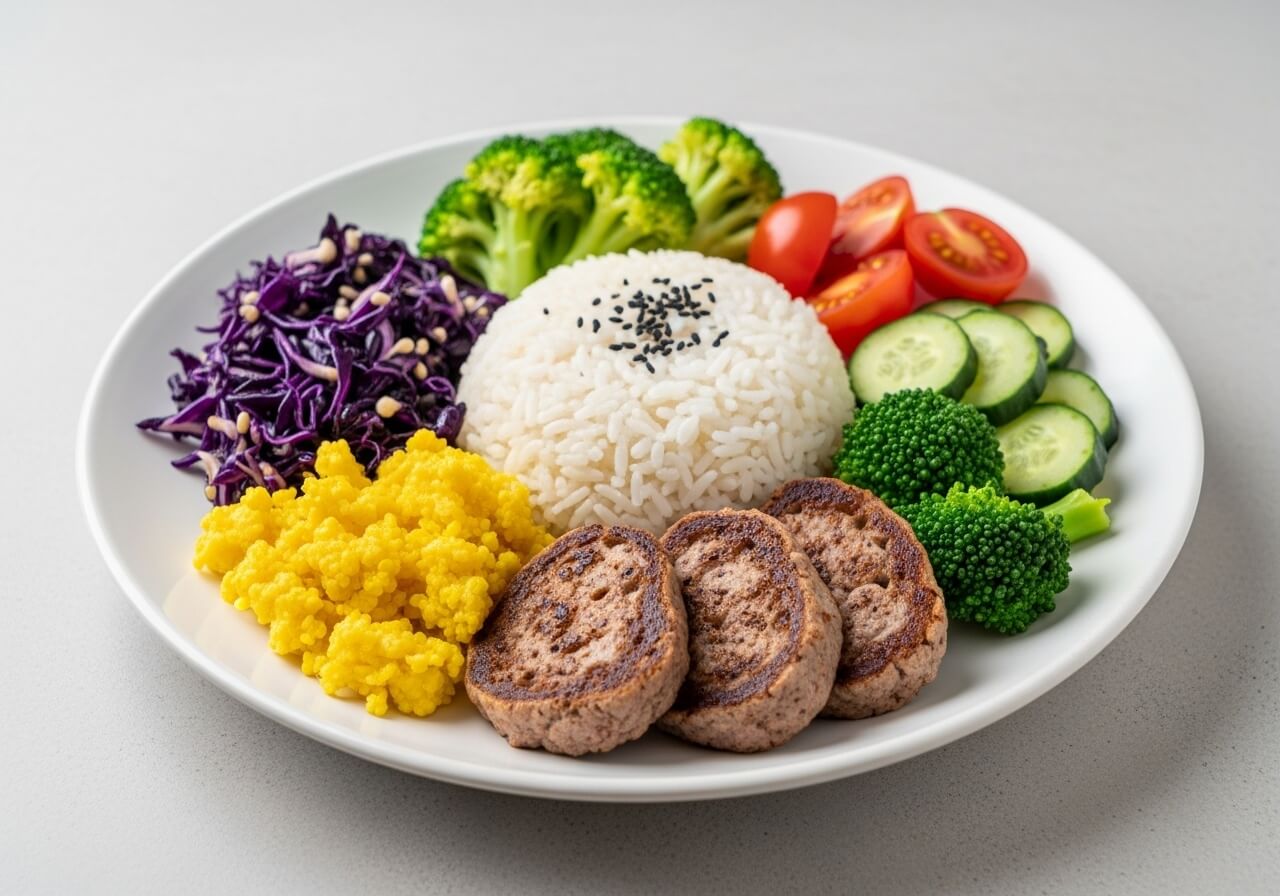
Does adding protein speed up glycogen refilling?
This is the most-repeated recovery claim, and the honest answer is that the sources disagree — so here they both are.
The conditional position. The ISSN states that “protein addition augments glycogen recovery when carbohydrate ingestion is < 1.2 g/kg/h.” A 2018 review sets the threshold lower, saying protein may help “when carbohydrate ingestion is sub-optimal (≤0.8 g kg body mass⁻¹·h⁻¹)”, and reports no acceleration at 1.2 g/kg/h.
The pooled position. A 2021 systematic review and meta-analysis gathered 29 trials and 246 participants. Carbohydrate alone beat control decisively. But carbohydrate plus protein against carbohydrate alone came to 0.4 mmol·kg dm⁻¹·h⁻¹, p = 0.805 — nothing. Its conclusion: “co-ingesting PRO with CHO appears unlikely to enhance (or impede) the rate of muscle glycogen re-synthesis.”
How to read that disagreement. The meta-analysis did not find the dose-dependence the position stands describe — it found no correlation between carbohydrate dose and resynthesis rate at all. So the defensible practical line is: get the carbohydrate right first. Protein in your recovery meal is worth having for muscle, not for glycogen, and a combined drink is a convenience rather than a metabolic advantage.
Protein after training
Two figures, from two position statements, that agree with each other. The joint Academy of Nutrition and Dietetics / ACSM statement gives an early-recovery dose of “0.25–0.3 g/kg body weight or 15–25 g protein”. The ISSN gives 20–40 g, or 0.25–0.40 g/kg, repeated every three to four hours.
On urgency: post-exercise ingestion “immediately to 2-h post” stimulates robust increases in muscle protein synthesis — a two-hour window, not a thirty-minute one. And once daily protein is adequate, even that softens. The reasoning is covered in our guide to nutrient timing.
Rehydration: why 100% is not enough
Replacing exactly what you lost leaves you short, because a large fluid load increases urine output. Both position statements build that in.
| Measure | Figure |
|---|---|
| Fluid to drink after exercise | 125–150% of the deficit — 1.25 to 1.5 L for every 1 kg of body mass lost |
| Short recovery (under 4 hours) | Up to 150% of the estimated deficit |
| During exercise | Keep body-mass loss under 2% |
| Sodium supplementation warranted | Sweat sodium above 60 mEq/L combined with sweat rates above 2.5 L/h |
Sodium is not an optional extra here. The joint position statement notes that “the presence of dietary sodium/sodium chloride (from foods or fluids) helps to retain ingested fluids.” A salty meal with water does the same job as an electrolyte drink. Our sodium guide covers the everyday side of that.
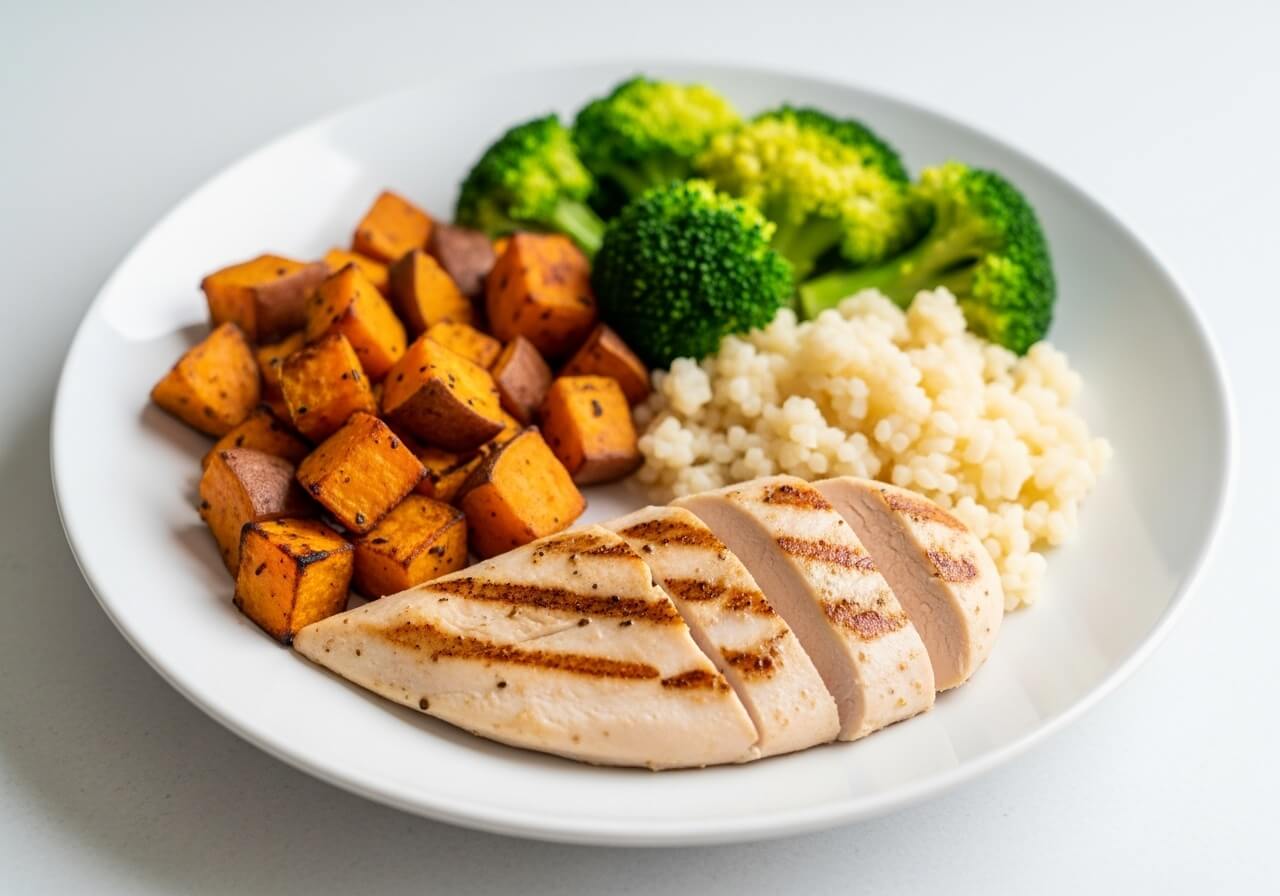
Recovery products, graded honestly
Chocolate milk. A systematic review of twelve studies found no effect on time to exhaustion, creatine kinase, heart rate or perceived exertion compared with placebo or other recovery drinks. Its conclusion is deliberately modest: chocolate milk “provides either similar or superior results when compared to placebo or other recovery drinks”, and “the evidence is limited.” It is a reasonable, cheap carbohydrate-and-protein vehicle. It is not an optimised recovery formula.
Tart cherry. A 2026 meta-analysis of 19 trials and 385 participants split cleanly. Muscle soreness — the thing it is sold for — showed no significant effect at any timepoint. Maximal voluntary contraction, meaning strength recovery, did improve at every timepoint, and CRP fell. The reviewers’ own grading: “low-to-moderate certainty of evidence, warranting cautious interpretation.” The NIH calls the results “variable.”
Combined protein–carbohydrate drinks. Convenient, and a sensible way to hit two targets in one go after a session when you do not feel like eating. Not faster for glycogen, per the meta-analysis above.
The one thing that beats all of it
Daily totals. Carbohydrate scaled to training load — 3–5 g/kg/day for light training up to 8–12 g/kg/day for extreme volumes — and protein at 1.2 to 2.0 g/kg/day. Every protocol above is a way of arranging those totals when time is short. When time is not short, the totals are the whole job.
FAQ
Do I need to eat within 30 minutes of finishing?
Only if your next hard session is within a few hours. Otherwise the consensus explicitly leaves the timing of carbohydrate to your convenience, and the protein window runs to a couple of hours rather than thirty minutes.
How much carbohydrate do I need after a hard session?
If the next session is under eight hours away, 1.0–1.2 g per kg per hour for the first four hours. Otherwise, whatever gets you to your daily total.
Is a recovery shake better than food?
Not metabolically. A combined drink is convenient and easy to get down after hard work; the pooled evidence does not show faster glycogen recovery from adding protein to carbohydrate.
How much should I drink after training?
125 to 150% of what you lost — about 1.25 to 1.5 litres per kilogram of body mass. Weighing yourself before and after is the only way to know the number.
Does tart cherry juice help sore muscles?
The pooled trials found no significant effect on soreness. They did find improved strength recovery and lower CRP, at low-to-moderate certainty. If you use it, use it for that.
Where this fits
The principles behind these protocols — and why protein timing behaves so differently from carbohydrate timing — are in nutrient timing. How the numbers change between endurance work, lifting and intervals is in fuelling different types of training. And if hard sessions upset your stomach, that is a separate mechanism, covered in the gut and athletic performance.
Every figure here is linked to its source in the text: the joint Academy of Nutrition and Dietetics / Dietitians of Canada / ACSM position statement, the International Society of Sports Nutrition position stands, the International Olympic Committee consensus on carbohydrates, the National Athletic Trainers’ Association position statement, the NIH Office of Dietary Supplements, and peer-reviewed meta-analyses in Sports Medicine – Open, Nutrients and the European Journal of Clinical Nutrition. Checked against those sources on 2 September 2026. Educational information, not medical advice — see our medical disclaimer.
This content is for educational purposes only and is not medical advice. Always consult a qualified healthcare professional for personalised guidance.