
Nutrition Facts Tomatoes (Canned)
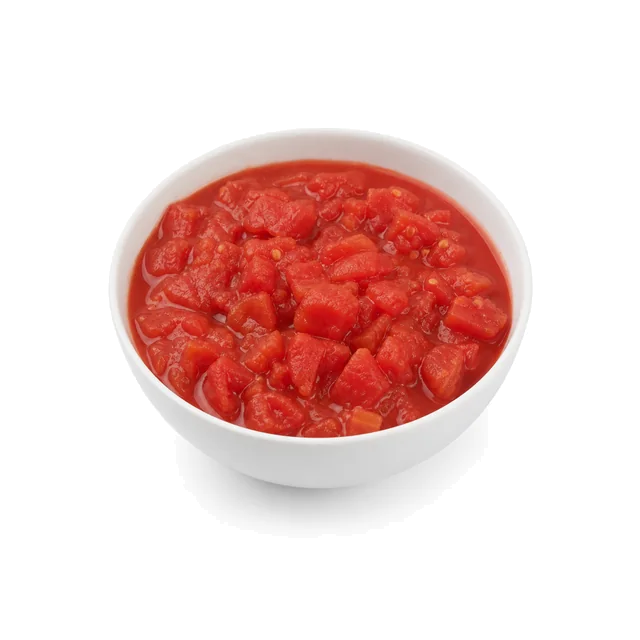
Tomatoes (Canned) are a canned food whose sodium, added sugar, and drained state depend on the recipe and packing liquid. They provide potassium. Choose an intact can without swelling, leakage, heavy rust, or a deep seam dent. Store unopened cans in a cool, dry place; after opening, transfer leftovers to a covered container and refrigerate.
Nutrition for 100 g
| Calories | 18 kcal |
|---|---|
| Protein | 0.84 g |
| Total Fat | 0.5 g |
| Carbohydrates | 3.32 g |
| Fiber | Not reported |
| Total Sugars | 2.99 g |
| Sodium | 125 mg |
Nutrients
Full nutrient profile
Proximates
Carbohydrates
Minerals
Interesting fact
A damaged can is a safety signal, not a cosmetic detail
A small shallow dent may be harmless, but a bulging, leaking, heavily rusted, or deeply dented can—especially at a seam—should be discarded without tasting. After opening, move leftovers out of the can and refrigerate them in a covered container.
Related foods
Compare similar foods


Recipes with this food
Use tomatoes (canned) in simple recipes
These nutrition values are provided for educational purposes only and are not medical advice. Values may vary depending on brand, preparation method, and serving size.