
Nutrient timing science explores how the strategic placement of meals throughout your day influences performance, recovery, and body composition. This guide breaks down the evidence on when to eat protein, carbs, and fats—and shows you how to apply these principles without adding unnecessary complexity to your routine.
- How Nutrient Timing Works in Your Body
- When Your Body Processes Food Differently Throughout the Day
- How Insulin and Metabolic Pathways Respond to Timing
- Putting Nutrient Timing Into Your Daily Routine
- Pre and Post Workout Timing for Maximum Recovery
- Daily Meal Timing Around Work and Sleep Schedules
- Common Nutrient Timing Mistakes That Slow Progress
- Skipping Nutrients During Restrictive Eating Windows
- Overcomplicating Timing When Simplicity Works Better
- FAQ
- Does timing really matter if I hit my daily macros?
- What is the best time to eat protein for muscle building?
- Should I adjust fat intake timing on rest days versus training days?
- Conclusion
How Nutrient Timing Works in Your Body
When Your Body Processes Food Differently Throughout the Day
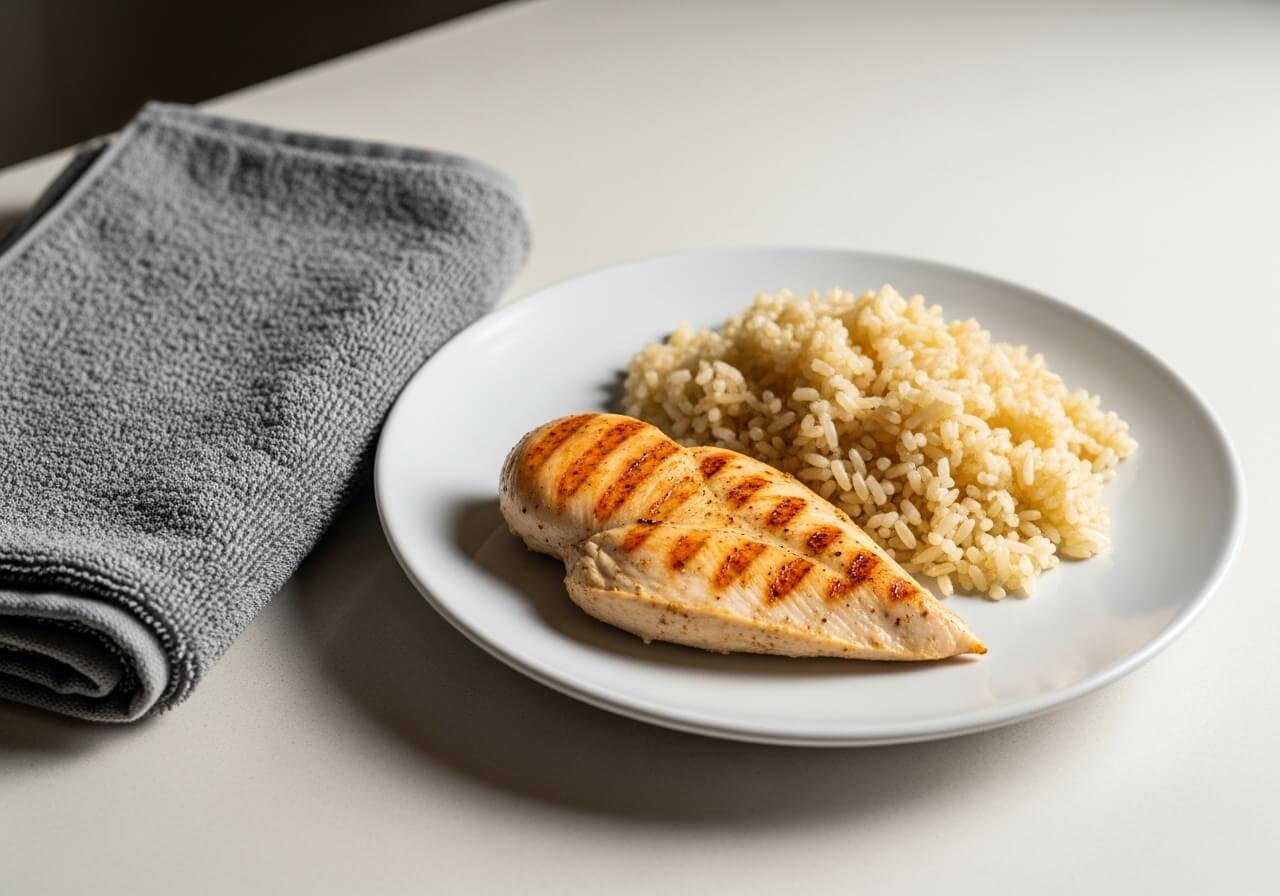
Your body’s ability to use and store nutrients shifts based on activity, time of day, and the interval since your last meal. After resistance training, your muscles are primed to absorb amino acids and rebuild protein. Your muscle cells also accept glucose more readily without requiring as much insulin, which makes the post-workout period useful for recovery.
The key distinction: your body does not have an “anabolic on/off switch” tied to a 30-minute window. The post-exercise period represents a window of heightened nutrient uptake that extends for hours, not minutes. If you finish training at 3 PM and eat protein at 5 PM, your muscles can still use that protein effectively. However, if your next training session is only 4–6 hours away, waiting too long to refuel becomes counterproductive because you start the next session with depleted glycogen stores.
How Insulin and Metabolic Pathways Respond to Timing
Insulin sensitivity—your cells’ ability to respond to insulin and take up glucose—peaks after exercise and during the early part of a meal. This is why eating carbohydrates after a hard workout may help replenish muscle glycogen faster than eating them later when you are sedentary. Your muscles are actively signaling for fuel, and insulin shuttles carbohydrates directly into those depleted stores.
Fat intake timing has far less impact on workout recovery compared to protein and carbohydrate timing. A meal containing fat after training is not harmful, but fat slows overall digestion, which can delay the absorption of carbohydrates and protein when rapid refueling is your goal. This matters most when you are training again within a few hours; for most people with 24+ hours between sessions, the digestive slowdown is less relevant.
Putting Nutrient Timing Into Your Daily Routine

Pre and Post Workout Timing for Maximum Recovery
If you train once per day with at least 24 hours until your next session, your priority is straightforward: eat adequate protein and carbohydrates within a few hours after training. Waiting one to two hours is fine.
If you train twice in one day—for example, a morning lift followed by an evening conditioning session—the middle meal becomes critical. Your post-workout meal after the morning session should include 20–40 grams of protein and 0.5–1 gram of carbohydrate per pound of body weight. This is where nutrient timing for fitness genuinely matters: insufficient refueling between two sessions can degrade performance and recovery more than imperfect timing with longer rest periods.
Pre-workout nutrition follows similar logic. Eating a small balanced meal 2–3 hours before training gives you fuel without digestive discomfort. If you only have 30–60 minutes, a small dose of easy-to-digest carbohydrates (a banana, a rice cake) with minimal fat and fiber is more practical than a full meal.
Daily Meal Timing Around Work and Sleep Schedules
Outside the immediate workout window, spacing your protein intake across the day matters more than hitting a specific time. Eating roughly 20–40 grams of protein every 3–4 hours supports consistent muscle protein synthesis. This might look like breakfast at 7 AM (30 grams), lunch at 12 PM (35 grams), and dinner at 6 PM (40 grams).
Carb timing strategies around your schedule should align with activity. If you sit at a desk most of the day and train in the evening, front-loading your carbohydrates at breakfast and lunch, then consuming a carb-rich meal or snack after your workout, keeps your energy stable and supports recovery without excess calories when your activity is low. If you train early morning, you may eat a small carb-rich snack before training and a larger carb dose after.
Eating a large meal immediately before bed can disrupt sleep quality for some people. If this applies to you, shift your larger meals earlier and keep your evening meal moderate in size and fat content.
Common Nutrient Timing Mistakes That Slow Progress
Skipping Nutrients During Restrictive Eating Windows
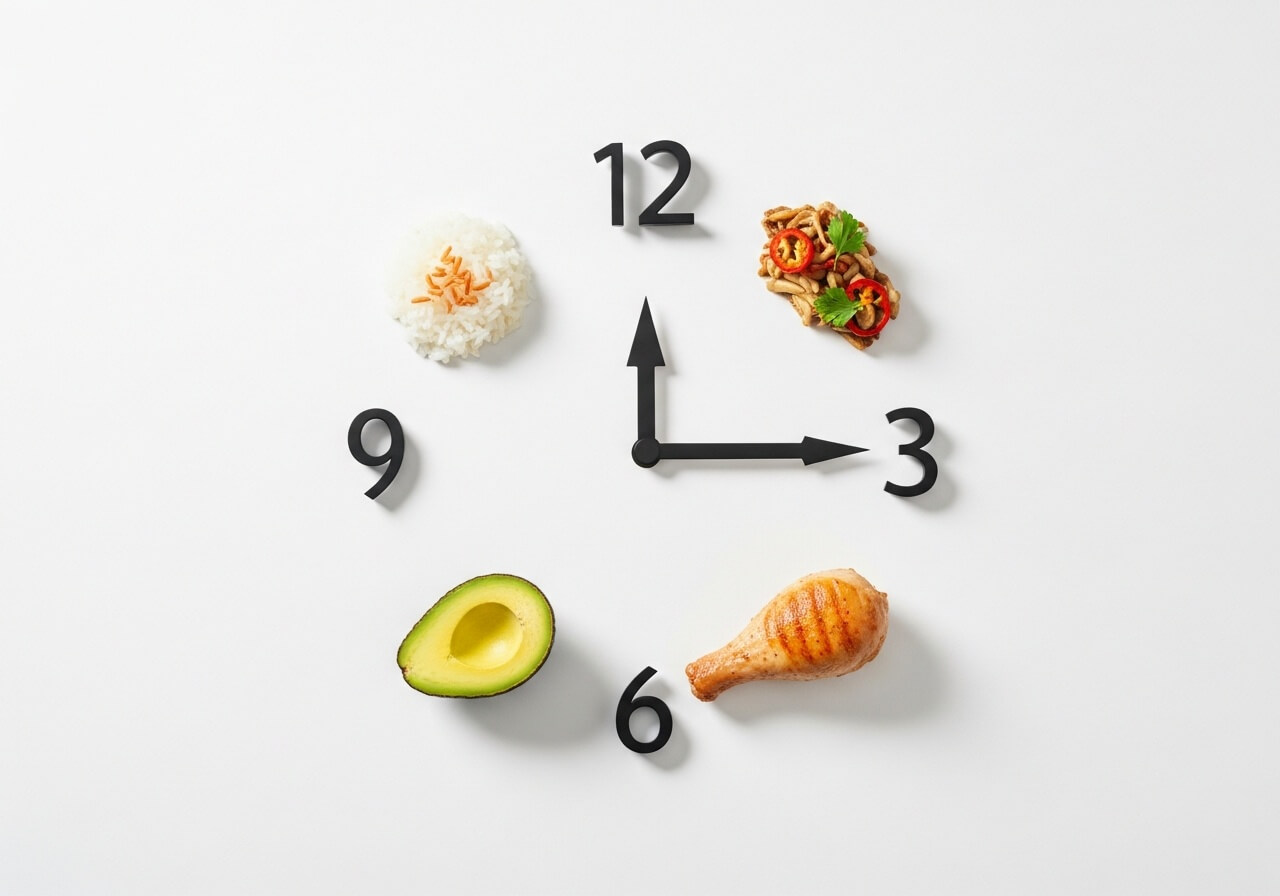
The most frequent error is confusing intermittent fasting or time-restricted eating with nutrient timing. Some people adopt a narrow eating window and assume that because they are “timing” their nutrition, they do not need to meet their actual daily protein, carbohydrate, and calorie targets.
If you eat only between noon and 8 PM, your protein goal remains the same. Cramming 150 grams of protein into eight hours is harder and less efficient for muscle protein synthesis than spreading it across the entire day. The timing benefit only works if your total nutrition is adequate. Restrictive eating windows that force under-eating undermine everything timing can offer.
Overcomplicating Timing When Simplicity Works Better
Many people create overly rigid rules: eating exactly 30 minutes post-workout, measuring each macronutrient to the gram, or adjusting timing daily based on perceived fatigue. This complexity exhausts mental energy and often leads to inconsistency.
A person training three times per week who eats 120 grams of protein daily across three ordinary meals will build muscle effectively. They do not need to consume 40 grams immediately after training. A recreational lifter benefits far more from consistent total intake than from optimized timing. If you are stressed about whether your post-workout meal is at the 35-minute or 50-minute mark, you are optimizing the wrong detail.
FAQ
Does timing really matter if I hit my daily macros?
Hitting your daily macros is the priority. Timing refines results on top of that foundation. If your daily totals are solid—enough protein, carbohydrates for your training volume, and appropriate calories—you will make progress regardless of minor timing variations. Timing becomes valuable when you are already consistent with daily intake and want to squeeze out additional performance or recovery benefits, particularly if you train multiple times per day or do long endurance work.
What is the best time to eat protein for muscle building?
Spacing protein doses throughout the day—roughly every 3–4 hours at 20–40 grams per dose—may support better muscle protein synthesis than eating most of your daily protein in one or two large meals. Eating protein after resistance training is useful, especially if another training session is coming within 4–6 hours. But the “best” time is whichever time you actually eat adequate protein consistently.
Should I adjust fat intake timing on rest days versus training days?
Fat intake timing is not a primary lever for fitness results. On training days, eating less fat around your post-workout meal can speed carbohydrate and protein digestion if you are refueling for another session soon. On rest days, fat intake timing is largely irrelevant to recovery or performance. Prioritize total fat intake and how it affects your overall energy balance and satiety.
Conclusion
Nutrient timing can enhance your fitness results when built on a foundation of consistent overall nutrition. Start by meeting your daily targets for protein, carbohydrates, and calories, then add basic timing structure—like spacing protein across the day and eating carbohydrates around training. Focus on what truly drives results: training consistently and eating enough to support your goals.