When you’re scanning a nutrition label and spot “sugar alcohols” or “artificial sweeteners,” you might wonder if these terms mean the same thing. They don’t. Sugar alcohols contain approximately 2.6 calories per gram and have a mild effect on blood sugar, while artificial sweeteners contain zero calories and do not affect blood sugar. This guide explains how your body processes each type, their digestive differences, and which might work better for your specific health situation.
- Understanding What Each Sweetener Is
- How Sugar Alcohols Work
- The Nature of Artificial Sweeteners
- Metabolic and Digestive Effects on Your Body
- Impact on Blood Sugar and Insulin
- Digestive Experiences and Common Side Effects
- Nutritional Differences and Calorie Content
- Calorie Count and Sweetness Intensity
- Contribution to Overall Dietary Intake
- Choosing the Right Sweetener for Your Health Needs
- Situations Where Sugar Alcohols Shine
- When to Opt for Artificial Sweeteners
- FAQ
- Do sugar alcohols like erythritol affect gut bacteria differently than stevia?
- Can low-calorie sweeteners truly help with weight management long-term?
- Are there specific types of sweeteners to avoid if I have IBS?
- Conclusion
Understanding What Each Sweetener Is
How Sugar Alcohols Work
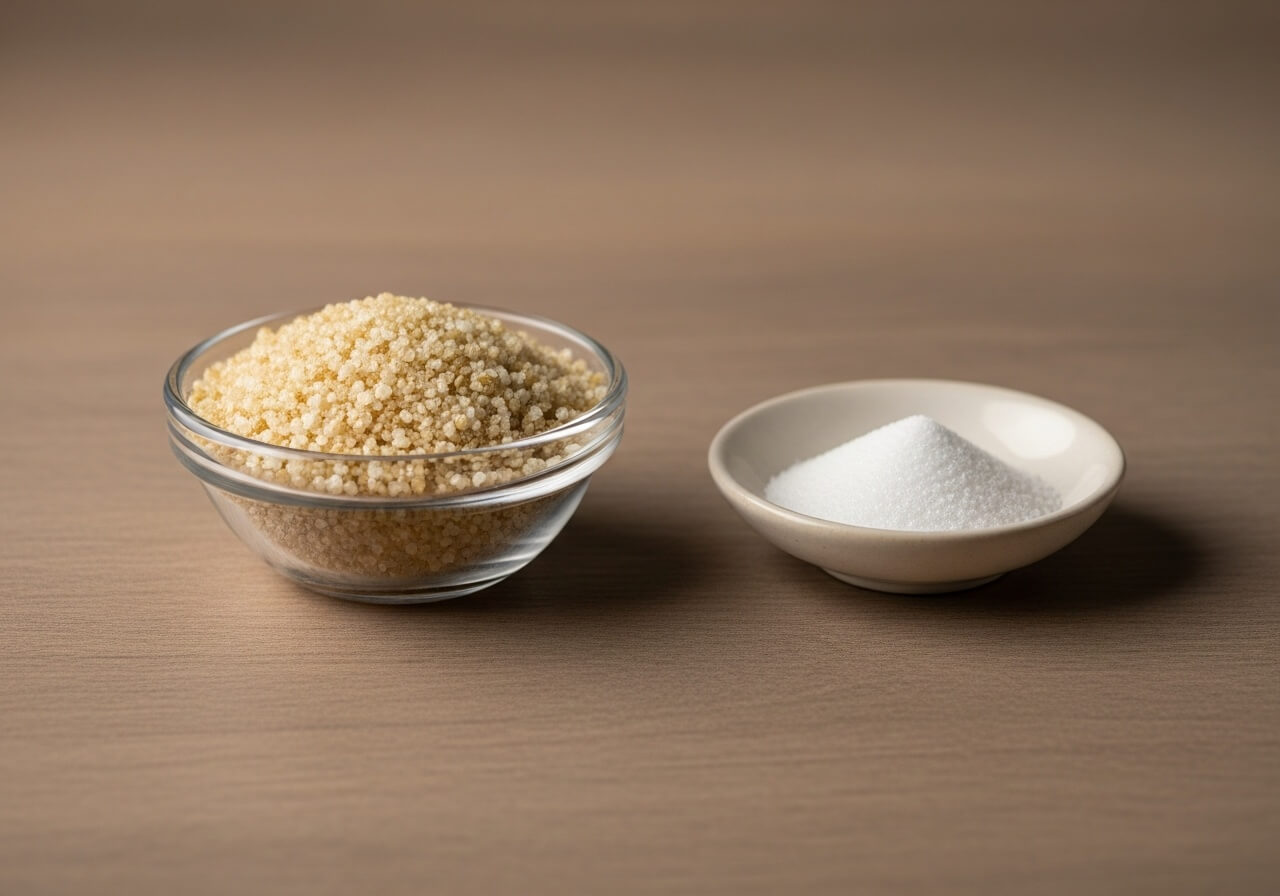
Sugar alcohols are carbohydrates derived from plants or synthesized from sugars—they contain no ethanol, despite the name. Common varieties include xylitol, erythritol, sorbitol, and maltitol. They’re classified as “nutritive” sweeteners because they contain approximately 2.6 calories per gram, compared to sugar’s 4 calories per gram.
Their sweetness intensity ranges from 40 to 80 percent of regular sugar, so you need more to achieve the same sweetness. This is why manufacturers often blend them with other sweeteners. Their incomplete absorption by the body becomes relevant for digestive tolerance.
The Nature of Artificial Sweeteners
Artificial sweeteners—such as aspartame and certain stevia derivatives—are synthesized compounds or plant extracts that trigger sweetness receptors on your tongue. They contain zero calories and produce no measurable effect on blood sugar. Many are up to 200 times sweeter than sugar, which is why they appear in tiny amounts in products.
Because they pass through your digestive system largely unchanged, they don’t contribute to caloric intake or glucose fluctuations. This metabolic neutrality makes them useful in specific health contexts, though it doesn’t automatically make them superior in all situations.
Metabolic and Digestive Effects on Your Body

Impact on Blood Sugar and Insulin
Sugar alcohols produce a mild effect on blood glucose due to their caloric and carbohydrate content. Someone managing prediabetes or type 2 diabetes would experience a more noticeable blood sugar response from erythritol than from aspartame, though the impact remains considerably lower than regular sugar.
Artificial sweeteners do not affect blood sugar at all. For individuals requiring strict glucose control, or anyone following a ketogenic diet where maintaining ketosis depends on minimizing insulin response, artificial sweeteners offer a metabolic advantage. If your primary concern is blood glucose stability, artificial sweeteners are the more reliable choice.
Digestive Experiences and Common Side Effects
Sugar alcohols can cause gastrointestinal side effects including bloating, gas, and diarrhea in some individuals because they’re not fully absorbed by your body. The severity varies widely—some people tolerate them without issue, while others experience noticeable discomfort from even modest amounts.
Sorbitol and mannitol tend to trigger these effects more predictably than erythritol, though individual tolerance differs significantly. If you have IBS or a sensitive digestive system, consuming products sweetened with sorbitol might mean experiencing bloating or loose stools within hours. Artificial sweeteners rarely produce these digestive side effects since they pass through your system without the incomplete absorption that causes fermentation.
In practical terms: a protein bar sweetened with erythritol might be fine for your afternoon snack, while an identical bar sweetened with sorbitol could trigger hours of discomfort.
Nutritional Differences and Calorie Content
Calorie Count and Sweetness Intensity
Sugar alcohols contribute roughly 2.6 calories per gram to your intake, while artificial sweeteners contribute zero. For someone tracking calories closely, this difference matters. A sweetened beverage using stevia adds virtually no calories, while one using erythritol might add 5–10 calories depending on the amount used.
However, sweetness intensity means you’re comparing different quantities. Because artificial sweeteners are significantly more potent, manufacturers use smaller amounts to achieve the same sweetness level. The actual caloric difference between a product sweetened with erythritol and one sweetened with aspartame might be minimal—sometimes just 1–3 calories per serving. The bigger distinction emerges in products where sugar alcohols make up a significant percentage of the formula, such as sugar-free chocolate or baked goods.
Contribution to Overall Dietary Intake
Your daily sweetener choice rarely hinges on a single product—the cumulative effect matters more. Someone consuming two erythritol-sweetened beverages, a sugar-free yogurt, and a protein bar might consume 20–30 extra calories from sweeteners alone. Over months, this adds up.
The practical difference appears when you’re operating with a tight caloric budget—athletes tracking macros or people in a significant caloric deficit. For casual use, the gap is negligible. Neither sweetener offers meaningful nutritional contribution beyond their caloric and blood sugar effects.
Choosing the Right Sweetener for Your Health Needs
Situations Where Sugar Alcohols Shine
Sugar alcohols work well when baking or cooking requires specific texture and mouthfeel. Erythritol can substitute for sugar in cookies and cakes with results closer to the original than many artificial sweeteners achieve. If you’re making homemade treats and texture matters, sugar alcohols deliver better results.
They also make sense if you tolerate them well digestively and you’re not managing blood glucose tightly. Someone without diabetes or metabolic concerns, whose digestive system handles sugar alcohols without bloating, might prefer them as a plant-derived option. Erythritol specifically has minimal blood sugar impact compared to other sugar alcohols, making it a reasonable middle ground.
When to Opt for Artificial Sweeteners
Choose artificial sweeteners when blood glucose stability is essential. Anyone with diabetes, prediabetes, or following a ketogenic diet benefits from the zero-calorie, zero-blood-sugar-impact profile. In these contexts, artificial sweeteners are the metabolically cleaner choice.
If you have IBS or a history of digestive sensitivity, artificial sweeteners eliminate the risk of bloating and gas that can accompany sugar alcohols. Someone with known sensitivity to sorbitol-sweetened products can avoid digestive guesswork entirely by choosing artificial sweeteners instead.
For convenience, artificial sweeteners also win. A stevia-sweetened drink contributes no calories and no digestive burden, making it ideal when you want sweetness without metabolic or digestive consequences.
FAQ
Do sugar alcohols like erythritol affect gut bacteria differently than stevia?
The evidence distinguishing their specific effects on gut bacteria is limited. Erythritol and other sugar alcohols pass through your intestines partly unabsorbed, which can create an environment favoring fermentation. Stevia and artificial sweeteners bypass this process almost entirely. Neither sweetener has been proven to damage healthy gut bacteria at typical consumption levels, but the mechanism differs between the two types.
Can low-calorie sweeteners truly help with weight management long-term?
Low-calorie sweeteners may support short-term weight management, but long-term efficacy varies significantly by individual and diet context. No definitive evidence shows they prevent obesity on their own. Weight loss depends primarily on overall calorie intake, diet quality, physical activity, and sustained behavioral changes. Someone might lose weight by switching from sugar to erythritol if the calorie reduction is meaningful and maintained, but if overall diet quality remains poor or portions increase elsewhere, the sweetener choice alone won’t drive results.
Are there specific types of sweeteners to avoid if I have IBS?
If you have IBS, sorbitol and mannitol are the most likely culprits for triggering bloating and loose stools. Xylitol falls in the middle—some people tolerate it, others don’t. Erythritol has a better safety profile for IBS-prone individuals, though responses still vary. Artificial sweeteners like aspartame and stevia derivatives are generally well-tolerated by people with IBS since they don’t undergo incomplete absorption. Your best approach: keep a food and symptom log to identify which specific sweeteners cause your symptoms, then avoid those.
Conclusion
The choice between sugar alcohols and artificial sweeteners depends on whether you’re prioritizing blood sugar stability, digestive comfort, or calorie reduction. Start by identifying your primary constraint: Is glucose control your main concern? Do you experience digestive issues? Your answer points you toward the sweetener that will actually serve your goals rather than create new problems.