
Building muscle requires protein—that much is clear. But does it matter when you eat it? For years, gym culture has promoted the idea of a narrow “anabolic window” requiring immediate post-workout protein consumption. The reality is simpler: your total daily protein intake matters far more than precise timing. While consuming protein within a few hours of training may offer a modest benefit, it won’t make or break your results if you’re consistently meeting your daily target of 1.6–2.2 grams per kilogram of body weight.
- The Actual Role of Protein Timing in Muscle Building
- How Protein Synthesis Works After Exercise
- Why Total Daily Protein Intake Trumps Precise Timing
- Understanding the Post-Workout Protein Window
- Why the Narrow Window Is Overstated
- The Modest Benefit of Post-Exercise Protein
- How to Structure Your Daily Protein Intake
- Distributing Protein Throughout the Day
- Choosing Quality Protein Sources
- FAQ
- Is the post-workout protein window a real thing?
- How much protein should I eat daily for muscle growth?
- Does consuming protein before bed help with muscle repair?
- What are the best protein sources for muscle building?
- Conclusion
The Actual Role of Protein Timing in Muscle Building
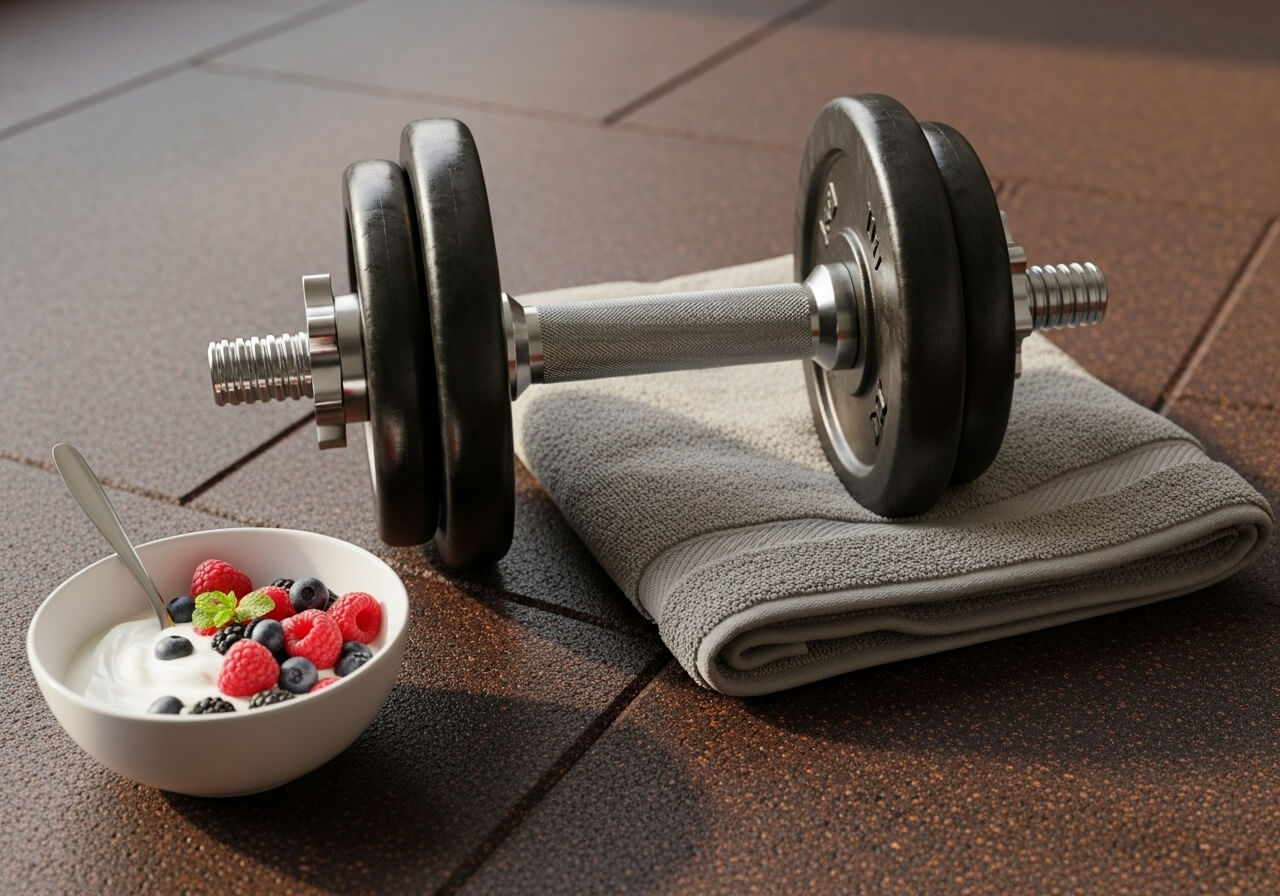
Protein timing plays a secondary role compared to total daily intake. Research indicates that consuming 1.6–2.2 grams of protein per kilogram of body weight each day is the primary driver of muscle protein synthesis—the biological process that repairs and builds muscle tissue after training.
How Protein Synthesis Works After Exercise
Resistance training creates microscopic damage in muscle fibers. Your body responds by increasing muscle protein synthesis, using amino acids from dietary protein to repair and strengthen these fibers. Contrary to popular belief, this process doesn’t shut down after 30 minutes. Research shows muscles remain responsive to protein intake for at least 24 hours following exercise. This extended window means missing your immediate post-workout meal won’t sabotage your progress.
Why Total Daily Protein Intake Trumps Precise Timing
Meeting your daily protein target consistently matters more than when you consume it. Someone who trains at 6 PM and eats dinner at 8 PM—consuming 25 grams of protein as part of their daily 1.6–2.2 g/kg target—will still build muscle effectively. The two-hour delay doesn’t prevent muscle growth. Long-term gains in strength and muscle mass show minimal difference between immediate post-workout consumption and eating a few hours later, provided both approaches hit the same daily total.
Understanding the Post-Workout Protein Window

The strict 30-minute “anabolic window” stems from early research conducted under specific laboratory conditions—often with fasted subjects or people in severe caloric deficits. These scenarios don’t reflect typical eating patterns. In real-world settings where people consume regular meals throughout the day, the timing urgency largely disappears.
Why the Narrow Window Is Overstated
Your muscles don’t stop responding to protein 30 minutes after you finish training. They remain sensitized for hours, giving you flexibility without sacrificing results. This broader window means you don’t need to rush from the gym to your protein shake. The original research conditions created a scenario where timing mattered more than it does for most people eating normally throughout the day.
The Modest Benefit of Post-Exercise Protein
Consuming protein within a few hours of training may provide a small acute boost to muscle protein synthesis compared to waiting significantly longer. However, this minor advantage doesn’t translate to meaningful differences in long-term muscle growth if your daily total is adequate. Think of it as a slight optimization rather than a requirement. If you’re meeting your daily target consistently, the timing becomes a convenience factor rather than a critical variable.
How to Structure Your Daily Protein Intake
Since total intake drives results, the real optimization happens in how you distribute protein across your day. This approach is both more practical and more effective than obsessing over post-workout timing.
Distributing Protein Throughout the Day
Consuming 20–40 grams of high-quality protein every 3–4 hours helps maximize muscle protein synthesis throughout the day. Your body can only utilize a certain amount of protein from a single meal for muscle building. Spreading intake across four to five meals ensures steady amino acid availability for repair. For example, instead of eating 100 grams at dinner with minimal protein at breakfast, distribute 25 grams at breakfast, 30 grams at lunch, 25 grams mid-afternoon, and 30 grams at dinner. This pattern supports more consistent muscle protein synthesis.
Choosing Quality Protein Sources
High-quality proteins contain all nine essential amino acids, particularly leucine, which triggers muscle protein synthesis. Eggs, Greek yogurt, lean meat, fish, poultry, legumes, and dairy products are reliable choices. Animal sources tend to be complete proteins with higher leucine content, while plant-based sources often work well when combined. Your priority is hitting your daily 1.6–2.2 g/kg target with foods you actually enjoy and can sustain. If you consistently fall short—averaging 1.2 g/kg daily—no amount of perfectly timed shakes will compensate. Conversely, consistently meeting your target makes timing considerations far less critical.
FAQ
Is the post-workout protein window a real thing?
Muscles remain more responsive to protein for hours after exercise, not just 30 minutes. Your muscles stay sensitized for at least 24 hours post-training. Consuming protein within a few hours of your workout as part of regular daily intake is sufficient. The pressure to act within 30 minutes is largely marketing rather than science.
How much protein should I eat daily for muscle growth?
Evidence supports 1.6–2.2 grams per kilogram of body weight daily for those doing consistent resistance training. For a 70-kilogram (154-pound) person, this translates to 112–154 grams daily. Track your intake for a week to assess your baseline, then adjust to reach this range consistently. Those in caloric deficits while preserving muscle may benefit from the higher end of this range.
Does consuming protein before bed help with muscle repair?
Pre-bed protein isn’t necessary for muscle repair since your body continues synthesizing muscle protein overnight. However, if you haven’t met your daily target yet, a protein source before bed—such as Greek yogurt, cottage cheese, or a shake—can help you reach your goal. The benefit comes from meeting your daily total, not from special overnight muscle-building properties. If you’ve already hit your target, a pre-bed protein meal offers no additional advantage.
What are the best protein sources for muscle building?
The best source is one you’ll eat consistently. Eggs, chicken breast, ground turkey, salmon, Greek yogurt, cottage cheese, milk, beans, lentils, and tofu all provide substantial protein and essential amino acids. Cost, availability, dietary preferences, and taste should guide your choices. Someone who prefers fish and beans over chicken will achieve better results by eating foods they enjoy rather than forcing themselves to eat “optimal” sources they avoid.
Conclusion
Your total daily protein intake—1.6–2.2 grams per kilogram of body weight—drives muscle growth far more than precise timing around workouts. Start by calculating your daily target, track your intake for a week, then make structural changes to meet it consistently. The foundation of muscle building is more flexible than fitness marketing suggests—focus on the fundamentals, and timing will take care of itself.